
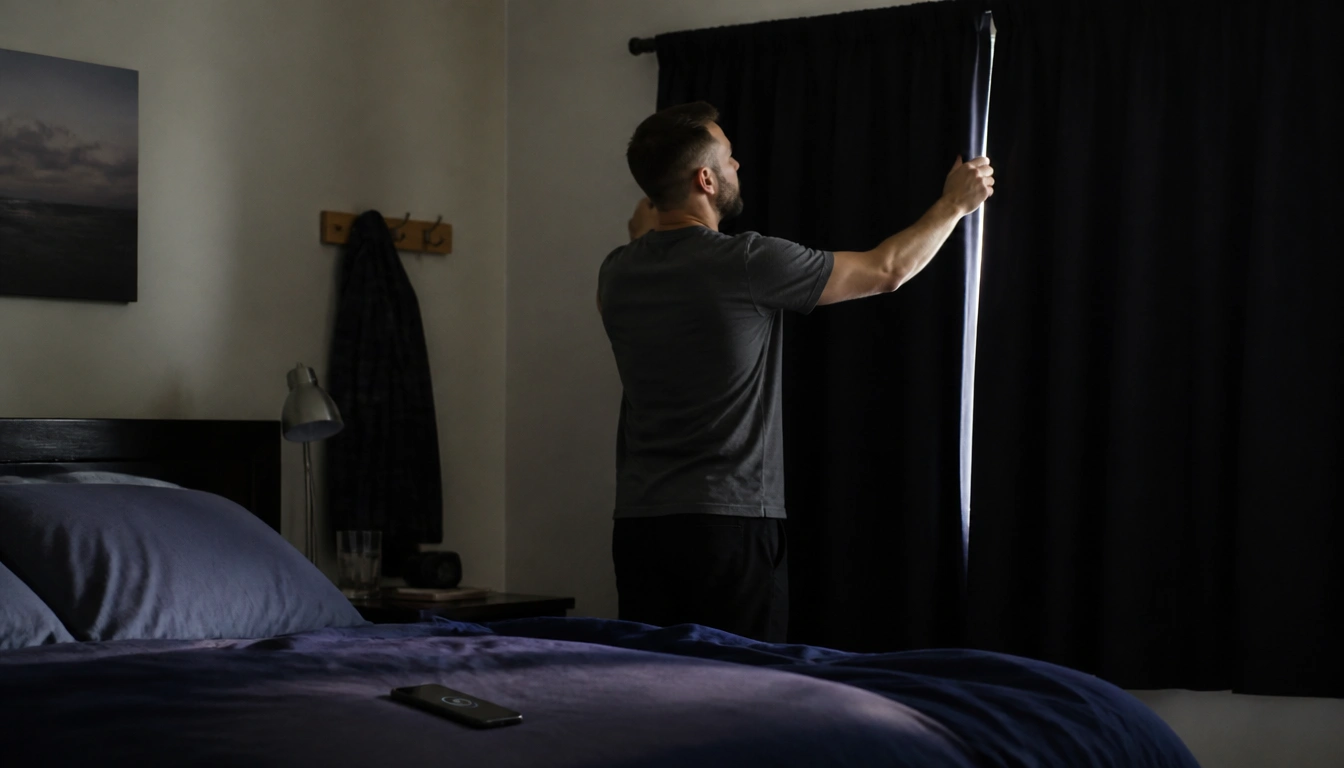
The safest, most effective sleep routine for a busy week of shift work is usually a compromise routine: protect a main sleep block, add strategic naps, use light and caffeine timing to support alertness, and avoid fully flipping back to a daytime schedule on days off if that worsens fatigue. The goal is to reach roughly 7 to 9 hours of sleep in 24 hours without creating constant circadian jet lag or unsafe drowsiness.
Key Takeaways
- Aim for 7 to 9 hours of sleep in a 24-hour period, but for shift workers that may need to be split into a primary sleep block plus a nap.
- A consistent anchor sleep block is often more sustainable than switching completely back to a daytime schedule on every day off.
- Use bright light early in the shift, reduce light after night work, and make daytime sleep environment feel cave-like.
- Take caffeine early in the shift and stop several hours before your planned sleep so it does not delay sleep onset.
- If severe sleepiness, missed sleep, or drowsy driving keeps happening for months, it may be more than a busy week and deserves clinical evaluation.
Why shift work disrupts sleep timing
Shift work sleep problems start with a basic biology mismatch. Your brain’s circadian system is designed to promote alertness during the day and sleep at night. When you work nights, early mornings, or rotating schedules, your body is asked to stay awake when it is biologically primed for sleep and to sleep when it is primed for wakefulness. That makes sleep shorter, lighter, and more fragmented for many people.
This matters because busy weeks do not just add more hours to the day. They also reduce the number of chances your body gets to recover. The result is often a mix of acute sleep loss and circadian misalignment, which can build fatigue quickly and make concentration, reaction time, mood, and safety worse. The Centers for Disease Control and Prevention notes that healthy adults generally need 7 to 9 hours of sleep per 24 hours, but shift workers often need to reach that total in pieces rather than in one perfect overnight block.
The practical goal is not a flawless sleep schedule. It is to reduce the amount of biological stress your schedule creates.
The busy-week problem and the days-off jet lag trap
A common pattern is to sleep one way on workdays and then switch all the way back to a daytime routine on days off. That seems logical, but it often creates a recurring “jet lag” effect. Your circadian system never fully settles, because it keeps getting pulled in two directions. You may feel like you are resetting on paper while actually keeping your body in a loop of partial adjustment and repeated sleep debt.
For a high-demand week, a better target is often a workable compromise. Instead of asking, “How do I sleep like a day worker on my days off?” ask, “How do I keep a stable enough anchor so I am not restarting my body clock every few days?” That shift in thinking can make the week more sustainable and reduce the feeling of constant recovery failure.
A realistic routine may include one protected main sleep block, one shorter recovery nap, and consistent timing cues such as light exposure, meals, and caffeine cutoff. The routine should fit the week you actually have, including commuting, family demands, and irregular end times. If sleep is treated as optional, the schedule usually becomes more chaotic, not less.
Use anchor sleep instead of flipping everything
An anchor sleep block is a short, stable piece of sleep that stays in roughly the same place each day, even when the rest of the schedule changes. For a night-shift worker, that might mean sleeping for a few hours after work and keeping that same block on days off, then filling in the rest of the needed sleep at another time. This approach is often easier on the body than fully switching to a daytime pattern after every shift.
The reason it helps is simple: it reduces the size of the circadian swing. A full flip can feel like two different sleep lives, one for workdays and one for rest days. That increases the “weekday versus weekend” mismatch and can leave you perpetually under-recovered on the next workday. Anchor sleep does not eliminate disruption, but it narrows the gap.
For example, if your workdays require daytime sleep after a night shift, you might preserve a consistent early-morning or late-morning sleep window on days off instead of sleeping only at night. The exact timing depends on your shift, commute, family life, and how your body responds. The best version is the one you can repeat without burning out or making your first shift back feel like a reset from zero.
When to nap and how light should work for you
During a busy shift week, naps are not a luxury. They are a tool for reducing acute sleep debt. A pre-shift nap can make a long night or extended shift more manageable, especially if the previous sleep was shortened by commuting, childcare, or a late finish. A nap before work is often more useful than trying to “push through” on willpower alone.
Keep naps purposeful. Short naps can improve alertness without leaving you groggy, while longer naps may be useful if you have enough time to wake up fully before the next duty period. The best nap length depends on your schedule and how sleepy you feel, but the main idea is to use naps to support performance, not to replace a regular sleep plan.
Light timing matters just as much. Bright light can help you stay alert during the first part of a night shift, but light exposure after the shift can make daytime sleep harder. On the commute home, many workers benefit from reducing bright light exposure, for example by using sunglasses if they can still drive safely. Once home, darkening your environment helps signal to the brain that sleep is coming. That does not mean you must live in darkness all day; it means using light strategically so it works for your sleep instead of against it.
Make daytime sleep feel like nighttime
Daytime sleep is often more fragile than nighttime sleep, so the room matters. If you are trying to sleep after a night shift, treat the bedroom like a cave: dark, quiet, and cool. Blackout curtains or shades can block sunlight. Earplugs or white noise can reduce daytime traffic, household noise, and neighborhood sounds. A cooler room often makes it easier to fall asleep and stay asleep.
Small details can make a big difference. Silence alerts on devices. Let household members know when your protected sleep time begins. If possible, reduce tasks that reliably wake you up, such as errands or noisy chores, before you try to sleep. The goal is not perfection; it is lowering the number of interruptions that chip away at already-short sleep.
It can also help to think in terms of sequence. After a shift, the routine should move from bright-light exposure and stimulation into a wind-down period, then into a sleep space that is clearly different from the rest of the home. The more the environment resembles nighttime, the easier it is for your circadian system to cooperate, even when the clock says morning.
Caffeine, food, and timing choices that protect sleep later
Caffeine can be useful during a demanding shift, but timing matters. The safest approach is to use caffeine early in the shift, when you need it most, and avoid it in the hours before your planned sleep window. If caffeine is too late in the shift, you may feel wired when you need to be winding down, which can make daytime sleep shorter or delayed.
Food timing matters too. Heavy meals during the night can feel uncomfortable and may make it harder to sleep later, especially if they are high in fat or hard to digest. Many shift workers do better with lighter, more manageable meals during the shift and a calmer eating pattern before sleep. That does not mean skipping food altogether; it means choosing meals that support alertness without creating extra digestive stress when you are trying to rest.
Hydration should also be balanced. Going into a shift underhydrated can worsen fatigue, but loading up on fluids right before sleep can create more awakenings. A good routine is the one that keeps you functional without making sleep harder at the end of the shift.
If you rely on stimulants to get through every week, that is a sign your schedule may be outrunning your recovery. Caffeine should support the plan, not become the plan.
How age, chronotype, and family demands change the plan
No sleep routine works the same way for everyone. Age matters because many older adults adapt less easily to abrupt circadian changes and may need more protection around sleep timing. Younger workers may tolerate schedule shifts a little better, but they are not immune to cumulative sleep debt.
Chronotype also matters. Natural night owls often find late or overnight work less punishing than early-morning schedules, while early birds may struggle more with nights. Even so, being a night owl does not make shift work harmless. It only changes how difficult the adjustment feels.
Family and home responsibilities can be the hardest part. Childcare, school runs, caregiving, and shared living spaces often collide with the exact hours that should be protected for rest. That is why the most effective routine is usually the one that negotiates with real life instead of pretending those obligations do not exist. It may mean shorter sleep blocks, more use of naps, or a stable anchor window that your household can plan around. The practical question is not whether your schedule is ideal. It is whether it is repeatable.
Safety checks: drowsy driving and when to get help
Drowsy driving is one of the biggest safety issues in shift work. If you are too sleepy to remember the last few miles of a drive, nodding off at stops, drifting in your lane, or fighting repeated microsleeps, that is not a productivity problem; it is a safety problem. If possible, build a buffer after a night shift before driving, especially if you have had little sleep or a long commute.
Also watch for a pattern that goes beyond a rough week. If you regularly cannot sleep when you should, cannot stay awake when you need to, or feel impaired for months because your schedule and sleep keep colliding, Shift Work Sleep Disorder becomes a possibility. That is worth discussing with a clinician, especially if you are relying on alcohol, over-the-counter sleep aids, or high stimulant intake to get by.
Professional evaluation can help sort out whether the problem is mainly schedule-driven, whether another sleep disorder is present, and whether structured treatment would help. Self-management is often enough for short busy stretches, but persistent impairment deserves more than improvisation.
Frequently Asked Questions
How can a shift worker sleep enough when workdays and days off keep changing?
Use a repeatable compromise rather than trying to reinvent your schedule every time. Keep a main sleep block or anchor period, then add naps or a second sleep period as needed so your total sleep reaches about 7 to 9 hours in 24 hours.
Should I keep the same sleep window on my days off or switch back to a normal daytime schedule?
If flipping back and forth leaves you constantly tired, keeping part of the same sleep window is often more sustainable. A partial anchor sleep can reduce the repeated “jet lag” feeling that comes from fully resetting on every day off.
How do naps help shift workers during a heavy week, and when should I take them?
Naps help reduce acute sleep debt and can improve alertness before a long or overnight shift. A pre-shift nap is often especially useful. The best timing is the one that fits your work schedule without making it harder to sleep later.
What should I do about light exposure after a night shift and before sleeping during the day?
Try to reduce bright light on the way home and make your sleep space dark once you arrive. Sunglasses may help during the commute if they do not interfere with safe driving, and blackout curtains or shades can help at home.
How much caffeine is too late in the shift if I still need to sleep soon after work?
Caffeine is best used early in the shift and stopped several hours before your planned sleep time. If you are still wired close to bedtime after using caffeine, it may be interfering with your sleep window and should be moved earlier.
The Bottom Line
A busy shift-work week usually goes better with a realistic routine than with a perfect one. Protect a main sleep block, use naps to reduce acute sleep debt, and keep your light and caffeine timing aligned with the sleep you want later.
Avoid the cycle of fully switching to daytime sleep on days off if that leaves you in constant biological jet lag. If your fatigue is persistent, your alertness is unsafe, or you are relying on stimulants or sleep aids to function, get clinical help rather than trying to push through indefinitely.
Medical disclaimer
Medical disclaimer: This content is for educational and informational purposes only and is not a substitute for professional medical advice, diagnosis, or treatment. Dietary needs and supplement suitability vary by individual.
Sources
- Centers for Disease Control and Prevention (CDC) — cdc.gov. Accessed November 2026.
- Centers for Disease Control and Prevention (CDC) — cdc.gov. Accessed November 2026.
- Centers for Disease Control and Prevention (CDC) — cdc.gov. Accessed November 2026.
- Centers for Disease Control and Prevention (CDC) — cdc.gov. Accessed November 2026.
- Academic Research Institution — utah.edu. Accessed November 2026.
