
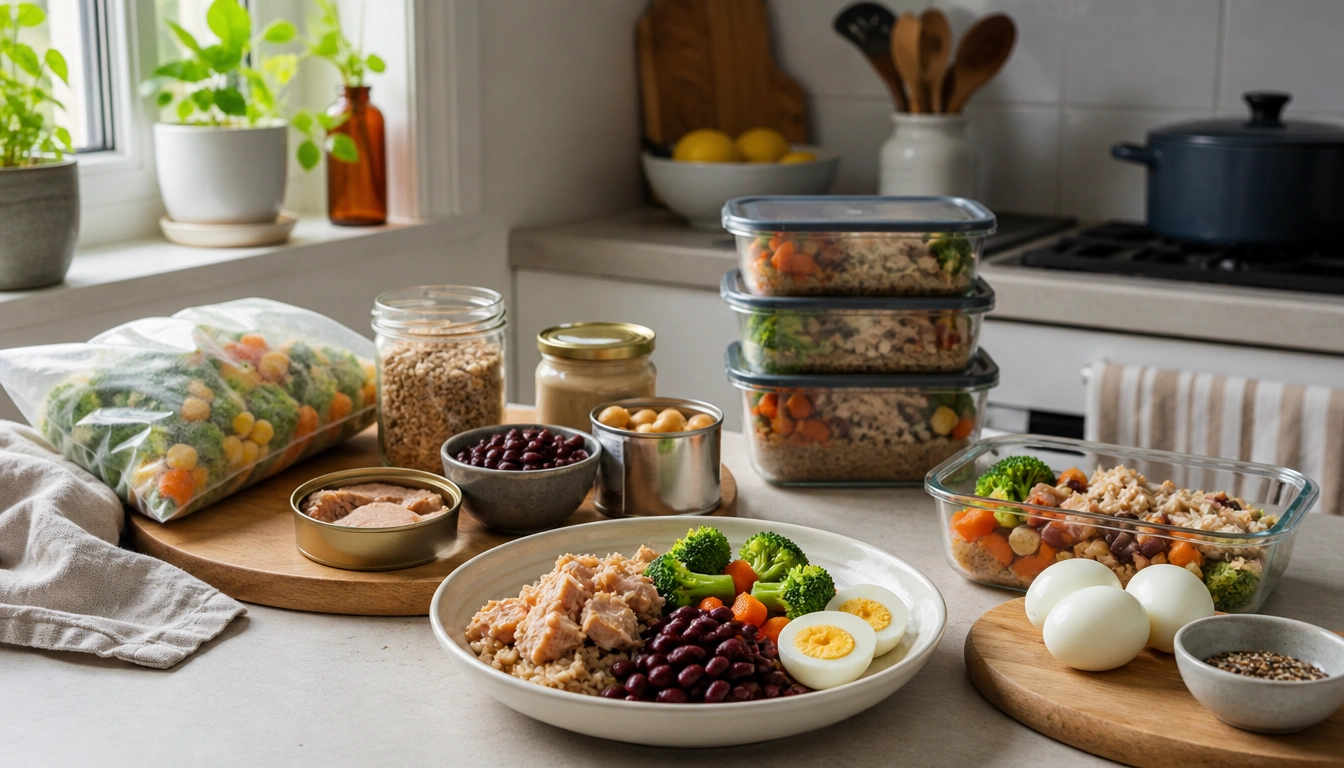
Yes—households can use convenience foods in a healthy, budget-conscious way by choosing grocery staples that are easy to assemble, filling, and minimally processed. Frozen vegetables, canned beans, canned fish, whole grains, eggs, and store-brand staples can lower cost and prep time while still supporting good nutrition. The biggest savings usually come from building simple meals at home instead of relying on expensive ready-made meals or takeout.
Key Takeaways
- Frozen and canned produce can be a smart substitute for fresh when price, transport, or spoilage are barriers.
- Fiber- and protein-rich convenience foods help meals feel more filling, which can reduce snack spending and impulse takeout.
- Store-brand frozen, canned, and dry goods often deliver similar nutrition at a lower price than name brands.
- For sodium-sensitive households, no-salt-added products and rinsing canned beans or vegetables can make a meaningful difference.
- People managing blood sugar often do better with whole-grain convenience carbs, beans, and lentils than with refined snack foods.
- Older adults may benefit from low-prep protein options such as eggs, canned fish, or rotisserie chicken to make meals easier and more nourishing.
Why convenience foods and healthy eating can work together on a budget
Healthy convenience food strategy does not mean buying expensive diet meals or filling the cart with ultra-processed snacks. It means using convenience in ways that reduce friction: frozen vegetables instead of fresh produce that may spoil, canned beans instead of dried beans that need long cooking, or microwaveable grains instead of takeout rice bowls. Public health guidance from the CDC and NHS supports building meals around basic foods that are quick to prepare and not heavily loaded with salt, sugar, or saturated fat.
This approach helps in three ways. First, it saves time, which matters when the real alternative is skipping cooking and ordering food. Second, it often lowers the per-meal price because grocery staples stretch across several meals. Third, it can improve consistency: people are more likely to eat vegetables, fiber, and protein when the ingredients are ready to use. The goal is not perfection. It is a routine that is easy enough to repeat on busy days.
The best convenience foods to prioritize and how to build a cheap, healthy plate
The most useful budget convenience foods are the ones that carry nutrition without much waste. Frozen vegetables, frozen fruit, canned beans, lentils, canned fish, eggs, plain yogurt, microwaveable whole grains, oats, and store-brand soups with simpler ingredient lists are all practical examples. Frozen produce is often picked at peak ripeness and processed quickly, so it can hold onto nutrients well. Canned fruit in juice, canned tomatoes, and plain canned vegetables can also be useful when fresh produce is expensive or likely to spoil before you use it.
For satiety, pair convenience items that bring fiber or protein. Beans, lentils, eggs, tuna, salmon, sardines, chicken, tofu, and yogurt can make a meal feel complete without a lot of added cost. This is where convenience foods can work better than snacky ready-made options: a meal with protein and fiber tends to keep people full longer, which may reduce frequent grazing and impulse spending.
A simple plate pattern makes planning easier: fill about half the plate with vegetables or fruit, one quarter with protein, and one quarter with a high-fiber carbohydrate such as brown rice, quinoa, whole-wheat pasta, oats, or potatoes with the skin on. If you need the easiest version, think in parts rather than recipes: a bag of frozen broccoli, a can of beans, and a microwavable grain pouch can become dinner with very little effort.
Examples of low-cost combinations include:
- Frozen mixed vegetables, canned chickpeas, and brown rice.
- Frozen spinach, eggs, and whole-grain toast.
- Canned tuna, microwavable quinoa, and frozen peas.
- Canned lentils, jarred salsa, and a baked potato.
Label-reading rules that matter most
Package labels matter most when convenience foods start to look less like ingredients and more like full meals or snacks. The first number to check is serving size, because a package may contain more than one serving and the label can make a food seem lighter than it is. After that, focus on sodium, added sugars, and saturated fat. These are the nutrients most likely to be pushed high in many ready-made meals, sauces, and snack foods.
If a food is meant to be part of your regular routine, compare it against similar items rather than trying to find a “perfect” choice. A canned bean with less sodium is usually a better everyday option than one with heavily salted sauce. Plain yogurt is usually easier to work into a meal than a sweetened flavored version. Unsweetened frozen fruit is more flexible than fruit packed in syrup. Small changes on labels add up when the food appears in your cart every week.
For households trying to limit saturated fat, pay extra attention to creamy sauces, pastries, processed meats, and many frozen comfort meals. If sodium is your main concern, choose “no salt added” or “low sodium” versions when possible, and remember that broth, sauces, seasoning packets, and cheese can contribute as much salt as the main ingredient.
Smart supermarket tactics that reduce cost
Saving money on healthy convenience foods often depends more on shopping strategy than on cooking skill. Store brands are one of the easiest wins. Many supermarket own-label frozen vegetables, canned beans, oats, rice, and tuna are comparable to name brands in basic quality but cost less. In many cases, the main difference is packaging and marketing, not the usefulness of the food in a meal.
Shelf placement also matters. Eye-level products are often the most expensive, while lower or higher shelves may hold cheaper options. It is worth scanning the full section before choosing. The same habit helps in the freezer aisle and the canned goods aisle, where the best-value item is not always the most visible one.
Another budget tactic is to prioritize shelf-stable staples that can support multiple meals. A few examples are canned beans, canned tomatoes, oats, rice, pasta, peanut butter, frozen vegetables, and tins of fish. These foods can be assembled in different ways across the week, which lowers the chance that you will order takeout because nothing at home feels usable. Buying ingredients that overlap across meals is usually cheaper than buying separate products for each recipe.
Quick meal-building formulas for breakfast, lunch, and dinner
The easiest meals come from formulas, not from complicated recipes. For breakfast, combine one protein source with one high-fiber carbohydrate. Oats with peanut butter and frozen berries work well. Eggs on whole-grain toast with fruit is another low-effort option. Plain yogurt with oats and frozen fruit can be assembled fast and eaten on the go.
For lunch, think of a base, a protein, and a vegetable. A wrap filled with rotisserie chicken, bagged salad, and beans is fast and filling. A rice bowl with canned salmon, frozen vegetables, and a simple sauce can be made with minimal prep. Soup also works well: canned lentils, frozen vegetables, and stock can become lunch without a long cooking session.
For dinner, aim for the same pattern but make the vegetable portion the easiest part. Microwaveable whole grains, frozen broccoli, and eggs or canned fish can be combined in one bowl. A pasta meal can stay budget-friendly if you use whole-wheat pasta, canned tomatoes, frozen spinach, and a modest amount of cheese or protein. When time is tight, semi-homemade is often better than skipping the meal or defaulting to takeout.
If you want the fastest version under 10 minutes, keep a few “assembly meals” in mind:
- Microwave rice, canned beans, and salsa.
- Frozen vegetables, eggs, and toast.
- Rotisserie chicken, bagged salad, and whole-grain rolls.
- Canned tuna, crackers or toast, and a piece of fruit.
Condition-specific adjustments for sodium, blood sugar, and age
For sodium-sensitive households, the most practical step is not eliminating convenience foods. It is choosing lower-sodium versions and making small adjustments. No-salt-added canned vegetables, beans, tomatoes, and broth can help. Rinsing canned beans and vegetables under water can also reduce surface sodium. That makes it easier to keep using budget-friendly staples without pushing sodium too high.
For people managing diabetes or blood sugar, the biggest difference often comes from the type of carbohydrate in the convenience food. Refined snack crackers, sweetened cereals, sugary drinks, and white rice bowls can raise blood sugar quickly. Better choices include microwaveable brown rice, whole grains, beans, lentils, and vegetables paired with protein. The NHS and diabetes guidance generally favor meals that spread carbohydrates more evenly and avoid large refined-carb portions without protein or fiber.
Older adults may need a different kind of convenience strategy. Appetite, chewing comfort, and energy for cooking can all change with age, so easy protein matters. Eggs, canned fish, yogurt, beans, and rotisserie chicken can support protein intake without much prep. For children, the same foods can help, but portions and texture should match their needs. If someone has kidney disease, is on a special meal plan, or uses insulin or other medications that depend on precise carbohydrate intake, it is important to get individualized advice before making major changes.
Food safety basics for canned and frozen items
Convenience should never come at the cost of safety. For canned foods, check the can before buying or opening it. Avoid cans that are bulging, leaking, badly rusted, or badly dented. These may signal spoilage or container damage. Once opened, transfer leftovers to a clean container and refrigerate promptly rather than leaving food in the can.
For frozen foods, follow package heating instructions. Microwaves and ovens can both work, but the food needs to be heated thoroughly and evenly. Stirring during heating, rotating the food, and letting it stand after cooking can help reduce cold spots. If you are reheating a frozen ready meal, make sure it is fully hot throughout, not just warm at the edges.
One hidden advantage of frozen produce is waste reduction. You can use only what you need and return the rest to the freezer, which is harder with fresh produce that may wilt or spoil. That makes frozen foods especially helpful for households with irregular schedules or limited access to stores.
A simple weekly system to reduce takeout and waste
A low-stress weekly plan works better than a detailed menu that no one follows. Start by choosing three core dinners that use overlapping ingredients. For example, you might buy frozen vegetables, rice, eggs, canned beans, and rotisserie chicken, then use them across bowls, wraps, and quick soups. Shared ingredients reduce waste and make shopping simpler.
Next, decide which meal will be the easiest fallback. If you know a certain week will be hectic, keep one or two emergency meals ready: tuna and crackers, frozen vegetable stir-fry with rice, or bean-and-cheese quesadillas. That backup plan can prevent expensive takeaway runs when energy is low.
Finally, shop from a short list and buy only what fits the week. If you routinely lose fresh vegetables before using them, shift part of the cart to frozen. If leftovers are ignored, build meals from items that can be recombined easily. The long-term win is not a perfect pantry. It is a repeatable system that makes the cheapest healthy choice the easiest one.
Frequently Asked Questions
Which convenience foods are the healthiest and cheapest to keep on hand?
Frozen vegetables, canned beans, lentils, eggs, oats, brown rice, canned tomatoes, and canned fish are some of the best value options. They are affordable, flexible, and easy to combine into meals without much prep.
How do I read labels on frozen, canned, and packaged foods to avoid too much sodium, sugar, or saturated fat?
Start with serving size, then check sodium, added sugars, and saturated fat. Choose simpler products more often, such as plain frozen vegetables, no-salt-added canned goods, and unsweetened fruit. Compare similar items rather than searching for a perfect label.
Are frozen and canned fruits and vegetables as nutritious as fresh ones?
Often, yes. Frozen produce is usually picked at peak ripeness and frozen quickly, while canned foods can still provide useful vitamins, minerals, and fiber. Fresh produce is great too, but frozen and canned options can be just as practical and sometimes waste less.
How can I build quick meals from pantry and freezer staples in under 10 minutes?
Use a simple formula: one protein, one high-fiber carbohydrate, and one vegetable or fruit. Examples include microwave rice with beans and salsa, eggs with frozen vegetables and toast, or canned tuna with whole-grain crackers and fruit.
What should people with diabetes, high blood pressure, or kidney disease watch for when choosing convenience foods?
People with these conditions often need extra attention to sodium, refined carbohydrates, and portion size. Low-sodium products, whole grains, beans, and rinsed canned vegetables can help, but kidney disease and diabetes can require individualized guidance from a clinician or dietitian.
The Bottom Line
Convenient foods can fit a healthy budget when they are treated as ingredients, not just as ready-made meals. Frozen produce, canned beans, canned fish, eggs, and whole grains give you speed, flexibility, and better control over cost and nutrition.
The easiest wins usually come from repeating a few simple meal formulas, buying store brands, and choosing lower-sodium or lower-sugar versions of foods you already use. Small swaps can make convenience much more affordable without making meals feel complicated.
If your household has diabetes, high blood pressure, kidney disease, or food insecurity, the same strategy still applies, but individualized advice may be needed. When in doubt, keep the meals simple and ask for help early rather than waiting until shopping or eating habits become harder to manage.
Medical disclaimer
Medical disclaimer: This content is for educational and informational purposes only and is not a substitute for professional medical advice, diagnosis, or treatment. Dietary needs and supplement suitability vary by individual.
Sources
- National Health Service (NHS) — www.nhs.uk. Accessed November 2026.
- Centers for Disease Control and Prevention (CDC) — cdc.gov. Accessed November 2026.
- National Health Service (NHS) — diabetesmyway.nhs.uk. Accessed November 2026.
