
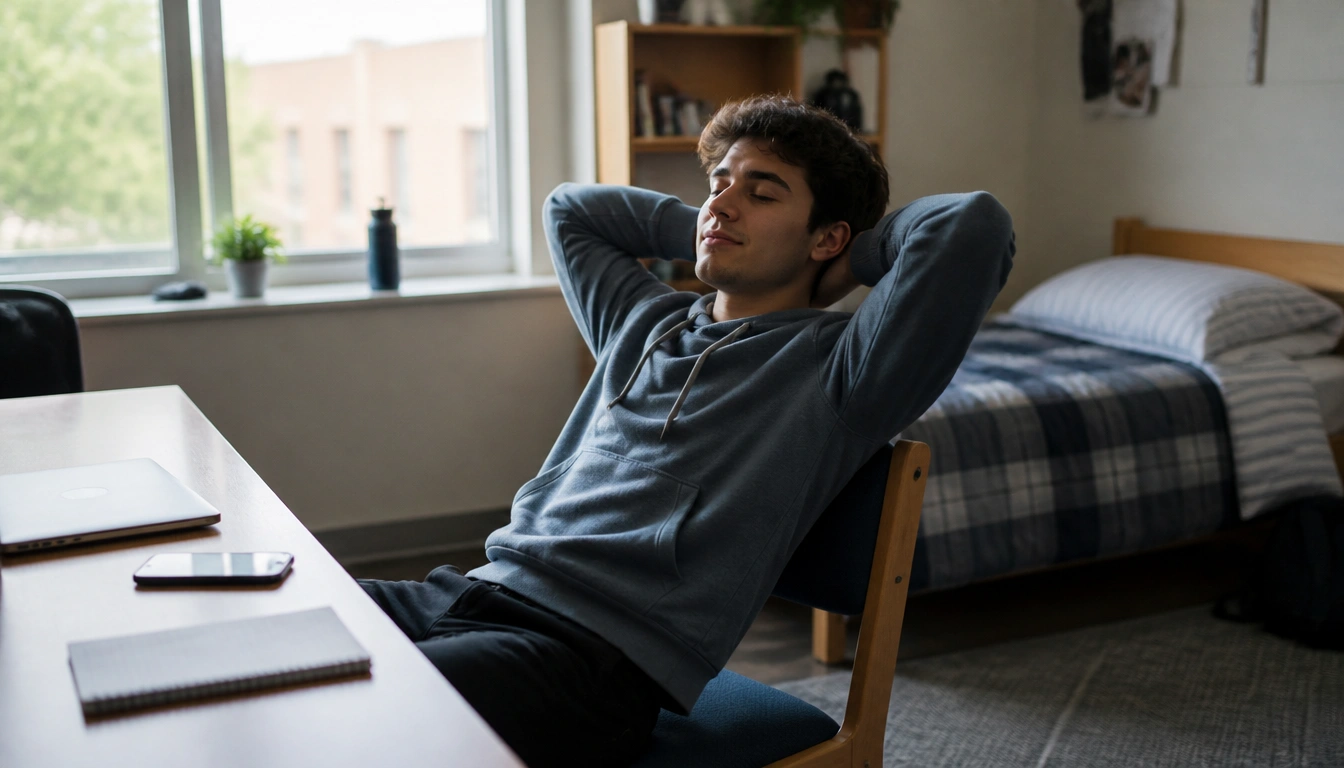
Yes—college students can and often should take a rest day without guilt. Rest is not laziness or a reward you must earn; it is part of maintaining attention, memory, emotional regulation, and overall mental health. If you are feeling chronically exhausted, mentally foggy, emotionally flat, or unable to focus, a rest day may be necessary. If symptoms are persistent or severe, rest alone may not be enough and professional support may be appropriate.
Key Takeaways
- Rest helps protect performance; it is maintenance, not a moral failure or a sign that you are falling behind.
- A useful rest day usually includes psychological detachment: stepping away from school tasks, not just sitting near your laptop.
- Passive recovery and active recovery help in different ways; the best choice depends on how tired, anxious, or overstimulated you feel.
- Students in first year, demanding majors, internships, or jobs often need firmer boundaries because recovery time gets squeezed.
- If hopelessness, anhedonia, severe anxiety, or sleep problems keep showing up, a break may not be enough on its own.
Why rest guilt feels so intense in college
Rest guilt in college usually comes from more than a crowded calendar. Many students absorb the idea that being busy proves they are disciplined, ambitious, or worth something. When that belief is strong, a rest day can feel like a threat to identity, not just a pause in studying. That is why taking a break may trigger anxiety even when your body and mind are clearly asking for one.
College culture can make this worse. Deadlines are public, comparison is constant, and many students are balancing classes with jobs, internships, commuting, family responsibilities, and social pressure. In that setting, “doing nothing” can feel unsafe, even when the real problem is that your nervous system has been in high gear for too long. Rest guilt is often a sign that you have been treating output as the measure of your value.
Reframing rest helps. A rest day is not a prize for perfect productivity; it is part of keeping your system functional. That shift matters because guilt can keep stress active even when you are technically off the clock.
What burnout looks like in students
The World Health Organization recognizes burnout as a result of chronic stress that has not been managed successfully. In student life, that can show up as emotional exhaustion, growing cynicism toward school, and a drop in your ability to think clearly or care about tasks that normally matter to you. Over time, constant stress can make it harder to concentrate, retrieve information, regulate emotions, and stay motivated.
From a stress-response perspective, the problem is not one hard week. The problem is repeated activation without enough recovery. If your mind is always preparing for the next quiz, shift, paper, or lab, the brain never fully shifts into recovery mode. That is when students may start noticing brain fog, shorter attention span, irritability, more mistakes, or the feeling that everything takes more effort than it should.
Public health and psychological organizations consistently treat rest and recovery as protective. The American Psychological Association has emphasized regular breaks and time away from demands as part of resilience and burnout prevention. The CDC also recommends deliberate time to unwind, step away from digital stressors, and use calming movement or social connection to reduce chronic stress. None of that means every tired day requires a full reset. It does mean recovery should be built into student life, not added only after you crash.
What psychological detachment looks like in real student life
Psychological detachment means your mind is actually off school, not just physically away from a desk. You are not checking the learning platform between errands, mentally rehearsing an essay while eating, or scrolling class group chats during your “break.” Detachment matters because the brain’s executive systems need a clean pause from task demands before they can recover efficiently.
In practical terms, detachment can look simple. You shut the laptop, silence class notifications, put your notes out of sight, and choose an activity that does not ask you to perform academically. You do not need a perfect vacation mood for this to count. The goal is a clear boundary between study mode and recovery mode.
This is especially important for students whose stress shows up as constant mental checking. If you keep telling yourself you should be studying, even while resting, your body may be off but your stress response is still partially engaged. That is one reason guilt can make rest feel strangely ineffective.
How to tell the difference between rest and avoidance
Not every break feels the same. A helpful rest day usually lowers stress after the initial discomfort of stepping away. Avoidance, on the other hand, often brings temporary relief followed by more panic, more self-criticism, or a bigger pile of work that makes the next day feel worse.
Ask yourself a few questions. Am I stepping away because I am depleted, or because I am trying to outrun a task I have not started? Do I feel more settled after a break, or more scattered and guilty? Is this a planned recovery period, or am I repeatedly postponing work because the task feels emotionally overwhelming?
The distinction is not about being strict with yourself. It is about matching the response to the problem. If you are exhausted, a rest day may be the right choice. If you are avoiding because a task feels confusing, breaking the assignment into a smaller first step may help more than a full day off. Sometimes you need both: a short recovery window and a plan for re-entry.
A practical rest-day framework for college students
A good rest day works best when it has shape. Without some structure, students often spend the day half-resting and half-worrying, which can feel worse than either true work or true recovery. Start by deciding when rest begins and ends. That might mean closing your school apps after a certain hour, putting your laptop in a drawer, or moving your notes to a different room.
Next, set digital boundaries. Mute class chats, turn off nonessential notifications, and take a break from feeds that make you compare your progress to everyone else’s. The CDC’s stress guidance supports stepping away from digital overload as part of unwinding. You do not need to disappear from every responsibility, but you do need fewer interruptions.
Then choose low-pressure activities. Good options often include a shower, a walk, simple cooking, stretching, light reading, music, a low-stakes show, journaling, or sitting outside. The activity should feel restorative, not like another assignment. If you notice yourself turning the rest day into a “catch up on everything” day, scale it back. The point is to reduce pressure, not replace one form of performance with another.
Passive recovery vs. active recovery
Passive recovery is the most straightforward kind of rest. It includes sleep, naps, lying down, quiet breathing, or simply being still. This type of recovery is often the best choice when you are physically drained, sleep deprived, overstimulated, or emotionally flat. It gives your body a chance to downshift.
Active recovery is different. It uses gentle activities that still engage your attention but do not demand academic performance. That might mean cooking, walking, drawing, cleaning a small area, gardening, or listening to music. Active recovery can help when your energy is low but total stillness makes you more anxious or restless.
The best choice depends on your state. If you feel wiped out, passive recovery may help more. If you feel edgy, trapped, or mentally noisy, a low-demand activity may calm you better than lying in bed and spiraling. Many students do best with a mix: some quiet time, then a small enjoyable activity, then more rest if needed.
| Type of recovery | Best when | Examples |
|---|---|---|
| Passive | You feel physically depleted, sleepy, or overstimulated | Nap, sleep, lie down, breathe quietly, do nothing for a while |
| Active | You feel anxious, restless, or stuck in your head | Walk, cook, stretch, listen to music, tidy, hobby time |
Resting when your schedule feels impossible
Some students have less flexibility than others. First-year students may be adjusting to new independence, new expectations, and new social pressure all at once. STEM, pre-med, and nursing students may face compressed timelines, labs, clinical demands, or heavy memorization loads. Students with part-time jobs or internships may have to protect rest more deliberately because there is less empty space in the week.
In those situations, rest may need to be smaller and more intentional instead of waiting for a free day that never arrives. A 30-minute recovery window can still matter. So can deciding in advance which blocks are nonnegotiable, such as sleep, meals, or one real break after a difficult class or shift.
Students who commute or work between classes may need to think in transitions rather than whole days. Even a short buffer between obligations can help your mind shift out of constant task mode. The goal is not to create a perfect schedule. It is to avoid running on stress alone.
Rest day strategies for ADHD, autism, and executive dysfunction
Flexible routines often work better than rigid time-blocking for students with ADHD, autism, or executive dysfunction. A strict plan can feel realistic in the morning and impossible by noon, which turns a rest day into another source of failure. Instead of trying to control every hour, build a loose sequence with low-demand transitions.
For example, you might use “before” and “after” anchors: after breakfast, I will put my laptop away; after my walk, I will choose one calming activity. Visual reminders, alarms, or checklists can help, but they should support the day rather than police it. If starting is the hardest part, make the first step tiny and concrete.
Neurodivergent-friendly rest also works better when it reduces decision fatigue. Pick a few default recovery options ahead of time so you do not have to invent a rest day while already tired. If you feel guilty when resting, remind yourself that flexibility is not a lack of discipline. For many students, it is the structure that actually makes recovery possible.
When rest is not enough
A rest day can help with ordinary academic fatigue, but it cannot fix every mental health problem. If you keep feeling hopeless, unable to enjoy anything, intensely anxious, or unable to sleep even after time off, the issue may be bigger than temporary stress. Ongoing fatigue, major loss of interest, panic, or emotional numbness can point to depression, anxiety, or clinical burnout that deserves more support.
That is when campus counseling, a primary care clinician, or another mental health professional may be the right next step. Seeking help does not mean you failed at self-care. It means the pattern has moved beyond what a rest day can solve on its own. The earlier you ask for help, the easier it can be to interrupt the cycle.
Common mistakes can also keep stress high. These include spending the whole day scrolling while feeling guilty, checking school email every few minutes, using alcohol or other substances to force numbness, sleeping so long that your schedule gets more chaotic, or calling a day a rest day while secretly trying to catch up on everything. If a break leaves you more activated instead of calmer, adjust the plan or ask for support.
Frequently Asked Questions
Is it normal to feel guilty when I take a day off from studying?
Yes. Many college students link busyness with worth, so rest can trigger guilt even when it is needed. That guilt does not mean you are doing something wrong. It often means you have been under enough pressure that slowing down feels unfamiliar.
What does psychological detachment mean for students, and why does it matter?
Psychological detachment means stepping away from school mentally as well as physically. You stop checking assignments, messages, and task thoughts for a while. Research on stress recovery suggests that a clean mental break helps restore attention and energy better than half-working all day.
How can I rest if I have ADHD, executive dysfunction, or trouble sticking to routines?
Use flexible, low-pressure structure instead of strict time blocks. Choose a few simple anchors, like putting your laptop away after breakfast or taking a walk before dinner. Reduce decisions by picking a short list of default rest activities ahead of time.
What should I do on a rest day so it actually helps instead of making me more anxious?
Try a mix of clear boundaries and calming activities. Silence school notifications, step away from classwork, and choose rest that matches your energy: sleep, a walk, cooking, music, or a hobby. If total inactivity makes you anxious, use gentle active recovery instead.
How do I know whether I need a rest day or professional mental health support?
If you are simply depleted, a rest day may help. If you have persistent hopelessness, loss of pleasure, severe anxiety, major sleep disruption, or symptoms that keep returning, professional support is a better next step. Rest can help, but it is not a substitute for care when symptoms are ongoing.
The Bottom Line
A rest day in college is not a luxury and not a reward you have to earn. It is one of the ways you protect attention, mood, and long-term performance when school stress starts to accumulate.
The most effective rest usually includes a real break from coursework, some form of digital boundary, and a recovery style that matches how you feel. If your schedule is tight, make the break smaller but more intentional rather than waiting for a perfect day.
If guilt stays high, or if exhaustion is joined by hopelessness, anhedonia, severe anxiety, or sleep problems, do not try to handle it by willpower alone. Rest can help, but counseling or medical support may be the more appropriate next step.
Medical disclaimer
Medical disclaimer: This content is for educational and informational purposes only and is not a substitute for professional medical advice, diagnosis, or treatment. Dietary needs and supplement suitability vary by individual.
Sources
- Centers for Disease Control and Prevention (CDC) — cdc.gov. Accessed November 2026.
- Centers for Disease Control and Prevention (CDC) — cdc.gov. Accessed November 2026.
- Academic / Medical Research Institution — apa.org. Accessed November 2026.
- Academic Research Institution — uci.edu. Accessed November 2026.
