
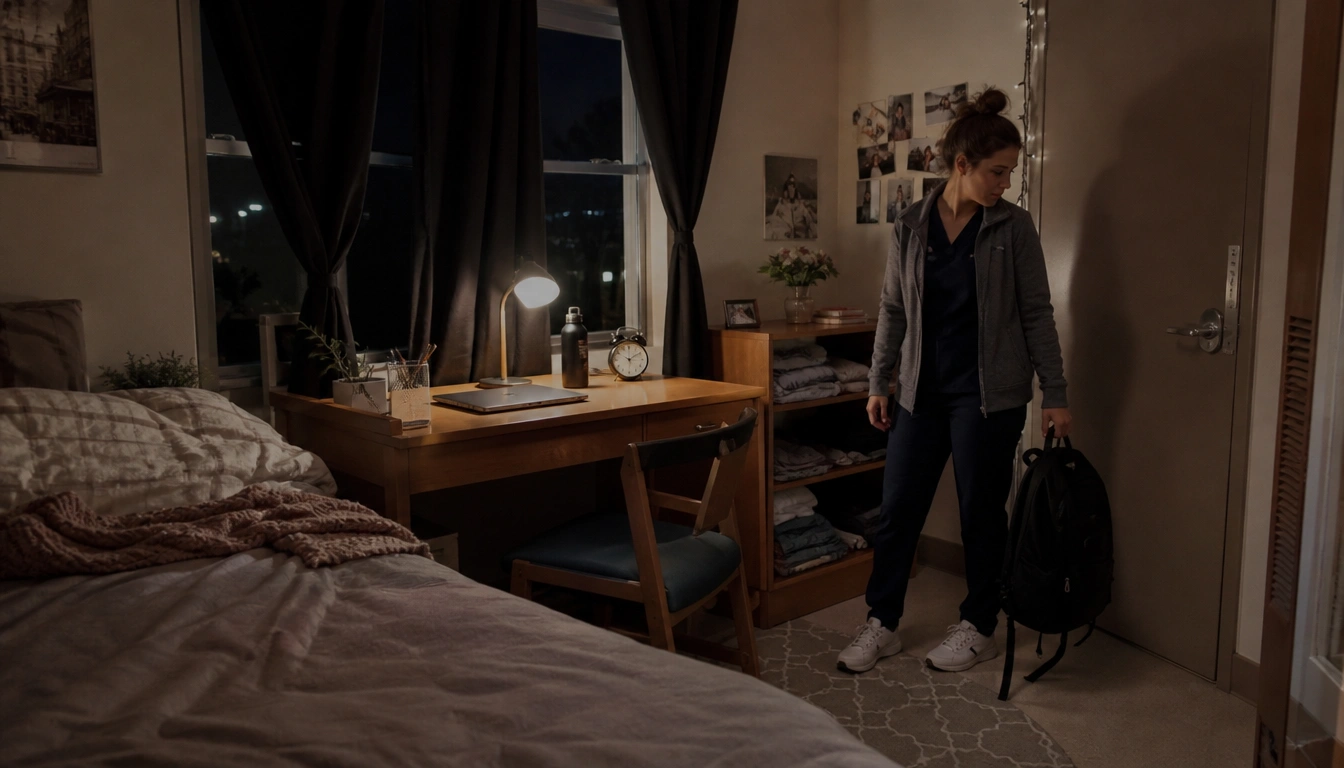
A college student can stay healthier with changing work shifts by protecting total sleep, using a flexible wind-down routine, and managing light, naps, caffeine, and commute safety around each shift. The goal is not a perfect bedtime every night. It is a workable pattern that keeps you close to 7 to 9 hours of sleep per 24 hours, reduces circadian misalignment, and helps you recover without wrecking class performance.
Key Takeaways
- Standard sleep hygiene is too rigid for many student shift workers; a flexible routine works better than trying to sleep at the same time every day.
- On days off, a compromise schedule usually works better than fully flipping back to a daytime routine and creating social jet lag.
- Bright light can help during the first half of a night shift, while reducing light after the shift can make it easier to sleep afterward.
- A 20-minute bridge nap or a 90-minute pre-shift nap can help when class, homework, and work leave little recovery time.
- Caffeine, energy drinks, alcohol, and drowsy driving can turn sleep debt into a safety problem, not just a fatigue problem.
Why shift changes hit college students harder
Changing shifts do more than make you feel tired. They can push your sleep, class schedule, study time, and social life in different directions at once. The result is circadian misalignment, which means your body clock and your actual schedule are no longer lined up. According to the CDC and sleep medicine experts, healthy adults generally need 7 to 9 hours of sleep in 24 hours, but shift work often makes that hard to reach consistently.
For college students, the impact shows up in attention, reaction time, working memory, and mood. That can mean rereading the same page, forgetting lecture details, making careless mistakes on assignments, or feeling more irritable than usual. The problem is not just one short night. Repeated schedule changes can create a sleep debt that adds up across the week, especially when you also have exams, commuting, and late-night study sessions.
A useful mindset shift is this: your routine does not have to look like a standard 10 p.m. to 6 a.m. sleep schedule to be healthy. It has to be consistent enough to protect enough sleep and predictable enough that your body can adapt.
A flexible routine for evening, night, and rotating shifts
Instead of one perfect routine, build a routine that matches the shift you actually work. For evening shifts, the main challenge is staying alert through the end of work without sacrificing sleep after you get home. For night shifts, the challenge is staying awake during the biological low point and then falling asleep in daylight. For rotating schedules, the challenge is constant readjustment, which is why a stable core routine matters more than trying to reset from scratch every time.
Think in terms of a before-work, during-work, and after-work sequence. Before an evening or night shift, eat a normal meal, get light exposure, and use a short wind-down routine so you are not rushing from class straight into work. During the shift, use light, movement, hydration, and planned food breaks to stay functional. After the shift, reduce stimulation quickly so your body gets a clear signal that sleep is next.
If your chronotype leans later, you may tolerate evening work better than morning work. If you are naturally an early sleeper and early riser, night shifts may take more effort. That is not a weakness; it is just a clue about which shift patterns will be harder during the semester.
Build a Bedtime A, B, and C routine that fits your week
A flexible bedtime system is often more realistic than one fixed bedtime. Use a Bedtime A, B, and C plan so your body gets the same signals even when the clock changes.
Bedtime A: school nights
This is your usual wind-down for nights when you are sleeping before an early class or after a normal evening. Keep it simple and repeatable: dim lights, finish caffeine earlier in the day, close the laptop, wash up, and do the same short sequence of quiet activities each night.
Bedtime B: post-shift days
This version is for the day you get home after late work. The goal is to shorten the gap between arriving home and sleeping. Use the same sequence every time, but compress it: light snack if needed, brush teeth, shower or change clothes, dark room, phone on do-not-disturb, sleep.
Bedtime C: days off
This is your compromise routine for days when you are off work but still need to function for classes, errands, and friends. Try not to fully flip to a normal daytime schedule if that means you will have to swing right back again in a day or two. A middle-ground sleep window reduces social jet lag and usually feels less punishing than resetting completely. For example, keep part of your sleep timing anchored instead of shifting everything by many hours.
The point is not perfection. It is reducing the size of the adjustment your body has to make every few days.
Use light and naps as tools, not accidents
Light is one of the strongest cues for the body clock. During the first half of a night shift, brighter light can help promote alertness and reduce the feeling that your body wants to shut down. This matters most when you are entering the shift or hitting the earlier hours when attention tends to fade.
Later in the shift, especially on the commute home, reduce light exposure when possible so your brain is less likely to interpret morning light as a cue to stay awake. That can mean dimmer screen use after work, avoiding unnecessary bright light, and using dark glasses carefully if they do not make driving less safe. If you are already struggling to stay awake, do not let light management distract from safety.
Napping is often the best practical backup for students. A 20-minute bridge nap can help you get through a gap between class and work without leaving you too groggy. A 90-minute pre-shift nap can be useful before an evening or night shift because it gives you a fuller rest period before you start. After a shift, a short recovery nap may help if you are too wired to sleep a full block right away, but long unplanned naps can make the next sleep period harder.
Eat, hydrate, and sleep like you live in shared housing
Food and fluids do not replace sleep, but they can make your schedule easier to manage. Regular meals help give your body time cues, and that matters when your clock is already being pushed around by work and class. A balanced meal before a shift is usually better than relying on vending machine snacks alone. During long shifts, small planned snacks can help prevent the crash that leads people to overuse caffeine.
Caffeine can be useful, but timing matters. If you are trying to sleep after a shift, avoid caffeine too close to your planned sleep period. The CDC and sleep experts commonly advise leaving several hours between caffeine and sleep, and a practical student rule is to stop well before your main sleep block. Energy drinks deserve extra caution because they can make it easy to exceed what your body handles comfortably, especially if you are also sleep deprived.
Your sleep environment matters even in a dorm or shared apartment. Use blackout curtains, a sleep mask, earplugs, a white noise machine, or a fan if needed. Keep your room cool if possible and try to make it clear to roommates that your sleep window is not optional. If you are sleeping at odd hours, the room needs to function more like a dark, quiet bunker than a normal shared living space.
Protect class performance without trying to do everything at once
Shift workers often try to cram studying into whatever hours are left, but not all study times are equal. High-focus work, such as problem sets, dense reading, labs, or writing that requires judgment, is usually best done after you have slept and before your fatigue peaks. Try to schedule your hardest work during your best alert window, not in the last stretch of a long shift or after an overnight work block.
Use low-demand tasks for low-energy periods. That can mean reviewing flashcards, organizing notes, or doing easier reading when you are tired, while saving the material that needs deep concentration for a better time. If you have a night shift, be cautious about trying to complete major assignments immediately afterward. The circadian trough, often in the early morning hours, is a poor time for careful work and increases the risk of mistakes.
If your schedule is unstable, use short planning blocks. Before the week starts, identify which days will be best for serious studying, which days will be for maintenance work, and which days should be protected for sleep recovery. That planning step can prevent the common student pattern of missing sleep first and then trying to recover by sacrificing academics later.
Watch for safety red flags before they become a bigger problem
The biggest safety issue for shift-working students is drowsy driving. If you have heavy eyelids, drifting between lanes, missed exits, or brief moments where you stop remembering the road, do not drive. Get a ride, use transit, wait before leaving, or ask for another safe option. Sleepy driving is not a willpower problem; it is a risk problem.
Be careful with alcohol, nicotine, and heavy stimulant use. Alcohol may seem like it helps you fall asleep, but it can disrupt restorative sleep and leave you more tired the next day. Nicotine can also interfere with sleep quality. Energy drinks and repeated caffeine doses can cause jitters, a racing heart, and worse sleep later, which creates a cycle that is hard to break during exam season.
Persistent fatigue deserves more attention if it does not improve when your schedule improves. If you have ongoing insomnia, excessive daytime sleepiness, frequent trouble staying awake in class, mood changes, or symptoms that sound like shift work disorder, a campus clinic or sleep specialist can help. They can check for other causes too, including anxiety, depression, anemia, thyroid problems, or sleep disorders that are not explained by your schedule alone.
When to get help from a campus clinic or sleep specialist
Consider making an appointment if your fatigue is lasting for weeks, if you are repeatedly missing class because you cannot wake up, if you are falling asleep unintentionally, or if your grades and mood are slipping even after you try to improve your sleep routine. That is especially true if you are using caffeine heavily just to get through the day or if your sleep is still poor on days when you have more control over your schedule.
A clinician can help you sort out whether you are dealing with ordinary sleep loss, a schedule problem, or a condition that needs more specific treatment. For some students, the fix is better scheduling and light timing. For others, it is a deeper evaluation. Getting help early is often easier than waiting until burnout, poor attendance, or unsafe driving becomes the main issue.
Frequently Asked Questions
How much sleep should a college student working shifts aim for each day?
Most healthy adults, including college students, should try to get 7 to 9 hours of sleep in a 24-hour period. If one solid block is not realistic, a split schedule with a core sleep period plus a planned nap is often better than repeatedly sleeping too little.
Should I keep the same sleep schedule on days off from work?
Usually no, not if it means fully flipping back and forth. A compromise schedule is often easier on your body than constant re-setting. Keeping part of your sleep timing stable can reduce social jet lag and make the next shift easier.
What is the best way to use light exposure during a night shift?
Use brighter light during the first half of the shift to help stay alert, then reduce bright light after the shift, especially on the way home, so your body gets a cue to sleep. Be careful not to trade light management for unsafe driving.
How should I nap before or after a shift without ruining my sleep later?
A 20-minute nap can bridge a short gap without much grogginess, while a 90-minute nap before a shift can provide fuller recovery. Try to keep naps purposeful and not so long or so late that they steal sleep from your main rest period.
When is shift work affecting my health enough that I should see a doctor?
If fatigue, insomnia, or sleepiness keeps affecting class, work, mood, or driving, it is worth talking to a campus clinic or sleep specialist. Seek help sooner if you are nodding off unintentionally, relying heavily on stimulants, or having symptoms that persist even when you try to protect sleep.
The Bottom Line
A healthy routine for changing shifts is less about one perfect bedtime and more about protecting total sleep, limiting schedule swings, and using light, naps, and caffeine on purpose. The more predictable your cues are, the easier it is for your body to adapt.
For college students, the most useful habits are usually the practical ones: a repeatable wind-down, a compromise schedule on days off, a safe commute plan after late shifts, and study blocks that match your best alert hours. If fatigue keeps taking over despite those changes, get medical help rather than trying to push through it.
Medical disclaimer
Medical disclaimer: This content is for educational and informational purposes only and is not a substitute for professional medical advice, diagnosis, or treatment. Dietary needs and supplement suitability vary by individual.
Sources
- Centers for Disease Control and Prevention (CDC) — cdc.gov. Accessed November 2026.
- National Institutes of Health (NIH) — nih.gov. Accessed November 2026.
- Academic Research Institution — rochester.edu. Accessed November 2026.
- Academic Research Institution — utah.edu. Accessed November 2026.
- Academic Research Institution — sdstate.edu. Accessed November 2026.
- Academic Research Institution — ncsu.edu. Accessed November 2026.
