
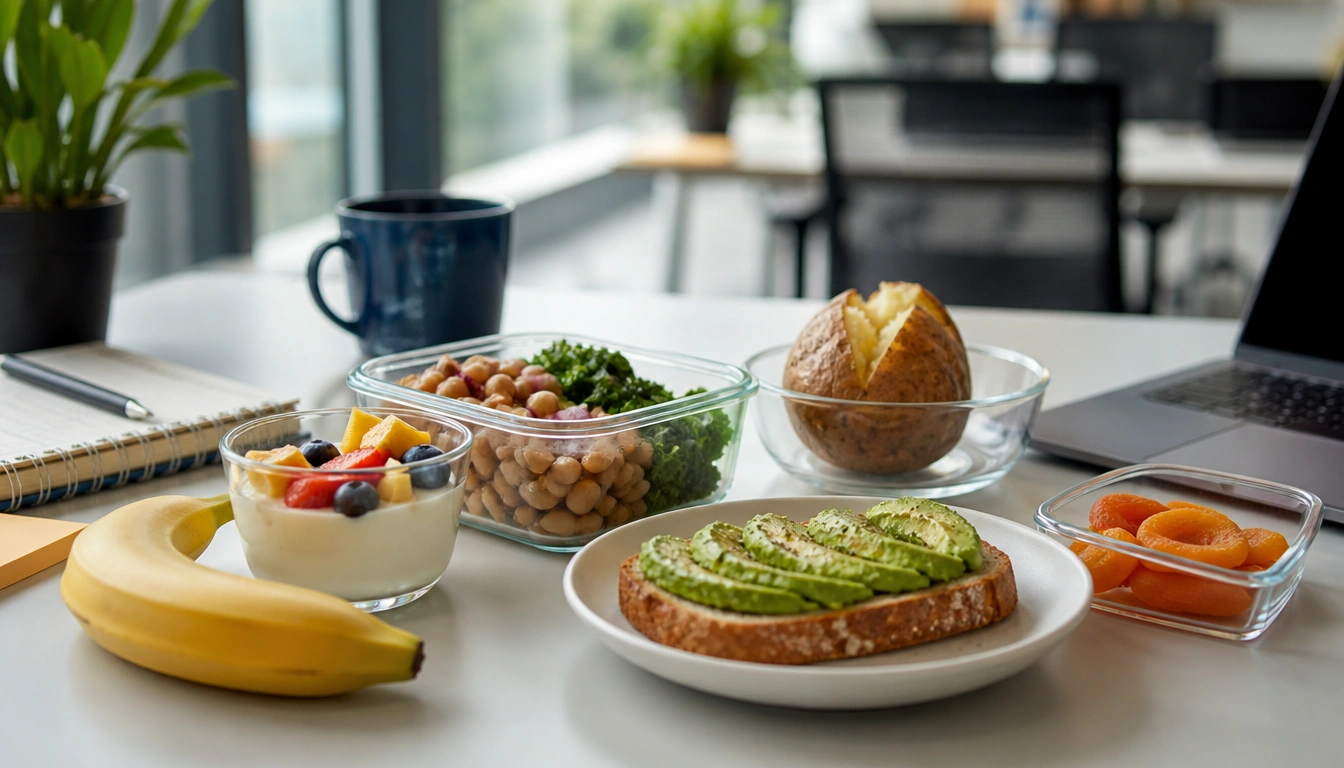
The easiest everyday foods with potassium are simple, portable options like bananas, yogurt, beans, potatoes, avocado, dried fruit, and canned fish. For most healthy adults, food is the safest way to improve intake, and it works best when you think in terms of overall eating patterns—not potassium alone. If you have kidney disease or take certain medications, ask a clinician before increasing potassium or using salt substitutes.
Key Takeaways
- Potassium is easier to raise with food than with supplements for most healthy adults, especially through snacks and quick assembly meals.
- The sodium-to-potassium balance in your overall diet matters more for blood pressure than chasing potassium in isolation.
- Desk-friendly potassium sources include bananas, yogurt, dried apricots, raisins, nuts, and shelf-stable beans.
- Fast lunches and dinners can still be potassium-rich with potatoes, lentils, salmon, avocado, and microwavable vegetables.
- Potassium supplements and potassium-based salt substitutes can be risky for people with kidney disease or certain prescriptions.
- Men generally need more potassium than women, and pregnancy or breastfeeding can slightly raise needs.
Workday-friendly potassium: why it matters and what this guide covers
Potassium is an essential electrolyte that helps nerves fire, muscles contract, and blood vessels relax. For busy professionals, the practical value is that potassium can support a diet pattern that is more heart-friendly and less dependent on highly processed foods. The challenge is not that potassium is hard to find; it is that many office routines are built around convenience foods that are usually higher in sodium and lower in potassium.
This guide focuses on everyday foods with potassium that fit real schedules: desk snacks, breakfast foods you can eat quickly, lunch add-ins, and dinners that come together with little cooking. It also covers how potassium works with sodium, when food is enough, and when medical caution matters. If you only remember one planning idea, make it this: use potassium-rich foods to improve the balance of your whole day, not just one meal.
Daily potassium targets for healthy adults
According to the National Academies, as summarized by the NIH Office of Dietary Supplements, the Adequate Intake for healthy adults is 3,400 mg per day for men age 19 and older and 2,600 mg per day for women age 19 and older. These are intake goals, not upper limits, and they are meant to support normal health when kidneys are functioning well.
Pregnancy and breastfeeding can raise potassium needs slightly, and national guidance gives somewhat higher targets for those life stages. The exact amount can vary with age and individual circumstances, so it is better to treat those numbers as planning guides rather than a reason to self-prescribe supplements. If you are pregnant, breastfeeding, or managing another condition, your clinician or registered dietitian can help interpret the target in context.
Most people do not hit these intakes by accident. That is why small, repeatable choices matter: adding a fruit at breakfast, a bean-based lunch topping, or a potato at dinner can make more difference than trying to build a perfect meal once in a while.
Best everyday potassium foods for low-prep routines
For office life, the best potassium foods are the ones you can keep on hand, eat quickly, and combine without much cleanup. Potassium-rich foods do not have to be elaborate, and they do not need a special recipe to count.
Desk snacks and commute-safe options
Bananas are the classic portable choice because they travel well and need no preparation. Dried apricots, raisins, and prunes are also convenient, though portions matter because dried fruit is easy to overeat. Unsalted nuts add some potassium, too, even if they are not the richest source. If your office has refrigeration, single-serve yogurt cups are another easy option with protein plus potassium.
Breakfast and lunch add-ins
For breakfast, plain yogurt with fruit is a practical no-cook option. Whole-grain toast with avocado works well when you need something fast but more filling than a pastry. At lunch, add beans, lentils, tomato, avocado, or a side of fruit to a salad, grain bowl, or wrap. Canned beans and lentils are especially useful because they are ready after rinsing.
Quick dinner bases
Microwaved potatoes and sweet potatoes are among the highest-potassium convenience foods. Add a can of beans, a pouch of tuna or salmon, or a rotisserie chicken plus a microwaveable vegetable bag and you have a balanced dinner without a long prep session. Frozen spinach, edamame, and mixed vegetables also help round out the day.
A simple food-first day might look like this: breakfast of yogurt with a banana, lunch of a salad topped with beans and avocado, an afternoon snack of dried apricots, and dinner of a microwaved potato with salmon and vegetables. You do not need every meal to be high in potassium; the goal is a steady pattern that brings your daily intake up in realistic steps.
| Meal moment | Easy potassium options | Why it works for busy schedules |
|---|---|---|
| Desk snack | Banana, dried apricots, raisins, yogurt | Portable, no cooking, easy to store |
| Breakfast | Yogurt and fruit, avocado toast | Fast, filling, minimal cleanup |
| Lunch | Beans, lentils, avocado, tomatoes, fruit | Easy to add to takeout or packed meals |
| Quick dinner | Potato, sweet potato, salmon, canned beans | Microwave-friendly and satisfying |
Why sodium-to-potassium balance matters more than potassium alone
For blood pressure and cardiovascular support, the ratio of sodium to potassium matters more than treating potassium as a stand-alone fix. Potassium helps the body excrete excess sodium and supports healthier blood vessel function, while sodium-heavy eating patterns can push blood pressure in the opposite direction. That is why a high-potassium diet works best when it also helps lower excess sodium.
This is especially relevant for professionals who rely on restaurant lunches, packaged snacks, deli meats, or instant meals. A meal can contain some potassium and still be a poor choice if sodium is very high. The practical takeaway is to pair potassium-rich foods with lower-sodium staples: choose plain yogurt instead of sweetened flavored varieties, rinse canned beans, use frozen vegetables without heavy sauce, and watch salty condiments. According to the American Heart Association and NIH guidance, the broader eating pattern matters more than one nutrient alone.
You do not need perfection. A more favorable balance often comes from small substitutions repeated across the week, not from one “clean” meal that gets canceled out by the rest of the day.
When food is enough and when to be cautious
For most healthy adults, food is enough. Potassium from whole foods is absorbed in a way that usually fits the body’s normal regulation, and it comes packaged with fiber, fluid, and other nutrients that supplements do not provide. That makes food the first choice for anyone trying to improve intake safely.
Potassium supplements are different. They can deliver a concentrated dose that may not be appropriate without medical guidance, especially if you have kidney problems or take medicines that reduce potassium excretion. Potassium-based salt substitutes also need caution because they can raise potassium intake quickly without feeling like a “supplement.”
Some medications can increase potassium levels, including certain blood pressure medicines such as ACE inhibitors and ARBs, potassium-sparing diuretics, and some anti-inflammatory drugs. If you use one of these drugs, ask a clinician or pharmacist before making a major dietary shift. The same caution applies if you have ever been told your potassium is high or your kidney function is reduced.
Who should not increase potassium without medical advice
People with chronic kidney disease, impaired renal function, or a history of hyperkalemia should not start a high-potassium plan on their own. Kidneys remove excess potassium, so when kidney function is reduced, even normal foods can sometimes add up too quickly. The risk is higher if you also use medications that affect potassium handling.
This is not a reason to avoid potassium-rich foods automatically, but it is a reason to individualize the plan. Someone with kidney disease may need portion limits, food swaps, or lab monitoring that would not apply to a healthy adult. The same is true for people with heart failure, diabetes with kidney involvement, or complex medication regimens. If you are unsure, do not guess; get guidance from a clinician or renal dietitian before making changes.
Shopping and prep shortcuts for busy professionals
The easiest way to eat more potassium at work is to stock foods that are already prepared or need only one step. Shelf-stable staples such as canned beans, canned fish, fruit cups in juice, no-salt-added vegetables, nut butter, dried fruit, and plain oats can live in a desk drawer or office kitchen. Refrigerator staples can include yogurt, hummus, avocado, prewashed greens, and microwavable grain pouches.
To keep prep realistic, use “assembly meals.” For breakfast, combine yogurt, fruit, and oats. For lunch, build a grain bowl from a microwavable base, beans, and a vegetable bag. For dinner, pair a potato or sweet potato with a protein and a vegetable. If you commute, pack a banana, a resealable bag of dried apricots, or a single-serve shelf-stable snack so you are not dependent on vending machines.
Microwaveable foods are especially useful. A baked potato or sweet potato takes minutes, frozen vegetables steam quickly, and canned beans can be rinsed and added to almost anything. These shortcuts work because they lower the effort required to choose better food on the days when time is tight.
Common mistakes to avoid when raising potassium quickly
One common mistake is assuming that potassium alone will fix a diet that is still very high in sodium. Another is using salt substitutes without checking whether they contain potassium chloride, which can be unsafe for some people. A third is relying on supplements before making easier food changes that are safer and more sustainable.
People also sometimes overdo dried fruit or fruit juice because it is “healthy,” then miss the benefit of more balanced meals. Dried fruit can be useful, but it is better as a portioned snack than as an all-day habit. Another mistake is ignoring the office environment: if the only available foods are salty packaged snacks, it helps to bring your own shelf-stable options rather than hoping willpower wins the day.
Finally, do not assume that exercise automatically means you need a potassium supplement. Most active people can meet needs through food unless a clinician identifies a specific problem. If you sweat heavily and eat very little, the better response is usually to improve overall meal quality and hydration, not to self-treat with high-dose minerals.
Frequently Asked Questions
How much potassium do healthy adults need each day?
According to the National Academies and NIH, healthy adult men age 19 and older have an Adequate Intake of 3,400 mg per day, and healthy adult women age 19 and older have an Adequate Intake of 2,600 mg per day. Pregnancy and breastfeeding may require slightly higher intakes.
Which grab-and-go foods provide the most potassium with minimal prep?
Good grab-and-go choices include bananas, yogurt, dried apricots, raisins, prunes, canned beans, avocado, microwavable potatoes, and some canned fish. The best option is the one you can keep available and actually eat consistently.
How can I add potassium to breakfast, lunch, and dinner without cooking much?
At breakfast, use yogurt with fruit or avocado toast. At lunch, add beans, lentils, tomato, or avocado to a salad or wrap. At dinner, use a microwaved potato or sweet potato with a protein and frozen vegetables.
What is the sodium-to-potassium balance and why does it matter for blood pressure?
Blood pressure is influenced by both minerals together. Potassium helps counter sodium’s effects by supporting sodium excretion and healthier vessel function, so a more favorable sodium-to-potassium balance is generally better than focusing on potassium alone.
Who should be careful about increasing potassium intake or using salt substitutes?
People with kidney disease, impaired kidney function, hyperkalemia, or medications such as ACE inhibitors, ARBs, potassium-sparing diuretics, or some NSAIDs should get medical advice first. Potassium-based salt substitutes can also raise intake quickly.
The Bottom Line
The easiest everyday foods with potassium are the ones that fit a real work schedule: bananas, yogurt, beans, potatoes, avocado, dried fruit, and shelf-stable or microwavable staples. If you build a few of these into your usual breakfast, lunch, snacks, and dinner, potassium intake becomes much easier without major meal prep.
For most healthy adults, food-first is the safest and most practical approach. If you have kidney disease, take certain medications, or are considering a potassium supplement or salt substitute, talk with a clinician before changing your intake in a big way.
Medical disclaimer
Medical disclaimer: This content is for educational and informational purposes only and is not a substitute for professional medical advice, diagnosis, or treatment. Dietary needs and supplement suitability vary by individual.
Sources
- National Institutes of Health (NIH) — nih.gov. Accessed November 2026.
- National Institutes of Health (NIH) — nih.gov. Accessed November 2026.
- U.S. Government / Health Authority — medlineplus.gov. Accessed November 2026.
- Academic / Medical Research Institution — heart.org. Accessed November 2026.
