
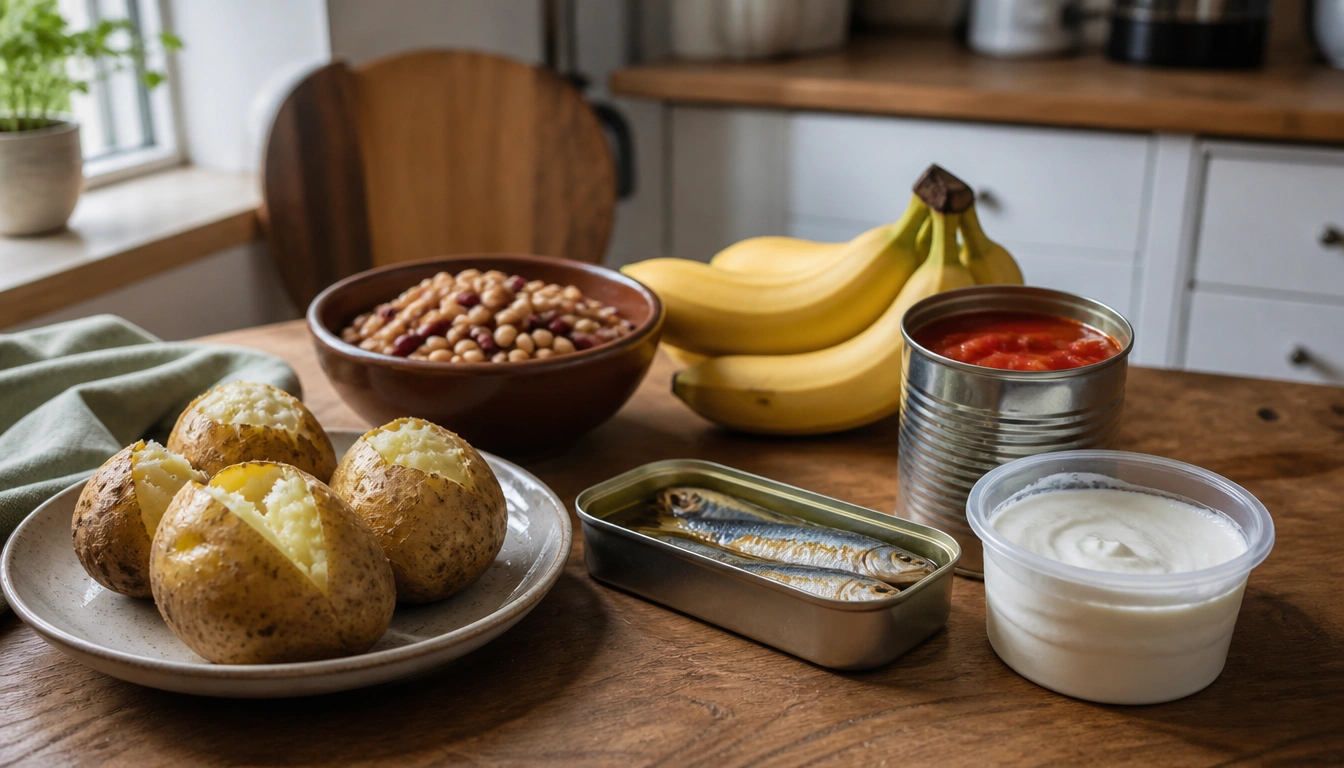
The cheapest everyday potassium foods are usually potatoes and sweet potatoes with the skin on, beans and lentils, bananas, tomato products, canned fish, and plain yogurt. The best budget strategy is to buy store brands, use dried or frozen foods when they cost less, keep potatoes unpeeled, and choose lower-sodium packaged options so you get more potassium without spending more.
Key Takeaways
- Potatoes, beans, bananas, tomato products, canned fish, and plain yogurt are practical budget foods that can add meaningful potassium.
- Whole foods are usually safer than potassium supplements or potassium-based salt substitutes for most people.
- Dried beans, frozen vegetables, and store-brand canned foods can lower cost and waste without giving up much potassium.
- If you have kidney disease, heart failure, or take certain blood pressure medicines, ask a clinician before intentionally increasing potassium.
- Lower-sodium packaged foods help you raise potassium without undermining blood pressure goals.
Why potassium matters
Potassium is an essential mineral and electrolyte. Your body uses it to help control fluid balance, support nerve signaling, and make muscles contract normally, including the heart muscle. The National Institutes of Health also notes that dietary potassium plays a role in blood pressure control, partly because it helps offset the effects of sodium.
That matters for budget shoppers because the goal is not just to find any potassium source. The goal is to choose foods that do double duty: they add potassium, fit into ordinary meals, and do not create a lot of extra cost or waste. Foods that are already staples in many kitchens can do that well.
Potassium is best thought of as part of an overall eating pattern. A meal that includes potatoes, beans, vegetables, fruit, and yogurt will usually deliver more potassium than a meal built around refined grains and salty convenience foods. You do not need specialty products to move in that direction.
How much potassium adults need
According to the National Academies, as referenced by the USDA and CDC, the adequate intake for potassium is 3,400 mg per day for adult men and 2,600 mg per day for adult women. During pregnancy, the target is 2,900 mg per day, and during lactation it is 2,800 mg per day.
Those numbers are useful as a reference, but most people do not need to count every milligram. A more practical approach is to build meals around foods that naturally carry potassium in meaningful amounts. If you do that consistently, your intake usually rises without much extra effort.
It is also worth remembering that potassium needs vary by age and by medical situation. A person with healthy kidneys can usually handle potassium from food much differently than someone with kidney disease or certain heart and blood pressure conditions. That is one reason food-first guidance is usually safer than trying to self-correct with pills or salt substitutes.
Best budget potassium foods by category
Potatoes and sweet potatoes: These are among the most economical potassium-rich vegetables. A medium baked potato with the skin on is especially strong value, and a medium baked sweet potato also provides a solid amount. The skin matters because it helps preserve the parts of the potato that carry nutrients, while also making the food more filling for the price.
Beans and lentils: Dried beans, lentils, and peas are some of the cheapest high-potassium foods you can buy. They are shelf-stable, versatile, and easy to batch-cook. White beans, black beans, kidney beans, lentils, and split peas all work well in soups, grain bowls, tacos, and side dishes. If canned beans are easier, they still help; just choose low-sodium or no-salt-added versions when possible.
Bananas: Bananas are a familiar, low-cost fruit that can fit into breakfast, snacks, or smoothies. They are not the most potassium-dense food on the list, but they are cheap, portable, and easy to use before they overripe. For households watching food waste, that convenience matters.
Tomato products: Tomato paste, sauce, puree, and juice are useful pantry items that can add potassium to soups, pasta dishes, chili, and casseroles. They are especially practical because a small amount can flavor an entire meal. Look for lower-sodium versions if you rely on them often.
Canned fish: Canned tuna, salmon, and similar products can provide potassium along with protein. They are helpful when you need a fast meal from the pantry. Their value depends on the specific product, so check the Nutrition Facts panel and ingredients list instead of assuming every can is similar.
Plain yogurt: Large tubs of plain store-brand yogurt are often a smart budget buy. Yogurt gives potassium, protein, and versatility for breakfast, snacks, or savory sauces. Plain yogurt usually makes more sense than flavored versions because added sugar and flavoring can raise cost without improving potassium much.
These foods are not the only sources of potassium, but they are among the easiest to buy regularly. The point is to build a repeatable grocery pattern, not to chase specialty “superfoods.”
How to keep costs down without losing potassium
Buy store brands when the ingredients are similar. In many cases, the potassium content of a store brand and a name brand is comparable, especially for basic foods like beans, tomatoes, yogurt, and canned fish. Save the premium price for products only when there is a clear reason.
Choose dried beans when time and planning allow. Dried beans usually cost less per serving than canned beans, and you can cook a large batch for several meals. If you do not have time to cook from dry every week, use a mix of dried and canned so the plan stays realistic.
Frozen vegetables can be a better budget choice than fresh produce that spoils before you use it. Frozen spinach, broccoli, and similar vegetables are picked and frozen at peak freshness, which helps limit waste. They are also easy to portion, so you only thaw what you need.
Rinse canned beans if you are trying to reduce sodium. This does not remove the potassium-rich food itself, but it can lower the salt load from the canning liquid. The same idea applies when you choose no-salt-added tomatoes or beans. You keep the nutrient-dense food while trimming unnecessary sodium.
Use potatoes and sweet potatoes with the skin on whenever possible. Wash them well, then bake, roast, boil, or microwave them without peeling. That keeps prep simple and makes the food more filling, which is helpful when you are stretching a grocery budget.
Sodium and potassium together
Potassium and sodium work in opposite directions in the body. A potassium-rich eating pattern can support healthier blood pressure, but that benefit can be blunted if the diet is also very high in sodium. For budget shoppers, this means the label matters as much as the ingredient.
Many low-cost packaged foods are useful, but some are heavily salted. Canned soups, seasoning mixes, frozen meals, and flavored tomato products can add up quickly. When you are choosing potassium-rich packaged foods, compare sodium numbers and aim for the lower-sodium option that still fits your budget.
The Nutrition Facts label can help in practical ways. Look at the potassium line if it is listed, but also check sodium per serving and servings per container. A food may look inexpensive at first glance, yet become a poor value if the package requires several servings and each serving is very salty.
One helpful habit is to build a meal around a potassium food and then season it yourself. For example, a baked potato, beans, or plain yogurt can be flavored with herbs, citrus, garlic, pepper, or small amounts of salt instead of relying on a salty packaged topping. That keeps control in your hands.
Who should be careful
More potassium from food is not right for everyone. People with chronic kidney disease are the main group that needs caution, because the kidneys are responsible for removing extra potassium from the body. If the kidneys cannot do that well, potassium can build up and become dangerous.
Heart failure can also change the picture, especially when a person is taking medicines that affect potassium balance. Common examples include ACE inhibitors, angiotensin II receptor blockers, and potassium-sparing diuretics such as spironolactone or triamterene. Other medications may matter too, so a full medicine review is important.
If you have been told to limit potassium, or if you take prescription medicine for blood pressure or heart disease, do not assume that “healthy foods” are automatically safe in any amount. Ask a clinician or registered dietitian what fits your condition, because the safest plan may involve individual limits.
Symptoms such as unusual muscle weakness, tingling, palpitations, or severe fatigue deserve medical attention, especially if you have kidney or heart disease. Food choices are only one part of the picture.
When food is enough and when supplements are not appropriate
For most healthy adults, food is the preferred way to raise potassium intake. Whole foods deliver potassium along with fiber, protein, and other nutrients, and they do not usually create the sharp safety problems that supplements can.
Potassium supplements and potassium-based salt substitutes can be risky because they can add a large amount of potassium quickly. That is especially important for people with reduced kidney function or for anyone taking medicines that already raise potassium. A supplement may look simple, but it is not a casual nutrition add-on.
If you are trying to eat better on a budget, start with meals rather than pills. Add potatoes with skin, beans, lentils, bananas, tomato products, canned fish, and plain yogurt across the week. If your intake still seems low, or if you have a medical reason to be concerned, talk with a healthcare professional before taking anything that contains potassium.
A food-first plan is usually easier to sustain anyway. It supports better overall eating, lowers the chance of accidental overuse, and is more likely to fit normal grocery shopping.
Low-cost potassium foods and how to use them
| Food | Typical serving | Practical use | Budget tip |
|---|---|---|---|
| Potato with skin | 1 medium baked potato | Main dish, side, soup topper | Buy in bags and store in a cool dark place |
| Sweet potato with skin | 1 medium baked sweet potato | Simple side, mash, breakfast bowl | Use when on sale and roast several at once |
| Beans or lentils | 1/2 to 1 cup cooked | Chili, tacos, salads, soups | Choose dried for lowest cost; rinse canned |
| Banana | 1 medium banana | Snack, oatmeal, yogurt topping | Buy slightly underripe fruit to reduce waste |
| Tomato products | Varies by product | Sauces, soups, stews | Look for store brands and no-salt-added versions |
| Canned fish | 1 standard can or portion | Quick sandwich, salad, rice bowl | Compare sodium and buy multipacks on sale |
| Plain yogurt | About 1 cup | Breakfast, snack, sauce base | Choose large plain tubs over single-serve cups |
This table is not a complete nutrient ranking. It is a practical shopping guide. A food can still be useful even if it is not the absolute highest in potassium, as long as it is affordable, available, and something your household will actually eat.
That last point matters. The best potassium food is the one you will buy regularly, prepare without stress, and finish before it spoils. For many families, that means simple ingredients that already fit familiar meals.
Frequently Asked Questions
How much potassium do adults need each day?
According to the National Academies, adult men need an adequate intake of 3,400 mg per day and adult women need 2,600 mg per day. Pregnancy and lactation have slightly different targets. You do not need to hit the number perfectly every day, but it helps to know the benchmark.
What are the cheapest high-potassium foods I can buy year-round?
Potatoes with skin, dried beans, lentils, bananas, tomato products, canned fish, and plain yogurt are common year-round choices. Store brands, dried legumes, and frozen vegetables usually give the best value when price and waste are both considered.
How can I increase potassium intake without raising my grocery bill?
Use budget staples you already buy more often, such as potatoes, beans, and bananas. Cook dried beans in batches, choose frozen vegetables when fresh spoils too fast, and buy store-brand plain yogurt or canned tomatoes on sale.
Are canned, frozen, or dried foods as useful as fresh foods for potassium?
Yes, often they are. Frozen foods can be very practical because they reduce waste, and dried beans are usually the cheapest option per serving. Canned foods can still help, especially if you choose lower-sodium versions or rinse beans before using them.
Who should be cautious about eating more potassium-rich foods?
People with chronic kidney disease, heart failure, or certain blood pressure and heart medicines should be careful. Potassium can build up if the kidneys cannot remove it well, so a clinician or dietitian should help decide what is safe.
The Bottom Line
If you want more potassium on a budget, start with ordinary foods: potatoes with skin, beans, lentils, bananas, tomato products, canned fish, and plain yogurt. These foods are familiar, inexpensive, and easy to use in everyday meals.
Food-first shopping is usually safer than relying on potassium supplements or potassium-based salt substitutes. It is also easier to control sodium when you choose lower-sodium packaged foods, rinse canned beans, and season meals yourself.
If you have kidney disease, heart failure, or take medicines that affect potassium, get personalized advice before changing your intake. For most other adults, small changes in regular grocery habits can make a real difference without increasing the food budget much.
Medical disclaimer
Medical disclaimer: This content is for educational and informational purposes only and is not a substitute for professional medical advice, diagnosis, or treatment. Dietary needs and supplement suitability vary by individual.
Sources
- U.S. Government / Health Authority — medlineplus.gov. Accessed November 2026.
- Centers for Disease Control and Prevention (CDC) — cdc.gov. Accessed November 2026.
- National Institutes of Health (NIH) — nih.gov. Accessed November 2026.
- National Institutes of Health (NIH) — nih.gov. Accessed November 2026.
