
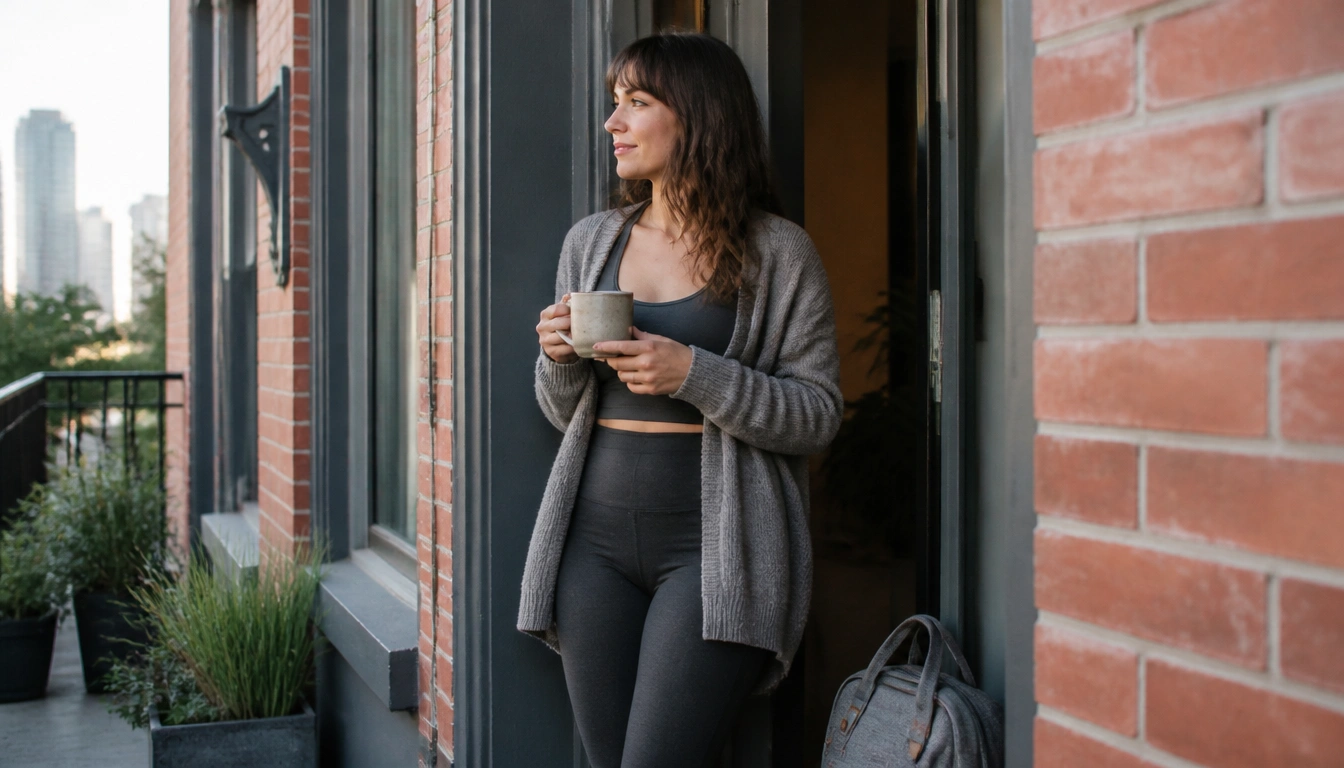
For most people working from home, meaningful outdoor time can be as simple as stepping outside once or several times a day for daylight, movement, and a mental reset. A short morning outing is especially useful for sleep and alertness, while brief midday or end-of-day breaks can reduce sedentary time and screen fatigue. Even 2 to 5 minutes outside can help when a longer walk is not realistic.
Key Takeaways
- Morning and daytime light are especially helpful because they help set your body clock and can support better nighttime sleep and daytime alertness.
- Outdoor time does not have to mean exercise. A doorstep break, balcony pause, or short walk can still interrupt screen fatigue and long periods of sitting.
- If your schedule is crowded, use anchors such as lunch, first coffee, or the end of the workday to make the habit more automatic.
- On high-UV, poor-air-quality, extreme-weather, pollen-heavy, or photosensitivity days, change the plan rather than forcing it.
- If you can walk while taking an audio-only meeting, you may combine nature exposure with weekly physical activity goals without adding another task.
What daily outdoor time looks like for a remote worker
For a person working from home, daily outdoor time means intentionally leaving the indoor work space to get some natural light, fresh air, and a change of setting. It can be a walk around the block, a few minutes on a balcony or stoop, a lunch break outside, or a short “bookend” walk before and after work. The point is not to turn every break into an event; it is to break up a day that might otherwise stay indoors from morning to evening.
This habit matters for more than “getting fresh air.” Remote work can compress movement, light exposure, and social transition into a few hours in front of a screen. The National Institutes of Health and the Centers for Disease Control and Prevention both support the idea that movement and outdoor exposure can contribute to better health habits, and the daily structure of outdoor time can help replace the missing cues that a commute used to provide.
For many adults, the goal is not perfection. It is to make outdoor time frequent enough that it changes the feel of the workday. If you can step outside without needing special gear, travel time, or a full workout, the habit is more likely to stick.
Why work-from-home routines make outdoor time more important
Working from home often increases sedentary time because the usual “friction” of leaving home disappears. There is no train platform, parking lot, or office hallway to naturally interrupt sitting. It is also easy to move from bed to desk, then from one meeting to the next, with only short bursts of movement. Over time, that pattern can leave you physically stiff and mentally foggy.
Outdoor time helps in several ways at once. First, daylight exposure, especially in the morning and during the day, helps anchor circadian rhythm. That matters because your internal clock uses light to help regulate sleep and wake timing. Second, stepping outside can reduce stress by changing the sensory input around you. Even a small shift from screens and indoor noise to trees, sky, air, and distance can create a noticeable mental reset.
There is also an attention benefit. Screen work asks for constant directed attention, which can become exhausting. Natural environments tend to offer softer, less demanding stimulation, such as moving leaves or changing light. That kind of low-pressure input can make it easier to return to focused work afterward.
Finally, outdoor time interrupts sitting. If your day includes a lot of meetings or concentrated work, a short walk or standing break can help counter the feeling of being “stuck” in place. That does not replace exercise, but it does add movement where none may otherwise happen.
Morning, midday, and end-of-day: when outdoor time helps most
Morning outdoor time is especially useful for sleep regulation and alertness. Even on cloudy days, outdoor light is usually much brighter than indoor light. A morning walk, a coffee on the porch, or a quick step outside before opening your laptop can help signal that the day has started. For remote workers who wake up groggy or feel disconnected from the day, this is one of the most practical habits to try first.
Midday outdoor time is useful when the workday feels mentally flat or physically cramped. A short break around lunch can help you change posture, reduce screen fatigue, and return with more mental space. If your schedule is tight, even a few minutes outside after eating can be worthwhile. The goal is not to wait for a perfect hour; it is to interrupt the longest stretch of indoor time.
End-of-day outdoor time works differently. It can help mark the boundary between work and personal time, especially if you work in the same room where you relax. A short evening walk or a few minutes outside after your last message can create a mental “shutdown” cue. That transition matters because remote work can blur the line between being on duty and being off duty.
If you are trying to use outdoor time for sleep support, the strongest habit is often a bright morning outing, not only an evening one. Late-day outdoor time can still be helpful, but the circadian cue from morning light is usually the most useful for setting the day.
How to build the habit into a busy workday
The easiest way to keep daily outdoor time realistic is to attach it to something you already do. If you drink coffee at 8:30, step outside with it. If you eat lunch at noon, take the first five minutes outside before checking messages. If you usually end work by shutting the laptop and switching tasks, add a short walk as the bridge between work and home life.
A “simulated commute” can be especially effective for remote workers. Before starting work, step outside for a brief walk around the block or even just a few minutes at the building entrance. At the end of the day, do the same in reverse. This creates a clear start and stop to the workday, which some people find easier than trying to use willpower alone.
If your meetings are rigid, look for low-disruption windows. An audio-only meeting, a listen-only webinar, or a routine check-in that does not require video may be a chance to walk outside with headphones. Even if you can only do this once or twice a week, it turns a necessary meeting into a movement opportunity.
For very busy days, use micro-resets. Two to five minutes on a balcony, doorstep, porch, or outside bench can still help when a full walk is impossible. These short pauses are not a substitute for longer breaks forever, but they are a practical way to keep the habit alive during meeting-heavy stretches.
How much outdoor time is enough
There is no single official prescription for daily outdoor time. A realistic target depends on your schedule, climate, health, and what you are trying to get from the habit. For some people, a short reset is enough to break up a long indoor stretch. For others, a 10- to 15-minute walk is the sweet spot because it provides more movement, more daylight, and a clearer mental reset.
If you already want to meet physical activity goals, outdoor time can do double duty. Major public health guidance for adults supports at least 150 minutes of moderate-intensity physical activity each week. A brisk walk outside can contribute to that total while also giving you the light and mood benefits of being outdoors. If walking feels manageable, it is one of the simplest ways to combine nature time with exercise.
That said, outdoor time does not need to become a formal workout to matter. The low-pressure version is often the one people can repeat. Sitting outside in the sun may feel calming, but walking usually adds more benefit because it interrupts sitting and increases movement. If you cannot walk, standing outside still counts as a meaningful change from staying indoors all day.
A useful way to think about the habit is in layers: a short reset when time is tight, a longer walk when you can fit it, and an outdoor movement break when you also want to support weekly activity goals. Any of those can be a good start.
When outdoor time should be modified for safety
Outdoor time is usually beneficial, but safety matters. High UV days can raise sunburn risk, and people with a personal or family history of skin cancer, or those taking photosensitizing medications, should be especially careful about timing and protection. On those days, shorter outings, shade, hats, sunglasses, protective clothing, and sunscreen may be more appropriate than a long unprotected walk.
Air quality is another reason to adapt. On days with poor air quality, wildfire smoke, or heavy pollution, the healthiest choice may be to stay indoors and use an alternate break. The same is true for extreme heat, ice, strong winds, or cold that could make outdoor time unsafe or unpleasant. Pollen can also matter if you have seasonal allergies; a shorter outing or different time of day may help, but sometimes staying inside is the better call.
If you spend time in wooded, brushy, or grassy areas, think about ticks and mosquitoes. Protective clothing and insect precautions can reduce risk. If you live where weather shifts quickly, keep your outdoor plan flexible so you do not treat one bad day as a reason to abandon the habit entirely.
For people who are sensitive to sunlight or have a complex medical history, individualized advice from a healthcare professional is more important than a generic routine. A daily outdoor habit should support health, not create avoidable risk.
Indoor substitutes when going outside is not practical
Some days are simply not good outdoor days. You may be caregiving, trapped in back-to-back meetings, dealing with bad weather, or living in a place where stepping outside is not possible at the moment. In those cases, choose the closest workable substitute rather than skipping the reset entirely.
One option is to move near a bright window for a few minutes and stand up while you do it. Another is to step away from the desk, look into the distance, and let your eyes focus on something far away instead of a screen. If you can, pair that with gentle movement such as walking indoors, climbing a few stairs, or stretching your hips, calves, shoulders, and neck.
Indoor substitutes will not fully replace outdoor daylight, especially for circadian benefits, but they can still interrupt sedentary time and screen fatigue. They are best treated as fallback tools for difficult days, not as a permanent replacement for being outside when conditions allow.
When the barrier is time rather than weather, even opening a door, standing in a hallway with daylight, or taking a brief pause on a building landing can help create a mental pause. The goal is to preserve the habit pattern so it is easier to return to the outside version later.
How to keep the habit going without relying on motivation
Motivation is unreliable, especially after a long day of calls or focused screen work. Habit design matters more. Make the default choice easy: keep shoes by the door, put sunglasses where you will see them, or leave a jacket near your workspace. Small environmental cues reduce the number of decisions you have to make.
It also helps to decide in advance what counts as success. If the day is overloaded, success might be three minutes outside. On a better day, it might be a lunch walk. If you set one rigid standard, you may skip the habit whenever life gets messy. A flexible standard makes the behavior more durable.
Try tying the habit to a simple script: after coffee, after lunch, or after my last meeting, I go outside for a short reset. Repeating the same trigger makes the routine feel automatic over time. If you have a partner, roommate, or colleague who also works remotely, a shared step-out routine can add accountability without turning the habit into a chore.
Finally, track the feeling, not just the minutes. Many people continue the habit because they notice that they sleep a little better, feel less compressed, or return from breaks with more patience. Those practical payoffs matter more than a perfect daily streak.
Frequently Asked Questions
How much outdoor time per day is realistic for remote workers?
A realistic amount is whatever you can repeat most days. For many people, that means one short morning outing plus one brief midday or end-of-day break. A 10- to 15-minute walk is useful when you can manage it, but even a few minutes outside can still help break up a sedentary day.
What is the best time of day to go outside for sleep and alertness benefits?
Morning and daytime outdoor time are usually the most useful for circadian rhythm and alertness because they give your body a strong light cue early in the day. Midday breaks can also help you reset. Evening outdoor time can still be helpful for stress and transitions, but morning light is the strongest sleep-timing cue.
Can short micro-breaks outdoors still help if I cannot take a long walk?
Yes. A 2- to 5-minute step outside can still interrupt screen fatigue, break up sitting, and give you a change of light and scenery. It will not replace a longer walk, but it is a practical option when meetings or caregiving leave very little time.
What should I do on bad air quality, extreme heat, or high UV days?
Modify the habit instead of forcing it. On those days, shorten the outing, choose shade, protect your skin, or stay indoors and use a bright window, indoor walking, or standing movement. If the air quality or weather is unsafe, indoor fallback options are the better choice.
How can I use outdoor time without turning it into a formal exercise workout?
Keep the goal simple: step outside for daylight, a mental reset, or a break from sitting. You can sit, stand, or walk. If you want more physical activity, an outdoor walk can also help with weekly exercise goals, but it does not need to be a workout to be worthwhile.
The Bottom Line
A daily outdoor habit can make remote work feel less closed-in and more sustainable. The biggest gains often come from morning or daytime light, short breaks that interrupt screen sessions, and a routine that is easy enough to repeat even on busy days.
If a long walk is not realistic, start with a doorway pause, balcony break, or a few minutes around the block. Use the safest option for the weather and your health situation, and shift indoors when conditions make outdoor time a poor choice. The habit works best when it fits real life, not when it depends on perfect motivation.
Medical disclaimer
Medical disclaimer: This content is for educational and informational purposes only and is not a substitute for professional medical advice, diagnosis, or treatment. Dietary needs and supplement suitability vary by individual.
