
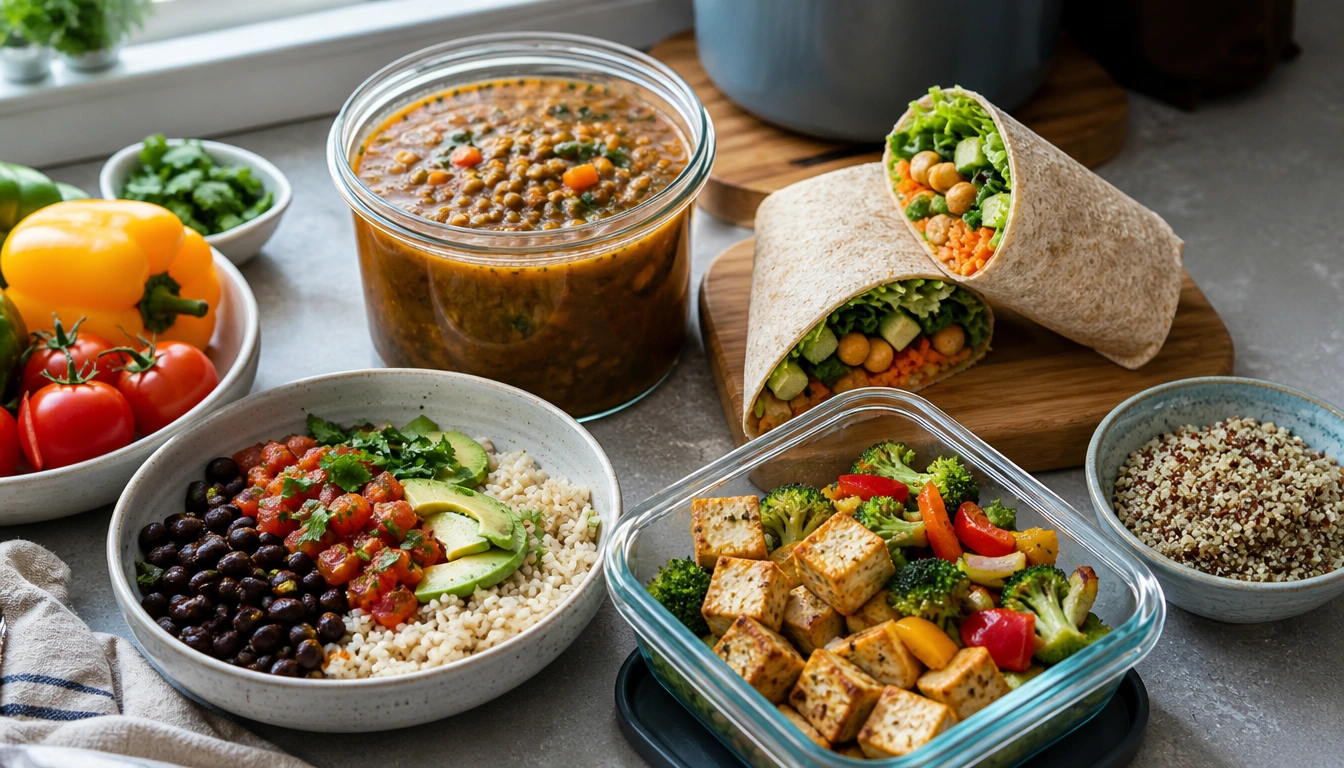
The cheapest vegetarian lunches usually come from beans, lentils, tofu, peanut butter, and whole grains. You do not need specialty meat alternatives to get enough protein. Build lunches around a protein source, a fiber-rich grain or legume base, and vegetables or fruit for balance. Pair legumes with grains across the day, and add vitamin C foods when you want to support iron absorption.
Key Takeaways
- Beans, lentils, tofu, peanut butter, and whole grains are the best-value staples for higher-protein vegetarian lunches.
- You do not need every meal to be a “complete protein”; varied plant foods across the day can cover essential amino acids.
- Protein plus fiber helps vegetarian lunches feel more filling than refined-carb meals and may reduce the afternoon energy dip.
- For iron, combine bean- or lentil-based meals with vitamin C foods such as tomatoes, peppers, citrus, or salsa.
- Gradually increase beans and lentils, rinse canned beans, and drink enough fluids to help your digestion adjust.
Budget-friendly protein strategy for vegetarian lunches
For budget shoppers, the best vegetarian lunches are usually built from inexpensive staples that do two jobs at once: they provide protein and they add bulk, fiber, and minerals. That is why beans, lentils, tofu, and whole grains tend to outperform specialty meat substitutes on both cost and practicality. They are widely available, easy to store, and flexible enough to work in bowls, wraps, soups, salads, and sandwiches.
Plant proteins are slightly different from animal proteins in amino acid makeup, but that does not mean vegetarian lunches are “incomplete.” Public health guidance from the USDA emphasizes using a variety of plant foods over the day, and combining grains with legumes is a classic, inexpensive way to get a well-rounded amino acid pattern. Rice and beans, hummus on whole-wheat bread, or lentil soup with toast all fit that approach without requiring expensive products.
Another reason these meals work well is the protein-and-fiber combination. Fiber slows digestion, helps keep you satisfied longer, and makes a lunch more likely to carry you through the afternoon. A lunch made mostly of refined pasta or white bread can feel cheaper at checkout but often leaves people hungry again sooner. Budget plant lunches can be the opposite: low-cost, steady energy, and easy to scale.
How to build a filling high-protein vegetarian lunch on a budget
A simple formula works better than chasing a “perfect” recipe: protein + fiber + produce + flavor. Start with a protein source such as beans, lentils, tofu, peanut butter, or seeds. Add a high-fiber base such as brown rice, oats, barley, whole-wheat bread, tortillas, or potatoes. Then include produce for vitamins, texture, and freshness. Finish with a strong flavor element so the meal feels satisfying enough to repeat.
For example, black beans with brown rice, salsa, and shredded cabbage make a cheap burrito bowl. Chickpeas with whole-wheat pita, cucumber, tomato, and yogurt or tahini dressing become a portable wrap. Lentils stirred into a tomato-based soup with carrots and onions can be packed with whole-grain toast. None of these meals needs specialty ingredients; they just need a good balance of components.
If you want more staying power, make the lunch more generous with protein and fiber before you add extra oils or expensive toppings. That usually gives better value. The USDA MyPlate framework also makes it easier to think in portions: beans, lentils, tofu, nut butters, and seeds all count toward the protein group, so you can mix several small servings into one meal instead of relying on a single pricey food.
Best low-cost protein staples to keep on hand
The cheapest lunch ingredients are the ones you can use in many different ways. Dried beans and lentils are usually the lowest-cost option per serving, especially if you cook them in batches. Canned beans are a little more expensive but still budget-friendly, and they are useful on busy days when time matters more than a few cents of savings. Rinsing canned beans can improve taste and reduce excess sodium.
Tofu is another strong value. A block of firm or extra-firm tofu can be sliced, crumbled, pan-seared, baked, or added to soup. It takes on whatever seasoning you use, which makes it practical for people who do not want repeated meals to taste identical. Peanut butter, other nut butters, sunflower seeds, pumpkin seeds, and sesame products also help, especially in sandwiches, sauces, and dressings.
Whole grains belong in the pantry too: brown rice, oats, barley, whole-wheat bread, and whole-wheat tortillas are versatile and usually affordable. These foods do not just add carbohydrates; they help round out the meal, improve texture, and work with legumes to create a more complete lunch. A few well-chosen staples can cover many workdays without a complicated shopping list.
Meal-prep and shopping shortcuts that save money
Batch cooking is one of the easiest ways to lower lunch costs. Cook a large pot of lentils, beans, or grains once, then use them in different combinations through the week. A pot of brown rice can become a bowl, a wrap filling, or a side dish. A tray of roasted vegetables can be folded into salads, grain bowls, or sandwiches. Even a simple chickpea salad can turn into several meals if you change the bread, greens, or sauce.
Frozen vegetables are often a smart buy because they reduce waste and are ready whenever you need them. Frozen broccoli, spinach, mixed vegetables, and peas can be stirred into rice bowls, soups, and pasta without much prep. Canned tomatoes, salsa, and jarred curry or pasta sauce are also useful flavor boosters that make plain beans or lentils taste like a real lunch instead of a thrift exercise.
Think in terms of useful overlaps. A lentil chili can become a rice bowl one day and a stuffed baked potato the next. Chickpeas can move from salad to wrap to mash. If you buy ingredients that can play more than one role, you spend less and waste less. That matters as much as finding the lowest sticker price on a single food item.
Cheap vegetarian lunch ideas that work in real life
Chickpea salad wrap
Mix canned chickpeas with a little mustard, yogurt or tahini, lemon juice, diced celery or cucumber, and black pepper. Spoon into a whole-wheat tortilla with greens or tomatoes. This works because it combines legumes, a grain wrap, and fresh produce in a fast handheld lunch.
Red lentil tomato soup
Simmer red lentils with canned tomatoes, onion, garlic, carrots, and cumin until thick. Pack with whole-grain bread or crackers. Red lentils cook quickly, so this is ideal for batch prep and reheats well for several days.
Rice and bean bowl
Layer brown rice, black beans or pinto beans, salsa, shredded cabbage, and avocado if budget allows. Add lime or lemon for brightness. This is one of the cheapest complete lunch formats because the ingredients are simple, shelf-stable, and easy to scale.
Tofu vegetable stir-fry box
Pan-sear cubed tofu and serve with rice and frozen vegetables. Use soy sauce, garlic, ginger, or a peanut-based sauce for flavor. This lunch is flexible, reheats well, and gives variety if you are tired of bean-based meals every day.
Peanut butter and seed sandwich plate
Spread peanut butter on whole-grain bread and serve with fruit, carrots, or a simple yogurt cup if you eat dairy. It is not as protein-dense as beans or tofu, but it can be a useful low-cost lunch on days when you need almost no prep.
How to make vegetarian lunches more balanced
For most healthy adults, the protein target across the whole day is about 0.8 grams per kilogram of body weight, according to public health guidance used by the NHS and USDA. Lunch does not have to do all the work, but it should contribute meaningfully. If your lunch is built mostly from refined bread, chips, or plain pasta, you may feel hungry sooner even if the calories look similar on paper.
A good vegetarian lunch usually includes a clear protein source, a fiber-rich base, and vegetables or fruit. If you are active, pregnant, a teenager, or trying to maintain muscle mass as you get older, you may need larger portions or more protein across the day. That does not automatically mean more expensive food. It often means adding another half cup of beans, extra tofu, a second slice of bread, or a side of yogurt, milk, soy milk, or fruit.
Iron deserves special attention in vegetarian lunches. Plant iron is less readily absorbed than the iron from animal foods, so pair beans, lentils, tofu, spinach, or chickpeas with vitamin C foods such as tomatoes, bell peppers, citrus, kiwi, or salsa. Try not to drink tea or coffee right with an iron-rich meal, since they can reduce absorption. Small details like that matter more for iron than buying a specialty protein powder.
Digestion and tolerance tips for beans and lentils
If beans or lentils make you gassy at first, that does not mean they are a poor choice. Many people need time to adapt to a higher-fiber diet. Start with smaller servings, then build up gradually over a week or two. Rinsing canned beans well can help reduce the starchy liquid that bothers some people. Softer options like red lentils or split peas may also feel easier to tolerate than larger beans at first.
Hydration matters too. Fiber works best when you are drinking enough fluids through the day. If you add legumes to lunch but forget to drink water, bloating can feel worse. Cooking beans until tender, chewing thoroughly, and using spices such as cumin, ginger, fennel, or coriander can also make meals more comfortable for some people. Budget-friendly does not need to mean digestive discomfort.
If you are very new to high-fiber eating, spread your bean and lentil portions across the day instead of loading them all into one meal. A smaller lunch with a bean side dish and a fruit snack later may be easier than a giant bowl on day one. Your digestive system often adjusts better when change is steady rather than abrupt.
When this approach may need modification
Some people need a more individualized plan. If you have chronic kidney disease, gout, inflammatory bowel disease, severe irritable bowel syndrome, or another digestive condition, a high-protein or high-fiber vegetarian pattern may need adjustment. In those cases, the type and amount of legumes, grains, and overall protein can matter more than the recipe itself.
Pregnant people, adolescents, older adults, and athletes may also need more food than a standard budget lunch provides. That usually means scaling up the same meal template, not abandoning it. Add more beans, tofu, bread, rice, or a side snack if your needs are higher. If you have unexplained fatigue, weight loss, trouble tolerating food, or concerns about anemia, it is worth speaking with a registered dietitian or clinician for individualized advice.
The strongest budget strategy is still the simplest one: buy low-cost staples, cook them in batches, and combine them in ways that are filling, varied, and easy to repeat. That approach can support protein needs without relying on expensive substitutes or complicated recipes.
Frequently Asked Questions
How much protein do adults need at lunch or per day on a vegetarian diet?
For most healthy adults, a common baseline is about 0.8 grams of protein per kilogram of body weight per day. Lunch does not need to hit a special target on its own, but it should contribute a meaningful share. More active people, older adults, and some pregnant people may need more total protein and larger portions.
Which budget plant foods give the most protein per serving?
Dried or canned beans, lentils, tofu, peanut butter, and seeds are among the best-value options. Whole grains also contribute protein, though they are usually better thought of as the base that supports the meal. If you want the most protein for the least money, legumes and tofu are usually the top choices.
How can I combine grains and legumes to make a more complete protein meal?
Use familiar pairings such as rice and beans, hummus with whole-wheat pita, lentils with bread, or chili with cornbread. You do not need a perfect ratio at every meal. Eating a variety of plant proteins over the day helps supply all essential amino acids, which is why mixed meals work so well.
What are some cheap vegetarian lunches that are good for meal prep and reheat well?
Lentil soup, bean chili, rice and bean bowls, tofu stir-fries, and grain salads with chickpeas all reheat well. These lunches are practical because the base ingredients hold up for several days and can be changed with different sauces, vegetables, or bread so they do not feel repetitive.
How can I improve iron absorption from plant-based lunch ingredients?
Pair iron-rich foods such as lentils, beans, tofu, and leafy greens with vitamin C foods like tomatoes, peppers, citrus, or salsa. Try not to have tea or coffee right with the meal, since they can reduce iron absorption. This matters especially if most of your lunch protein comes from plants.
The Bottom Line
Cheapest vegetarian lunches usually come from the same few foods: beans, lentils, tofu, peanut butter, seeds, and whole grains. Those staples can be mixed into bowls, wraps, soups, and sandwiches that are filling without depending on meat substitutes.
The best budget approach is to build each lunch around protein, fiber, produce, and flavor. Add vitamin C foods to help with iron, scale portions up when your needs are higher, and increase beans and lentils gradually if your digestion needs time to adjust. With a short list of pantry staples and some batch prep, higher-protein vegetarian lunches can stay practical, affordable, and satisfying.
Medical disclaimer
Medical disclaimer: This content is for educational and informational purposes only and is not a substitute for professional medical advice, diagnosis, or treatment. Dietary needs and supplement suitability vary by individual.
Sources
- National Health Service (NHS) — nwknowledgenow.nhs.uk. Accessed November 2026.
- myplate.food — myplate.food. Accessed November 2026.
