
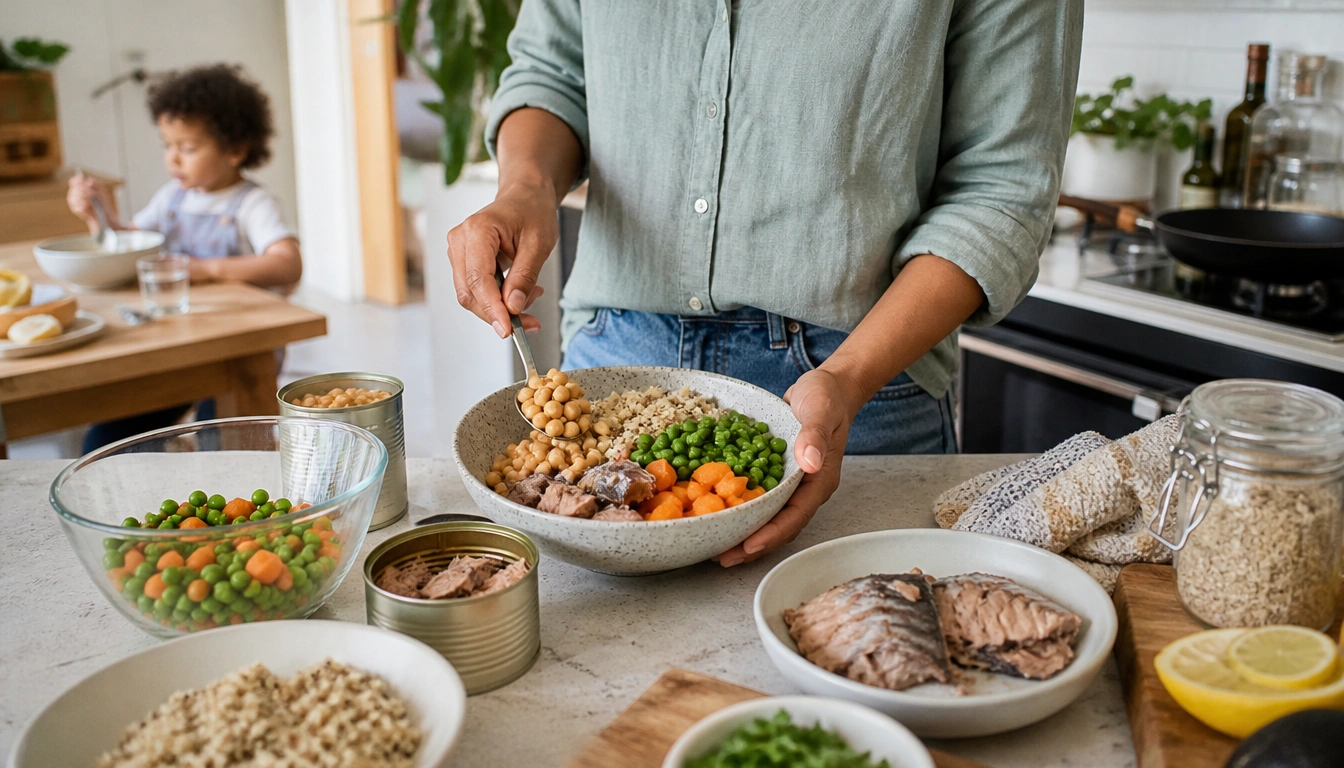
Yes—busy parents can make healthy pantry dinners quickly by combining vegetables, whole grains, lean protein, and a calcium-rich side or fortified alternative. A MyPlate-style approach works well without measuring: fill half the plate with vegetables or fruit, a quarter with whole grains, and a quarter with protein, then use pantry shortcuts like rinsed beans, water-packed fish, frozen vegetables, and low-sodium canned goods.
Key Takeaways
- Rinsed canned beans, shelf-stable fish, frozen vegetables, and whole grains can make a balanced dinner in minutes.
- A MyPlate-style plate is an easy shortcut: half produce, one-quarter whole grains, one-quarter protein, plus dairy or a fortified alternative.
- Look for label cues such as no-salt-added, low-sodium, and packed in water or natural juices.
- Toddlers and picky eaters often do better with softer textures, smaller pieces, and familiar flavors.
- You can keep the same meal framework and still adapt for gluten-free, vegetarian, or tighter budgets.
Why pantry meals can still be healthy for busy families
Pantry dinners do not have to mean bland food or an all-processed shortcut. With a few reliable staples, they can be balanced, filling, and faster than takeout. The advantage of pantry and freezer meals is flexibility: you can build them around beans, canned fish, whole grains, frozen vegetables, and a simple sauce or seasoning blend you already have.
That approach matters on weeknights, when everyone is hungry and patience is low. Instead of chasing a perfect recipe, think in terms of structure. A meal built from fiber-rich beans or whole grains, plus vegetables and a moderate amount of protein, tends to be more satisfying than a refined-carb dinner alone. According to the American Heart Association, choosing more plant-based foods, seafood, and lean proteins while limiting sodium and highly processed add-ins supports heart-healthy eating patterns.
For busy parents, healthy also has to mean realistic. The best pantry dinner is the one your family will actually eat, can be made quickly, and does not create a sink full of dishes. That is why the smartest pantry meal ideas use familiar ingredients in new combinations rather than complicated techniques.
How to build a balanced pantry dinner in minutes using the MyPlate plate method
The MyPlate-style formula is one of the simplest ways to build a healthy dinner without counting calories. Start with the plate itself instead of the recipe. Aim for half vegetables or fruit, one-quarter whole grains, and one-quarter lean protein. Then add a serving of low-fat dairy or a fortified plant-based alternative if your family uses one.
In practice, that might look like rice with beans and vegetables, whole-wheat pasta with tuna and spinach, or a grain bowl with chickpeas and frozen broccoli. You do not need exact measurements at the table. The idea is to keep the meal visually balanced so the vegetables do not get crowded out by starches alone.
One reason this works well for families is that the plate method is forgiving. If your child only eats a little of the vegetables, you can still keep the overall meal balanced by making the veggie portion easy to see and easy to pick from. A simple side of fruit, a cup of milk, or a yogurt-based dip can also help round out the meal without extra planning.
When time is tight, use a two-step rule: choose one base grain, one protein, and two easy produce items. Frozen vegetables count here, and so do canned tomatoes, canned green beans, or salsa used as a topping. The goal is not perfection; it is a dinner that covers the major food groups in a way that fits a real household schedule.
Best pantry and freezer staples to keep on hand for fast family meals
A useful pantry starts with a few repeat ingredients that can be combined many ways. For protein, keep beans, lentils, and canned fish such as tuna or salmon. For grains, choose brown rice, whole-wheat pasta, oats, quinoa, tortillas, or microwaveable whole-grain pouches. For vegetables, stock canned tomatoes, corn, green beans, and low-sodium broth, plus frozen broccoli, spinach, mixed vegetables, or peppers.
Flavor builders matter too. Olive oil, garlic powder, onion powder, cumin, oregano, chili powder, vinegar, mustard, and lemon juice can make a plain pantry dinner taste like a real meal. These staples add interest without relying on heavy sauces or excess sodium.
It also helps to keep a few “backup” items that can turn a near-empty fridge into dinner: jarred salsa, shelf-stable broth, nut or seed butter, crackers, applesauce, and fruit packed in juice. For families that often run late, these basics give you enough structure to make dinner without starting from scratch.
The freezer is just as valuable as the pantry. Frozen vegetables are especially useful because they are prepped already and can go straight into soups, pastas, rice, or quesadillas. Frozen fruit can round out a meal or become a quick side dish, smoothie, or yogurt topper. In busy homes, the freezer is often the difference between “nothing to cook” and a workable dinner in ten minutes.
How to choose healthier canned and shelf-stable ingredients
Label reading does a lot of the work here. For beans, vegetables, broth, and soups, look for no-salt-added or low-sodium versions when you can. For canned fish, water-packed or packed in natural juices is usually a more flexible choice than fish packed in heavy oil or salty sauces. For tomatoes, choose plain diced, crushed, or sauce versions without added sugar when possible.
Rinsing canned beans and vegetables under cold water is a useful practical step, especially for busy cooks trying to lower sodium without changing the whole meal. It is not magic, but it can reduce some of the surface sodium and improve the taste and texture of the ingredient. That makes it easier to use canned foods regularly without every meal tasting overly salty.
It also helps to notice the hidden sodium in the “helpers” around the main ingredient. Packets, seasoning mixes, boxed rice mixes, frozen meal add-ins, and jarred sauces can quietly raise sodium faster than the beans or vegetables themselves. If a product does not have a no-salt-added or low-sodium label, assume it may need balancing with more plain ingredients.
For canned fruit, choose fruit packed in water or 100% juice instead of heavy syrup. For dairy or dairy alternatives, plain yogurt and unsweetened fortified plant milks are generally easier to use in both savory and sweet meals. These choices keep the pantry flexible while making it easier to build meals that are lower in added sugar and sodium.
Kid-friendly adjustments for picky eaters, toddlers, and mixed-age households
Kid-friendly pantry meals work best when the texture and shape fit the child, not just the adult. For toddlers, mash beans lightly, cook vegetables until soft, and cut pasta or noodles into smaller pieces. For picky eaters, keep the parts separate on the plate when possible so the food feels less mixed and more familiar.
Safety matters just as much as taste. Avoid whole nuts for young children, and be cautious with round, hard, or sticky foods that can become choking hazards. If you use seeds or dried fruit, choose age-appropriate textures and cut them up when needed. Whole grapes, cherry tomatoes, and large chunks of raw vegetables also need special attention for younger children.
Mixed-age households often need a dinner that can be customized at the table. That is where pantry meals shine. A parent can add chili flakes, hot sauce, or extra herbs to their own bowl while a toddler gets a softer, milder portion. The same base meal can also be offered with different toppings, such as cheese, avocado, salsa, or plain yogurt.
If your child resists mixed foods, build trust with a simple pattern: one familiar item, one safe protein, and one easy vegetable. A bean quesadilla, pasta with a little sauce, or soup with soft bread can feel less intimidating than a heavily seasoned casserole. Repeated exposure often works better than forcing variety in a single meal.
Four quick pantry meal formulas: pasta, quesadillas, grain bowls, and soup
Pasta: Cook whole-wheat or chickpea pasta and toss it with canned tuna or salmon, frozen spinach, and a simple olive oil and garlic sauce. If you want more vegetables, stir in peas, broccoli, or canned tomatoes. This formula is fast, family-friendly, and easy to keep mild for kids.
Quesadillas: Spread mashed or whole black beans on whole-wheat tortillas, add corn or finely chopped vegetables, and use a modest amount of cheese. Cook until crisp and serve with salsa or plain yogurt. For toddlers, cut into thin strips or small triangles and keep the filling soft.
Grain bowls: Start with brown rice, quinoa, or microwaveable whole grains. Add chickpeas or edamame, then top with frozen vegetables and a quick dressing made from tahini, peanut butter, or olive oil mixed with a little water and seasoning. Grain bowls are especially useful when everyone wants a different topping.
Soup: Simmer low-sodium broth with canned beans, canned tomatoes, and frozen spinach or mixed vegetables. Add herbs, garlic, and a little olive oil for flavor. Serve with whole-grain toast, crackers, or a small side of fruit so the meal feels complete without much extra work.
Each of these formulas follows the same logic: a filling base, a protein, a vegetable, and a simple flavor finish. That is why they are so useful on nights when you are cooking with one eye on the stove and one eye on the clock.
Easy swap chart for vegetarian, gluten-free, and budget-conscious variations
| Need | Easy swap | Why it works |
|---|---|---|
| Vegetarian | Use beans, lentils, edamame, tofu, or hummus instead of meat or fish | These options keep protein in the meal without changing the whole structure |
| Gluten-free | Choose brown rice, quinoa, corn tortillas, gluten-free pasta, or potatoes | These fit the same dinner formulas without relying on wheat |
| Budget-conscious | Lean on dried or canned beans, store-brand frozen vegetables, and canned tomatoes | These are often affordable, shelf-stable, and useful in many meals |
| Picky eaters | Keep toppings separate and use mild flavors | Separate components often feel safer and easier to accept |
| Toddler-friendly | Soften vegetables, mash beans, and cut food into small pieces | Texture changes can make the same meal safer and easier to chew |
If your budget is tight, start with the cheapest version of each category rather than trying to buy everything at once. One grain, one bean, one vegetable, and one flavor source can make several different dinners across the week. Stretching a meal with vegetables, broth, or extra beans is usually more useful than buying specialty products.
For gluten-free households, the main challenge is usually not the protein or vegetables; it is the grain and seasoning base. Check pasta, broth, soy sauce, and seasoning blends carefully, and keep one or two safe starches in rotation so dinner does not become complicated at the last minute.
Common pantry-meal mistakes to avoid, including high-sodium shortcuts and overly processed add-ins
The most common pantry-meal mistake is building dinner around a salty shortcut and calling it done. Boxed rice mixes, flavored instant noodles, creamy soup bases, processed meat add-ins, and heavily seasoned sauces can push sodium high before the rest of the plate is even assembled. A better pattern is to start with plain staples and add flavor yourself.
Another mistake is forgetting the vegetables. A pasta dish made only with noodles and cheese is fast, but it does not give the same balance as a version with beans, spinach, tomatoes, or broccoli. The same goes for grain bowls and soups: the produce is part of the meal, not just a garnish.
It also helps to avoid assuming that “healthy” on the front of a package means the whole product is a good fit. Check the sodium, added sugars, and ingredient list when you can. For family meals, the simplest products are often the easiest to improve with your own ingredients.
Finally, remember that the goal is not to turn every busy night into an elaborate cooking project. A healthy pantry dinner is one that uses what you have, fits your family’s tastes, and still covers the main food groups. If you can make that happen most nights, you are already doing a lot right.
Frequently Asked Questions
How do I build a balanced pantry meal using MyPlate without measuring everything?
Use the plate as your guide: fill half with vegetables or fruit, one-quarter with whole grains, and one-quarter with protein. Then add a little dairy or a fortified alternative if your family uses one. You can eyeball it at dinner; exact measuring is not necessary.
Which canned and shelf-stable foods are the healthiest choices for family meals?
Look for no-salt-added or low-sodium beans, vegetables, broth, and tomatoes. For fish, water-packed tuna or salmon is a strong pantry option. Plain oats, brown rice, quinoa, and unsweetened or low-sugar canned fruit also fit well in family meals.
How can I lower sodium in pantry meals without making them bland?
Rinse canned beans and vegetables, choose lower-sodium products when possible, and build flavor with garlic, onion powder, cumin, oregano, vinegar, lemon juice, and herbs. Using more plain ingredients and fewer processed sauces usually helps keep the meal tasty without relying on salt.
What pantry meal ideas work best for picky kids or toddlers?
Soft, familiar foods usually work best: bean quesadillas, mild pasta with small vegetables, soups with soft bread, or grain bowls with toppings kept separate. For toddlers, mash beans, cook vegetables until tender, and cut food into small pieces to make eating easier and safer.
How do I adapt pantry meals for gluten-free, vegetarian, or budget-conscious households?
Keep the same meal framework and swap the base ingredients. Use rice, quinoa, or corn tortillas for gluten-free meals, and beans, lentils, tofu, or edamame for vegetarian meals. For budget-friendly cooking, lean on store-brand canned beans, frozen vegetables, and simple grains.
The Bottom Line
Healthy pantry meals are very doable on a busy weeknight when you lean on a simple formula: vegetables, whole grains, and lean protein, with dairy or a fortified alternative if desired. That structure keeps dinner balanced without turning it into a project.
The most useful pantry habits are also the simplest: choose low-sodium or no-salt-added staples, rinse canned beans and vegetables, and keep a few flexible meal bases on hand. With those pieces in place, pasta, quesadillas, grain bowls, and soup can all become realistic family dinners.
If you have a toddler, a picky eater, or a tighter budget, keep the same framework and adjust the texture, seasoning, or grain choice. That makes the meal easier for everyone without starting over.
Medical disclaimer
Medical disclaimer: This content is for educational and informational purposes only and is not a substitute for professional medical advice, diagnosis, or treatment. Dietary needs and supplement suitability vary by individual.
