
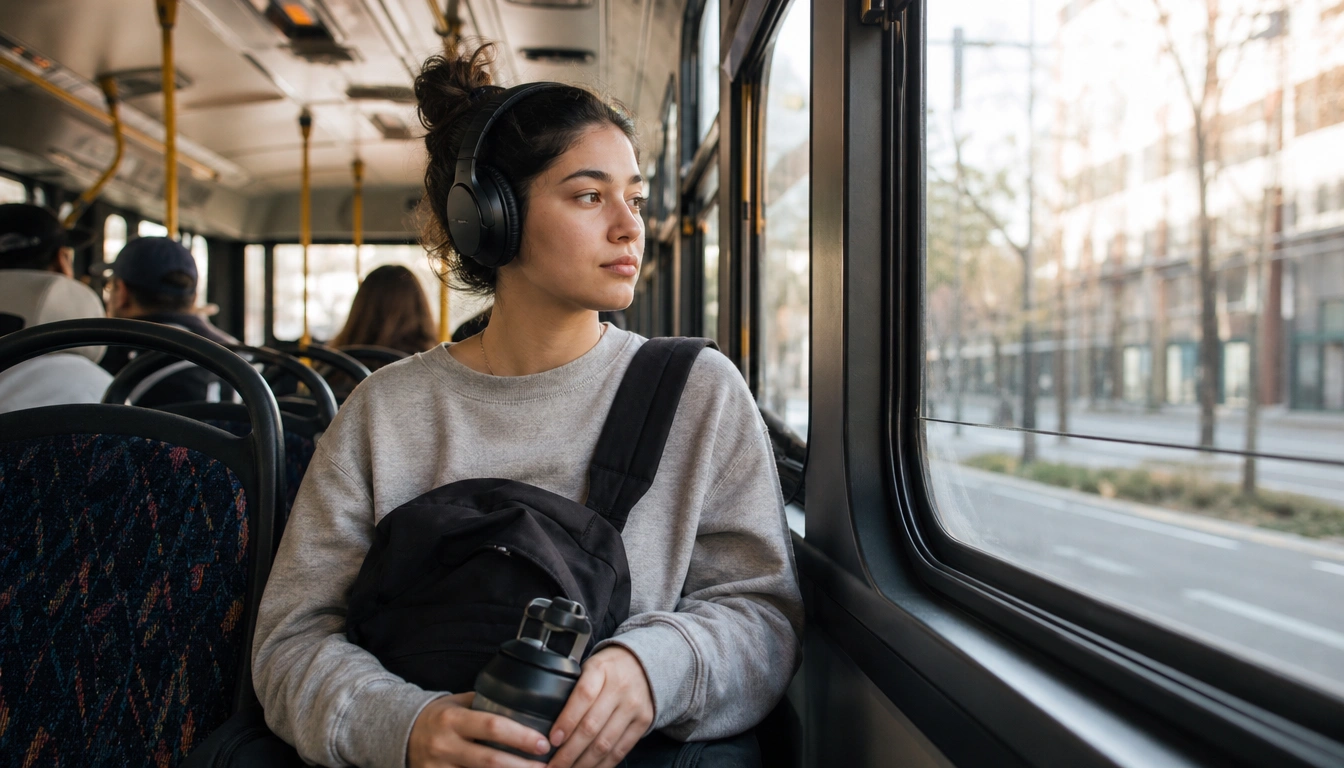
Yes—your commute can feel calmer without becoming slower or less safe. The best approach is to build a short pre-departure buffer, use mode-specific calming strategies while you travel, and treat the ride as a transition between home mode and student mode. Keep any calming technique road-safe or transit-safe, and get help if commute stress is leading to panic, persistent anxiety, or difficulty functioning.
Key Takeaways
- A calmer commute starts before you leave: a small buffer can reduce rushing, which often drives most of the stress.
- Drivers need eyes-on-the-road strategies only; transit riders can use more sensory grounding, but safety always comes first.
- Replacing doomscrolling with audio, silence, or simple grounding can keep the commute from adding anxiety.
- Treat the ride as a mental boundary: leave home concerns behind on the way in, and leave academic pressure behind on the way out.
- If commute stress is causing panic, sleep disruption, or ongoing distress, campus counseling or medical support may be appropriate.
Why commuting feels harder for college students than it looks
A calm commute routine for college students matters because commuting is not just travel time. It often compresses sleep, meals, studying, work shifts, and family responsibilities into the same day. That leaves less margin for delay, which means a late bus, slow traffic, or crowded parking can feel bigger than it would on another day.
Public health guidance from the CDC and mental health guidance from the National Institutes of Health recognize that stress can build when demands keep stacking up without enough recovery time. For commuter students, the pressure is often made worse by early wake-ups, unpredictable schedules, and the feeling that every minute has to be used perfectly. That is a lot of mental load before class even starts.
Commuting also creates repeated micro-stresses. You may be monitoring traffic, checking transit updates, finding a place to park, or trying to stay alert in a crowded car or bus. Over time, that kind of repeated strain can leave you tense, distracted, or already tired when you arrive. The goal is not to make the commute luxurious. It is to stop it from draining the energy you need for learning.
The calm commute framework: before you leave, while you travel, and when you arrive
A useful way to organize a commute is to think in three parts: preparation, travel, and reset. That structure helps the commute become a deliberate transition instead of a rush from one role to another.
Before you leave: reduce preventable stress. Pack your bag, charge your devices, set out what you need, and decide what you will listen to or focus on during the ride. If you start already behind, your nervous system often stays in a hurry mode longer than necessary.
While you travel: keep the activity low-stimulation and safe. Drivers should use audio-only calming tools and stay focused on the road. Transit riders can use quieter sensory grounding, low-stimulation audio, or a screen-free window to settle their attention. The point is to avoid adding more input than the commute already brings.
When you arrive: pause for a moment before jumping into your next task. A brief reset can help your brain switch from home responsibilities to academic focus, or from campus demands back to home life. That transition matters as much as the travel itself.
Build a 10-minute buffer before leaving
One of the most practical ways to lower commute stress is to stop leaving at the exact last minute. A 10-minute buffer gives you room for small delays without triggering panic. If you have ever rushed out the door and then spent the whole ride replaying what you forgot, you already know how much stress that can create.
Use the buffer for a simple departure ritual. Check your essentials, fill your water bottle, grab a portable snack if needed, and take a moment to orient yourself before stepping outside. This is not about a perfect morning routine. It is about preventing the rush that can throw off your whole day.
If your schedule is tight, protect the buffer by simplifying the hour before leaving. Set alarms with a little margin, keep your bag near the door, and make as many decisions as possible the night before. The less you decide while half-awake, the less likely you are to start the commute in a stressed state.
A buffer also helps with real college-life unpredictability. If the bus comes early, if there is frost on the windshield, or if a roommate needs a quick favor, you have some slack. That small amount of flexibility can prevent the entire morning from feeling like a failure.
What to do during the commute if you are driving or riding transit
If you are driving: safety comes first. Keep your calming strategy to things that do not take your eyes off the road or reduce alertness. Use preselected audio such as a calm playlist, an audiobook, or a podcast that is interesting but not emotionally intense. Avoid turning the drive into an argument with the news, social media, or stressful calls.
At red lights or other fully stopped moments, do a quick posture check. Soften your shoulders, unclench your jaw, and relax your hands on the wheel. These are small changes, but they can interrupt the physical buildup of stress. If traffic makes you tense, notice that tension without trying to force it away. Then return attention to driving.
If you are on public transit: you have more room for calming techniques, but the commute still needs to stay practical and safe. One simple option is a screen-free window for the first stretch of the ride. Look out the window, notice what is around you, and let your attention settle before you reach for your phone.
Low-stimulation audio can help here too. That might mean music without a strong beat, a familiar podcast, or a guided exercise you already know well. You can also use sensory grounding: feel your feet on the floor, notice your seat support, or quietly name a few things you can see and hear. If the bus or train is crowded, keep your focus simple and avoid anything that makes your body feel more activated.
For pedestrians and bike commuters, the rule is similar: stay alert, keep your head up, and choose calming methods that do not pull attention away from traffic, crossings, or surroundings. A steady pace and simple awareness are often enough.
Turn the ride into a boundary between home and student life
One of the most helpful uses of commute time is as a mental boundary. Instead of letting home stress follow you into class, or academic stress follow you back into the house, use the ride as a clear handoff between roles. That can reduce the sense that everything is happening at once.
You do not need a long meditation for this. A short phrase can be enough. On the way to campus, you might quietly tell yourself that the ride is the end of home mode and the start of student mode. On the way home, you can use the trip to leave school concerns at the curb and come back to your personal life.
That framing can be especially useful if you balance classes with work or family duties. When you are switching roles many times a day, a commute can feel like wasted time. Reframing it as transition time gives the day more structure. It helps your brain understand what is ending and what is beginning.
If you want to make the boundary stronger, pair the commute with a consistent habit. For example, one playlist can mean “ready for class,” while another can mean “done for the day.” A repeated cue helps your mind recognize the switch even on stressful days.
Simple food, hydration, and energy habits that support a calmer ride
Hunger, dehydration, and fatigue can make commute stress feel louder. If you leave with low energy, small annoyances may feel harder to handle. That is why simple food and hydration habits are part of a calming routine, not separate from it.
Try to avoid starting the commute on an empty tank if you know that makes you irritable or shaky. A portable breakfast, a banana, yogurt, toast, trail mix, or another easy option can help you feel more settled. A reusable water bottle is useful too, especially on long days when you may not have time to pause between classes.
These habits do not need to be elaborate. The goal is to reduce the physical discomfort that can amplify stress. If your commute is long, think ahead about when you will next eat or drink so you are not making decisions while already tired. Small planning choices can reduce the feeling that your day is running you.
It can also help to be realistic about caffeine. Some students use it to get through early mornings, but if too much caffeine makes you feel jittery, it may increase the sense of rush rather than calm. The best choice is the one that supports alertness without making your body feel more on edge.
When your commute is long, unpredictable, or shared with other responsibilities
Long or unpredictable commutes do more than take time. They can shrink the space available for sleep, meals, studying, and recovery. That time pressure is part of why commuter students often feel more stretched than students who live close to campus. A commute that changes day to day can also make planning feel exhausting.
If that sounds familiar, focus on reducing friction rather than trying to make the entire commute relaxing. Keep a small go-bag ready. Batch what you can the night before. Build a little extra margin for transit delays, childcare needs, or work shifts. The more you can reduce last-minute decisions, the less likely the commute is to feel like constant crisis management.
If you share responsibilities with family or a job, the commute may be the only quiet stretch in the day. Protect it. That may mean choosing one low-effort audio option, using the first few minutes for silence, or not opening your phone until you have reached a specific stop or parking spot. The best routine is the one you can repeat on busy days, not just ideal ones.
Also notice what is not helping. If you are trying to study, scroll, answer messages, and plan the rest of the day all at once, the commute can turn into more stress instead of less. A smaller plan is usually more sustainable: one audio choice, one arrival reset, and one simple next step.
When commute stress needs more than self-care
It is normal to feel irritated, tired, or mentally crowded after a hard commute. But if commute stress is turning into persistent anxiety, panic symptoms, sleep problems, or trouble concentrating in class, it may be more than everyday stress. If you start dreading travel so intensely that it interferes with attendance, work, or daily life, that is a sign to get support.
Campus counseling centers, student health services, and licensed mental health professionals can help you sort out whether the commute is amplifying a broader stress, anxiety, or mood concern. The National Institutes of Health and the CDC both emphasize that mental health symptoms deserve attention when they start affecting functioning. You do not have to wait until you are overwhelmed to ask for help.
Reach out sooner if you notice panic attacks, frequent tearfulness, a growing fear of driving or riding, or a pattern of using caffeine, scrolling, or avoidance just to get through the day. A practical commute routine can support well-being, but it is not a substitute for care when symptoms are becoming persistent or disruptive.
If you are unsure whether your stress level is serious enough, use this standard: if it is getting in the way of daily life, sleep, safety, or academic functioning, talk to someone. Support is often most useful before the problem becomes bigger.
Frequently Asked Questions
What should I do in the 5–10 minutes before leaving for campus to avoid rushing?
Use that time as a buffer, not a bonus task slot. Check your essentials, fill water, grab a simple snack if needed, and leave enough margin for small delays. A short pre-departure pause also helps you start the commute without the stress spike that comes from running out the door.
What are the safest calming techniques I can use while driving versus riding public transit?
If you are driving, stick to audio-only calming tools and quick posture checks when stopped. If you are on transit, you can add screen-free windows, sensory grounding, or low-stimulation audio. In both cases, safety comes first, so do not use any technique that reduces attention to your surroundings.
How can I stop doomscrolling or anxious phone use during my commute?
Make a specific replacement plan before you leave. Choose one podcast, playlist, audiobook, or silence window, and decide when you will check messages. If the phone is your default stress habit, keeping it out of reach for part of the ride can make the new routine easier to follow.
What can I do at arrival so commute stress does not carry into class or home?
Pause before you exit the car or step off the bus. Take one breath, notice your surroundings, and mentally name the role you are stepping into next, such as class or home. That tiny reset helps your brain switch gears instead of dragging the commute into the next part of the day.
When is commute-related stress a sign I should seek counseling or other professional support?
If the stress is causing panic, ongoing anxiety, sleep problems, avoidance, or trouble functioning in class or daily life, it is worth getting help. Campus counseling, student health services, or a licensed mental health professional can help if the commute is becoming more than a manageable annoyance.
The Bottom Line
A calmer commute is usually built from small, repeatable choices: a short buffer before leaving, a safe way to settle your mind while traveling, and a brief reset when you arrive. Those habits can make the trip feel more contained and less draining.
The goal is not to turn every ride into a wellness ritual. It is to keep commute stress from spilling into the rest of your day. If your stress is persistent, intense, or affecting your functioning, reach out for professional support instead of trying to manage it alone.
Medical disclaimer
Medical disclaimer: This content is for educational and informational purposes only and is not a substitute for professional medical advice, diagnosis, or treatment. Dietary needs and supplement suitability vary by individual.
