
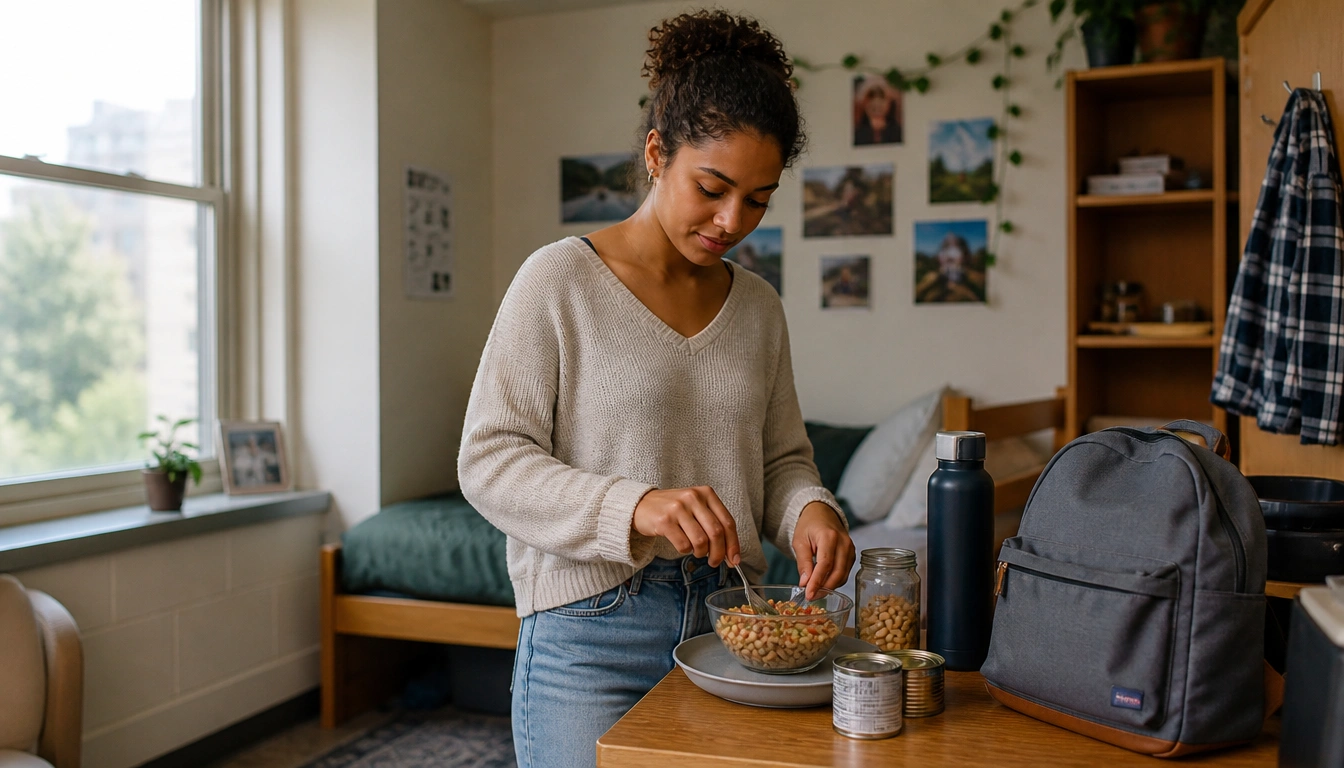
The easiest healthy habit swaps in college are the ones that fit your current routine: carry water instead of relying on energy drinks, add one protein plus one fruit or vegetable to meals, keep shelf-stable snacks in your room, walk more between classes, and protect a consistent wake time. Small changes work better than all-or-nothing plans because they are easier to repeat during busy weeks, late nights, and shared living situations.
Key Takeaways
- Build habits around existing college routines, like waking up, class changes, dining hall visits, and study breaks.
- In dining halls, aim to add one protein and one fruit or vegetable before worrying about perfect meals.
- Keep low-cost dorm foods on hand so you are not forced into vending machine or delivery choices when hungry.
- Use walking, stairs, and short movement breaks to make campus activity feel automatic instead of extra.
- For sleep, a steady wake time and an earlier caffeine cutoff can matter more than chasing an ideal bedtime every night.
- If stress, food insecurity, or symptoms are getting in the way, campus health, counseling, and community resources can help.
Why college makes healthy habits harder
College changes the environment around almost every health decision. You may have less control over meal times, more access to all-you-can-eat food, later nights, irregular class schedules, and fewer private spaces for sleep, food prep, and quiet recovery. Add stress, social pressure, and new independence, and even good intentions can get crowded out fast.
That is why the goal is not a total lifestyle makeover. The more realistic approach is to identify the habits that already happen every day and attach one small healthy swap to them. Public health guidance and university wellness programs often use this kind of habit stacking because it lowers the mental effort needed to follow through. A tiny change that repeats is more useful than a perfect plan that disappears after one hectic week.
For first-year students, this matters even more. The shift from home routines to dorm life can change sleep timing, eating patterns, and activity almost overnight. Building around what is already happening on campus makes healthy choices feel less like a separate project and more like part of student life.
Micro-swaps and dining hall changes that actually stick
Healthy habit swaps work best when they are attached to a trigger you already recognize. For example, after you swipe into the dining hall, choose one fruit or vegetable before checking the rest of the buffet. After your morning shower, fill your water bottle. After your last class, take a ten-minute walk before heading back to your room. These small cues reduce decision fatigue.
In dining halls, the easiest nutrition swap is structure, not perfection. A simple plate pattern can help: include a protein, a fruit or vegetable, and a grain or starchy food. That approach is more useful than trying to avoid everything “unhealthy,” because it supports steadier energy and helps prevent the crash that can happen when a meal is mostly refined carbs or sweets. If the dining hall is unlimited, start with the balanced items first so the plate is not filled by default with fries, dessert, or oversized pasta portions.
If late-night delivery is your weak spot, do not aim to eliminate it completely right away. Instead, make one better choice inside the order: choose a smaller portion, add a side salad or fruit, or pair a heavier main dish with water instead of a sugary drink. The same logic works with vending machines. If the machine is the most convenient option, look for the least processed choice available rather than waiting until you are so hungry that any option feels like a win.
Dorm-friendly food that is cheap, quick, and filling
Students often need food that is cheap, shelf-stable, and usable with almost no prep. That is not a failure of planning; it is a reality of dorm life. The goal is to keep a few reliable foods around so hunger does not force you into the most convenient ultra-processed option every time.
Good dorm staples include peanut butter, nuts, seeds, oats, whole-grain crackers, shelf-stable milk or soy milk, canned tuna or beans, instant brown rice or microwave rice, fruit cups in juice, apples, bananas, dried fruit, and low-sugar bars you actually like. Frozen vegetables and fruit are also strong choices if you have access to a freezer. These foods are practical because they can be assembled without a full kitchen.
A few assembly-only meals can cover a lot of situations: oatmeal with peanut butter and fruit; rice, beans, and salsa; crackers with tuna and a piece of fruit; yogurt with oats and nuts; or a microwaved grain bowl with frozen vegetables and canned protein. If money is tight, focus first on foods that can be combined in many ways. That gives you more variety without buying separate ingredients for every meal.
Movement that fits campus life without needing the gym
Physical activity does not have to look like a full workout. Public health recommendations for adults call for regular weekly movement, but students often do better when activity is folded into normal campus routines. Walking to class, taking stairs, or getting off the bus one stop early can add up more reliably than an occasional intense gym session you keep postponing.
Try linking movement to transitions you already make. After class, take the long way back to your dorm. Before opening your laptop, spend five minutes stretching or walking. During a long study block, stand up, refill water, and move for a few minutes between chapters. These active breaks can help with stiffness, attention, and mood without requiring special clothes, equipment, or a full schedule overhaul.
If you enjoy structure, use study intervals as movement cues. For example, after every one or two hours of sitting, do a short walk or stair loop. If you live in a residence hall, stairs can be a built-in movement tool. The point is not to “burn calories”; it is to avoid letting every campus day become a mostly seated day.
Sleep anchors for students with changing schedules
Sleep is one of the first things to wobble in college, especially during exams, social events, or early morning labs. Young adults generally need seven to nine hours of quality sleep, but many students try to solve sleep problems by chasing a perfect bedtime. That is often too hard to sustain when the schedule keeps changing.
A more realistic anchor is a consistent wake time. Waking up around the same time most days helps stabilize your body clock, even if bedtime shifts a bit. Another useful anchor is caffeine timing. If you rely on coffee or energy drinks, try to stop them well before your intended sleep window so they do not interfere with falling asleep later. That may be easier to keep than a rigid bedtime, especially during busy weeks.
Sleep also improves when the environment supports it. Dim lights before bed, reduce last-minute scrolling if possible, and keep the room as quiet and cool as you can manage. If roommates, hall noise, or a shifting class schedule make sleep imperfect, aim for consistency where you can control it instead of expecting every night to be ideal.
Hydration and caffeine swaps for steadier energy
Many students reach for caffeine because they are tired, dehydrated, or both. That can work temporarily, but it often leads to a crash later in the day. A better swap is to pair caffeine with water and notice whether some of the “I need coffee” feeling is actually thirst, missed meals, or sleep debt.
Keep a refillable water bottle in your backpack and treat it like part of your school supplies. Drink some water before or with coffee rather than using caffeine as your only energy strategy. If you use sweetened coffee drinks or energy drinks every day, try shifting some of those occasions to plain coffee, tea, flavored sparkling water, or water with fruit slices. The goal is not to ban caffeine; it is to reduce the pattern of high-caffeine, low-hydration, high-sugar intake that can make energy less stable.
Another useful swap is to stop drinking caffeine earlier in the day. For many students, the timing matters as much as the amount because late caffeine can make sleep harder even if you feel fine at bedtime. If you notice headaches, jitteriness, or afternoon slumps, check whether you are skipping meals or going long stretches without water before assuming you need more caffeine.
How to adapt habits when ADHD, stress, or low bandwidth get in the way
Students with ADHD, executive dysfunction, or intense workloads often do better with fewer steps, not more motivation. If planning feels overwhelming, build a “default list” of foods and routines that require almost no decision-making. For example: breakfast is oatmeal or yogurt; lunch is a dining hall plate with protein and produce; snacks are nuts, fruit, or a bar; movement is a walk between classes; water bottle gets filled after the bathroom or before leaving the dorm.
It also helps to reduce friction. Put snacks where you can see them. Keep a spare charger, water bottle, and granola bar in your backpack. Choose foods that do not require chopping, measuring, or much cleanup. When possible, pick habits that can fail gracefully. If you miss a full workout, walking still counts. If you miss a “perfect” dinner, adding fruit or a vegetable still improves the meal.
For students who struggle with food access, budget limits, or a hectic course load, the healthiest plan is often the one that survives real life. Assembly-only meals, shelf-stable foods, and short routines are not lesser versions of healthy living; they are often the most sustainable version for college.
When healthy habits are not enough
Habit swaps can support everyday wellness, but they are not a substitute for care when something more serious is going on. If stress, sadness, anxiety, panic, or sleep problems are interfering with classes, relationships, or daily functioning, campus counseling or a medical provider can help. Persistent fatigue, frequent illness, unexplained weight loss, severe stomach issues, or prolonged changes in appetite also deserve attention.
Living in residence halls increases exposure to infections, so basic prevention matters: wash hands regularly, keep up with recommended vaccines, and seek care promptly if you develop signs of illness that do not improve. According to the CDC and NHS, prevention in close living spaces is not just about one habit; it is a mix of sleep, nutrition, hygiene, and staying current with routine health care.
If food insecurity is part of the problem, use campus food pantries, meal swipe support, student affairs offices, or local community resources. You do not need to wait until things are severe. Getting help early makes it easier to keep up with school and protect your health at the same time.
Frequently Asked Questions
How can I eat healthier in a dining hall without meal prepping?
Use a simple plate structure: start with a protein, add a fruit or vegetable, then add a grain or starch. You do not need to meal prep to do this. Repeating the same balanced pattern most days is often enough to improve energy and reduce random snacking later.
What are cheap healthy snacks I can keep in a dorm room?
Good budget-friendly dorm snacks include peanut butter, nuts, oats, whole-grain crackers, fruit, applesauce cups, tuna packets, beans, yogurt, and low-sugar bars. Choose items that are shelf-stable, filling, and easy to eat between classes or during late-night study sessions.
How do I stay active on campus if I don’t have time for the gym?
Use campus movement as part of your routine: walk to class, take stairs, stand during short breaks, and do a few minutes of movement between study blocks. These small bouts add up and are often easier to keep than a formal workout schedule.
How can I improve sleep when my schedule changes every day?
Focus on a steady wake time and an earlier caffeine cutoff rather than trying to force the same bedtime every night. Protect the parts of sleep you can control, such as light, noise, and screen use, so your body clock has a clearer rhythm.
What should I do if stress, poor sleep, or food insecurity make healthy habits hard to maintain?
Treat that as a support issue, not a willpower issue. Use campus health, counseling, student support services, meal assistance, or a food pantry if available. If symptoms are persistent or severe, talk with a healthcare professional rather than trying to solve everything with habit changes alone.
The Bottom Line
The easiest healthy habit swaps for college students are small, repeatable, and attached to routines you already have. A better drink, a more balanced dining hall plate, a snack in your backpack, a walk between classes, and a steadier wake time can make a real difference without demanding a total reset.
College life is full of barriers that make healthy choices harder, so the goal is not perfection. Build a few defaults that work in dorms, dining halls, and busy weeks, then adjust them when your schedule changes. If stress, illness, or food access problems are getting in the way, reach out early for support.
Medical disclaimer
Medical disclaimer: This content is for educational and informational purposes only and is not a substitute for professional medical advice, diagnosis, or treatment. Dietary needs and supplement suitability vary by individual.
Sources
- Centers for Disease Control and Prevention (CDC) — cdc.gov. Accessed November 2026.
- National Institutes of Health (NIH) — nih.gov. Accessed November 2026.
- National Health Service (NHS) — icb.nhs.uk. Accessed November 2026.
- Centers for Disease Control and Prevention (CDC) — cdc.gov. Accessed November 2026.
- Academic Research Institution — wisc.edu. Accessed November 2026.
