
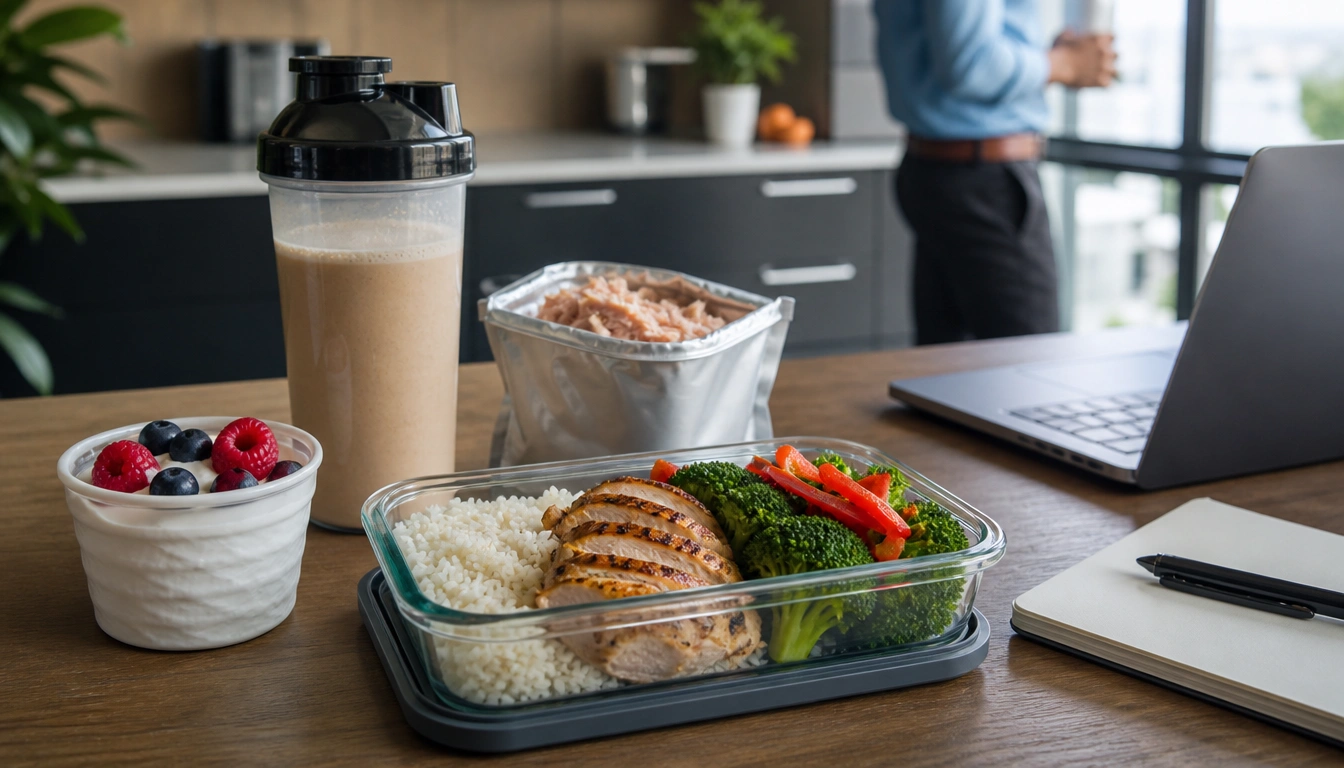
For most healthy busy adults, a practical protein target is about 20–40 grams per meal, with the exact amount depending on body size, age, and whether the protein is mostly plant-based. Total daily protein still matters most, but spreading it across breakfast, lunch, and dinner tends to support muscle protein synthesis better than saving most of it for dinner. If you have chronic kidney disease, get individualized advice before increasing protein.
Key Takeaways
- Total daily protein is the main driver, but even distribution across meals can improve 24-hour muscle protein synthesis compared with heavy dinner back-loading.
- A workable per-meal target for many adults is roughly 20–40 grams, with older adults and plant-based eaters often benefiting from the higher end.
- A protein-forward breakfast is the easiest place to fix a busy eating pattern because it reduces the need to “catch up” later in the day.
- Desk snacks, commute foods, and batch-prepped lunches make protein goals realistic when meetings, travel, or appetite changes disrupt normal meals.
- Higher-protein eating is generally fine for healthy adults, but chronic kidney disease requires medical supervision and a more cautious approach.
Protein distribution across the day matters, not just the total
For a busy professional, protein planning starts with a simple idea: daily total protein matters most, but how you spread it across the day also affects how your body uses it. Research cited by the National Institutes of Health shows that an even protein pattern can raise 24-hour muscle protein synthesis compared with a pattern that leaves most of the protein for dinner, even when the daily total is the same.
That does not mean every meal must be mathematically perfect. It means the body tends to respond better when it gets several useful protein doses instead of one oversized evening dose after a low-protein day. If you routinely under-eat at breakfast and lunch, you may still meet your daily gram target, but the distribution can be less supportive of muscle maintenance and satiety across the day.
This is especially relevant when work demands make eating irregular. Long meetings, travel, and late emails often encourage a “save it for later” pattern. The problem is that later usually becomes dinner, and dinner then has to do too much of the work.
A practical daily protein target and a realistic per-meal range
The baseline Recommended Dietary Allowance for protein is 0.8 grams per kilogram of body weight per day. That level is intended to prevent deficiency, but many healthy adults who want better satiety, stable energy, or support for lean mass do better with a more useful working range. Public health and clinical guidance commonly point to about 1.2 to 1.6 grams per kilogram per day for active, healthy adults, with higher needs sometimes used in specific settings.
Translated into meals, that often means three to four protein-containing eating occasions per day. A practical per-meal target for many adults is about 20 to 40 grams of protein. A common working estimate is around 0.4 grams per kilogram per meal, though exact needs vary with body size and total daily intake.
Why that range? Muscle protein synthesis is stimulated by a moderate dose of high-quality protein, often described as providing roughly 2.0 to 3.0 grams of leucine. Once you reach that useful threshold, more protein in the same sitting has diminishing returns for immediate muscle-building signaling. Extra amino acids can still contribute to overall nutrition, but they are not proportionally better for that one meal’s tissue-building response.
For breakfast, that can look like Greek yogurt with fruit and seeds, eggs with cottage cheese on the side, tofu scramble, or a smoothie built with milk or soy milk and protein powder. For lunch and dinner, it can mean a palm-sized portion of protein plus a fiber-rich side, rather than a plate dominated by starch with a token amount of protein.
Breakfast is often the easiest meal to improve first because many professionals already have a default morning routine. Replacing a low-protein pastry or cereal habit with a reliable protein anchor can make the whole day easier. It also reduces the temptation to “make up for it” with a very large dinner, which often happens when the morning window is skipped.
Office-proof lunch planning that survives real schedules
Lunch is where good intentions often break down. Calendars fill up, food options vary, and the easiest choice is whatever is nearby. A practical protein plan removes that friction by making lunch predictable before the workday starts.
Batch-prepping twice a week is often enough. Cook one or two proteins in advance, then mix them with convenient sides. Examples include chicken breast, salmon, tuna, tofu, tempeh, lentils, beans, or turkey. Pair them with microwaveable grains, bagged salad, roasted vegetables, or pre-cut produce. The goal is not gourmet meal prep; it is a lunch that can be assembled fast and eaten without much decision-making.
Travel and office days call for foods that hold up well. A cold grain bowl with chicken or tofu, a wrap with turkey and hummus, a bean-and-quinoa salad, or a leftover dinner portion can all work. If you have access only to a microwave or a shared break room, build meals that do not depend on a full kitchen. The more portable the protein, the more likely you are to use it.
Think of lunch as a reset point. If breakfast was small, lunch should help close the gap without making dinner enormous. A balanced lunch with a solid protein portion, fiber, and some fat is usually more sustainable than a rushed sandwich that leaves you hungry again an hour later.
Desk and commute protein backups for emergencies
Busy schedules fail in predictable ways, so keep backup protein where failure usually happens: in your desk, bag, car, or carry-on. This is not about replacing meals with bars. It is about preventing a missed protein window when a meeting runs long or you are stuck between appointments.
Good emergency options include tuna or salmon pouches, roasted edamame, nuts or seeds paired with fruit, shelf-stable milk or soy milk, jerky with modest sodium and sugar, and protein powder in a shaker bottle. If you tolerate dairy, single-serve Greek yogurt cups can also help when refrigeration is available. For plant-based eaters, roasted soybeans, edamame, or a soy-based drink can be especially useful.
The best emergency protein is the one you will actually keep stocked and eat. Convenience matters more than perfection here. If a packaged option helps you avoid going from noon to 8 p.m. without protein, it has done its job.
Use these backups strategically, not as a substitute for every meal. They are a bridge for the day you cannot sit down for lunch, not the whole plan.
How to avoid back-loading protein at dinner
Many people unintentionally turn dinner into the day’s protein correction. That often happens after a low-protein breakfast, a rushed lunch, and a long afternoon. The result is a very large dinner that feels like both a meal and a catch-up attempt.
A better pattern is to assign dinner a clear role: it is the final protein installment, not the rescue mission. If breakfast and lunch each contain a meaningful amount of protein, dinner does not need to carry the whole day. That can make eating more comfortable, especially if you do not like very large evening meals or prefer not to go to bed overly full.
One practical method is to set a minimum protein floor for each meal. For example, aim to get a solid protein source at breakfast, a real protein portion at lunch, and another at dinner. If one meal is smaller than expected, let the other meals fill the gap, but avoid letting dinner become so large that the rest of the day stays protein-poor.
For professionals with irregular evenings, this often means planning dinner backward. Ask what is realistic after work, then make breakfast and lunch strong enough that dinner can stay moderate. That is usually easier than trying to fix the entire day at 8 p.m.
Adjustments for older adults, plant-based eaters, and low-appetite days
Older adults often need more protein per meal to get the same muscle-building response because of anabolic resistance, the age-related blunting of the body’s response to amino acids. For many adults over 65, a target closer to 35 to 40 grams per meal may be more appropriate than the lower end of the range. The exact amount still depends on body size, total intake, and medical context.
Plant-based eaters can meet protein goals, but they often need more planning. Many plant proteins have a less concentrated leucine profile and are less digestible than animal proteins. That does not make them inadequate; it just means the meal may need a larger portion or a smarter combination. Beans, lentils, tofu, tempeh, soy milk, seitan, grains, nuts, and seeds can all contribute, especially when combined across the day.
Low-appetite schedules are another common problem, especially when stress, travel, or appetite-suppressing medications reduce interest in food. In those cases, smaller meals and more frequent feedings may work better than trying to force three large plates of food. Liquid options, such as protein smoothies or milk-based drinks, can be easier to tolerate than heavy meals.
The goal is not to chase a perfect meal structure. It is to make protein achievable in the real schedule you have.
When protein supplements help, and when whole foods should lead
Whole foods should stay the foundation of most workday protein plans because they bring fiber, vitamins, minerals, and better meal satisfaction. Chicken, fish, eggs, dairy, tofu, beans, and similar foods do more than deliver protein. They also help you build meals that are more filling and more nutritionally complete.
Supplements can still be useful when time is the limiting factor. A protein powder or ready-to-drink shake may help you cover a missed breakfast, bridge a long gap before lunch, or salvage a day of travel. They are especially helpful if appetite is low or if you need something portable and quick. The trade-off is that supplements are usually less satisfying than a mixed meal, and they should not crowd out nutrient-dense foods when you have the chance to eat them.
As a general rule, use supplements as a backup or convenience tool, not as the default solution for every protein problem. If a shake helps you avoid skipping protein altogether, that is a valid use. If you can eat a balanced meal, that is usually the better foundation.
For plant-based professionals, supplements can also help close gaps without making every meal large. Still, meals built from tofu, tempeh, soy milk, beans, lentils, and grains should remain the core strategy whenever possible.
Safety, food quality, and when to ask for medical guidance
Higher-protein eating is generally considered safe for healthy adults when it stays within a reasonable range and the overall diet remains balanced. The important exception is chronic kidney disease or known impaired kidney function. In that setting, protein advice should come from a physician or registered dietitian, because the right amount can be very different from general fitness or workplace nutrition guidance.
Food quality matters too. A protein-focused plan works best when it still includes vegetables, fruit, whole grains, legumes, nuts, and healthy fats. Choosing only highly processed meats or very salty convenience foods can undermine cardiovascular health over time. Protein should support the rest of the diet, not crowd it out.
It is also worth asking for individualized guidance if you have kidney disease, significant appetite loss, unexplained weight changes, advanced age with frailty concerns, or a medical condition that affects digestion, muscle mass, or nutrient needs. For most healthy professionals, the message is simpler: build meals around protein, but keep the rest of the plate balanced.
A practical protein plan should make life easier, not more complicated. If it feels unsustainable, the plan is too ambitious for your schedule and needs adjusting.
Frequently Asked Questions
How much protein should I aim for per day if I’m a healthy busy adult?
A common working range for healthy adults is about 1.2 to 1.6 grams per kilogram of body weight per day, which is higher than the basic RDA of 0.8 g/kg. Exact needs depend on body size, activity, age, and whether you are trying to preserve lean mass or improve satiety.
Is it better to spread protein evenly across meals or eat most of it at dinner?
Evenly spreading protein is usually more effective for muscle protein synthesis than saving most of it for dinner, especially when the daily total is the same. Dinner can still be your largest meal, but it should not be the only meaningful protein meal of the day.
What is a realistic per-meal protein target for breakfast, lunch, and dinner?
For many healthy adults, about 20–40 grams per meal is a practical target. Older adults and people relying mostly on plant protein often do better toward the higher end, because their meals may need more protein to create the same muscle-building signal.
How can I hit protein goals when I skip meals or have back-to-back meetings?
Use friction-reducing options: a protein-anchored breakfast, a batch-prepped lunch, and desk or bag backups like tuna pouches, roasted edamame, yogurt, milk, or protein powder. These options help prevent a long gap that forces dinner to do all the work.
When should someone with kidney disease avoid higher-protein advice?
If you have chronic kidney disease or impaired kidney function, do not follow general high-protein guidance without medical supervision. Protein targets in kidney disease are individualized, and the right amount depends on your diagnosis, stage, and treatment plan.
The Bottom Line
For healthy busy adults, the most useful protein strategy is not a giant dinner. It is enough total protein for the day, spread across meals well enough that breakfast and lunch do real work instead of being skipped or ignored.
A practical target is often 20–40 grams per meal, with the higher end more relevant for older adults, plant-based eaters, or anyone whose schedule makes meals small and irregular. If your day is hectic, use breakfast anchors, batch-prepped lunches, and desk backups to make the plan realistic.
If you have chronic kidney disease, get individualized advice before increasing protein. For everyone else, keep the plan food-first, portable, and balanced enough to support energy, satiety, and lean mass without making dinner carry the whole day.
Medical disclaimer
Medical disclaimer: This content is for educational and informational purposes only and is not a substitute for professional medical advice, diagnosis, or treatment. Dietary needs and supplement suitability vary by individual.
Sources
- National Institutes of Health (NIH) — nih.gov. Accessed November 2026.
- National Institutes of Health (NIH) — nih.gov. Accessed November 2026.
- U.S. Government / Health Authority — realfood.gov. Accessed November 2026.
- Academic / Medical Research Institution — heart.org. Accessed November 2026.
- Academic Research Institution — stanford.edu. Accessed November 2026.
