
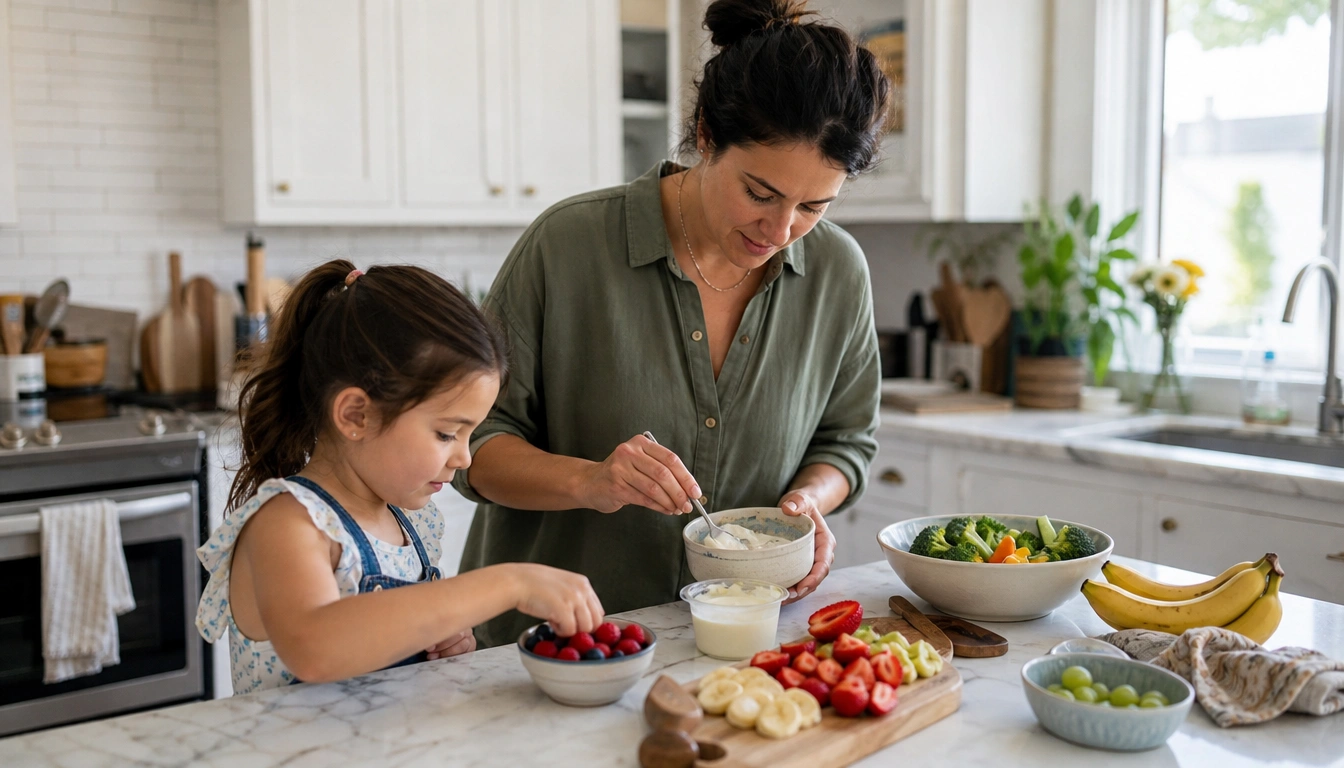
The easiest healthy swaps for busy parents are the ones that reduce friction instead of adding it: add nutrient-dense foods, make healthy options more visible, keep convenient basics on hand, and attach one new action to a routine you already do. You do not need a full meal-prep system or a perfect pantry to start. A few steady changes can make family eating feel easier, not stricter.
Key Takeaways
- Start with one small swap at a time, such as adding fruit to breakfast or replacing one sugary drink with water.
- Use the “addition” mindset: add vegetables, protein, or whole grains before trying to cut favorite foods.
- Design your kitchen for convenience by keeping visible produce, hidden trigger foods, and a grab-and-go snack bin.
- Frozen and canned produce can be budget-friendly, practical, and nutritious when you choose options without added sugar or excess sodium.
- For kids, keep safety in mind: modify choking hazards, avoid food moralizing, and let appetite guide portions.
- Habit stacking helps busy families stick with changes because it ties a new action to something already automatic.
Why small swaps work better than big overhauls
For busy parents, the most realistic healthy changes are the ones that fit into an existing day instead of requiring a brand-new routine. Public health guidance from the CDC and NHS supports building healthier patterns through small, repeatable steps rather than waiting for the “perfect” week to start. That matters because family life is rarely predictable. A school event, late work meeting, or tired evening can wipe out an ambitious plan quickly.
Habit stacking is one of the easiest ways to make progress. The idea is simple: link a new action to something you already do without thinking. If you always make coffee in the morning, use that moment to pack tomorrow’s water bottles. If you brush your teeth every night, do a few stretches or calf raises after. If you unload groceries on Sunday, put washed fruit at eye level at the same time. The new habit borrows the structure of the old one, which lowers mental effort.
The same logic works for food. Instead of saying, “We need to eat perfectly,” try asking, “What can I add to make this meal more nourishing and easier to repeat?” That shift lowers resistance because it does not frame favorite foods as the problem. According to nutrition guidance from the CDC and the Dietary Guidelines for Americans, the overall pattern matters more than one meal or one ingredient. Small changes repeated often are easier to keep.
Food-first swaps that save time, not just calories
Busy parents often hear about healthy eating as if it depends on extra cooking time. In practice, the best food swaps usually save time. A frozen vegetable bag can go from freezer to pan in minutes. A can of beans can become a lunch bowl, soup, or taco filling with very little prep. A whole-grain wrap can replace a more refined option without making dinner more complicated.
Think in terms of upgrades, not bans. Add spinach to pasta sauce. Add berries to cereal or yogurt. Add beans to canned soup to make it more filling. Add a side salad or sliced cucumbers to a sandwich meal. These changes increase fiber, color, and nutrient density while keeping the meals familiar enough that kids and adults are more likely to eat them.
Cooking fats can be part of the same approach. When a recipe allows it, liquid vegetable oils such as olive or canola oil are often a practical swap for solid fats. This is not about perfection in every pan. It is about building a pattern that fits a real kitchen and is easy to repeat on a Tuesday night.
If your family relies on takeout or packaged meals, you can still use the same principle. Add a bagged salad, fruit cup, or steamed frozen vegetable on the side. A small addition can improve the meal without forcing a full menu change.
Pantry, fridge, and freezer upgrades that reduce weekday friction
Environment shapes behavior. If the easiest snack is a bag of chips on the counter, that is what people tend to reach for. If cut fruit, yogurt, or baby carrots are visible and ready, those foods become the path of least resistance. This is one of the most practical ways to support healthier eating in a busy household.
Start with the fridge. Put washed grapes, sliced peppers, cheese sticks, hard-boiled eggs, or yogurt where they are easy to see. Use a dedicated grab-and-go bin so hungry kids and adults do not have to hunt for a snack. Keep less nutritious impulse foods out of sight rather than in the front row. You are not forbidding anything; you are simply making the easier choice the more helpful one.
The freezer deserves the same attention. Frozen vegetables, fruit, and even chopped onions or stir-fry blends can shorten prep time dramatically. They are often picked at peak ripeness, then frozen quickly, which helps preserve nutrients and reduces spoilage. That makes them especially useful when schedules are unpredictable or produce seems to disappear before anyone can use it.
Pantry basics help, too. Keep canned beans, canned tomatoes, tuna or salmon, oats, whole-grain crackers, and nut butters on hand. With a few staples available, you are less likely to feel trapped by “nothing to make” on a busy evening.
Snack and beverage swaps for kids and adults
Snacks and drinks are often where routines drift without much notice. This is also where small swaps can have a big effect because they are used every day. The goal is not to eliminate snacks. It is to make them more satisfying and less likely to leave everyone hungry again an hour later.
For snacks, combine at least two parts when possible: a fruit or vegetable plus protein or healthy fat. Examples include apple slices with nut butter, yogurt with berries, whole-grain crackers with cheese, or hummus with carrots. These pairings tend to hold people over better than a single refined snack alone.
For beverages, water is the easiest place to start. If plain water feels boring, try chilled water, sparkling water, or water flavored with citrus slices or berries. Replacing one sugary drink a day can be easier than trying to change every beverage at once. The CDC and heart health organizations consistently emphasize limiting added sugars as part of a healthier pattern.
For children, the best swap is often the one they will actually accept. A smoothie may work better than a salad on a hectic school morning. A yogurt pouch may be more realistic than a full breakfast plate when time is short. The point is to improve the pattern without creating a fight over every bite.
Budget-friendly shortcuts that still count
Healthy eating does not require expensive produce or a full weekend of prep. Frozen and canned foods can be excellent budget tools, especially when fresh food spoils before your family can use it. They also reduce chopping, washing, and last-minute grocery runs.
Choose canned vegetables and beans with no added sugar and, when possible, lower sodium. If the sodium is higher, rinsing beans or vegetables can help. Choose fruit canned in water or its own juice rather than heavy syrup. For frozen options, plain vegetables and fruit are usually the simplest pick. These are useful when schedules are unpredictable or fresh produce is out of budget.
Batch-cooking can also save money, but it does not need to be an all-day project. Cook one base protein or one pot of grains and use them across a few meals. Roasted chicken might become tacos, then soup, then a lunch wrap. Brown rice can turn into a quick bowl with frozen vegetables and beans. Reuse cuts down on both food waste and decision fatigue.
If your schedule is too tight for batch cooking, rely on “assembled meals” instead of cooked-from-scratch meals: canned beans plus prewashed greens, rotisserie chicken plus frozen vegetables, or eggs plus whole-grain toast and fruit. Convenience can still be healthy.
How to make healthy changes easier for picky eaters and kids
Children often eat differently from day to day. Appetite changes with growth, activity, tiredness, and mood. That means parents usually do better when they offer structure without pressure. Clinical and pediatric guidance commonly encourages parents to avoid forcing clean plates and to let children listen to hunger and fullness cues when possible.
The “addition” mindset is especially useful with picky eaters. Instead of removing favorite foods, add something familiar and nourishing alongside them. If your child likes pasta, add peas or spinach. If they like toast, offer fruit and peanut butter beside it. If they prefer plain rice, serve it with beans or a small portion of vegetables. You are reducing mealtime friction by keeping something comfortable on the plate.
Involving kids can help, too. Let them rinse berries, tear lettuce, pick a vegetable in the store, or stir ingredients in a bowl. Small jobs build familiarity, and familiarity often matters more than persuasion. The less a food feels like a battle, the more likely it is to become part of the routine.
For younger children, safety matters as much as nutrition. Whole grapes, raw carrots, nuts, popcorn, and similar foods can be choking hazards. Modify them in age-appropriate ways: cut grapes lengthwise, soften vegetables, and spread nut butter thinly rather than serving thick spoonfuls. If you are not sure whether a food is safe for your child’s age, choose the safer texture or ask a pediatric professional.
Common mistakes that make healthy swaps harder
One common mistake is moralizing food. Calling foods “good,” “bad,” “junk,” or “forbidden” can create anxiety, secrecy, or guilt, especially for children. It also makes ordinary family meals feel more stressful. A calmer approach is more sustainable: foods are more or less nourishing, more or less helpful for a given moment, but they are not a test of character.
Another mistake is setting all-or-nothing goals. If the plan is too strict, one missed day can feel like failure, and that can end the whole effort. Busy parents usually do better with flexible targets such as “add one fruit today” or “swap one drink this week.” That kind of goal is easier to repeat when life gets messy.
It also helps to avoid making too many changes at once. A new snack routine, a new dinner plan, a new beverage rule, and a new breakfast schedule can overwhelm everyone. Choose the change that would reduce the most friction first. For some families, that is drinks. For others, it is the after-school snack bin. For others, it is simply putting frozen vegetables in every week’s shopping list.
Healthy change works best when it feels ordinary. The goal is not to transform family life overnight. It is to make the next meal, snack, or shopping trip a little easier than the last one.
When a healthy swap should be individualized
Most families can start with broad, practical changes, but some situations need personalized guidance. If a child has extreme food selectivity, avoids entire food groups, has poor growth, or seems anxious around eating, speak with a pediatrician or pediatric registered dietitian. They can help you tell the difference between normal picky eating and a pattern that needs support.
Adults with diabetes, high blood pressure, kidney disease, digestive disorders, food allergies, or other chronic conditions may also need individual advice before making bigger food changes. Even helpful habits, like increasing fiber or changing sodium intake, can need adjustment based on the person.
If a swap creates new symptoms, worsening fatigue, dizziness, stomach issues, or intense stress around food, pause and get medical guidance. A workable plan is one that supports the whole household without creating new problems. The healthiest swap is the one your family can keep using safely.
Frequently Asked Questions
How can I make healthier food choices when I have no time to meal prep?
Use “assembly” meals instead of full prep. Keep a few ready items on hand, such as frozen vegetables, canned beans, fruit, yogurt, eggs, and whole grains. Then build meals by combining them rather than cooking from scratch every night.
What are the best snack and drink swaps for kids and parents?
Choose snacks that pair fiber with protein or healthy fat, such as fruit with nut butter, yogurt with berries, or crackers with cheese. For drinks, water is the easiest swap, followed by sparkling water or water flavored with fruit slices.
How do I build healthy habits into an already busy morning or evening routine?
Attach the new habit to something that already happens every day. Pack water bottles while making coffee, set out fruit while unloading groceries, or prep lunch items while cleaning up dinner. This lowers the amount of thinking required.
What healthy food swaps are budget-friendly for families?
Frozen and canned produce are often the most budget-friendly choices because they last longer and need less prep. Canned beans, frozen vegetables, oats, whole-grain bread, and seasonal fruit can all support quick, affordable meals.
How do I avoid turning healthy eating into a battle with my kids?
Avoid labeling foods as good or bad, and do not pressure children to clean their plates. Offer a familiar food alongside a small new one, let kids help with simple prep, and keep the focus on routine rather than rules.
The Bottom Line
Busy parents do not need a full wellness overhaul to support healthier family eating. The most realistic changes are small: add nutrient-dense foods, make the healthier choice easier to reach, and connect new habits to routines that already exist.
Frozen and canned foods, visible produce, grab-and-go snacks, and simple drink swaps can all reduce weekday stress. For children, keep safety and flexibility in mind, especially around choking hazards and mealtime pressure. The best plan is the one your family can repeat.
If a child has significant feeding concerns or an adult has a medical condition that affects diet, individualized advice matters. Otherwise, start with one low-effort swap, let it settle in, and build from there.
Medical disclaimer
Medical disclaimer: This content is for educational and informational purposes only and is not a substitute for professional medical advice, diagnosis, or treatment. Dietary needs and supplement suitability vary by individual.
Sources
- National Health Service (NHS) — scot.nhs.uk. Accessed November 2026.
- Centers for Disease Control and Prevention (CDC) — cdc.gov. Accessed November 2026.
- Academic / Medical Research Institution — heart.org. Accessed November 2026.
