
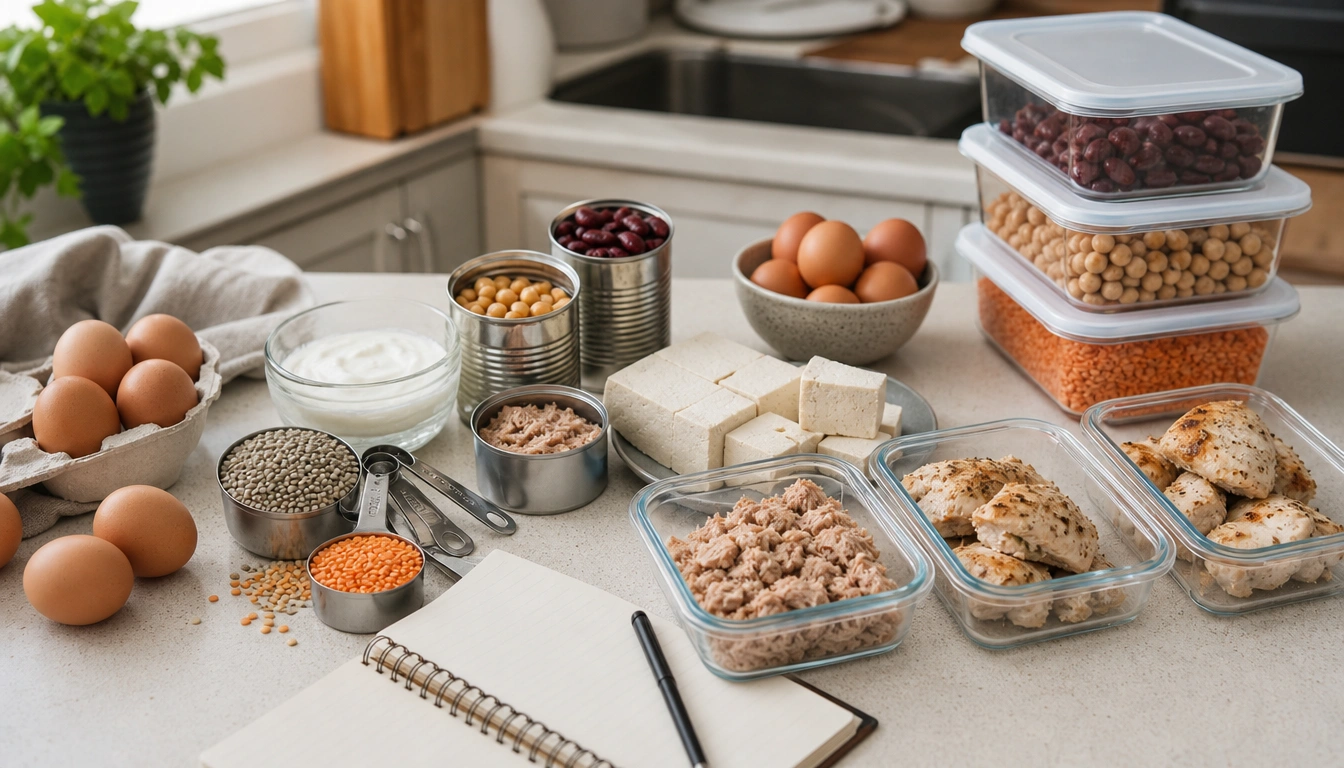
Yes—you can eat enough protein each day without overspending by using a few budget staples consistently, planning protein around meals instead of single expensive items, and comparing cost per serving rather than sticker price. For most healthy adults, the baseline target is 0.8 grams of protein per kilogram of body weight per day, while active adults often need more. Affordable foods like beans, lentils, eggs, dairy, tofu, and canned seafood can make that manageable.
Key Takeaways
- Start with the 0.8 g/kg/day baseline, then adjust upward if you are active, older, pregnant, or trying to preserve muscle.
- Buy for protein plus nutrients, not protein grams alone. Budget foods can also provide iron, zinc, fiber, calcium, and omega-3s.
- Plant proteins can work well on a budget even if each food is not complete by itself; variety across the day matters more than perfection at one meal.
- Unit pricing, dried legumes, family packs, and batch cooking usually save more than chasing single-sale items.
- Higher-protein eating is usually fine for healthy adults, but kidney disease and certain metabolic disorders need individualized advice.
Budget-first protein planning starts with your daily target
If you are trying to stretch groceries, protein needs by meal planning for budget shoppers should begin with a realistic target, not a vague idea of “more protein.” The National Academies’ protein RDA for adults is 0.8 grams per kilogram of body weight per day. That is a baseline for general maintenance, not a ceiling. The Dietary Guidelines for Americans from the U.S. government also encourage choosing a variety of protein foods, including beans, peas, lentils, soy foods, seafood, eggs, and lean meats.
For many active adults, the useful planning range is higher than the minimum. The research brief supports a common practical range of about 1.2 to 1.6 grams per kilogram for people who train regularly or are trying to support recovery and lean mass. That does not mean you must buy more expensive foods. It usually means distributing protein more intentionally across the day and choosing foods that give the most nutrition for the money.
Life stage matters too. Older adults may need more protein than younger adults to help protect muscle, and pregnant or lactating people often need more as well. If you are a student, parent, or worker with a busy schedule, the most useful question is not “Which food has the most protein?” but “Which combination gives me enough protein, useful micronutrients, and enough satiety at a price I can keep repeating?”
Best budget protein foods and what else they bring to the table
The cheapest protein choices are often the ones that do more than one job. Eggs are a classic example: they are versatile, affordable in many stores, and provide complete protein along with choline and B vitamins. Dried beans and lentils are usually among the lowest-cost protein foods per serving, especially when bought in bulk and cooked at home. They also add fiber, iron, and potassium, which improves meal quality beyond protein alone.
Canned seafood such as tuna, salmon, or sardines can be budget-friendly when compared with fresh seafood, and it brings protein plus nutrients like omega-3 fats. Chicken, especially whole chickens or family packs, can provide a lot of meals if you use the whole bird and portion it well. Plain Greek yogurt and cottage cheese are useful when you want a fast, high-protein option with little prep. Tofu is another strong budget choice for many shoppers, especially when you compare the cost per serving instead of the package price.
Looking at nutrient value is especially important when money is tight. Protein foods that also supply iron, zinc, calcium, or healthy fats can improve the overall quality of the day’s meals. That matters because the goal is not only to reach a protein number, but also to build meals that support energy, fullness, and long-term health.
How to build a cheap high-protein day
A low-cost day of eating works best when protein is spread across breakfast, lunch, dinner, and snacks. Protein is linked with fullness and can help reduce between-meal hunger, so spreading it out may make it easier to stay consistent and avoid expensive impulse snacks. You do not need a perfect amount at every meal. You just need a pattern that gives you a steady intake through the day.
For breakfast, think in combinations: eggs with toast, Greek yogurt with oats, cottage cheese with fruit, or tofu scrambled with vegetables and rice. For lunch, use leftovers as the backbone of a bowl, wrap, or soup. Beans and lentils work especially well here because they can be added to grain bowls, chili, pasta sauce, or mixed salads without much extra cost. For dinner, build around a protein anchor and bulk it out with inexpensive sides like rice, potatoes, cabbage, frozen vegetables, or whole-wheat pasta.
Snacks can help fill gaps without blowing the budget. Examples include yogurt, a hard-boiled egg, roasted chickpeas, cottage cheese with fruit, or a bean dip with crackers or vegetables. If your budget is very tight, it can help to plan one or two “anchor” meals with the most protein, then use lower-cost supporting foods elsewhere. That keeps the day balanced without requiring expensive specialty items.
Meal prep strategies that lower protein costs
Batch cooking is one of the most reliable ways to lower your protein bill. A large pot of lentil soup, bean chili, shredded chicken, or tofu stir-fry can cover several meals and reduce the temptation to buy convenience food. Freezer meals help even more because they protect you from waste on nights when you do not want to cook.
Recipe stretching is another high-value tactic. You can add cooked lentils to ground meat sauces, blend beans into soups, or mix chopped chicken into rice bowls, casseroles, and pasta dishes. This lowers the cost per serving while keeping the meal filling. If you buy a whole chicken, use it in stages: roast it once, then turn leftovers into soup, sandwiches, tacos, or grain bowls.
Buying in bulk or family packs can save money when you have room to store and use the food safely. The same is true for dried legumes. Dried beans and lentils often cost less than canned versions, though canned foods are still useful when time is short. The most cost-effective strategy is usually the one you can repeat every week without throwing food away.
How to shop smarter when prices keep changing
Unit pricing is one of the simplest tools for budget protein shopping. It tells you the cost per ounce, pound, or serving, which makes it easier to compare different package sizes, brands, and formats. A lower sticker price is not always the better deal if the package is small or the usable yield is low. This matters with meat, fish, yogurt, and plant proteins alike.
Store brands often give similar nutrition at a lower price, especially for dried beans, canned beans, yogurt, cottage cheese, tofu, and frozen vegetables. Seasonal swaps help too. If chicken prices rise, use more beans, lentils, or eggs for that week. If seafood is on sale, buy extra cans for the pantry. If produce is expensive, lean on frozen vegetables to keep meals balanced without increasing waste.
Food waste is part of the cost equation. Plan meals around what you will actually use, cook the most perishable items first, and freeze leftovers in portions you can reheat easily. A good grocery list is often worth more than a coupon because it prevents duplicate purchases and forgotten ingredients. The more often you shop with a plan, the easier it becomes to keep protein intake steady without overspending.
Plant and animal protein can both work on a budget
You do not need animal protein at every meal to meet your needs. Many plant proteins are low-cost, and while some are lower in one or more essential amino acids than animal foods, a varied diet across the day is enough for most healthy adults. That means beans, lentils, peas, tofu, grains, nuts, and seeds can all play a role without requiring every meal to be “complete” on its own.
The practical advantage of plant proteins is flexibility. A bean-and-rice bowl, lentil soup with bread, tofu stir-fry with noodles, or peanut-free hummus-style dip with vegetables can all contribute meaningful protein at low cost. If you eat a mix of plant foods over the day, the amino acid pattern balances out. You do not need to chase perfect pairing at every lunch or dinner.
Animal proteins can still be useful when they fit the budget and the household. Eggs, canned seafood, dairy, and chicken are all efficient options for many shoppers. The best approach is usually not “plant versus animal,” but which combination gives you enough protein, enough variety, and the best price per meal. For many families, mixing both is the easiest way to keep costs and nutrition in balance.
Special situations and when to get individual advice
Most healthy adults can handle higher-protein eating without problems, but there are important exceptions. People with chronic kidney disease should not self-direct a high-protein plan, because protein intake may need to be limited or adjusted. The same caution applies to some metabolic disorders and other medical conditions that affect how the body handles protein.
Pregnant and lactating people, older adults, athletes, and growing teens may need more protein than average, but their exact needs depend on body size, health status, and goals. Food allergies can also change the best budget plan. Eggs, soy, fish, shellfish, peanuts, and dairy are common protein staples, so if one of those is off-limits, you may need to lean more heavily on beans, lentils, peas, seeds, or another safe option.
Seek individualized guidance if you have kidney disease, unexplained weight loss, swelling, a complex metabolic condition, or a medical diet already prescribed by a clinician or dietitian. Budget planning should support your health, not override a condition-specific plan. If you are unsure how much protein is appropriate, a registered dietitian can help you match your needs to foods you can afford.
A simple comparison of low-cost protein foods
| Food | Approximate grocery-use advantage | Prep convenience | Common barrier |
|---|---|---|---|
| Eggs | Versatile, fast, easy to portion | Very high | Egg allergy or price swings |
| Dried beans and lentils | Usually among the lowest cost per serving | Medium | Soaking or longer cook time |
| Canned beans | Fast and shelf-stable | Very high | Sodium or higher cost than dried |
| Canned tuna, salmon, sardines | Good protein plus omega-3s | Very high | Fish preference or fish allergy |
| Chicken, especially whole birds or family packs | High yield when portioned well | Medium | Time to cook and shred or portion |
| Tofu | Flexible, works in many dishes | High | Soy allergy or unfamiliar texture |
| Greek yogurt and cottage cheese | Fast protein for breakfast or snacks | Very high | Dairy intolerance or short shelf life |
This kind of comparison is useful because it shows why the cheapest protein is not always the one with the lowest shelf price. Convenience, storage, food waste, and how well the food fits your household matter too. A slightly more expensive item can still be the better value if it actually gets eaten.
Frequently Asked Questions
How much protein do I actually need per day based on my body weight and activity level?
A common baseline for healthy adults is 0.8 grams per kilogram of body weight per day. Active adults often need more, and older adults or people in certain life stages may also need more. The right amount depends on body size, activity, and health status, so it is best to treat the baseline as a starting point rather than a universal target.
What are the cheapest high-protein foods that still offer good nutrition?
Dried beans, lentils, eggs, canned seafood, chicken bought in larger packs or as a whole bird, tofu, Greek yogurt, and cottage cheese are often strong budget options. The best choices usually depend on local prices, but many of these foods also provide nutrients like iron, zinc, calcium, or omega-3 fats.
How can I spread protein across breakfast, lunch, and dinner on a budget?
Use one protein anchor at each meal, even if it is modest. Eggs or yogurt work well at breakfast, beans or leftovers at lunch, and chicken, tofu, lentils, or canned seafood at dinner. A snack can fill the gap if needed. Spreading protein out often helps with fullness and consistency.
Are plant proteins enough, or do I need animal protein to meet my needs?
Plant proteins can absolutely meet protein needs for many people. They do not need to be complete in every meal as long as the overall diet is varied across the day. Beans, lentils, peas, tofu, grains, nuts, and seeds can all contribute, and animal foods can be included if they fit your budget and preferences.
How can I use meal prep and batch cooking to reduce protein costs?
Cook once and eat several times. Large pots of beans, lentils, soups, chili, or shredded chicken can cover multiple meals and reduce waste. Freezing portions, stretching recipes with legumes or grains, and buying family packs or whole chickens can lower the cost per meal without making dinner more complicated.
The Bottom Line
The most affordable way to get enough protein is usually not a single superfood or supplement. It is a repeatable system: know your rough protein target, buy foods that also add useful nutrients, and plan meals that spread protein across the day.
For many budget shoppers, beans, lentils, eggs, dairy, tofu, canned seafood, and chicken are the core tools. Use unit pricing, batch cooking, and food-waste prevention to make those foods go further. If you have kidney disease, a metabolic disorder, or a food allergy, get individualized guidance before changing your protein plan.
Medical disclaimer
Medical disclaimer: This content is for educational and informational purposes only and is not a substitute for professional medical advice, diagnosis, or treatment. Dietary needs and supplement suitability vary by individual.
Sources
- U.S. Government / Health Authority — dietaryguidelines.gov. Accessed November 2026.
- U.S. Government / Health Authority — health.gov. Accessed November 2026.
- U.S. Government / Health Authority — nutrition.gov. Accessed November 2026.
