
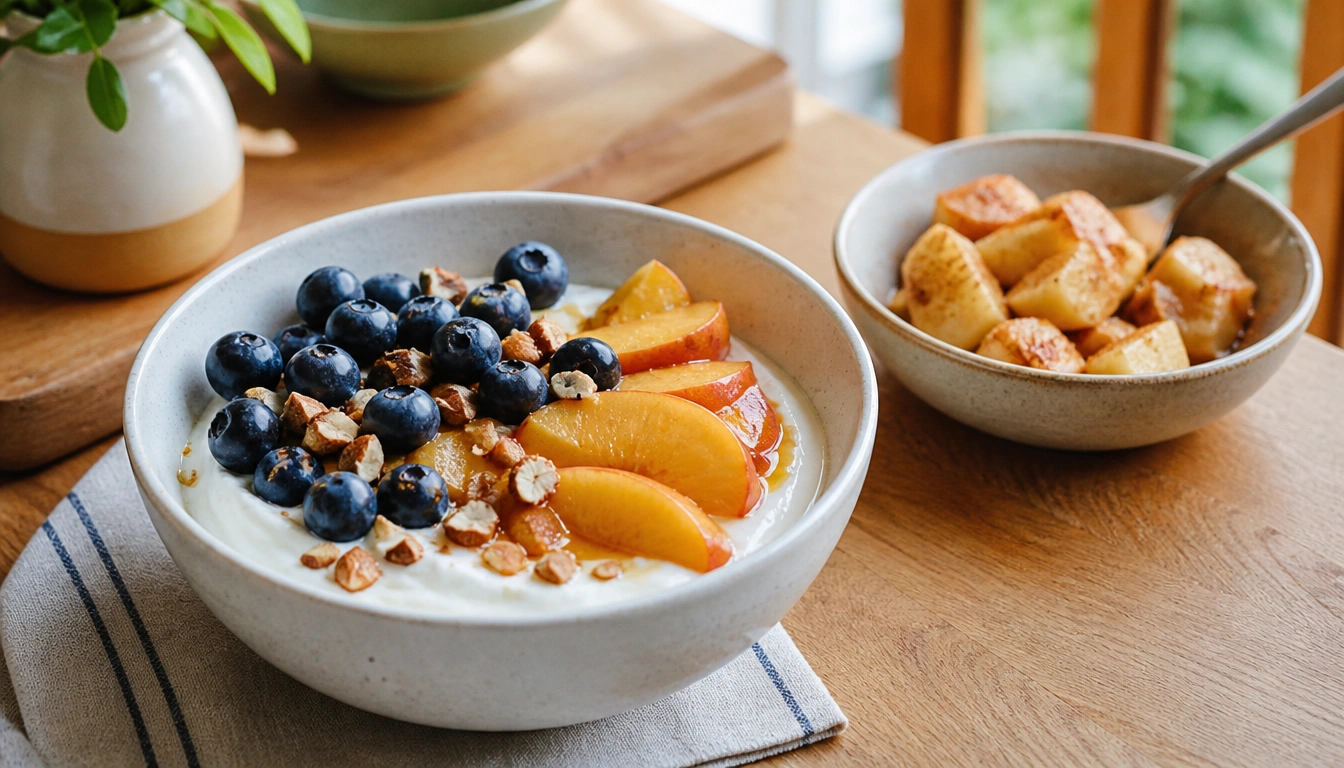
The easiest healthy fruit-and-yogurt desserts for adults over 50 are plain or Greek yogurt topped with fruit, such as berry parfaits, warm cinnamon apples, thawed frozen mango, or canned peaches packed in juice. These desserts work well because they are quick, easy to chew, and can help support protein, calcium, and fiber needs while keeping added sugar low.
Key Takeaways
- Plain or Greek yogurt plus fruit can turn dessert into a practical way to add protein, calcium, and fiber after 50.
- Greek yogurt usually gives more protein per serving, while plain yogurt keeps added sugar lower than flavored varieties.
- Soft fruit, thawed frozen fruit, or fruit cooked until tender can make desserts easier to chew and safer for sensitive mouths.
- Adults with lactose intolerance may do well with lactose-free yogurt or fortified soy yogurt.
- For blood sugar awareness, keep portions modest and rely on fruit, cinnamon, vanilla, or nuts for flavor instead of sweetened toppings.
Why fruit-and-yogurt desserts fit well after 50
Fruit-and-yogurt desserts make sense for adults over 50 because they line up with three common nutrition priorities: more protein, enough calcium, and steady fiber intake. The National Institute on Aging notes that calcium needs stay important with age, and yogurt is a convenient way to get it in a familiar food. Greek yogurt and other strained styles can also add more protein, which matters because muscle maintenance becomes harder as we get older.
Fruit helps round out the dessert with fiber, vitamins, and natural sweetness. That fiber can support regular digestion and may help slow the rise in blood sugar after a meal compared with a dessert made mostly from refined starches or added sugar. The practical benefit is that dessert can become part of your daily food pattern instead of an extra treat that adds calories without much nutrition.
For many home cooks, the other advantage is portion control. A bowl of yogurt with fruit is easy to scale up or down, and it does not require baking, decorating, or complicated equipment. That makes it more realistic on weeknights, for caregivers, or for anyone who wants something sweet without a big project.
How to choose the best yogurt
The best yogurt for older adults is usually plain and unsweetened. That keeps added sugars lower and gives you more room to flavor the dessert with fruit. If you want a thicker texture and more protein, plain Greek yogurt is often the most practical option. If you prefer a milder taste or lighter texture, regular plain yogurt can still work well.
Lactose-free yogurt is a smart choice for people who get bloating or discomfort from standard dairy. Fortified soy yogurt can also be a useful option, especially for people who avoid dairy but still want a creamy base. Check the label for protein content and added sugar, and choose unsweetened versions when possible.
If you are comparing containers, look first at the ingredient list. A short list usually signals a simpler product. Flavored fruit yogurts can be convenient, but many contain more added sugar than most people need in a dessert that already includes fruit. If you want sweetness, add ripe fruit, cinnamon, vanilla, or a spoonful of chopped nuts instead.
| Yogurt type | Best use | Why it works |
|---|---|---|
| Plain Greek yogurt | High-protein parfaits and bowls | Thick texture, higher protein, easy to pair with fruit |
| Plain regular yogurt | Everyday fruit cups and quick desserts | Softer texture and familiar taste |
| Lactose-free yogurt | For lactose sensitivity | Better tolerated while still offering dairy nutrients |
| Fortified soy yogurt | Dairy-free desserts | Useful option for people avoiding dairy |
Best fruits for easy, low-effort desserts
The easiest fruits to use are the ones that require little trimming and can be served soft. Berries are especially convenient because they need minimal prep and work well fresh or thawed from frozen. Blueberries, raspberries, and strawberries add color, flavor, and fiber without much effort.
Frozen fruit is often the most budget-friendly choice. Buy bags with no added sugar and thaw only what you need. Frozen berries, mango, cherries, and peaches all work well in yogurt desserts. They are especially handy when fresh fruit is expensive, out of season, or likely to spoil before you finish it.
Canned fruit can also be useful, as long as you choose fruit packed in water or its own juice rather than heavy syrup. Drain it if you want to reduce extra sweetness. Soft fruit such as peaches, pears, and mandarin oranges can be easy to chew, but fruit with tough skins, hard cores, or large seeds may need more preparation. If chewing is difficult, cook fruit until tender or mash it before adding it to yogurt.
Simple fruit-and-yogurt dessert formulas
Berry parfait: Spoon plain Greek yogurt into a glass or bowl, add berries, then repeat with another layer. Finish with a small sprinkle of chopped walnuts or oats if desired. This is a good default dessert because it is fast, colorful, and easy to adjust.
Warm cinnamon apple bowl: Cook chopped apples with a splash of water until soft, then stir them into plain yogurt or spoon them on top. Cinnamon adds flavor without extra sugar, and the warm fruit can feel more like a traditional dessert.
Mango-vanilla cup: Stir thawed mango into yogurt with a small amount of vanilla extract. The mango adds sweetness and softness, while vanilla gives the dessert a richer taste without needing syrup or candy toppings.
Peach-and-berry sundae: Combine drained canned peaches with a few berries and a base of plain yogurt. This version works well when you want something sweet but do not have fresh fruit on hand.
Each of these desserts can be made in minutes. If you want a little crunch, add a small amount of nuts or seeds just before serving. If you prefer a softer dessert, keep the texture smooth and skip the topping.
Texture and digestion upgrades for sensitive teeth or swallowing concerns
Some older adults need softer textures because of dental work, dry mouth, or swallowing difficulty. In those cases, the best fruit-and-yogurt desserts are the ones that can be blended, mashed, or cooked until soft. Smooth yogurt with fruit puree is often easier to manage than chunks of raw fruit.
Stewed apples, baked pears, mashed bananas, thawed berries, and well-ripened peaches are all better options than crisp apples or tough fruit skins. If a dessert needs more smoothness, blend the fruit into the yogurt until it is creamy. You can also thin yogurt slightly with milk or a fortified dairy alternative if swallowing a thick mixture is uncomfortable, but only if that texture is easier for the person eating it.
For caregivers, the safest approach is to avoid hard pieces, seeds, or large chunks in desserts served to someone with chewing or swallowing problems. If there is any history of dysphagia, follow the texture guidance given by a clinician or speech-language pathologist.
How to make these desserts more blood-sugar-friendly
For people who want steadier blood sugar, the main goal is to keep the dessert balanced, not to remove fruit altogether. Whole fruit is usually a better choice than juice or sweetened fruit because it contains fiber. Plain yogurt also gives you a neutral base without the extra sugar found in many flavored cups.
Portion size matters. A smaller bowl with yogurt and fruit can still feel satisfying, especially if it includes protein and a little fat from nuts or seeds. Pairing fruit with yogurt is helpful because protein and fat can slow digestion compared with fruit eaten alone.
Flavor helps too. Cinnamon, nutmeg, vanilla, lemon zest, or a few crushed nuts can make the dessert taste fuller without adding much sugar. If you use canned fruit or frozen fruit blends, choose unsweetened versions so the dessert stays simple and predictable.
Smart substitutions for common barriers
Lactose intolerance does not mean giving up fruit-and-yogurt desserts. Lactose-free yogurt is the most direct swap, and fortified soy yogurt is another good option if you avoid dairy. Both can work in parfaits, bowls, and blended desserts.
Kidney-related diet needs are more individualized. Some people with chronic kidney disease need to watch potassium, phosphorus, or fluid intake. That may mean adjusting fruit choices, yogurt amount, or portion size. A person who has been told to limit potassium may do better with smaller servings and fruits that fit their plan, rather than large portions of bananas or melon. Because kidney diets vary so much, it is best to follow personal guidance from a clinician or dietitian instead of using a one-size-fits-all rule.
Grapefruit is another special case. It can interact with certain medications, so it is safer to choose other fruits if grapefruit is on your medication warning list. Berries, peaches, mango, apples, and pears are easy substitutes that still keep the dessert fresh and interesting.
Make-ahead and budget tips
The easiest fruit-and-yogurt desserts are the ones you can assemble from pantry and freezer staples. Keep plain yogurt, frozen fruit with no added sugar, and a few flavor boosters on hand. Cinnamon, vanilla extract, oats, and chopped nuts can make the same base taste different from one day to the next.
For make-ahead prep, portion yogurt into containers and thaw fruit in the refrigerator overnight. That creates a ready-to-serve dessert with almost no effort. If you buy larger tubs of yogurt, use a clean spoon each time to help it stay fresh longer.
Budget-friendly choices usually include frozen berries, canned peaches in juice, plain yogurt, and seasonal fruit when it is on sale. You do not need a special recipe to make these desserts work. A simple fruit-and-yogurt bowl can be flexible enough for everyday use, which is often what makes it the healthiest option in real life.
Frequently Asked Questions
How much fruit and dairy should adults over 50 aim for in a day?
The USDA and the National Institute on Aging recommend about 1½ to 2 cups of fruit daily for adults 50 and older. A typical daily pattern also includes about 3 cup-equivalents of dairy, and one 8-ounce container of yogurt counts as a cup-equivalent.
What kind of yogurt is best for older adults who want more protein and less added sugar?
Plain Greek yogurt is often the best fit because it usually has more protein and no added sugar. If you prefer a lighter texture, plain regular yogurt can still work well. The main thing is to choose unsweetened yogurt and add sweetness with fruit instead of flavored syrups.
Which fruits are easiest to digest or safest for adults over 50 with chewing or swallowing issues?
Soft fruits are usually the easiest choice, especially when they are cooked or mashed. Good options include stewed apples, baked pears, ripe peaches, thawed berries, and smooth fruit purees. Hard, crunchy, or seedy fruit may be less suitable if chewing or swallowing is difficult.
Can people with lactose intolerance still enjoy fruit-and-yogurt desserts?
Yes. Lactose-free yogurt is the most direct swap, and fortified soy yogurt is another good option if dairy is not tolerated. Many people also find yogurt easier to digest than milk because of the live cultures, but individual tolerance varies.
Which fruit-and-yogurt desserts are better for blood sugar management?
Desserts made with plain yogurt, whole fruit, and no added sugar are usually the best starting point. Berry parfaits, plain yogurt with cinnamon apples, or yogurt with thawed unsweetened fruit are good examples. Smaller portions and a little protein from yogurt can help make the dessert more balanced.
The Bottom Line
Fruit-and-yogurt desserts are one of the easiest healthy desserts for adults over 50 because they are quick, affordable, and naturally flexible. They can support protein, calcium, and fiber needs without turning dessert into a complicated recipe.
Plain or Greek yogurt, soft fruit, and simple add-ins like cinnamon or nuts are usually enough to make a satisfying bowl. If chewing, lactose intolerance, medication interactions, blood sugar concerns, or kidney disease are part of the picture, adjust the fruit and yogurt choice to fit the person eating it rather than forcing a standard recipe.
Medical disclaimer
Medical disclaimer: This content is for educational and informational purposes only and is not a substitute for professional medical advice, diagnosis, or treatment. Dietary needs and supplement suitability vary by individual.
Sources
- National Institutes of Health (NIH) — nih.gov. Accessed November 2026.
- Centers for Disease Control and Prevention (CDC) — cdc.gov. Accessed November 2026.
- National Institutes of Health (NIH) — nih.gov. Accessed November 2026.
- Centers for Disease Control and Prevention (CDC) — cdc.gov. Accessed November 2026.
- Centers for Disease Control and Prevention (CDC) — cdc.gov. Accessed November 2026.
- Centers for Disease Control and Prevention (CDC) — cdc.gov. Accessed November 2026.
