
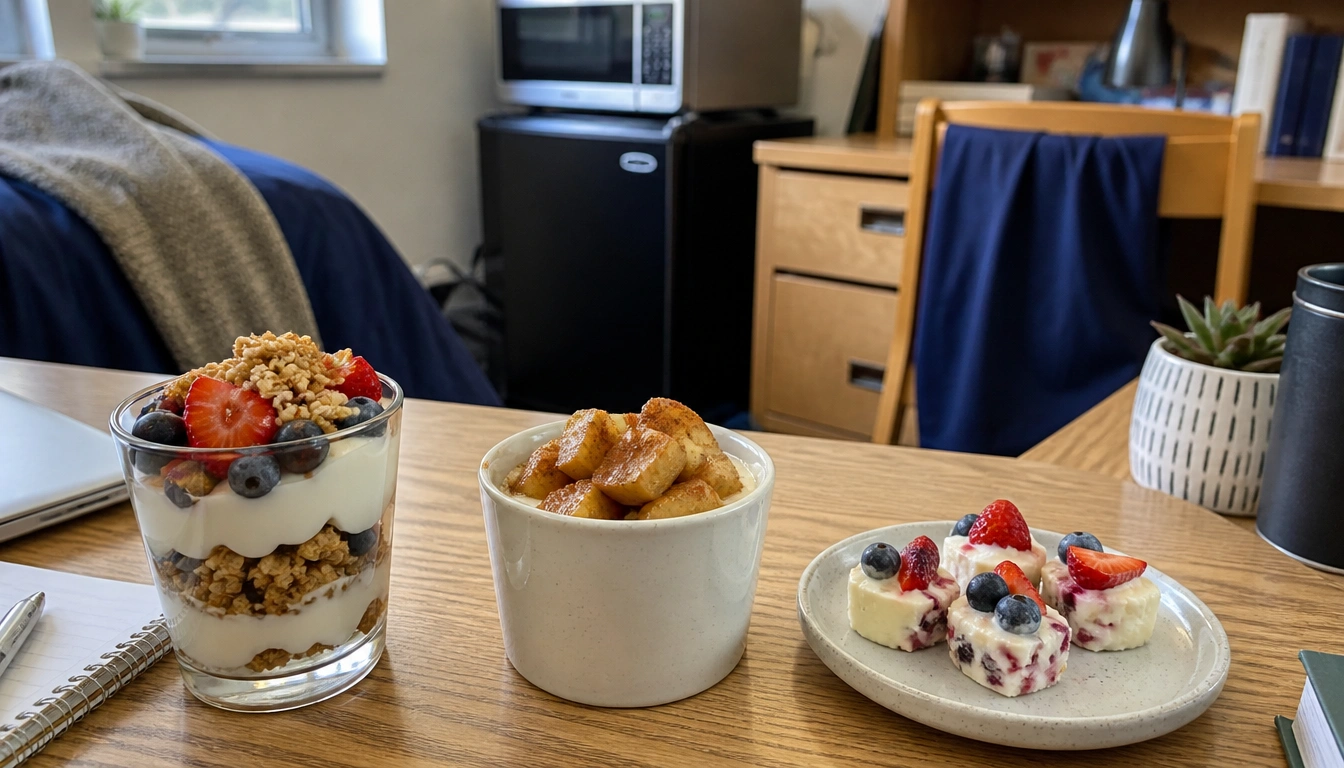
The easiest dorm-safe fruit-and-yogurt desserts are simple yogurt bowls, parfaits, freezer bites, and warm fruit bowls made with plain or lightly sweetened yogurt, fruit, and a small crunchy topping. They work well in a mini-fridge because they need little equipment, cost less than bakery desserts, and can be customized for sugar, protein, and dietary needs.
Key Takeaways
- Start with plain or lightly sweetened yogurt and let fruit do most of the sweetening, which keeps dessert flavor without relying on candy-like toppings.
- Greek yogurt usually feels more filling because it is typically higher in protein; plant-based yogurts can work too, but protein varies a lot by brand.
- Frozen fruit, canned fruit in juice, and bulk tubs of yogurt are usually the easiest ways to lower cost and reduce waste in a dorm.
- For crunch, add granola, cereal, crushed graham crackers, seeds, or chopped nuts right before eating so the texture stays crisp.
- Food safety matters in shared fridges: keep yogurt cold, store cut fruit sealed, and avoid leaving dairy or cut fruit out for long periods.
Dorm-friendly fruit-and-yogurt desserts that actually fit student life
Fruit-and-yogurt desserts make sense for college life because they are fast, cheap, and forgiving. You do not need an oven, a mixer, or much counter space. A spoon, a bowl or cup, a mini-fridge, and a microwave are enough to build a sweet snack after class or during a late-night study break.
The best versions also solve a common problem with dorm food: they feel like a treat without turning into a sugar bomb. MyPlate-style meal planning emphasizes balance, and yogurt plus fruit is a simple way to get protein, calcium, and produce into one snack-sized dessert. If you start with plain or lightly sweetened yogurt, fruit can provide most of the flavor while keeping added sugar lower than many packaged sweets.
For the best results, choose yogurt and fruit with the final texture in mind. Thick yogurt holds toppings better than thin yogurt. Soft fruit such as berries, bananas, or peaches works well in cold bowls, while apples, pears, and microwaved stone fruit give more “dessert” feel. Low-cost add-ins like cinnamon, vanilla, a drizzle of honey, or a few spoonfuls of granola can make plain ingredients feel more finished without making the snack expensive.
Three core builds for different study-night cravings
The simplest path is to keep three base formulas in mind. Each one uses the same core ingredients but delivers a different mood: crunchy, cold, or warm.
Crunchy parfait
Layer yogurt, fruit, and a crunchy topping in a cup or jar. This is the best option when you want something that feels structured and dessert-like. Start with yogurt, add fruit, then top with granola, whole-grain cereal, crushed graham crackers, or seeds. Add the crunchy layer at the end so it does not go soggy while you study.
Freezer bites
Mix yogurt with fruit, then spoon small portions onto a lined plate or into mini muffin cups and freeze until firm. These are useful when you want a cold, snackable treat that feels closer to ice cream. They work especially well with berries because the fruit freezes nicely and adds bright flavor without much prep.
Warm apple-cinnamon bowl
Microwave diced apple with cinnamon until just softened, then spoon yogurt over the warm fruit and finish with a small crunchy topping. The warm-cold contrast makes a basic snack taste more like a pie filling or cobbler. If you only have a microwave, this is one of the easiest ways to make a dorm dessert feel special.
Each build can be made in under a few minutes, and each one scales up or down depending on how hungry you are. If you are eating after dinner, use a smaller portion. If you are replacing a missed meal, pair the dessert with a more substantial food rather than relying on sweets alone.
How to keep them filling without making them heavy
The main reason yogurt desserts work as student snacks is that they can be satisfying without feeling greasy or overly rich. Protein is the biggest reason. Greek yogurt is usually more filling than regular yogurt because it tends to have more protein in a smaller serving. That protein can help you stay satisfied longer, especially when paired with fiber from fruit.
Regular yogurt still works if that is what you can afford or tolerate better. The key is to build around it with fruit and a modest portion of toppings so the dessert has substance. Fiber from berries, apples, pears, or bananas helps slow how quickly you feel hungry again. For students who get shaky or overly hungry after sweet snacks, that balance matters more than making the bowl huge.
Plant-based yogurts can also fit well, especially for lactose-free diets, but protein content varies. Some soy- or pea-protein-based versions are closer to dairy yogurt in satiety, while some coconut or almond yogurts are lower in protein and may need a more filling add-on such as oats, seeds, or extra fruit. If your goal is a snack that carries you through a study session, check the label and look for a higher-protein option when possible.
A good rule is to think in layers: yogurt for creaminess and protein, fruit for sweetness and fiber, and a small topping for texture. That keeps the dessert satisfying without turning it into a heavy meal.
Budget swaps and shelf-stable backups that save money
Fresh berries are great, but they are not always the cheapest option for students. Frozen fruit is often the easiest budget upgrade because it lasts longer, reduces waste, and can be portioned out as needed. Frozen berries work especially well in parfaits, yogurt bowls, and freezer bites. They thaw quickly and can help a cold bowl feel richer.
Canned fruit packed in juice is another useful backup, especially when fresh fruit is expensive or you do not have time to shop often. Drain it well before adding it to yogurt so the dessert does not become watery. Peaches, pears, pineapple, and fruit cocktail can all work if the juice is not overly sweetened.
Buying yogurt in larger tubs usually costs less per serving than single-serve cups. That matters in a dorm because you can portion it into a reusable container and stretch it across several desserts. If your fridge space is tight, choose a few versatile add-ins instead of many separate products: cinnamon, oats, cereal, granola, and one or two kinds of fruit.
For the cheapest combination, think in pairs that already taste good together: banana and yogurt, apple and cinnamon yogurt, or frozen berries and plain yogurt. Those combinations need very little extra sugar to taste complete.
Flavor and texture upgrades that make plain yogurt taste like dessert
Small flavor choices can make plain yogurt feel much more like dessert. Cinnamon is one of the easiest upgrades because it works with apples, bananas, pears, and even berries. Vanilla extract or vanilla yogurt can create a sweeter impression without much added sugar. A little citrus zest, if you have it, can brighten fruit and keep the bowl from tasting flat.
Texture matters just as much as flavor. Cold yogurt with room-temperature fruit is pleasant, but warm fruit with cold yogurt often feels more dessert-like. Crunch is the final layer that makes a bowl feel finished. Use granola, toasted oats, crushed cereal, chopped seeds, crushed pretzels, or a small amount of chopped nuts if your housing setup allows them.
If you want something that feels more indulgent, keep the sweetener minimal and focus on contrast: tart fruit with creamy yogurt, soft fruit with a crunchy topping, or warm fruit with a cold base. A light drizzle of honey or maple syrup can be enough. You do not need to turn the snack into a sundae for it to feel special.
One useful approach is to keep a “dessert box” in your room with cinnamon, a small jar of honey, and a resealable topping container. That makes it easier to build flavor without impulse-buying expensive sweets after a long day.
Dorm safety and storage tips for shared fridges
Food safety matters more in a dorm because fridges are crowded, shared, and opened often. Keep yogurt cold and return it to the fridge promptly after serving. The USDA and food safety guidance from academic medical sources emphasize keeping refrigerated foods at safe temperatures and not leaving perishable foods out too long. As a practical rule, do not leave yogurt or cut fruit sitting out for more than about two hours, and keep it out for less time if the room is warm.
Cut fruit should be stored in a sealed container so it does not dry out or pick up odors from other people’s food. If you are making a parfait ahead of time, keep crunchy toppings separate until eating time so the texture stays better and moisture does not seep into the granola or cereal. For freezer bites, keep them tightly covered once they are firm.
Shared-fridge hygiene also matters for allergies. If people in your dorm are sensitive to dairy, nuts, or other ingredients, use clearly labeled containers and clean utensils. Avoid double-dipping, and do not let spoons that touched a topping go back into the main container. If you are using nut toppings, store them in a sealed container to reduce cross-contact risk.
When in doubt, choose smaller batches. It is better to make one or two servings at a time than to let a whole container sit in a busy fridge for days.
Customizing for lactose-free, plant-based, nut-free, and lower-sugar needs
These desserts are easy to adapt. If you are lactose intolerant, lactose-free dairy yogurt is the closest swap in texture and protein. It usually behaves like regular yogurt in parfaits and bowls, so you can use the same fruit and topping ideas.
Plant-based yogurt also works, but the protein difference matters. Soy-based or pea-protein-fortified yogurts are usually the best fit when you want a more filling snack. Coconut or almond yogurts can taste great, but they may be lighter on protein, so consider adding oats, chia seeds, or extra fruit if you need more staying power.
For nut-free dorms, use granola, puffed rice cereal, seeds, or crushed crackers instead of nuts. Always check shared-kitchen rules, because some buildings are more strict about allergen storage than others. If you have a lower-sugar goal, start with plain yogurt, use fruit as the main sweetener, and keep honey or maple syrup to a small finishing touch rather than the base of the recipe.
Fresh fruit is not mandatory. If you only have frozen fruit, thaw it slightly before mixing. If you only have canned fruit, drain it well and use it as a topping rather than a syrupy mix-in. The goal is not perfection; it is a dessert that matches your needs and what your dorm setup can handle.
A quick weekly workflow for busy students
The easiest way to keep fruit-and-yogurt desserts realistic is to shop and prep in a routine. A simple Sunday grocery list can cover most of the week: one large tub of yogurt, two or three fruits you actually like, one crunchy topping, and one spice or flavor booster. That is enough to make several different snacks without cluttering your fridge.
Batch prep helps. Wash fruit when you get back from the store, portion out a few servings in small containers, and keep the crunchy toppings separate. If you buy apples or bananas, leave some whole for later and prep only what you will use in the next day or two. Frozen fruit can be kept in the freezer and scooped as needed, which is especially useful when fridge space is limited.
For study nights, assemble at the last minute if you want the best texture. That means yogurt in the bowl first, fruit on top, and crunchy toppings added right before eating. If you are making something ahead, choose a recipe that can handle a little moisture, such as a freezer bite or a yogurt-and-fruit cup with no crunchy layer mixed in yet. This approach keeps the snack cheap, flexible, and far less likely to disappoint after a long day.
Frequently Asked Questions
How do I make fruit-and-yogurt desserts taste like dessert without adding too much sugar?
Use ripe fruit, a plain or lightly sweetened yogurt base, and flavor boosters like cinnamon, vanilla, or citrus zest. Add only a small drizzle of honey or maple syrup if needed. Crunchy toppings such as granola or cereal help the bowl feel more like a treat without turning it into a sugar-heavy snack.
Which yogurt is best for a filling college snack: Greek, regular, lactose-free, or plant-based?
Greek yogurt is usually the most filling because it tends to be higher in protein. Regular yogurt can still work well if you pair it with fruit and a crunchy topping. Lactose-free dairy yogurt is a good swap if dairy bothers you. Plant-based yogurts vary widely, so soy- or pea-protein-fortified versions are usually more filling than coconut or almond options.
What fruits work best in dorm-friendly yogurt desserts when I only have a mini-fridge?
Berries, bananas, apples, pears, grapes, peaches, and canned fruit in juice are all practical choices. Frozen fruit is especially useful because it keeps longer and is usually cheaper. Apples and pears hold their texture well, while berries work well in parfaits, bowls, and freezer bites.
Can I make fruit-and-yogurt desserts ahead of time for study sessions without them getting soggy?
Yes, but keep crunchy toppings separate until the last minute. Yogurt, fruit, and toppings can be pre-portioned ahead of time, then assembled when you are ready to eat. If you need a fully made snack, freezer bites or a warm fruit bowl with a separate topping tend to hold up better than a layered parfait.
What are the safest ways to store yogurt and cut fruit in a shared dorm fridge?
Keep yogurt and cut fruit in sealed containers, label them if needed, and return them to the fridge quickly after serving. Do not leave perishables out for long periods, and keep spoons and toppings clean to avoid cross-contamination. If your dorm shares space with people who have allergies, separate nut toppings and be careful with shared utensils.
The Bottom Line
Fruit-and-yogurt desserts are one of the easiest dorm snacks to make because they need little equipment, little time, and very little money. The best versions start with plain or lightly sweetened yogurt, add fruit for sweetness and fiber, and finish with a small crunch or spice for flavor.
If you want more staying power, Greek yogurt usually gives you more protein; if you need lactose-free or plant-based options, choose the version that fits your body and your budget. Frozen fruit, canned fruit in juice, and bulk yogurt make this even easier for a busy week.
For best results, keep toppings separate until eating time and store everything cold in a shared fridge. That keeps the snack safe, fresher, and more satisfying when late-night cravings hit.
Medical disclaimer
Medical disclaimer: This content is for educational and informational purposes only and is not a substitute for professional medical advice, diagnosis, or treatment. Dietary needs and supplement suitability vary by individual.
Sources
- Academic Research Institution — usu.edu. Accessed November 2026.
- Academic Research Institution — illinois.edu. Accessed November 2026.
- myplate.food — myplate.food. Accessed November 2026.
- health.clevelandclinic.org — clevelandclinic.org. Accessed November 2026.
