
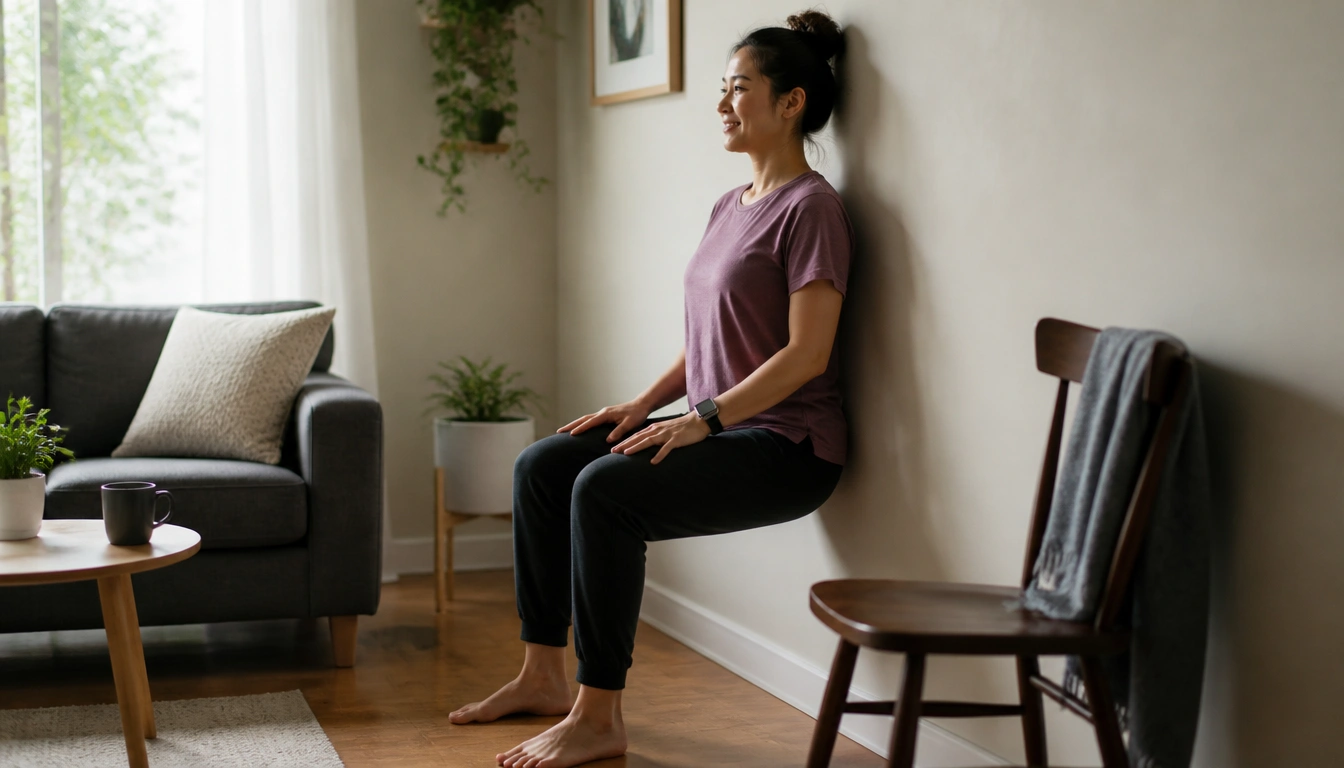
A good after-work movement routine at home is short, easy to start, and flexible enough to match your energy. Begin with a few minutes of light movement to break up sitting, then add mobility, gentle strengthening, or a brisk walk if you feel up to it. The best routine is the one you can repeat most days, not the hardest one you can finish once.
Key Takeaways
- Use the routine as a transition buffer: it helps your body loosen up and gives your mind a clean break from work.
- If energy is low, a mobility-only session or brisk walk still counts; you do not need a full workout every day.
- Short movement soon after work helps interrupt long sitting, even though it does not erase all the effects of a desk day.
- A no-equipment setup works well with a wall, chair, and a small clear floor space.
- Link the routine to an existing cue, such as closing your laptop or changing clothes, so it feels automatic.
Why desk days leave you stiff and mentally stuck
After a long day of sitting, many people notice the same pattern: tight hips, a stiff lower back, rounded shoulders, and an urge to collapse onto the couch. That happens because desk work keeps you in a small range of motion for hours at a time. Your body gets less change in posture, less lower-body movement, and fewer chances to unwind the muscles that have been holding one position.
The mental side matters too. If your workday ends and you move straight into dinner, chores, or television, your nervous system may still feel like it is “on.” That is why an after-work movement routine at home can be useful even when you are not trying to train hard. It gives you a short bridge between work and evening life.
Public health guidance from the CDC and the NHS also emphasizes moving more and sitting less across the day. An after-work routine cannot undo every hour of sitting, but it can interrupt the pattern, help you feel less compressed, and make the evening feel less like an extension of the workday.
The after-work movement routine at home as a transition buffer
Think of this routine as a buffer, not a test. Its main job is to change your state. You are using movement to tell your body, “work is over,” while also making the first part of the evening feel less sluggish.
That is different from the mindset of a workout you either “win” or fail. On some days the buffer is a full 15-minute session. On others it is a few mobility drills and a walk around the block. The routine works because it is repeatable and low-friction, not because it is intense.
Physical activity can also improve how you feel mentally. Movement tends to reduce the sense of fatigue and can support mood and stress relief. That does not mean exercise magically removes a hard day, but it can make the next hour feel more manageable.
If you have been thinking in all-or-nothing terms, it helps to reframe the goal: you are not trying to “make up for” sitting. You are trying to shift out of it, reduce stiffness, and build a habit that fits real life.
Choose the version that matches your energy
A flexible routine is easier to keep than one fixed to a single intensity. Use your energy level, stress level, and available time to choose your version.
Low-energy mobility reset
This is the best choice when you feel drained, mentally overloaded, or short on time. Move slowly and keep the whole thing easy. A simple version can include:
- March in place for a minute.
- Roll the shoulders and gently open the chest.
- Do a few cat-cow movements on the floor or hands-on-thighs version standing up.
- Step one foot back into a light hip flexor stretch on each side.
- Finish with easy breathing while standing or walking around the room.
This option is enough to loosen you up and interrupt sitting without asking for much willpower.
Moderate 15-minute routine
This is the middle path for an ordinary evening. A practical structure is: a short warm-up, a few mobility drills, and a small amount of activation. For example, you might spend a few minutes loosening the upper back and hips, then do bodyweight squats, wall push-ups, or a short march with arm swings. Finish with another minute of easy movement so you do not go from stillness straight to sitting again.
For many people, this version feels like a full reset without becoming a heavy workout.
Slightly more active option
If you feel good, add a bit more work without turning the session into an all-out effort. You might briskly walk outside, do a short circuit of sit-to-stands, step-backs, incline push-ups, and calf raises, or combine walking with a few strength moves. Keep the pace moderate enough that you can still speak in short sentences.
That approach can help contribute to weekly aerobic and muscle-strengthening goals while still fitting a home setting.
Set up your space with almost nothing
One reason after-work routines fail is that they ask for too much preparation. A zero-barrier setup removes that problem. You do not need a gym, special clothing, or equipment rack. You need a small, reliable space and a few household objects that already belong in the home.
Useful props can be as simple as a wall, a sturdy chair, and a clear patch of floor. The wall works for wall push-ups, standing stretches, and balance support. The chair helps with sit-to-stands or supported single-leg work. The floor gives you room for cat-cow, glute bridges, or gentle mobility.
The real setup is environmental: keep the path clear, set out comfortable shoes if you plan to walk, and make the routine easy to begin right after work. If you have to search for gear, you have already added friction.
Many people do better when the space is the same every day. That consistency reduces decision fatigue. You do not have to “feel ready” if the room already looks like the place where movement happens.
Pick moves that undo common desk-day tightness
The best exercise choices after desk work usually target the areas that feel compressed or underused: hips, lower back, shoulders, and upper back. The point is not to attack every tight spot aggressively. It is to move through positions your workday rarely gives you.
For hips: gentle lunges, hip flexor stretches, glute bridges, and controlled sit-to-stands can help restore some movement after long sitting.
For the lower back: cat-cow, pelvic tilts, supported hinges, and walking often feel better than forcing hard stretches. If your back feels irritable, keep the range of motion small and smooth.
For shoulders and upper back: wall slides, shoulder circles, chest-opening stretches, and wall push-ups are useful because they counter the rounded desk posture many people develop.
A balanced home routine usually combines mobility and activation. Mobility helps you move joints through comfortable ranges. Activation wakes up muscles that have been quiet all day, such as the glutes, upper back, and core.
If you only stretch but never move with a bit of effort, you may feel looser but still flat. If you only strengthen without preparing, you may feel stiff. The mix matters.
Decide what to do based on fatigue, stress, and time
When the workday ends, do not start by asking, “What is the perfect routine?” Ask a simpler question: “What can I repeat tonight?” A small decision guide can help.
| If you feel | Choose | Why it fits |
|---|---|---|
| Very tired or mentally cooked | Mobility-only reset | It lowers the barrier and still breaks up sitting. |
| Stiff but able to move | Mixed mobility + activation | It helps you loosen up and feel more energized. |
| Restless and have a little time | Brisk walk or short home circuit | It adds more aerobic work without needing a gym. |
| Pressed for time | Five-minute minimum | Keeping the habit alive matters more than doing everything. |
Weekly context also helps. The CDC and other public health bodies recommend regular aerobic activity across the week and muscle-strengthening work on at least two days. An after-work routine can contribute to both, especially if some sessions include walking, squats, push-ups against a wall or countertop, or other bodyweight moves. You do not need equipment to build a meaningful baseline.
If your week is chaotic, a good strategy is to think in layers: light movement most days, a few moderate sessions, and one or two slightly more active days when energy allows. That is more sustainable than chasing a perfect plan.
Keep it safe when your body feels worn down
Most people can adapt a home routine safely, but pain and warning signs deserve respect. Stop exercising if you notice chest pain, dizziness, unusual shortness of breath, or sharp pain in a joint or muscle. Those are not signals to push through.
If your lower back is sensitive, keep movements slow, avoid jerky twisting, and choose smaller ranges of motion. If your hips are tight, ease into lunges or hip stretches instead of forcing depth. If your shoulders are cranky, keep arm work light and avoid painful overhead positions.
It is also wise to get medical advice before increasing activity significantly if you have known heart disease, uncontrolled high blood pressure, a recent injury, or are pregnant. A general home routine is for everyday movement support, not for rehab or individualized treatment.
When in doubt, choose the gentlest version that still gets you moving. Consistency is more valuable than intensity on most after-work evenings.
Make the routine automatic after work
Habits stick better when they attach to a cue you already do. Pick one trigger and make it your signal to move. Good cues include closing your laptop, changing out of work clothes, putting your phone on charge, or stepping through the front door after commuting home.
You can also use a time anchor. For example, decide that movement starts before dinner, before the shower, or before you sit on the sofa. The order matters because once you sit down, your brain often resists getting back up.
Keep the routine simple enough that it does not require motivation. That may mean keeping shoes by the door, leaving a chair in place for sit-to-stands, or using the same short sequence every weekday. Familiarity reduces decision fatigue.
If you want a useful comparison, think of three options:
- Mobility-only: best for low energy, recovery, and stiffness.
- Mobility plus activation: best for most normal evenings.
- Brisk walk plus short strength circuit: best when you feel ready for a bit more effort.
Any of these can be a successful after-work movement routine at home if it helps you transition out of work mode and avoid an immediate return to sitting. The routine is doing its job when it feels easy enough to repeat tomorrow.
Frequently Asked Questions
How long should an after-work home movement routine be for beginners?
For beginners, even 5 to 10 minutes can be useful if it is consistent. Many people build well from that starting point and later add time as the habit feels easier. A 15-minute session is a strong middle ground, but it is not required on every day.
What is the best low-equipment routine to do after a desk-based workday?
The best low-equipment option is usually a mix of gentle mobility and a little activation: marching in place, shoulder rolls, hip flexor stretches, sit-to-stands, wall push-ups, and a short walk if possible. It should feel doable in normal clothes with a wall, chair, or clear floor space.
Should I choose mobility, stretching, walking, or a workout after work when I feel tired?
If you feel very tired, choose mobility or an easy walk. If you feel okay but stiff, add a few bodyweight exercises. If you feel energized, a short workout is fine. The best choice is the one that helps you move without making the evening feel overwhelming.
How can I make an after-work exercise habit feel automatic instead of draining?
Attach it to one fixed cue, such as closing your laptop or changing clothes, and keep the routine short and repeatable. Remove setup friction by keeping a clear space ready. The less you have to decide, the more likely the habit becomes automatic.
What movements are safest if I have tight hips, a sore back, or general workday stiffness?
Gentle options usually work best: walking, cat-cow, glute bridges, supported hip stretches, shoulder circles, wall push-ups, and sit-to-stands. Move slowly and stay in a comfortable range. If pain is sharp or unusual, stop and get medical advice.
The Bottom Line
A good after-work movement routine at home is not about doing the hardest workout you can manage. It is about creating a small bridge between work and evening life so your body feels less stiff and your mind can shift gears.
The most sustainable version is the one you can adjust by energy level: mobility-only on low days, a mixed routine on normal days, and a brisk walk or short circuit when you feel better. That flexibility helps the habit survive real home life.
If you keep the setup simple, use one cue to start, and choose movements that match your desk-day tightness, the routine can become a reliable part of your evening instead of another task to force yourself through.
Medical disclaimer
Medical disclaimer: This content is for educational and informational purposes only and is not a substitute for professional medical advice, diagnosis, or treatment. Dietary needs and supplement suitability vary by individual.
Sources
- National Health Service (NHS) — westlondon.nhs.uk. Accessed November 2026.
- Centers for Disease Control and Prevention (CDC) — cdc.gov. Accessed November 2026.
- National Institutes of Health (NIH) — nih.gov. Accessed November 2026.
- National Health Service (NHS) — www.nhs.uk. Accessed November 2026.
