
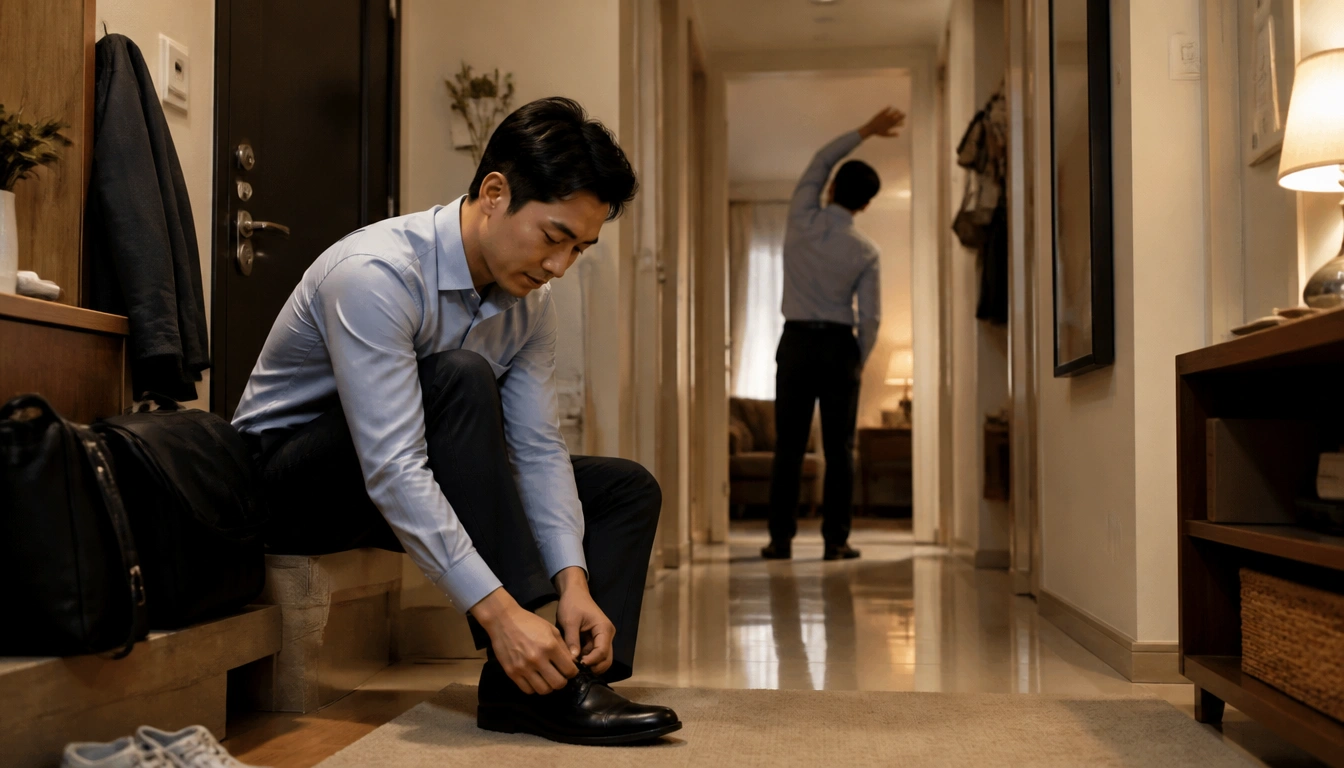
Start with 15 to 20 minutes of movement as soon as you can after work: a few mobility drills to open your hips, chest, and spine; a few simple strength moves to wake up your glutes, legs, and upper back; and then a short brisk walk or easy cycle if time allows. That combination is realistic, counters desk posture, and can still count toward weekly activity goals.
Key Takeaways
- A short after-work routine works best when it is simple: decompress, activate, then add an easy cardio buffer.
- Desk work tends to tighten hip flexors, round the shoulders, and switch off the posterior chain, so your routine should reverse those patterns.
- Low-to-moderate movement after work can help separate work stress from home life and make the transition feel less abrupt.
- Short bouts count: a 15 to 20 minute routine plus walking or an active commute can still contribute meaningfully to weekly activity targets.
- On low-energy days, mobility and walking are enough; beginners, older adults, and pregnant or postpartum people should scale range, pace, and position.
- Stop for sharp pain, chest pain, dizziness, unusual shortness of breath, or sudden weakness, and get medical advice when symptoms seem out of the ordinary.
Why an after-work movement routine matters for desk workers
If you sit at a desk most of the day, the goal is not to “make up” for work with a perfect workout. The goal is to interrupt the sitting-to-couch pattern before it becomes your whole evening. Public health agencies such as the World Health Organization and the National Health Service encourage adults to build weekly movement through both planned exercise and everyday activity, and that matters because prolonged sitting is not neutral. It is linked with slower muscle activity, less favorable blood sugar handling, and less efficient circulation.
A routine right after work is useful because it catches those effects while the body is still in the same stiff position it held for hours. Hips stay flexed, shoulders drift forward, and the upper back tends to round. Moving soon after work can also help you mentally shift gears. Instead of carrying the workday straight into dinner, screens, and more sitting, you create a small buffer that says the day is changing.
That buffer does not need to be intense. In fact, for most busy office workers, low-friction movement is more sustainable than a hard session that feels impossible to repeat. Consistency matters more than heroics.
The 3-part after-work movement routine: decompress, activate, buffer
A simple structure is easier to remember when you are tired: first decompress, then activate, then add a buffer. Decompressing helps undo the positions you held all day. Activating reminds the larger muscles that support standing, walking, and posture to do some work again. The buffer is a short period of easy-to-moderate movement that helps you transition out of work mode.
You do not need to complete every phase every day. On good days, do all three. On drained days, do the first and third. On very busy days, even five minutes of intentional movement is better than collapsing straight into stillness. The point is to make the routine feel repeatable, not complicated.
If it helps, think of the order this way: open up, wake up, then move on. That sequence works well because it starts gently and ends with something that can count toward your weekly activity total.
Phase 1: Decompress the spine, hips, chest, and shoulders
This phase should feel like you are undoing desk posture, not forcing flexibility. Keep breathing steady and move slowly through a comfortable range.
Low lunge with a gentle twist: Step one foot forward and let the back knee rest down if needed. Shift the hips forward a little to open the front of the hip, then rotate the torso toward the front leg. This helps with hip flexion tightness and spinal stiffness.
Cat-cow: On hands and knees, gently round and then lengthen the spine. This is a simple way to move the mid-back and lower back after a day of sitting.
Doorway chest stretch: Place forearms on a doorframe and lean forward slightly. This can open the chest and reduce the “shoulders forward” feeling that often builds during computer work.
Thoracic extension over a chair back or rolled towel: Support the upper back and gently extend over the support. This can help the ribs and upper spine move more freely, which matters when the neck and shoulders have been fixed in one position all day.
A good target is about three to five minutes here. If you only do one part of the routine on an exhausted day, make it this one. It is the easiest place to begin and often the most immediately relieving.
Phase 2: Wake up the posterior chain, then add an easy movement buffer
After sitting, many people need a reminder to use the muscles behind the body: glutes, hamstrings, and upper back. Those muscles support standing, climbing stairs, walking, and carrying. They also help counter the habit of hanging on passive structures all day.
Glute bridges: Lie on your back with knees bent and feet flat. Lift the hips by pressing through the heels and gently squeezing the glutes at the top. This is a low-equipment way to re-engage the back side of the body.
Sit-to-stands or bodyweight squats: Use a chair if needed. Stand up and sit down with control, or perform shallow squats if that feels better. Focus on pushing the hips back and keeping the torso long.
Wall slides or bandless pull-apart patterns: If shoulder motion feels tight, use a wall to guide the arms upward, or simply draw the shoulder blades gently back and down while standing. The goal is not a perfect posture; it is to remind the upper back how to support you.
For many people, one to two sets of each movement is enough. If you want the routine to contribute more directly to exercise guidelines, add a commute buffer: a brisk walk, a relaxed neighborhood loop, or an easy bike ride. The pace should feel purposeful, with breathing a little elevated but still controlled. According to the WHO and NHS, weekly aerobic activity can be accumulated in short bouts, so a short after-work walk can matter even when you do not have time for a full gym session.
If you take transit, this buffer can be the walk from the office to the station, or the last stop home on foot. If you drive, it can be a 10-minute loop before entering the house. The format matters less than the repeatability.
Scale the routine by energy level and fit it into real life
The best routine is the one you will actually do on a tired weekday. A useful way to plan it is by energy level, not by ideal motivation.
Low-energy day: five minutes of mobility, one set of glute bridges or sit-to-stands, and a 5- to 10-minute walk. This is the “minimum effective” version.
Normal day: the full mobility phase, two strength moves, and a 10- to 15-minute walk or easy cycle. This is the version most busy workers can sustain several times per week.
Higher-energy day: add a second set, a slightly longer walk, or a few extra minutes of brisk cycling. Keep the effort moderate enough that you are not dreading it tomorrow.
Habit-stacking helps the routine survive real life. Change clothes as soon as you get home. Keep walking shoes by the door. Pair the routine with something you already do, such as listening to a podcast during the walk or doing the mobility work before checking messages. If you commute, start the buffer before you reach home. That makes the routine feel smaller and reduces the chance that the couch wins.
This is also where the psychological benefit shows up. A low-to-moderate walk or cycle can give your mind a clean break between work stress and home life. Many people find that they think more clearly after a short movement block than after sitting with the day’s stress.
Who should modify the routine
Beginners: Start with shorter ranges of motion, slower pacing, and fewer repetitions. If a movement feels awkward, simplify it rather than forcing it. For example, use a chair for sit-to-stands or reduce the depth of your lunge.
Older adults: Focus on balance, control, and comfort. A slower walk, chair-supported squats, and gentle spinal movement are often a better starting point than chasing intensity. Stability matters more than speed.
Pregnancy and postpartum: Use positions that feel safe and comfortable, and avoid overheating or breath-holding. Later in pregnancy, lying flat for long periods may not feel good for everyone, so side-lying, standing, or incline-based options may be better. After childbirth, return gradually and follow personalized clinical guidance if you have symptoms such as pelvic heaviness, leaking, or pain.
For all of these groups, the rule is the same: the routine should leave you feeling better, not wiped out. Progress comes from repeating a manageable plan, not from pushing through fatigue every day.
Safety checks: soreness, pain, and when to get medical advice
Some mild soreness is normal, especially when you are getting used to movement again. A little muscle fatigue, temporary stiffness, or a warm working sensation in the legs or glutes can be expected. What you should not ignore is sharp pain, joint pain, shooting pain, numbness, dizziness, chest pain, unusual shortness of breath, or sudden weakness.
If a movement creates pain in a specific joint or makes symptoms worse instead of better, stop and modify the exercise. The difference between productive discomfort and warning signs is important. Productive effort feels like the body is working. Warning signs feel sharp, unstable, or out of proportion.
Seek medical advice before starting a new routine if you have an unmanaged heart or lung condition, a recent injury, significant back or joint problems, or symptoms that have not been evaluated. If something feels medically concerning during the routine, stop and get help rather than trying to push through it.
When in doubt, choose the gentler version. A movement habit should support your health, not test your tolerance.
Optional equipment upgrades if you want to progress later
You do not need equipment to start, but a few inexpensive tools can make the routine more varied over time.
Resistance band: Useful for rows, pull-aparts, and glute work. It adds just enough load to make activation exercises more challenging without taking up space.
Exercise mat: Makes floor work more comfortable if you do bridges, cat-cow, or stretching on hard floors.
Light dumbbells or kettlebell: Helpful once bodyweight squats and bridges begin to feel easy. You can hold weight for squats, carries, or hinging patterns later on.
Upgrade only when the current routine feels easy and repeatable. The point is not to collect gear. The point is to keep the habit simple enough that it survives a demanding workweek and still helps you move better tomorrow.
Frequently Asked Questions
How long should an after-work movement routine be for a busy office worker?
A realistic target is 15 to 20 minutes, but shorter still counts. A five-minute mobility reset plus a walk is a valid start on hectic days. The best length is the one you can repeat most weekdays without dreading it.
What are the best low-effort moves to undo desk posture after sitting all day?
The most useful low-effort moves are hip openers, cat-cow, chest-opening stretches, glute bridges, and sit-to-stands. Those choices help with tight hips, rounded shoulders, and reduced glute activity from long sitting.
Can a short after-work walk really count toward weekly exercise guidelines?
Yes. Public health guidance allows aerobic activity to be accumulated in shorter bouts across the week. A brisk 10- to 20-minute walk after work can contribute meaningfully, especially when paired with active commuting or other movement during the week.
Should I do mobility, strength, or cardio after work if I feel mentally drained?
On mentally drained days, start with mobility and an easy walk. If you still have energy, add simple strength work like bridges or squats. A moderate routine is usually more sustainable than forcing a hard workout when you are already exhausted.
When is an after-work routine unsafe and I should stop or get medical advice?
Stop if you get chest pain, dizziness, severe shortness of breath, sudden weakness, numbness, or sharp joint pain. Get medical advice sooner if you have a recent injury, an unmanaged medical condition, or symptoms that worsen instead of settling with rest.
The Bottom Line
A practical after-work movement routine does not need to be long or complicated. For most busy office workers, the best version is a short sequence that loosens the hips, chest, spine, and shoulders, then reactivates the glutes and upper back, followed by an easy walk or cycle if time allows.
That structure helps with the physical effects of desk sitting and gives you a clean transition out of work mode. If your energy is low, scale down rather than skipping the habit entirely. The routine still works when it is brief, gentle, and repeatable.
If you want one rule to remember, use this: open up, wake up, then move on. Start small, stay consistent, and build from there only when the current version feels easy enough to keep.
Medical disclaimer
Medical disclaimer: This content is for educational and informational purposes only and is not a substitute for professional medical advice, diagnosis, or treatment. Dietary needs and supplement suitability vary by individual.
Sources
- World Health Organization (WHO) — who.int. Accessed November 2026.
- National Health Service (NHS) — www.nhs.uk. Accessed November 2026.
- National Health Service (NHS) — westlondon.nhs.uk. Accessed November 2026.
