
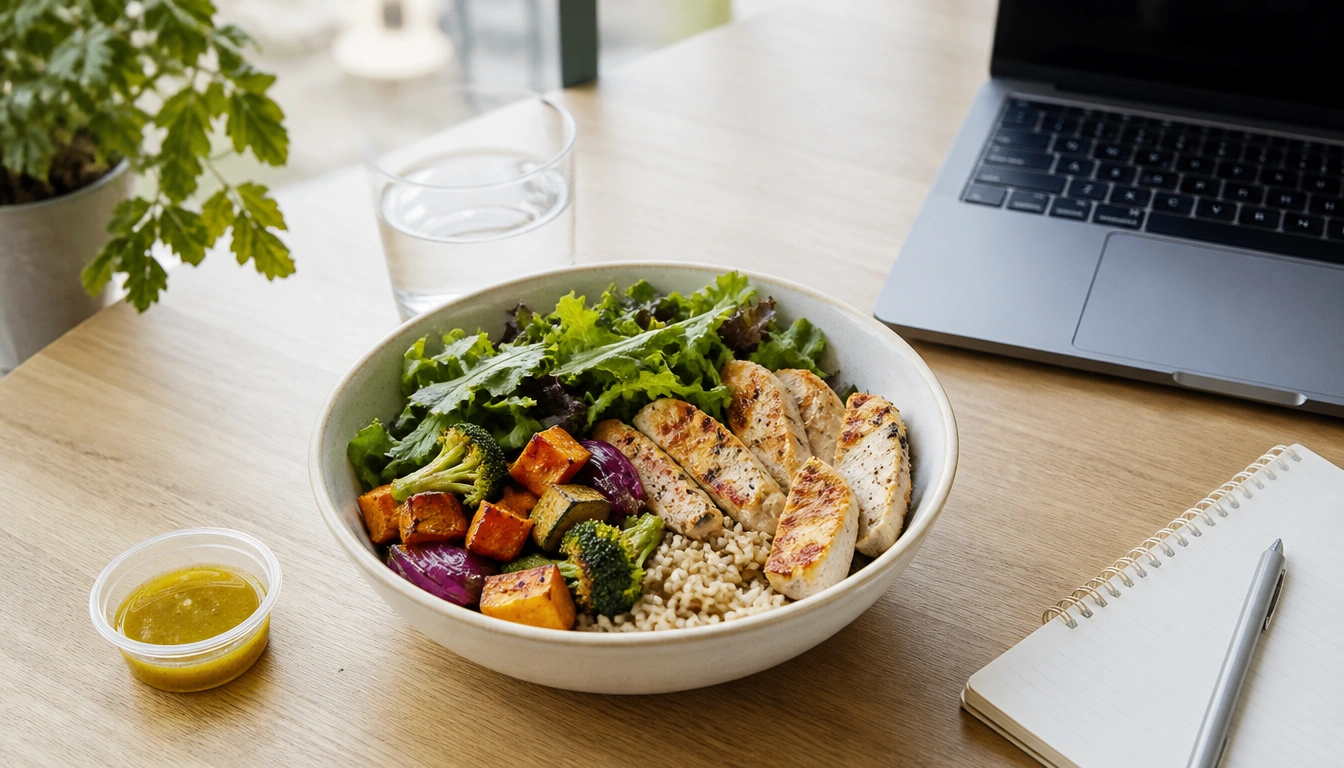
A balanced plate for a busy professional usually means half non-starchy vegetables or fruit, one-quarter whole grains or other quality carbohydrates, and one-quarter protein, with water and healthy fats as add-ons. In practice, that can be a salad bowl, a microwave lunch, a supermarket meal, or a travel-day plate built from whatever is available. The goal is structure, not perfection, so meals stay filling and support steady energy.
Key Takeaways
- Use the balanced plate method as a fast visual guide when you do not have time to count calories or plan a detailed menu.
- Aim for half non-starchy vegetables or fruit, one-quarter whole grains or other complex carbs, and one-quarter protein, then add unsaturated fats as needed.
- Microwave meals, cafeteria food, and supermarket staples can all fit the pattern if you build them deliberately.
- If you exercise hard, you may need a larger carbohydrate portion; if you sit most of the day or manage insulin resistance, keep starch portions tighter and choose high-fiber carbs.
- If you suddenly eat much more fiber, increase it gradually and drink more fluids to reduce bloating.
- People with kidney disease, advanced diabetes, or certain gastrointestinal disorders may need a modified plan from a clinician or dietitian.
Why the balanced plate method works on busy workdays
The balanced plate works well for packed schedules because it replaces decision fatigue with a simple visual rule. Instead of tracking every gram, you look at the meal and ask whether it has vegetables or fruit, a quality carbohydrate, and enough protein. That makes it easier to eat a reasonable meal even when you are between meetings, eating at your desk, or building lunch from whatever is available.
This structure also helps with the common workday problem of energy swings. Public health guidance from the Harvard Healthy Eating Plate and the NHS Eatwell Guide both emphasize vegetables, whole grains, and healthy protein sources as the backbone of a daily eating pattern. Fiber-rich foods slow digestion and can blunt sharp blood glucose rises after meals, which matters if you want fewer afternoon crashes and less “brain fog” after lunch.
Another advantage is practicality. A balanced plate is flexible enough to work with cafeteria food, freezer meals, or leftovers. It also makes it easier to notice what is missing. A lunch that is mostly refined starch with a little protein may fill you up briefly, but it often does not hold well through a long afternoon. Adding vegetables and a more substantial protein portion usually improves satiety and makes the meal more dependable.
The core balanced plate formula for office meals
The basic formula is straightforward: half non-starchy vegetables and fruit, one-quarter whole grains or other complex carbohydrates, and one-quarter protein. Healthy fats, sauces, and beverages are add-ons rather than the main structure of the plate. This is the same visual idea promoted by major public health models, and it is useful precisely because it stays simple.
For the vegetable half, think leafy greens, broccoli, peppers, cucumbers, tomatoes, zucchini, mushrooms, green beans, or roasted mixed vegetables. Fruit can help fill part of that section when vegetables are limited, but non-starchy vegetables usually do the heavy lifting for fiber and volume. For the carb section, choose brown rice, quinoa, whole-wheat pasta, oats, barley, farro, bulgur, corn, or beans in a higher-fiber pattern. For the protein section, choose fish, poultry, eggs, tofu, tempeh, Greek yogurt, beans, lentils, or edamame.
Healthy fats matter too, but they work best as a finishing touch: olive oil, nuts, seeds, avocado, or tahini can improve flavor and help the meal feel satisfying. For drinks, water, unsweetened tea, or coffee are the most practical default choices. A balanced plate is not a rigid prescription; it is a way to keep the meal from drifting too far toward starch-heavy convenience food.
Balanced plate examples you can actually eat at work or on the road
If you need office-ready examples, start with combinations that are realistic in a break room, a cafeteria, or a hotel lobby. A desk lunch might be a bagged salad with cherry tomatoes and cucumbers, a pouch of microwavable quinoa, and a can of salmon or chickpeas, finished with olive oil and lemon. A microwave-only lunch could be steam-in-bag broccoli, a brown rice pouch, and pre-cooked chicken, tofu, or beans. These take little time and require almost no equipment.
A grab-and-go supermarket lunch can work just as well. Look for pre-washed greens, a rotisserie chicken portion, a carton of cut vegetables, fruit, and a whole-grain side such as microwavable rice or a whole-grain wrap. If the store only has limited options, build the meal from the best available pieces rather than trying to find a perfect pre-made bowl. A sandwich with whole-grain bread, lean protein, and a side salad can fit the pattern if the vegetables are present.
For a travel-day meal, think in layers. A burrito bowl with beans, grilled chicken, salsa, lettuce, and a smaller scoop of rice is often closer to the plate model than a pastry, chips, and a sweet coffee drink. At an airport, a salad with protein, fruit, nuts, and a whole-grain side is usually a stronger choice than a meal built around refined snacks. The best option is the one that gives you enough vegetables and protein without turning lunch into a sugar-only stopgap.
Fast assembly systems that turn one prep session into multiple meals
The easiest way to stay consistent is to prepare components, not full recipes. A weekend batch-and-mix session can produce several lunches with very little work later in the week. Roast two sheet pans of vegetables, cook a pot of quinoa or brown rice, and prepare one or two proteins such as chicken, tofu, lentils, or hard-boiled eggs. Store everything separately so you can mix and match.
Then use a three-minute assembly rhythm during the week. Start with the vegetable base, add the carb, top with protein, and finish with a sauce or healthy fat. One day it may become a warm grain bowl; another day it may become a salad; another day it may become a wrap. The point is to reduce friction so lunch does not depend on whether you feel motivated after a long morning.
Pantry and freezer shortcuts make this easier. Keep frozen broccoli, cauliflower, green beans, stir-fry vegetables, and mixed berries on hand. Keep canned beans, tuna, salmon, chickpeas, and lentils in the cupboard. Keep microwaveable whole grains, bagged greens, and simple dressings or seasoning blends available. That combination lets you build a plate even when the fridge is nearly empty.
Choosing the right carbs and proteins for your day
Not all carbohydrates behave the same way, which is why quality matters more than strict avoidance. Whole grains and legumes generally offer more fiber and steadier digestion than refined starches. For most desk lunches, that means choosing brown rice instead of white rice more often, whole-grain bread instead of white bread, or beans and lentils as part of the carb-protein mix. The goal is not to eliminate starch; it is to choose forms that support steadier energy.
Protein should be practical and portable. Fish, poultry, tofu, tempeh, eggs, Greek yogurt, beans, and lentils are all useful options. If you are buying convenience foods, check whether the protein portion is actually large enough to matter. A plate that looks full but has only a small amount of protein may leave you hungry again before the next meeting.
It also helps to match the plate to the meal context. A more active person may need a somewhat larger carbohydrate portion to support training, commuting by bike, or a physically demanding job. Someone who sits most of the day or is trying to manage blood sugar may do better with a tighter starch portion and a stronger emphasis on vegetables, legumes, and other high-fiber foods. Public health models support the same general pattern, but real-world carbohydrate needs are not identical for everyone.
How to adjust the plate for activity level and digestion
If you are more active, the plate can shift modestly toward carbohydrates without losing balance. That may mean a slightly larger scoop of whole grains, an extra piece of fruit, or a more substantial bean or grain side. The main idea is to support glycogen replenishment and energy needs while still keeping vegetables and protein in the meal. If you train hard, a plate that is too light on carbs may leave you flat later in the day.
If you sit most of the day or tend to run high after starch-heavy meals, the opposite adjustment makes sense. Keep the carbohydrate section anchored to higher-fiber choices and let vegetables take up more visual space. That often means fewer refined grains, fewer sugary drinks, and fewer plates built around bread, pastries, or fries as the main side.
If you are moving from a lower-vegetable diet to a more plant-forward plate, increase fiber gradually. A sudden jump can cause temporary gas, bloating, or fullness, especially if your usual pattern was low in vegetables and legumes. Drink more fluids as you increase fiber, and give your gut time to adapt over one to two weeks. Mild bloating can be a normal transition sign, but persistent pain, severe diarrhea, or major changes in bowel habits deserve medical attention.
Common mistakes busy professionals make with balanced plates
One common mistake is relying too heavily on ultra-processed convenience food and assuming it is “good enough” because it is quick. Many convenience meals are low in vegetables and protein and high in refined starch, sodium, or added sugars. They can be useful in a pinch, but they should not be the default pattern if you want steadier energy and better satiety.
Another mistake is skipping meals and then trying to compensate with a large snack or a late, overly carb-heavy lunch. That often leads to a cycle of hunger, overeating, and a bigger energy dip afterward. A smaller balanced meal is usually more effective than waiting until you are ravenous.
A third issue is building a plate that is technically “healthy” but still too light on protein or too heavy on starch. A bowl of pasta with a few vegetables is not the same as a balanced plate. Neither is a salad that lacks a real protein source. If your meal does not keep you satisfied for several hours, it may need more structure rather than more willpower.
When a balanced plate is not enough
General plate guidance does not replace individualized medical nutrition care. People with chronic kidney disease may need adjustments in protein, potassium, phosphorus, or fluid. People with advanced diabetes may need a more precise carbohydrate plan than the visual plate model alone provides, especially if they use insulin or medications that can cause low blood sugar. People with irritable bowel syndrome, Crohn’s disease, celiac disease, or other gastrointestinal disorders may also need specific changes in fiber type, portion size, or food selection.
The same is true if you have unexplained fatigue, unintentional weight change, persistent digestive symptoms, or a history of disordered eating. In those cases, a registered dietitian or clinician can tailor the plan to your medical needs, food tolerances, and work schedule. The balanced plate is a helpful starting tool, but it should not override medical advice when a condition changes what is safe or appropriate.
For most healthy adults, though, the balanced plate offers a dependable middle ground: fast enough for a busy week, flexible enough for travel and office meals, and structured enough to avoid the worst convenience-food traps.
Frequently Asked Questions
What are a few grab-and-go balanced plate meal examples I can make in under 5 minutes?
Try a bagged salad topped with canned salmon and a microwave rice pouch, or a rotisserie chicken portion with pre-cut vegetables, fruit, and whole-grain crackers. You can also use Greek yogurt, berries, nuts, and a whole-grain side for a quick meal when cooking is not realistic.
How do I use a balanced plate when eating at my desk or in a microwave-only office?
Use the same visual pattern with whatever equipment you have. A microwave bowl of frozen vegetables, a grain pouch, and a protein such as chicken, tofu, or beans works well. At your desk, aim for a real lunch rather than random snacks so you are less likely to crash later.
How should the plate change if I exercise heavily or sit most of the day?
If you are very active, it is reasonable to make the carbohydrate section a bit larger to support training and recovery. If you sit most of the day or have blood sugar concerns, keep starch portions tighter and emphasize vegetables, beans, and other high-fiber foods.
How do I avoid bloating when I suddenly eat more vegetables and fiber?
Increase fiber gradually instead of all at once, and drink more water as you do it. Temporary gas or fullness is common during the transition. If symptoms are severe, persistent, or painful, check with a healthcare professional rather than pushing through.
Can I use a balanced plate if I have diabetes, IBS, or kidney disease?
Sometimes, but you may need a modified plan. Diabetes, IBS, kidney disease, and other medical conditions can change what counts as an appropriate carb, protein, or fiber balance. A clinician or dietitian can help tailor the plate to your specific needs.
The Bottom Line
A balanced plate is one of the simplest ways to eat well when your schedule is full. It gives you a fast visual framework that works with office food, microwave meals, supermarket staples, and travel-day options without requiring calorie counting.
For most meals, build around vegetables, choose a high-quality carbohydrate, include a solid protein source, and add healthy fats in moderation. If you are more active, use a little more carbohydrate; if you are sedentary or managing blood sugar, keep the starch section tighter and the fiber higher.
If you have kidney disease, advanced diabetes, or a digestive disorder, treat the plate as a starting point, not a final plan. Individual medical guidance matters more than any general template.
Medical disclaimer
Medical disclaimer: This content is for educational and informational purposes only and is not a substitute for professional medical advice, diagnosis, or treatment. Dietary needs and supplement suitability vary by individual.
Sources
- National Health Service (NHS) — www.nhs.uk. Accessed November 2026.
- Academic Research Institution — harvard.edu. Accessed November 2026.
- Academic Research Institution — harvard.edu. Accessed November 2026.
- Academic Research Institution — harvard.edu. Accessed November 2026.
