
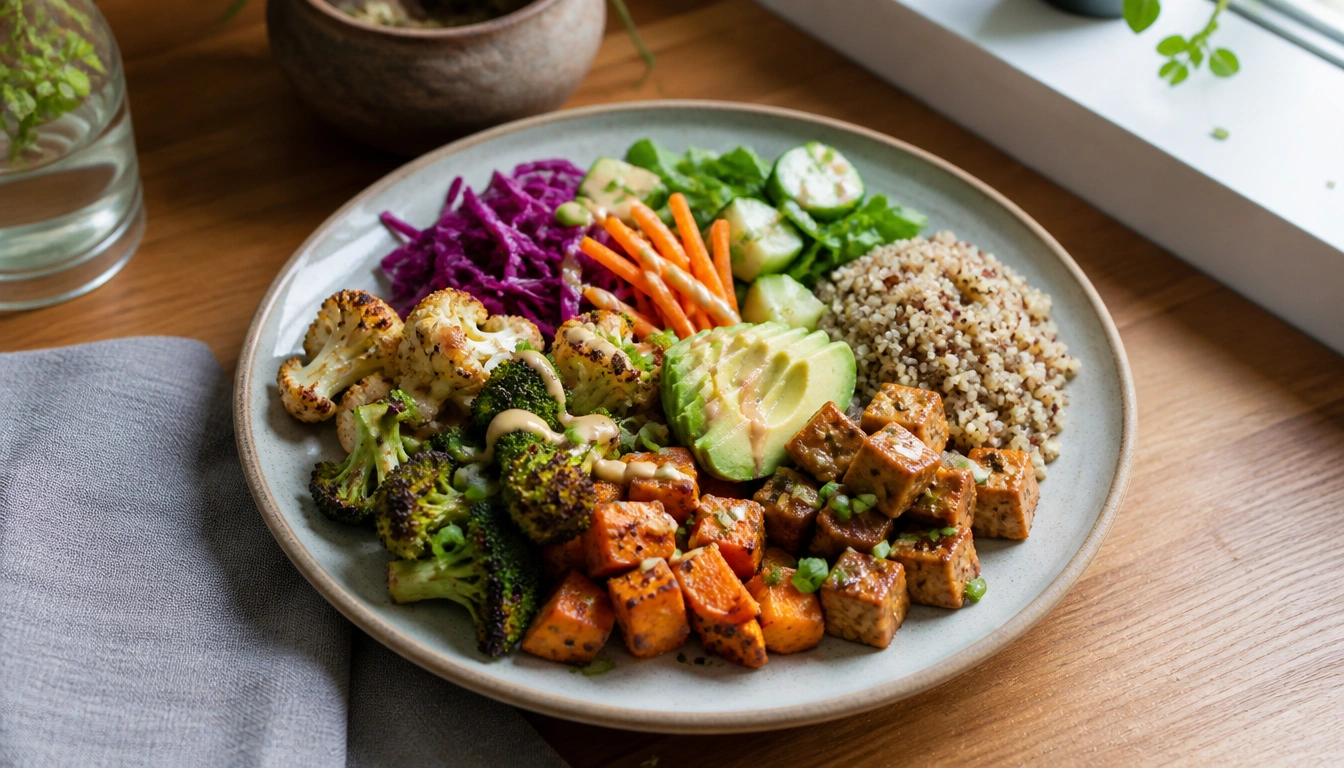
A balanced vegetarian plate usually starts with about half non-starchy vegetables and fruit, one-quarter whole grains or starchy carbohydrates, and one-quarter protein foods such as beans, lentils, tofu, tempeh, edamame, eggs, or dairy. Add a source of healthy fat and, when needed, calcium-rich foods. The main nutrition mistakes to avoid are relying too heavily on refined carbs, skipping key nutrients like B12 and iron, and increasing fiber too fast.
Key Takeaways
- Use the plate first: fill half with vegetables and fruit, then split the rest between whole grains and plant proteins.
- For better iron absorption, pair beans, lentils, tofu, or spinach with vitamin C foods like peppers, citrus, tomatoes, or berries.
- Beginner meals work best when they are familiar: think grain-and-bean bowls, stir-fries, and lentil-based comfort plates.
- Lacto-ovo vegetarians can use eggs and dairy for extra protein and calcium; strict vegans need fortified foods and more label checking.
- A gradual fiber ramp-up, enough fluids, and a stocked pantry can prevent bloating and make vegetarian eating easier to sustain.
What a balanced vegetarian plate looks like in practice
The easiest way to build a balanced vegetarian plate is to use a visual framework rather than counting grams at every meal. Public-health models such as the Harvard Healthy Eating Plate, the USDA Healthy Vegetarian Pattern, and the NHS Eatwell Guide all point in the same direction: make vegetables and fruit the biggest part of the plate, choose quality carbs, and include a reliable protein source.
A practical beginner version looks like this:
- Half the plate: non-starchy vegetables and fruit, such as leafy greens, broccoli, peppers, tomatoes, cucumbers, berries, or carrots.
- One-quarter of the plate: whole grains or starchy carbohydrates, such as brown rice, quinoa, whole-wheat pasta, oats, farro, potatoes, or sweet potatoes.
- One-quarter of the plate: plant proteins, such as beans, lentils, chickpeas, tofu, tempeh, edamame, eggs, or dairy if you eat it.
Healthy fats help with satisfaction and flavor. Olive oil, nuts, seeds, avocado, tahini, and nut butters are useful in small amounts. If you include dairy or fortified alternatives, those can support calcium intake as part of the meal, especially if you are using them in place of animal foods you used to rely on.
This pattern also helps you avoid a common transition problem: when meat disappears, the plate can become mostly pasta, bread, or processed substitute foods. The fix is not strict restriction. It is simply giving vegetables and protein a visible place on the plate every time.
Beginner-friendly plate examples you can copy tonight
Simple meal templates reduce decision fatigue. They also make it easier to repeat a few successful meals until the structure feels natural.
Grain-and-bean bowl
Start with greens or shredded lettuce, then add cooked quinoa, brown rice, or farro. Add chickpeas, black beans, or tofu. Finish with tomatoes, cucumber, roasted peppers, pumpkin seeds, and a lemon-tahini or olive oil dressing. This style works hot or cold and can be made from leftovers.
Plant-powered stir-fry
Use broccoli, snap peas, carrots, mushrooms, and bok choy or cabbage. Add brown rice, whole-wheat noodles, or soba if you like a more familiar comfort-food base. Include edamame or tempeh for protein, then season with garlic, ginger, and a low-sodium sauce. A small amount of oil is enough; the vegetables should still dominate the pan.
Root-vegetable and lentil plate
Roasted sweet potato or butternut squash can be paired with green beans, asparagus, or a side salad. Add lentil stew or dal for protein, then include whole-grain bread or wild rice if you want a sturdier meal. If you eat dairy, a spoonful of plain yogurt can add creaminess. If you do not, a calcium-fortified soy yogurt or drink may fit better.
These examples matter because they show the plate in real life. A balanced vegetarian meal does not need to be exotic, expensive, or highly processed to work well.
How to choose vegetarian proteins without overthinking it
Protein is important, but beginners often overfocus on it and underbuild the rest of the plate. The goal is to rotate several protein sources so meals are easier to prepare and more nutrient-dense overall.
Good everyday options include beans, lentils, chickpeas, black-eyed peas, tofu, tempeh, edamame, eggs, Greek yogurt, cottage cheese, milk, and fortified soy foods. Beans and lentils are especially useful because they also bring fiber, potassium, and other nutrients. Tofu and tempeh are practical because they take on flavor easily and can replace meat in many familiar dishes.
If you are switching from a meat-centered diet, start by replacing one familiar protein at a time. Lentils can stand in for ground meat in pasta sauce. Beans can replace some or all of the meat in chili. Tofu can work in stir-fries, curries, and noodle bowls. Eggs and dairy, if you use them, can make the transition easier because they are familiar and easy to keep on hand.
Try to think in terms of protein density, not just protein presence. A meal built around a tiny sprinkle of nuts over white pasta is not the same as a meal built around tofu, beans, or lentils with vegetables and grains. The plate should look and feel complete.
How to cover iron, B12, calcium, zinc, vitamin D, and fiber
A vegetarian diet can be nutritionally strong, but a few nutrients deserve special attention. The most commonly watched ones are vitamin B12, iron, calcium, zinc, and vitamin D. Fiber rises too, which is usually helpful but can be uncomfortable if it increases too quickly.
Iron: Plant foods provide non-heme iron, which is not absorbed as efficiently as the iron found in meat. Good sources include lentils, beans, tofu, pumpkin seeds, spinach, and fortified cereals. To improve absorption, pair these foods with vitamin C sources such as bell peppers, citrus, strawberries, tomatoes, or kiwi.
B12: Vitamin B12 is a special case because it is not naturally present in meaningful amounts in unfortified plant foods. If you are a strict vegan, or if your intake of fortified foods is inconsistent, you need to pay close attention to B12 from fortified foods or supplements under medical guidance.
Calcium: Lacto-ovo vegetarians may get calcium from dairy. Vegans can use fortified plant milks and yogurts, calcium-set tofu, and some leafy greens. The NHS and USDA both emphasize choosing nutrient-dense foods rather than relying on a single substitute product.
Zinc and vitamin D: Beans, nuts, seeds, dairy, eggs, and fortified foods help, but vitamin D is often harder to get from food alone. Sun exposure, fortified foods, and individualized medical advice may matter more here than in other nutrients.
Fiber: Higher fiber intake is one of the advantages of vegetarian eating, but too much too fast can cause gas, bloating, or loose stools. Increase beans, lentils, and whole grains gradually and drink enough fluids. That gives your gut time to adapt.
One small habit makes a big difference for iron: try not to drink tea or coffee with the meal itself. Waiting until after the meal can help reduce the effect of tannins on iron absorption, especially in meals built around plant iron.
How lacto-ovo and vegan beginners should adjust the plate
Not all vegetarian patterns are the same. Lacto-ovo vegetarians eat dairy and eggs, while strict vegans avoid all animal foods. That difference changes how you plan protein, calcium, and B12.
If you are lacto-ovo vegetarian, eggs, milk, yogurt, and cheese can make it easier to meet protein and calcium needs. They can also simplify breakfast and quick lunches. A vegetable omelet with whole-grain toast, or a bowl with grains, greens, and Greek yogurt on the side, is a straightforward option.
If you are vegan, you need more intention around fortified foods and label reading. Calcium-fortified plant milks, fortified yogurts, calcium-set tofu, nutritional yeast when fortified, and B12-fortified foods can help fill gaps. A vegan plate can still be very balanced, but it usually requires a little more planning than a lacto-ovo version.
For older adults, protein density matters more because muscle maintenance becomes harder with age. That means putting a meaningful protein food on the plate at each meal, not just at dinner. For premenopausal women, iron deserves more attention because needs are often higher. In that group, building meals around iron-rich plant foods with vitamin C is especially useful.
Common beginner mistakes and how to avoid them
The most common vegetarian beginner mistake is not “eating too little meat.” It is replacing meat with refined carbs and a few processed products while losing balance on the plate.
Too many refined carbs: White bread, plain pasta, crackers, and pastries can crowd out vegetables and protein. They are not forbidden, but they should not become the base of every meal. Swap in whole grains when you can, and build around beans, lentils, or tofu.
Too many processed meat substitutes: Some plant-based burgers, nuggets, and deli slices can be convenient, but they are not the foundation of a healthy vegetarian diet. Use them occasionally if they help with transition, not as the main daily protein strategy.
Too little variety: Eating the same three meals on repeat can leave gaps in nutrients and make the diet harder to sustain. Rotate beans, lentils, tofu, tempeh, eggs, yogurt, nuts, seeds, and different vegetables across the week.
Going from low fiber to very high fiber overnight: That can backfire. If your stomach is not used to beans and whole grains, introduce them in smaller amounts and increase slowly. Hydration helps, but so does patience.
Simple habit systems for weeknight success
The easiest vegetarian meal plan is the one you can assemble when you are tired. That usually means keeping a short list of pantry staples, freezer shortcuts, and repeatable meal templates.
Useful staples include canned beans, lentils, tomato sauce, brown rice, quinoa, oats, whole-grain bread, whole-wheat wraps, nut butter, seeds, olive oil, and low-sodium broth. In the freezer, keep edamame, frozen vegetables, fruit, and pre-cooked grains if they make weeknights easier.
The “swap, don’t restrict” method helps people stay consistent. Replace beef in chili with beans or lentils. Replace part of the meat in a family recipe with mushrooms, tofu, or chickpeas. Replace white rice with brown rice or half-and-half grains if a full switch feels too abrupt. Small swaps are easier to repeat than dramatic overhauls.
Meal templates also help. A grain base, a protein, two vegetables, and a sauce can cover many lunches and dinners. Once you know the formula, you only need to change the flavors: Mediterranean one night, stir-fry the next, curry later in the week.
This is the practical side of vegetarian eating. A balanced plate is not only about nutrients; it is also about making the right choice the easy choice.
When to get medical or dietitian advice
Most healthy adults can build a vegetarian plate with food alone, but some situations deserve extra support. The NHS and other public-health guidance recommend individual advice when there is a medical condition, a history of anemia, or a major dietary change.
Talk with a healthcare professional or registered dietitian if you have chronic kidney disease, a history of severe anemia, inflammatory bowel disease, unexplained weight loss, frequent digestive symptoms, or if you are pregnant, breastfeeding, or trying to plan a diet for an older adult with low appetite. These situations can change protein, iron, potassium, and supplement needs.
Supplements may be needed when food sources are not enough, especially for vitamin B12 in strict vegans and sometimes for vitamin D or iron depending on labs and medical history. The point is not to guess. It is to use food first, then add targeted support when a nutrient gap is likely or confirmed.
For most beginners, the safest path is simple: build meals around vegetables, grains, and protein-rich plant foods, then check the likely gap nutrients with a clinician if needed. That keeps the diet practical, flexible, and easier to maintain.
Frequently Asked Questions
How much of a vegetarian plate should be vegetables, grains, and protein?
A common public-health pattern is about half non-starchy vegetables and fruit, one-quarter whole grains or starchy carbohydrates, and one-quarter protein foods such as beans, lentils, tofu, tempeh, eggs, or dairy. Healthy fats and calcium-rich foods can be added in small amounts.
What are easy vegetarian meal examples for beginners?
Good starter meals include a grain-and-bean bowl, a vegetable stir-fry with tofu or edamame, and lentils with roasted vegetables and whole grains. These are flexible, budget-friendly, and easy to adjust with whatever you already have.
How do I get enough protein on a vegetarian diet?
Use a protein food at each meal instead of relying on one large serving at dinner. Beans, lentils, tofu, tempeh, edamame, eggs, and dairy are all practical choices. Older adults often benefit from putting more emphasis on protein density at each meal.
How can I improve iron absorption in vegetarian meals?
Pair plant iron foods such as lentils, beans, tofu, and spinach with vitamin C foods like bell peppers, citrus, tomatoes, or strawberries. Also try not to drink tea or coffee with the meal itself, since that can reduce absorption.
What nutrients do new vegetarians need to watch most closely?
Vitamin B12 is the biggest concern for strict vegans, while iron, calcium, zinc, and vitamin D also deserve attention. Fiber rises too, which is usually beneficial but should be increased gradually to avoid bloating or discomfort.
The Bottom Line
A balanced vegetarian plate is usually simple: fill half with vegetables and fruit, use one-quarter for whole grains or starchy carbs, and one-quarter for protein-rich plant foods. Add healthy fats and, when relevant, calcium-rich foods or fortified alternatives.
The most useful beginner habits are also the most practical ones: build around beans, lentils, tofu, eggs, or dairy; pair iron with vitamin C; and keep pantry staples ready so dinner does not default to refined carbs or processed substitutes.
If you have a medical condition, a history of anemia, or you are planning a strict vegan pattern, get individualized advice. Food should do most of the work, but supplements may be appropriate when a real nutrient gap is likely or confirmed.
Medical disclaimer
Medical disclaimer: This content is for educational and informational purposes only and is not a substitute for professional medical advice, diagnosis, or treatment. Dietary needs and supplement suitability vary by individual.
Sources
- National Health Service (NHS) — uhsussex.nhs.uk. Accessed November 2026.
- National Health Service (NHS) — www.nhs.uk. Accessed November 2026.
- National Health Service (NHS) — www.nhs.uk. Accessed November 2026.
- U.S. Government / Health Authority — usda.gov. Accessed November 2026.
- Academic Research Institution — harvard.edu. Accessed November 2026.
