
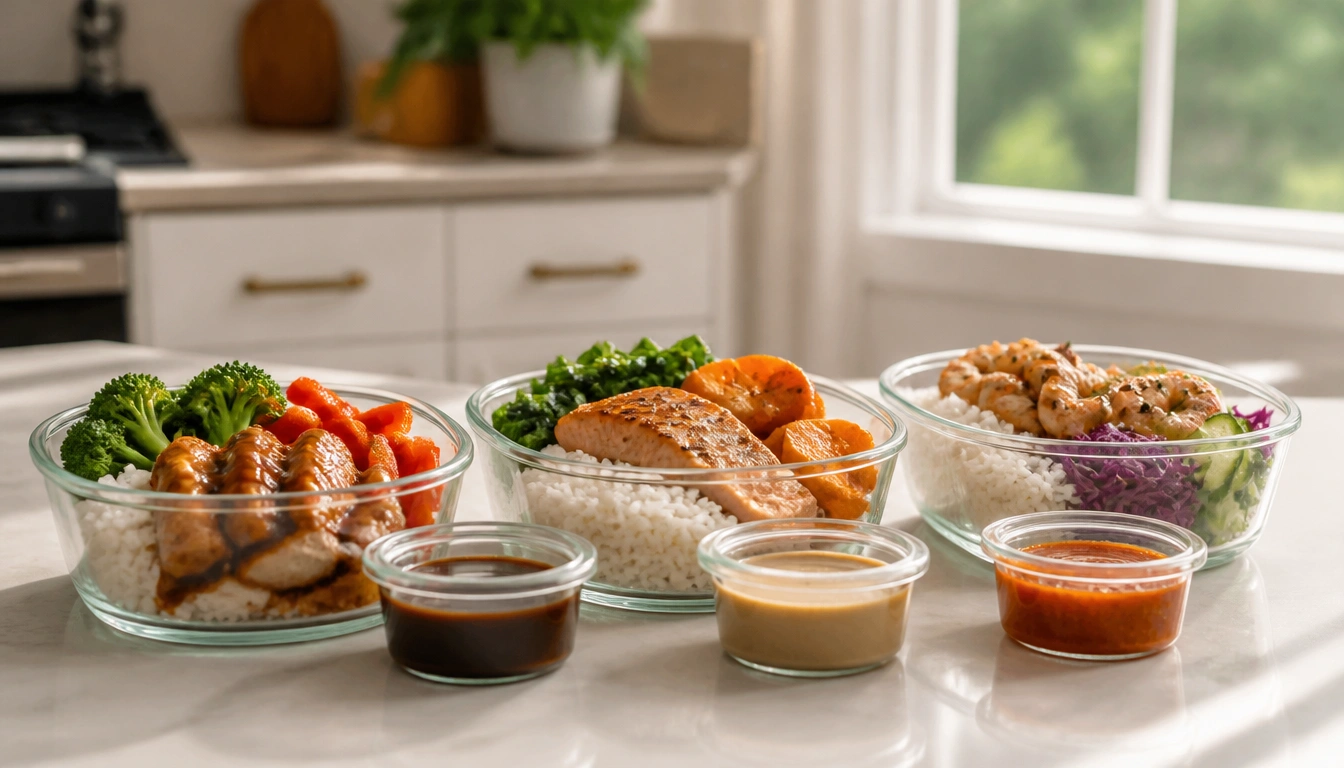
Build a balanced rice bowl by using a simple formula: about half vegetables, one-quarter protein, and one-quarter rice or another complex carbohydrate, then finish with a sauce or healthy fat. For meal prep, choose rice you like, cook a protein and vegetables at the same time, and store wet toppings separately so the bowl stays fresh. Cool cooked rice quickly, refrigerate it promptly, and use prepped bowls within about 3 to 4 days.
Key Takeaways
- A balanced rice bowl is easiest to build when you start with a base, add protein, pile on vegetables, and finish with a sauce or fat.
- A roughly half-vegetables, one-quarter-protein, one-quarter-grain pattern lines up well with public health eating models and supports fullness.
- Brown rice and rice blends with cauliflower can add fiber and help blunt sharper blood sugar rises compared with refined rice alone.
- Keep sauces, avocado, and other wet toppings separate until serving to prevent soggy bowls.
- Cooked rice should be cooled quickly, refrigerated promptly, and eaten within about 3 to 4 days for food safety.
- Beginners can adapt bowls for vegetarian eating, higher athletic needs, or closer carbohydrate control without changing the whole system.
Start with a simple rice bowl formula
A good balanced rice bowl does not need complicated measuring. Start with four parts: a base, a protein, vegetables, and a finishing sauce or fat. That gives you a repeatable template you can use all week without relearning a recipe each time.
Think of the base as the foundation, not the main event. Rice works well because it is easy to cook in batches, reheats predictably, and pairs with nearly any flavor profile. The protein gives the bowl staying power, while vegetables add volume, color, and fiber. The final drizzle or topping is what keeps the meal from feeling dry or bland.
A practical beginner approach is to build the bowl in this order: rice first, then protein, then vegetables, then the sauce or fat just before eating. That order matters for texture and also makes it easier to pack lunches quickly.
Why the balanced bowl ratio works
Public health models such as MyPlate and the Harvard Healthy Eating Plate both push a similar idea: make most of the plate vegetables, keep a solid portion for protein, and use grains as a supporting piece rather than the whole meal. A bowl built around roughly half vegetables, one-quarter protein, and one-quarter complex carbohydrates fits that pattern well.
This structure helps with satiety because vegetables add bulk and fiber without making the bowl heavy, while protein tends to help meals feel more satisfying for longer. The grain portion contributes steady energy for work, school, or exercise. Adding a little healthy fat, such as olive oil, sesame seeds, or avocado, can improve flavor and help you absorb fat-soluble nutrients from vegetables.
For beginners, the biggest advantage is consistency. You do not have to create a new meal every day. Once you understand the ratio, you can swap ingredients based on what is on hand, what is on sale, or what your family actually likes.
Choose the right rice for meal prep
Rice choice changes both texture and nutrition. White rice is soft, familiar, and usually the fastest option for beginners. Brown rice keeps the bran and germ, which means more fiber and more of the grain’s natural nutrients. Whole-grain choices are worth considering if you want a bowl that is more filling and slower to digest.
One useful middle ground is a rice-and-cauliflower blend. That option can lighten the bowl, add extra vegetables, and reduce the overall starch load while keeping the familiar feel of rice. For some people, that makes it easier to manage blood sugar or simply to feel comfortable after eating a larger bowl.
If you are deciding between white and brown rice, think about the whole week, not just one lunch. Brown rice often makes the bowl more filling, but white rice may be easier on the stomach for some people and can fit well when you need quick energy or are easing into higher-fiber meals. The best choice is the one you will cook, store, and eat consistently.
| Rice option | Best for | Texture and prep notes |
|---|---|---|
| White rice | Fast prep, mild flavor, easier digestion for some people | Soft, familiar, and flexible with many sauces |
| Brown rice | More fiber, more staying power, broader nutrient profile | Chewier texture; cooks longer and reheats well |
| Rice and cauliflower blend | Lower-starch bowls, lighter meals, more vegetables | Works best when mixed with a sturdy sauce or protein |
Use flavor templates instead of starting from scratch
Flavor boredom is one of the main reasons meal prep fails. A simple fix is to rotate a few templates instead of reinventing the bowl every week. Keep the structure the same and change the sauce, spices, and vegetables.
Try a teriyaki-style bowl with rice, tofu or chicken, broccoli, and carrots. Use a Southwestern version with black beans, chicken or tofu, peppers, onions, and a lime-cilantro dressing. A Mediterranean bowl can pair rice with chickpeas, cucumber, tomato, spinach, and a tahini-lemon sauce. For something richer, a peanut-lime bowl works well with edamame or chicken, shredded cabbage, and bell peppers.
If you want lower sodium, lean more on citrus, vinegar, garlic, ginger, herbs, and spice blends. You can still use store-bought sauces; just treat them as a seasoning, not the whole meal.
Make meal prep faster with a simple workflow
The easiest meal-prep workflow is to cook several bowl components at once. While the rice simmers, roast vegetables on one sheet pan and protein on another. That keeps active time low and reduces the odds that you abandon the whole project halfway through.
For many beginners, sheet-pan cooking is the least stressful method because it is forgiving. Toss vegetables with a little oil and seasoning, spread them out so they roast instead of steam, and cook protein in a separate area if needed so textures stay distinct. If you are using tofu, chickpeas, chicken, or turkey, season them generously before cooking so the bowl tastes complete after reheating.
Container choice matters too. Use divided meal-prep containers or pack the rice, protein, and vegetables in separate sections. Store sauces in small cups, and keep avocado, herbs, and crunchy toppings aside until serving. That small bit of organization improves texture and makes weekday lunches feel much fresher.
Keep cooked rice safe and fresh
Cooked rice needs more care than many beginners expect. According to the USDA, cooked rice should be cooled quickly and refrigerated promptly because bacteria can grow if rice sits out too long. A beginner-friendly rule is to get rice into the refrigerator as soon as it is cool enough to handle safely, rather than leaving it on the counter for hours.
As a general meal-prep habit, aim to use prepped rice bowls within about 3 to 4 days if they are stored in a refrigerator at a safe temperature. That timeline also applies well to most cooked proteins and roasted vegetables. If you need meals to last longer, freeze portions soon after cooking, but leave out delicate toppings like avocado, fresh greens, or crunchy garnishes and add them after reheating.
If a bowl smells off, looks slimy, or has been stored too long, do not try to rescue it. Food safety is one place where convenience should not win.
Adjust bowls for vegetarian, active, or carb-conscious eating
Vegetarian and vegan bowls can work very well as long as protein is planned on purpose. Good options include tofu, tempeh, edamame, chickpeas, black beans, lentils, or a mix of several plant proteins across the week. Rotating protein sources also helps keep the meal more interesting and can improve nutrient variety.
Active people and athletes may need a larger carbohydrate share than the standard beginner bowl. In that case, simply increase the rice portion a bit or use a fuller grain base around training days. The same bowl template still works; the ratio just shifts toward more energy-dense carbs.
If you are watching blood sugar more closely, keep the rice portion modest and put extra attention on fiber, protein, and non-starchy vegetables. Brown rice or a rice-cauliflower blend may fit better than refined rice alone. Some people also do better when they spread carbohydrates across the meal instead of stacking them all in one large portion.
Prevent soggy bowls and keep toppings crisp
Soggy bowls usually happen when moisture from sauce, tomatoes, cucumbers, or avocado sits against the rice for too long. The fix is simple: separate wet ingredients until serving, and build in layers that protect the base. A little planning here goes a long way.
Pack dressings in a small container, keep roasted vegetables and grains in the main box, and add fresh herbs, avocado, pickled vegetables, or crunchy seeds at the last minute. If you enjoy cold bowls, let hot ingredients cool before closing the lid so steam does not collect inside the container. If you prefer warm bowls, reheat the rice, protein, and sturdy vegetables first, then add cold toppings after.
Another useful trick is to place the sauce under the protein or around the edge of the container instead of pouring it across the whole bowl. That keeps flavor concentrated without turning the bottom layer mushy.
Frequently Asked Questions
What is the best ratio of rice, protein, and vegetables in a balanced bowl?
A practical starting point is about half vegetables, one-quarter protein, and one-quarter rice or another complex carbohydrate. That ratio is flexible, so you can shift it slightly based on hunger, activity level, or blood sugar goals without losing the basic structure.
Should I use white rice or brown rice for meal prep?
Both can work. Brown rice adds more fiber and tends to be more filling, while white rice is softer and may be easier to digest for some people. Choose the one you will actually cook and eat consistently.
How can I keep meal-prepped rice bowls from getting soggy?
Store sauces, avocado, and other wet toppings separately. Let hot ingredients cool before sealing the container, and keep crunchy items like seeds or cabbage out of the sauce until serving. Divide wet and dry components whenever possible.
How long do cooked rice bowls last in the refrigerator?
A good rule is to eat prepped rice bowls within about 3 to 4 days if they have been stored continuously in the refrigerator. If you will not eat them by then, freeze extra portions soon after cooking.
What are some beginner-friendly rice bowl flavor combinations?
Easy starting points include teriyaki tofu with broccoli, Southwestern chicken or black beans with peppers and lime, Mediterranean chickpeas with cucumber and tahini, or peanut-lime bowls with cabbage and edamame. Keep the same base and rotate the sauce.
The Bottom Line
A beginner-friendly rice bowl is mostly about structure, not perfection. Use the same simple formula each time: rice, protein, vegetables, and a finishing sauce or fat. That makes the meal easier to prep, easier to customize, and easier to repeat.
For the best results, choose a rice that fits your goals, keep wet toppings separate, and follow basic food-safety timing for cooked rice. Once you have one or two flavor templates you like, meal prep becomes much faster and much less overwhelming.
Medical disclaimer
Medical disclaimer: This content is for educational and informational purposes only and is not a substitute for professional medical advice, diagnosis, or treatment. Dietary needs and supplement suitability vary by individual.
Sources
- U.S. Government / Health Authority — usda.gov. Accessed November 2026.
- U.S. Government / Health Authority — va.gov. Accessed November 2026.
- Academic Research Institution — harvard.edu. Accessed November 2026.
