
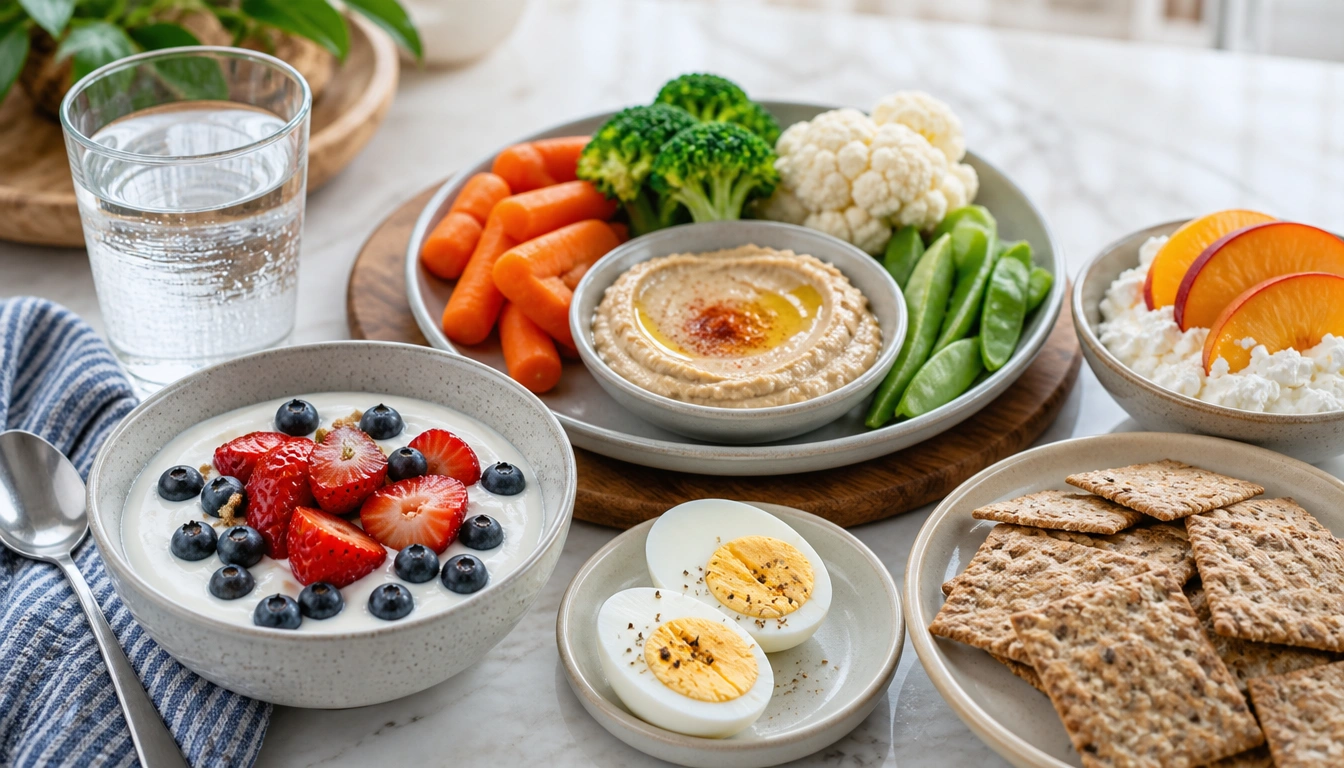
The best balanced snack ideas for adults over 50 combine protein with fiber, and sometimes a little healthy fat, to support muscle maintenance, steadier energy, and fewer cravings. Good choices include Greek yogurt with berries, cottage cheese with fruit, eggs with vegetables, tuna with whole-grain crackers, edamame, hummus with soft vegetables, and nut butter with apple slices. For many people over 50, a snack with about 10 to 15 or more grams of protein is a useful target when it fits their overall diet and health needs.
Key Takeaways
- Older adults often do better when protein is spread across meals and snacks instead of saved mostly for dinner.
- Pairing protein with fiber can help slow digestion, support satiety, and reduce energy crashes between meals.
- Soft, moist, or blended snacks can make healthy eating easier when chewing, dental issues, or dry mouth are a problem.
- Packaged snacks still need label checks for sodium, added sugar, saturated fat, and portion size, even when they seem healthy.
- People with kidney disease or other medical conditions may need individualized protein and mineral guidance from a clinician or dietitian.
Protein needs after 50: why snacks matter more than they used to
After age 50, the body often becomes less efficient at using protein for muscle repair and maintenance. That matters because muscle supports strength, balance, mobility, and the ability to stay independent. A snack is not just a filler between meals; it can be a practical way to help cover protein needs when appetite is smaller or meal timing is uneven.
The National Institute on Aging and other clinical guidance commonly point older adults toward a daily protein pattern that is more intentional than the standard “eat a little at dinner and hope it adds up” approach. In practice, that often means spreading protein through the day. For many people, a snack that contributes roughly 10 to 15 or more grams of protein can help make the total daily pattern more effective than a very light snack or one that is mostly refined carbohydrate.
That does not mean every snack has to be high-protein. It means the snacks you choose should do some nutritional work. A balanced snack should support muscle, help you feel satisfied, and not crowd out meals by being so large that it functions like a second lunch or dinner.
The simple formula for a balanced snack: protein + fiber, with optional healthy fat
The most useful snack formula for adults over 50 is simple: protein plus fiber, with a little healthy fat if needed for staying power. Protein helps with muscle maintenance and satiety. Fiber helps slow digestion and soften the blood sugar rise that can happen after a refined snack. Together, they can make energy feel steadier.
Examples are easy to build from ordinary foods. Greek yogurt with berries gives protein plus fruit fiber. Hummus with steamed vegetables or soft pita gives plant protein, fiber, and moisture. Cottage cheese with sliced peaches or tomatoes offers protein and a softer texture. Nut butter with apple slices brings protein, fiber, and fat, though portion size matters because nut butters are calorie-dense.
The goal is not to create a perfect macro formula. It is to avoid the common snack pattern of crackers, chips, pastries, or sweets that give a quick lift and then leave you hungry again. A snack with protein and fiber is more likely to carry you to the next meal without a crash.
Best snack ideas by texture and convenience
The best balanced snack ideas for adults over 50 are the ones you will actually eat regularly. Convenience matters, but so does texture. A good snack list should include no-cook, soft-chew, portable, and budget-friendly options.
No-cook ideas: plain Greek yogurt with berries; cottage cheese with sliced fruit; a hard-boiled egg with cucumber; tuna or salmon pouch with whole-grain crackers; hummus with baby carrots that have been lightly steamed for softness; edamame; or a small handful of unsalted nuts paired with fruit.
Soft-chew options: scrambled eggs; avocado on whole-grain toast; oatmeal stirred with nut butter and chia seeds; applesauce mixed with plain yogurt; ricotta with fruit; or a smoothie made with milk or unsweetened soy milk, berries, and a spoonful of nut butter. Blended options are especially useful when chewing is hard or appetite is low.
Portable choices: shelf-stable tuna or salmon packets, roasted chickpeas, single-serve yogurt cups, string cheese with an apple, or nut-and-seed mixes in pre-portioned containers. For travel or long workdays, choose items that do not require refrigeration right away, but still check the label for sodium and sugar.
Budget-friendly picks: eggs, oats, plain yogurt, beans, canned fish, peanut butter, cottage cheese, frozen berries, and carrots are all lower-cost building blocks. Buying larger containers and portioning snacks at home is often cheaper than individual convenience packs.
| Snack | Why it works | Best for |
|---|---|---|
| Greek yogurt with berries | Protein plus fiber and moisture | Steadier energy, easy prep |
| Cottage cheese with fruit | Soft texture and filling protein | Low appetite, chewing issues |
| Eggs with vegetables | High-quality protein with volume | Simple, budget-friendly snacking |
| Hummus with soft vegetables | Plant protein and fiber | Heartier snack without added sugar |
| Tuna with whole-grain crackers | Protein plus satisfying crunch | Portable, higher-protein option |
How to choose snacks for steadier energy and fewer cravings
Energy crashes often happen when a snack is mostly fast-digesting starch or sugar. That can be especially frustrating for adults over 50, who may have less appetite but still need reliable energy between meals. Pairing protein with fiber helps slow digestion and supports a more gradual rise in blood glucose, which can reduce the urge to keep grazing.
A practical way to judge a snack is to ask: Will this still feel satisfying an hour later? A plain muffin, sweet granola bar, or handful of pretzels usually will not. A yogurt cup without much sugar, a boiled egg with fruit, or beans with vegetables is more likely to last. If you want a small amount of healthy fat, include it as support, not as the main feature. A little avocado, nuts, seeds, or olive-oil-based dip can improve satisfaction without turning the snack into a heavy meal.
For people who feel tired or shaky between meals, it can also help to avoid snacks made only of refined flour or sweetened dairy drinks. Those foods may be convenient, but they often work against steady energy. Choose foods that look more like a mini-meal than a dessert.
What to look for on labels: protein amount, added sugar, sodium, and portion size
Packaged snacks can be useful, but the front label often tells only part of the story. A product may claim to be “high protein” or “made with real ingredients” and still contain a lot of sodium, added sugar, or saturated fat. For adults over 50, label reading matters because cardiovascular health, blood pressure, and blood sugar often become more important with age.
Start with portion size. A package may list two servings, which makes the protein look higher and the sugar or sodium look lower than what you will actually eat. Then look at protein grams, added sugars, sodium, and saturated fat together. A snack with enough protein but a long list of sweeteners or a salty seasoning blend may not be the best everyday choice.
The easiest rule is this: if the snack is packaged, check whether the protein comes with a reasonable amount of fiber and not too much sodium or added sugar. Jerky, seasoned nuts, flavored yogurt, trail mix, granola bars, and snack crackers are common examples that can look healthier than they are. Whole foods still give you the most control.
Age-related adaptations: chewing, dry mouth, lower thirst, and lower appetite
Many adults over 50 need snacks that fit changes in chewing, mouth comfort, and thirst. If teeth are sensitive, dentures are awkward, or dry mouth makes dry foods unpleasant, choose softer foods instead of forcing crunchy snacks that are hard to tolerate. Steamed vegetables, ripe fruit, yogurt, cottage cheese, smooth dips, oatmeal, and blended smoothies are all easier ways to get nutrients in.
Thirst also tends to decline with age, so mild dehydration can be mistaken for hunger. Pairing snacks with water, herbal tea, or another hydrating drink may help. Foods with higher water content, such as berries, melon, yogurt, cucumbers, tomatoes, soups, or smoothies, can also support hydration while still contributing protein or fiber.
Lower appetite is another common issue. In that case, small portions count. A few spoonfuls of yogurt with fruit may be more realistic than a large snack plate. The best snack is the one that is gentle enough to eat and nutrient-dense enough to matter.
When higher-protein snacks need medical caution, especially with kidney disease
Higher-protein snacks are not appropriate for everyone. People with chronic kidney disease, or other conditions that affect protein, potassium, phosphorus, or sodium handling, may need a different plan. Some protein-rich foods, especially dairy, nuts, beans, and certain packaged products, can also be higher in minerals that need to be monitored in kidney-related diets.
That is why a one-size-fits-all snack rule does not work. If you have kidney disease, diabetes with kidney concerns, or another condition that changes your nutrition needs, ask a healthcare professional or registered dietitian how much protein is appropriate and which snack foods fit best. The safest plan may involve smaller portions, different protein sources, or more attention to potassium and phosphorus content.
Medical guidance is also important if you have unintentional weight loss, ongoing poor appetite, swelling, unusual fatigue, or new weakness. Those can signal an issue that needs evaluation rather than a new snack routine.
Meal timing and habit tips: how to plan snacks so they support—not replace—meals
Snacks work best when they support your meal pattern instead of drifting into constant eating. For many adults over 50, a planned snack between breakfast and lunch or between lunch and dinner is more useful than grazing all day. Planning ahead makes it easier to choose food that truly supports health instead of whatever is closest.
Pre-portion snacks into small containers, keep a few shelf-stable options available, and choose times when you are genuinely hungry rather than bored or depleted. If you routinely skip meals and then over-snack later, a balanced snack can help, but it should not become a substitute for regular meals that provide a wider range of nutrients.
A simple habit can help: keep one protein-based snack and one fruit-or-vegetable-based snack ready. That combination makes it easier to meet protein needs, add fiber, and stay hydrated without relying on highly processed convenience foods.
Frequently Asked Questions
How much protein should a snack have for adults over 50?
A practical target is often around 10 to 15 or more grams of protein per snack when it fits the person’s overall diet and health needs. The exact amount can vary based on body size, appetite, and medical conditions, but spreading protein through the day is usually more helpful than relying mostly on one meal.
What are easy high-protein snack ideas for older adults who have dental issues or trouble chewing?
Choose soft, moist foods such as Greek yogurt, cottage cheese, scrambled eggs, hummus, applesauce with yogurt, oatmeal with nut butter, smooth smoothies, or mashed avocado on soft toast. These options are easier to chew while still providing protein and other nutrients.
What snacks help prevent blood sugar crashes between meals?
Snacks that combine protein and fiber are usually the best bet. Examples include yogurt with berries, an egg with fruit, hummus with vegetables, cottage cheese with tomatoes, or tuna with whole-grain crackers. These tend to digest more slowly than sweets or refined starches alone.
What should adults over 50 avoid in packaged snacks?
Watch for high added sugar, large sodium amounts, and saturated fat, especially in foods that look healthy on the front of the package. Portion size matters too, because a small-looking bag or cup may contain multiple servings. Foods like flavored yogurt, jerky, granola bars, and seasoned nuts deserve a close label check.
How can someone with kidney disease adjust high-protein snack choices safely?
People with kidney disease should not automatically raise protein without guidance. A clinician or registered dietitian can help choose the right protein amount and may also limit foods high in sodium, potassium, or phosphorus. Safer choices depend on the stage of kidney disease and the rest of the diet.
The Bottom Line
Balanced snack ideas for adults over 50 work best when they deliver protein, fiber, and enough moisture or softness to match changing appetite and chewing needs. Think yogurt with berries, eggs with vegetables, cottage cheese with fruit, hummus with soft vegetables, or fish with whole-grain crackers.
For healthier aging, snacks should help bridge nutrition gaps, not add a lot of sugar, sodium, or empty calories. Reading labels, pairing snacks with water, and planning portions ahead of time can make a big difference.
If you have kidney disease or another condition that changes your nutrition needs, get individualized advice before making higher-protein snacks a daily habit.
Medical disclaimer
Medical disclaimer: This content is for educational and informational purposes only and is not a substitute for professional medical advice, diagnosis, or treatment. Dietary needs and supplement suitability vary by individual.
