
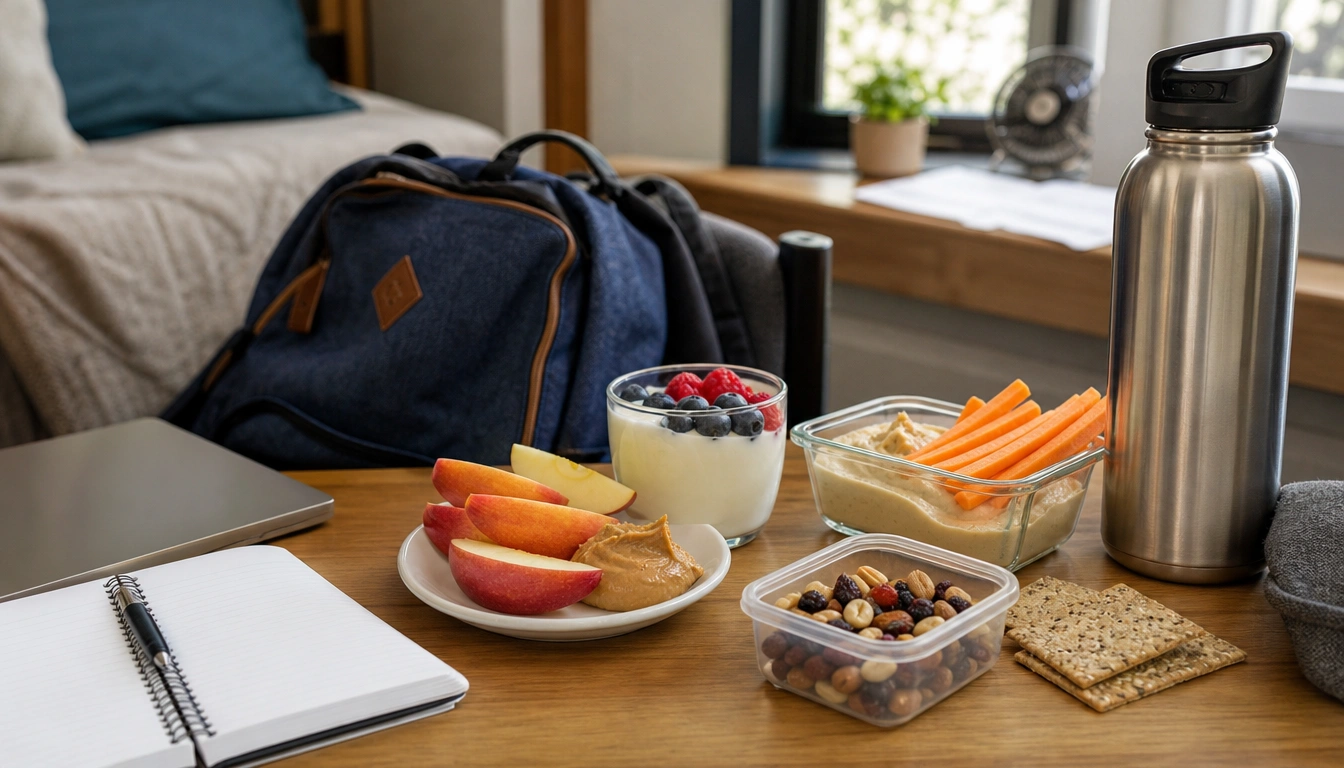
The easiest balanced snack for college students is one that pairs a fiber-rich carbohydrate with protein or healthy fat, such as fruit with nut butter, yogurt with berries, crackers with tuna, or hummus with vegetables. That combination tends to keep you fuller longer and support steadier energy than sugary snacks alone. The best choice is the one that fits your schedule, budget, storage space, and dietary needs.
Key Takeaways
- Aim for a fiber-rich carb plus protein or healthy fat to help snacks last longer and avoid the quick crash that often follows candy or pastries.
- Backpack-friendly options include fruit and nut butter, trail mix, jerky, tuna packets with crackers, and higher-fiber bars with lower added sugar.
- If you have a mini-fridge, try Greek yogurt and berries, string cheese with whole-grain crackers, hummus with vegetables, or edamame.
- Cheap staples like oats, peanut butter, bananas, store-brand yogurt, frozen vegetables, and campus pantry foods can build balanced snacks without much cost.
- Student athletes often need more frequent snacks with both carbohydrate and protein around training sessions to support performance and recovery.
- Food safety matters in dorms: watch expiration dates, refrigerate perishables promptly, and notice if food rules are becoming stressful or rigid.
Why balanced snacking matters in college
College schedules can be long enough that lunch at noon and dinner at 8 p.m. feels normal, even on days packed with classes, commuting, labs, practice, and study groups. In that gap, a balanced snack can do more than take the edge off hunger. It can help you stay mentally steady, avoid the “hungry and distracted” feeling that often shows up mid-afternoon, and reduce the temptation to grab whatever is closest, cheapest, and most sugary.
The brain uses glucose heavily, so very refined snacks can give a fast burst of energy followed by a drop that leaves you tired or foggy. Public health guidance from the NIH and academic nutrition programs consistently supports regular eating patterns built around fruits, vegetables, whole grains, and protein foods rather than relying on ultra-processed convenience items. For students, that usually means snacks that keep you full long enough to get through a class block or a library session without constant grazing.
Balanced snacking is also practical, not just nutritional. If your only options are a vending machine, a coffee shop, or a gas station between campus buildings, a planned snack can save money and make your day easier. The goal is not perfect eating. The goal is a snack that fits real college life and works with your energy needs.
What counts as a balanced snack
A simple way to think about balanced snacks is: fiber-rich carbohydrate + protein or healthy fat. The carbohydrate gives quick usable energy, while the protein or fat slows digestion and helps you stay satisfied longer. Fiber adds another layer of steadiness because it helps blunt the blood sugar rise that often comes from snack foods built mostly from refined flour or added sugar.
That does not mean every snack must be elaborate. A banana with peanut butter, whole-grain crackers with cheese, apple slices with sunflower seed butter, or carrots with hummus all use the same basic pattern. If your snack is only a sweet drink, candy bar, or plain chips, it may satisfy the craving but not the hunger for very long.
Food quality still matters. A protein bar can be helpful, but a bar with a lot of added sugar may act more like a dessert than a steady snack. Likewise, nuts are nutritious, but a tiny pack of lightly salted almonds alone may not be enough if you need to get through a long class block. The best snack is one that matches your hunger level and what comes next in your day.
If you are trying to eat more mindfully, this formula can be a useful shortcut. Ask: does this snack include a plant, grain, or other fiber source, and does it also include protein or healthy fat? If the answer is yes, it is probably closer to balanced than a snack made mainly of sugar or refined starch.
Shelf-stable snack ideas for backpacks and late classes
For students who spend most of the day on campus, shelf-stable snacks are often the most reliable. They fit in a backpack, survive a few hours without refrigeration, and are easy to eat between lectures. They also work well if your dorm fridge is tiny or shared.
Backpack-friendly options:
- Apple, banana, or clementine with a single-serve peanut butter or almond butter packet
- Trail mix made with unsalted nuts, seeds, and a small amount of dried fruit
- Whole-grain crackers with tuna or salmon pouches
- Higher-fiber granola or protein bars with lower added sugar
- Jerky, if you eat meat and want a portable protein option
If you want snacks that feel more like real food than packaged convenience, build around simple basics. An apple and nuts, an orange and seeds, or crackers plus a protein pouch all give you a better balance than chips alone. If your campus days are especially long, packing two smaller snacks may work better than one large one.
Mini-fridge and microwave snacks:
- Greek yogurt with berries
- Hummus with baby carrots, celery, or bell peppers
- String cheese with whole-grain crackers
- Microwaved edamame with fruit on the side
- Leftover cooked grains or oatmeal with nut butter and fruit
A dorm fridge opens up more options, but the same rule still applies. A snack with protein and fiber usually keeps you steadier than one built from dessert-style foods. If you have access to a microwave, frozen edamame, oatmeal, or simple leftovers can be surprisingly useful, especially after evening classes or before a late study session.
How to choose cheaper snacks without losing nutrition quality
Balanced snacks do not have to be expensive. In fact, some of the most useful college snacks are low-cost basics that show up in grocery store circulars, store-brand aisles, and campus pantry shelves. Budget-friendly eating is often more about planning than about finding specialty products.
Low-cost staples worth keeping on hand include oats, peanut butter, bananas, apples, store-brand yogurt, carrots, popcorn, canned beans, canned tuna, and frozen vegetables. These foods can be mixed and matched into snacks without much prep. For example, oats with peanut butter and banana can function as a filling mini meal, while popcorn plus string cheese or fruit plus yogurt gives you a quick snack with more staying power than chips.
If your campus has a pantry, use it. Pantry shelves often include items that are easy to overlook but helpful for snack building: crackers, canned protein, nut butter, fruit cups, oats, and shelf-stable milk or plant milk. Grocery store circulars can also point you toward lower-cost produce and protein options for the week.
A practical budget habit is to buy one or two “anchor foods” you eat often, then mix in lower-cost add-ons. For example, oatmeal plus peanut butter, yogurt plus fruit, or crackers plus tuna can stretch across several snacks. Store brands often provide similar nutrition to name brands at a lower cost, which matters when your food budget is limited.
Snack timing for long class days and what student athletes should do differently
Snack timing is not about following a rigid schedule. It is about preventing the long gaps that leave you drained, irritable, or too hungry to make good choices. For many students, eating every 2 to 3 hours during a long day can help support steadier mood, energy, and study stamina. That may mean breakfast, a mid-morning snack, lunch, an afternoon snack, and then dinner.
This matters most on days with back-to-back classes, labs, work shifts, or commuting time. If you know you will not get a proper meal for several hours, a planned snack is usually better than waiting until you are ravenous. Students often find they focus better when they do not let hunger build to the point that it competes with attention.
Student athletes are different from non-athletes because training raises overall energy and recovery needs. A pre-practice or post-practice snack usually works best when it includes carbohydrate plus protein, since that combination helps fuel activity and support muscle repair. A fruit and yogurt combo, crackers and turkey, or a sandwich half with milk or soy milk may fit better than a snack that is only sugary or only high in fat.
For athletes, the timing can matter as much as the food. A snack too close to hard training may feel heavy, while a snack too far away may not help performance. The exact approach depends on the sport, training load, and personal tolerance, so athletes with demanding schedules may benefit from a campus dietitian or sports nutrition professional for individualized planning.
How to adapt balanced snacks for vegan, vegetarian, gluten-free, or allergen-aware diets
Balanced snacks are easy to adapt, even with dietary restrictions. The main idea stays the same: pair a fiber-rich carbohydrate with a protein or healthy fat. You just choose different foods to fit your needs.
Vegan or vegetarian options: hummus with vegetables, fruit with peanut or sunflower seed butter, roasted edamame, soy yogurt with berries, trail mix, or whole-grain crackers with bean dip. Soy foods can be especially useful because they provide protein in forms that fit a quick snack.
Gluten-free options: fruit with nut butter, yogurt with fruit, rice cakes with peanut butter, popcorn with cheese, or gluten-free crackers with tuna, hummus, or seeds. Check labels carefully, especially if the product is processed in a facility that also handles gluten.
Allergen-aware options: if peanuts are an issue, use sunflower seed butter. If dairy does not work for you, look for fortified soy yogurt or other tolerated alternatives. If you have multiple allergies, choose simpler combinations with fewer ingredients so you can better track what works.
No matter the pattern, the best snack is one you can repeat safely and affordably. If a food restriction makes snack planning feel stressful, the easier route is often to focus on a few reliable foods you know you tolerate rather than trying to copy someone else’s snack list exactly.
Dorm and campus food-safety basics for perishable snacks
Mini-fridges make life easier, but they also make it easier to forget how quickly perishable foods can spoil. Basic food safety matters for yogurt, cheese, tuna salad, hummus, prepared meats, and any other snack that needs refrigeration. Check expiration dates, pay attention to how long food has been out, and keep the fridge cold enough to preserve safety.
A good habit is to put perishable snacks back in the fridge as soon as you are done eating. If you pack yogurt, cheese, tuna, or other chilled foods in a backpack, use an insulated bag or cooler pack if you expect a long delay before eating. Food left at room temperature for too long can become unsafe, especially in a warm dorm or during a long day on campus.
Also pay attention to freshness, not just dates. If a food smells off, looks odd, or has been in a shared fridge longer than you can confidently track, skip it. In a dorm setting, shared shelves and crowded bins make labeling helpful, especially for leftovers or opened containers.
Food safety is not meant to make you anxious. It is there to keep a helpful snack from becoming a stomach problem right before class or practice.
Common snack mistakes college students make and easy fixes
One common mistake is choosing snacks that are mostly sugar or refined starch. A pastry, sweet coffee drink, or large bag of chips may be convenient, but it often leads to another energy dip soon after. The fix is simple: pair the item with protein or choose a snack that already includes both parts. For example, fruit plus yogurt usually works better than fruit by itself if you need lasting fuel.
Another mistake is buying “healthy” snacks that are still not satisfying enough. A small granola bar may be too little for a long afternoon, while a handful of nuts may not provide enough carbohydrate if you need quick study fuel. Think about the size of the gap until your next meal, not just the label on the package.
A third issue is being too rigid. Some students start trying to snack “perfectly” and end up feeling anxious, guilty, or obsessive about food. That is a sign to step back. Healthy snack planning should make college easier, not add pressure. If you notice food rules becoming stressful or hard to break, it may be worth talking with a campus dietitian or counselor.
The easiest long-term fix is to keep a few dependable options on hand: one or two shelf-stable snacks, one or two fridge snacks, and a backup for days when the dining hall line is too long. That small amount of planning can make your whole week smoother.
Frequently Asked Questions
What makes a snack balanced for college students?
A balanced snack usually combines a fiber-rich carbohydrate with protein or healthy fat. That might be fruit with nut butter, yogurt with berries, hummus with vegetables, or crackers with tuna. This mix tends to support steadier energy and fullness than a snack made mostly of sugar or refined starch.
Which snacks work best without a fridge or kitchen?
Good no-fridge options include fruit with nut butter, trail mix, jerky, tuna or salmon pouches with crackers, and higher-fiber bars with less added sugar. These are easy to pack, travel well in a backpack, and are useful between classes or during long study sessions.
What are the cheapest healthy snack options for students on a budget?
Affordable basics include oats, peanut butter, bananas, apples, popcorn, carrots, canned beans, store-brand yogurt, and frozen vegetables. Campus pantry foods and grocery circulars can also help. The cheapest approach is often to buy a few versatile staples and mix them in different ways.
How should student athletes snack differently from non-athletes?
Student athletes usually need more frequent snacks and more carbohydrate-plus-protein around training. A snack before or after practice should help fuel activity and support recovery, such as fruit and yogurt, crackers and turkey, or another combination that sits well and is easy to digest.
Which balanced snacks are safest and most convenient in dorms or on campus?
Shelf-stable options are the most convenient for backpacks, while yogurt, cheese, hummus, and cooked foods need prompt refrigeration. In dorms, use clean containers, check expiration dates, and avoid leaving perishables out too long. If a snack seems questionable, it is safer to replace it.
The Bottom Line
The best balanced snacks for college students are usually simple, cheap, and portable: fruit with nut butter, yogurt with berries, hummus with vegetables, crackers with tuna or cheese, or trail mix in a modest portion. You do not need a full kitchen to eat in a way that supports focus and fullness.
If you build snacks around fiber-rich carbohydrates plus protein or healthy fat, you are more likely to avoid the fast energy swings that come from candy, pastries, or chips alone. Keep a few shelf-stable options in your backpack and a few fridge items in your dorm so you are covered on busy days.
If food planning starts to feel rigid, stressful, or obsessive, that is worth paying attention to. And if fatigue, concentration problems, or weight changes keep showing up, campus health services or a registered dietitian can help you sort out whether something more than snack timing is going on.
Medical disclaimer
Medical disclaimer: This content is for educational and informational purposes only and is not a substitute for professional medical advice, diagnosis, or treatment. Dietary needs and supplement suitability vary by individual.
Sources
- National Institutes of Health (NIH) — nih.gov. Accessed October 2026.
- Academic Research Institution — uga.edu. Accessed October 2026.
- Academic Research Institution — osu.edu. Accessed October 2026.
- Academic Research Institution — colostate.edu. Accessed October 2026.
- Academic Research Institution — ucsd.edu. Accessed October 2026.
