
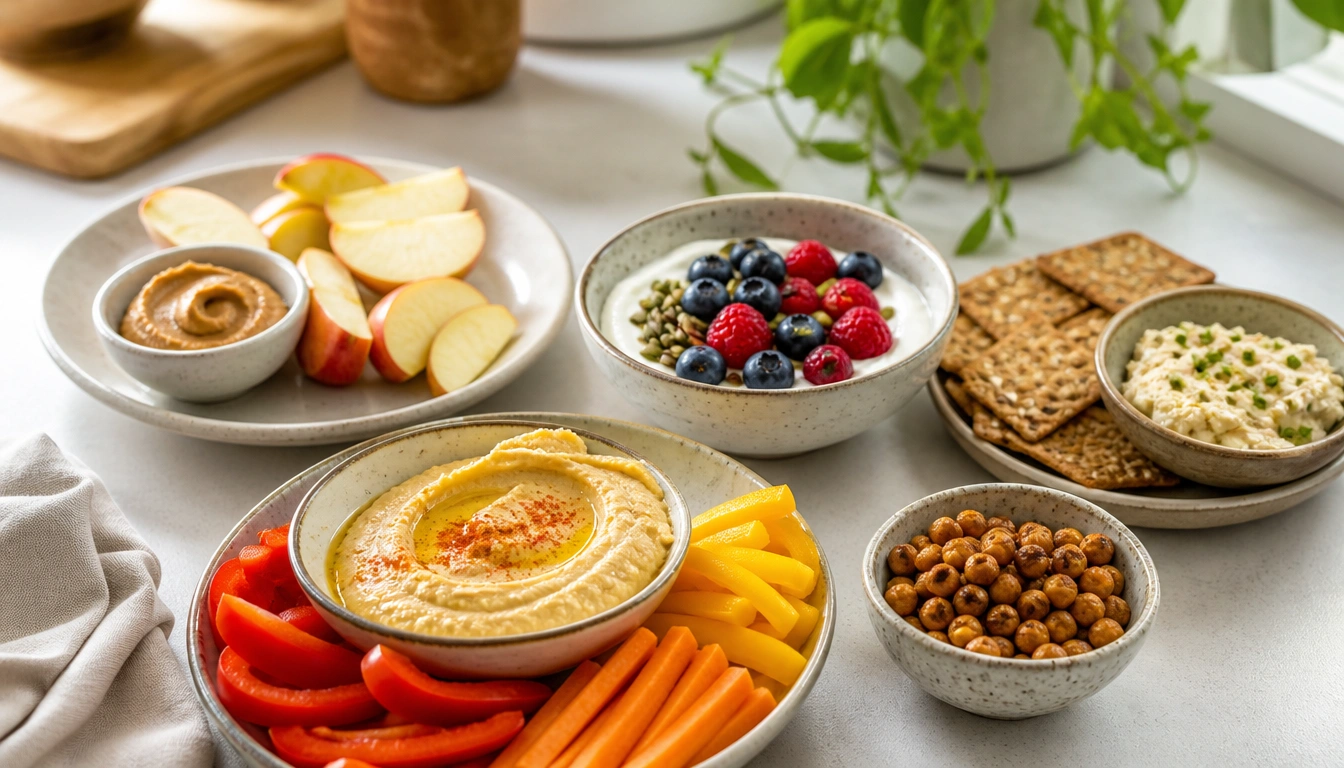
A filling vegetarian snack usually starts with a fiber-rich base, adds a protein source, includes a little healthy fat, and can finish with fruit or vegetables. That formula helps slow digestion, supports steadier energy, and makes it easier to avoid the refined-carb trap. For most beginners, the easiest wins are hummus with vegetables, fruit with nut butter, yogurt or soy yogurt with berries, roasted chickpeas, and whole-grain pairings with cheese, eggs, tofu, or beans.
Key Takeaways
- Build snacks around fiber + protein + healthy fat so they keep you full longer and reduce quick blood sugar swings.
- Choose whole-food snacks first; many packaged vegetarian snacks are more like desserts or refined-carb products than balanced fuel.
- Pair plant-based iron foods with vitamin C-rich foods to help your body absorb more of the iron.
- Lacto-ovo vegetarians can use dairy and eggs for convenience; vegans need more deliberate planning for complete protein and calcium.
- Increase beans, lentils, and raw vegetables gradually, and drink enough fluids to reduce bloating or gas.
Start with a simple snack formula
A reliable vegetarian snack formula is fiber-rich base + protein source + healthy fat source + optional produce add-on. That structure matters because each part plays a different role. Fiber slows digestion, protein helps you feel satisfied, and fat adds staying power so the snack does not feel empty an hour later. The optional fruit or vegetable piece can improve volume, flavor, and nutrient coverage without turning the snack into a meal.
For beginners, this approach is easier than memorizing perfect foods. Think in combinations instead of rules. Whole-grain crackers with hummus, apple slices with peanut butter, berries with yogurt, or carrots with bean dip all fit the pattern. If a snack is mostly white bread, sweet cereal bars, or crackers without a meaningful protein source, it is less likely to keep energy steady.
According to the NHS, vegetarian eating patterns can be healthy and practical when they include a variety of plant foods across the day. Snacks are a useful place to close gaps between meals rather than simply add extra calories.
Why balanced snacks matter for new vegetarians
Many new vegetarians accidentally replace meat with refined carbohydrates such as plain bagels, pretzels, pastries, or snack bars that are mostly sugar and starch. Those foods may be convenient, but they can digest quickly and leave you hungry again soon after. A balanced vegetarian snack helps prevent that cycle by pairing slower-digesting ingredients with more filling nutrients.
This is especially helpful during the transition period, when your usual meal rhythm may still be changing. If lunch is lighter than you expect or dinner is delayed, a balanced snack can smooth the gap without turning into a second meal. It may also make it easier to avoid grazing on ultra-processed foods out of convenience.
The goal is not to eat snacks constantly. It is to make the snacks you do eat count: better satiety, steadier energy, and fewer “I need something right now” cravings that come from a quick carbohydrate spike and drop.
Easy snack archetypes that work for beginners
For most people, the best vegetarian snack ideas are the ones you can assemble quickly from foods you already keep on hand. These simple patterns are easy to repeat, budget-friendly, and adaptable.
Crunch and dip: Carrot sticks, bell peppers, cucumbers, or whole-grain pita with hummus or bean dip. The vegetables add fiber and volume, while hummus contributes protein, iron, and a little fat from tahini.
Fruit and nut butter: Apple slices, banana, or pear with peanut, almond, or cashew butter. This is a good option when you want something sweet but still need staying power.
Dairy or soy protein bowl: Greek yogurt, plain yogurt, or soy yogurt topped with berries, chia seeds, or a few walnuts. This works well for a quick morning snack or post-workout bite.
Roasted chickpeas or edamame: These are portable, savory, and higher in protein than many snack foods. They also bring fiber, which helps the snack feel more substantial.
Whole-grain plus protein: Whole-grain toast with avocado and egg, crackers with cheese, or whole-grain bread with tofu spread. The grain provides the base; the protein and fat make it more balanced.
If you want a snack to last longer, look for two or three of these elements in the same plate rather than relying on one food alone.
Lacto-ovo and vegan snack planning are not the same
A lacto-ovo vegetarian can use dairy and eggs, which makes snack planning simpler in a few ways. Yogurt, cheese, and boiled eggs can provide convenient protein, and dairy foods can make calcium easier to cover. That does not mean every snack has to include animal foods, only that the category offers more easy plug-ins.
Vegan snacks need a little more planning because the protein and calcium sources are more dependent on legumes, soy foods, nuts, seeds, and fortified products. Tofu, tempeh, edamame, fortified soy yogurt, and calcium-set foods can all help, but you need to be more intentional about using them regularly. Vegan beginners also benefit from checking labels for fortification, especially when choosing plant milks or yogurts.
The practical difference is coverage. A lacto-ovo vegetarian may reach for cheese and fruit without much thought. A vegan beginner can absolutely do the same style of snack, but with tofu cubes, soy yogurt, bean dip, or fortified alternatives instead of dairy. Both patterns can work well when they are built around protein, fiber, and fat rather than just carbohydrate.
Vegetarian gap nutrients: iron, calcium, zinc, and fiber
Vegetarian snacks can do more than blunt hunger. They can also help cover nutrients that sometimes deserve extra attention in plant-forward eating patterns.
Iron: Plant foods provide non-heme iron, which is not absorbed as efficiently as the iron in animal foods. Good snack sources include pumpkin seeds, chickpeas, lentil dip, dried fruit, tofu, and fortified cereals or crackers. To improve absorption, pair these with vitamin C-rich foods such as bell peppers, strawberries, oranges, tomatoes, or citrus. A handful of pumpkin seeds with orange slices is one simple example.
Calcium: Lacto-ovo vegetarians can use yogurt, milk, and cheese. Vegans can look for calcium-set tofu, fortified soy milk or yogurt, and some fortified juices. Because snacks are small, even modest calcium-containing choices can matter over time.
Zinc: Beans, lentils, seeds, nuts, whole grains, and dairy can contribute zinc. A snack of whole-grain crackers with hummus and sunflower seeds, for example, gives more than empty crunch.
Fiber: New vegetarians often improve fiber intake naturally, which is usually beneficial. The trick is to increase it gradually so your gut has time to adjust.
The National Health Service and Mayo Clinic both emphasize that vegetarian diets can meet nutritional needs when they are planned thoughtfully and include variety. Snacks are one place where that planning becomes practical instead of theoretical.
How to shop, prep, and read labels
Convenience is where many vegetarian beginners get tripped up, so make the easy option the good option. A little prep can save you from defaulting to cookies, chips, or a sugary granola bar when hunger hits.
Try portioning snack containers at the start of the week: washed vegetables, fruit, roasted chickpeas, mixed nuts, or small bags of whole-grain crackers. Keep a few “emergency snacks” in a desk drawer, backpack, or car so you are not forced to rely on vending machine choices.
When reading labels, look beyond the vegetarian claim. Some commercial snack foods are high in added sugar, low in protein, and more ultra-processed than nourishing. Watch for items that seem healthy but behave like dessert, such as sweetened yogurt cups, coated nuts, flavored granola bars, or crackers with very little protein.
A budget-friendly swap is often the best swap: plain yogurt instead of flavored yogurt, unsalted nuts instead of candy-like snack mixes, or popcorn plus seeds instead of a refined snack bag. If a packaged snack has one or two ingredients you would use at home, it is often a better bet than something with a long ingredient list you would never cook with.
Adjust fiber slowly and support digestion
More beans, lentils, raw vegetables, and whole grains are usually a good move, but a sudden jump can cause bloating, gas, or abdominal discomfort. That does not mean those foods are a bad fit. It usually means your intake rose faster than your digestive system could comfortably adapt.
Increase fiber gradually over days or weeks, not all at once. Start with smaller portions of beans or edamame, mix cooked vegetables with raw ones, and choose softer textures if a huge salad feels heavy. Drinking enough fluids also matters because fiber works best when it can hold water in the gut.
If you are sensitive to high-fiber foods, it can help to choose snacks that are gentler at first: yogurt with fruit, toast with nut butter, smooth hummus, or a smaller serving of roasted chickpeas instead of a large raw veggie plate. Over time, many people find they tolerate more fiber as they build it into the routine.
Allergies and intolerances deserve attention too. Nuts, peanuts, soy, and dairy are common problem foods for some people, so adjust your snack list to your own needs rather than forcing a “perfect” vegetarian pattern.
A quick mix-and-match checklist
If you want a fast way to build vegetarian beginner snacks, use this check in your head:
- Do I have a fiber source such as fruit, vegetables, whole grains, beans, or seeds?
- Do I have a protein source such as yogurt, cheese, eggs, tofu, edamame, hummus, or nuts?
- Do I have a fat source such as nut butter, avocado, seeds, tahini, olives, or dairy fat?
- Would one vitamin C food help, especially if I am using an iron-rich plant food?
- Will this snack still feel satisfying in 1 to 2 hours?
You do not need every snack to be perfect. You need a repeatable pattern that is simple enough to use on busy days and flexible enough to fit your budget, taste preferences, and digestion.
Frequently Asked Questions
How do I build a balanced vegetarian snack with protein, fiber, and healthy fat?
Start with a high-fiber base such as fruit, vegetables, whole grains, or beans. Add a protein source like yogurt, tofu, hummus, eggs, cheese, or nuts, then include a small amount of healthy fat from nut butter, seeds, avocado, or tahini. That combination tends to keep you fuller than refined carbs alone.
What are quick vegetarian snack combinations that work for beginners?
Good beginner-friendly options include hummus with carrots or pita, apple slices with peanut butter, Greek or soy yogurt with berries, roasted chickpeas, edamame, or whole-grain toast with avocado and egg. These are easy to assemble and give a better balance than chips, crackers, or sweets by themselves.
How can vegetarian beginners avoid blood sugar spikes and energy crashes between meals?
Pair carbohydrates with protein, fat, and fiber. That slows digestion and makes the snack more satisfying. A piece of fruit is fine, but fruit plus nut butter or yogurt is usually steadier than fruit alone. Also try to avoid turning ultra-processed snack foods into your default between-meal habit.
What should vegans snack on differently from lacto-ovo vegetarians?
Vegans usually need to plan more deliberately for protein and calcium because they are not using dairy or eggs. Tofu, tempeh, edamame, fortified soy yogurt, calcium-set tofu, seeds, nuts, and fortified plant milks can help. Lacto-ovo vegetarians can use yogurt, cheese, and eggs more easily.
How can I choose vegetarian snacks that improve iron, calcium, and zinc intake?
Choose snacks that include legumes, tofu, seeds, nuts, whole grains, dairy, or fortified alternatives. For iron-rich plant snacks, add vitamin C foods such as citrus, berries, or bell peppers to improve absorption. Over time, variety matters more than any single perfect snack.
The Bottom Line
The easiest vegetarian snacks for beginners are not complicated recipes. They are simple combinations built from fiber, protein, and a little healthy fat. That pattern supports fuller, steadier snacking and helps you avoid leaning too hard on refined carbs or ultra-processed foods.
If you are new to vegetarian eating, keep a few go-to options on repeat: hummus and vegetables, fruit and nut butter, yogurt or soy yogurt with berries, roasted chickpeas, and whole-grain pairings with eggs, cheese, tofu, or beans. Adjust for your budget, allergies, and digestion, and increase fiber gradually if your gut needs time to adapt.
Medical disclaimer
Medical disclaimer: This content is for educational and informational purposes only and is not a substitute for professional medical advice, diagnosis, or treatment. Dietary needs and supplement suitability vary by individual.
Sources
- National Health Service (NHS) — www.nhs.uk. Accessed October 2026.
- National Health Service (NHS) — worcsacute.nhs.uk. Accessed October 2026.
- Mayo Clinic — mayoclinic.org. Accessed October 2026.
- Academic Research Institution — jhu.edu. Accessed October 2026.
