
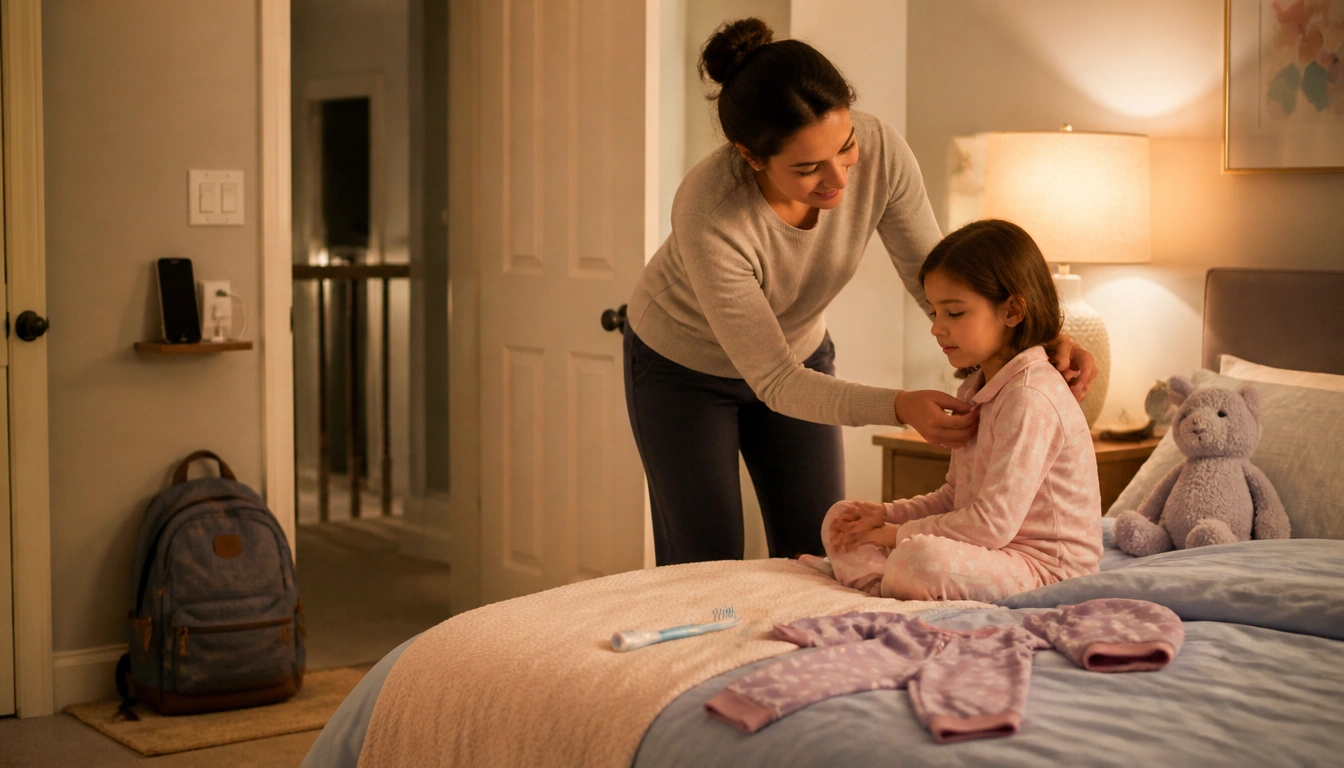
The most useful bedtime routine for students is a short, repeatable one: set a consistent bedtime and wake time, turn off screens before bed, do a brief wind-down, and keep the bedroom quiet, dark, and cool. Younger children usually need more parent guidance, while teens often do better with a firm digital curfew and a consistent wake time rather than pressure to go to bed much earlier.
Key Takeaways
- School-age children usually need 9 to 12 hours of sleep, while teenagers need 8 to 10 hours.
- A routine works best when it is simple enough to repeat on busy nights, not just ideal nights.
- For teens, a steady wake time and a screen cutoff often matter more than arguing about an earlier bedtime.
- If a child is genuinely hungry, a light snack is better than a heavy or sugary one; brushing afterward still matters.
- Snoring, gasping, breathing pauses, or persistent daytime sleepiness are reasons to ask a pediatrician about sleep problems.
Why a bedtime routine matters for students
A consistent bedtime routine for students helps the brain shift from daytime alertness into sleep. That transition matters for more than just falling asleep faster. Enough sleep supports attention, mood, memory, behavior, and classroom performance, while short or irregular sleep often shows up at home first as irritability, resistance, or morning chaos.
For busy families, the routine is also a tool for reducing negotiation. When the same sequence happens most nights, children know what comes next and do not have to decide everything fresh each evening. That lowers friction for parents and gives students fewer chances to stall, escalate, or stay wired late into the night.
The goal is not a perfect, choreographed evening. It is a reliable signal that the day is ending and sleep is near.
How much sleep students actually need
Sleep needs change with age, and official guidance from the American Academy of Sleep Medicine and the American Academy of Pediatrics reflects that. School-age children ages 6 to 12 generally need 9 to 12 hours in 24 hours. Teenagers ages 13 to 18 generally need 8 to 10 hours.
Those are daily sleep needs, not just bedtime targets. A child who has to wake very early for school may need a surprisingly early lights-out time to make the total work. Teens often need enough sleep but also have a biological shift toward later sleepiness, which can make early bedtimes feel unrealistic.
That is why it helps to think in terms of sleep opportunity, not just bedtime. If your child is consistently waking exhausted, falling asleep in class, or taking a very long time to fall asleep, the schedule may not match their real sleep need.
The core pieces of a realistic routine
The most effective routines usually share three features: consistency, a short wind-down, and a low-stimulation environment. Consistency means the steps happen in about the same order most nights. The wind-down gives the nervous system time to slow down. The low-stimulation environment reduces cues that keep the brain alert.
For a busy household, a practical version can be surprisingly brief. Start with a predictable sequence that takes about 15 to 20 minutes. For example: bathroom, teeth, pajamas, a short calm activity, then lights out. Many families find that the same order matters more than the exact details.
Parents can also use a launchpad near the door for backpacks, homework folders, sports gear, and clothes for the next day. That small setup reduces morning scrambling and keeps late-night searching from creeping into bedtime.
A household charging station in a common area can help too. Phones, tablets, and gaming devices stay there before bed instead of moving into bedrooms, where they invite scrolling and delay sleep.
What to do when homework, sports, or travel push bedtime late
Some nights will run late. That does not mean the routine failed. It means the routine needs a reset. On heavy homework or sports nights, keep the same main steps but compress them. If there is no time for the full version, preserve the pieces that matter most: remove screens, complete hygiene, and keep the final minutes calm and predictable.
If a child comes home late from practice, try to avoid turning bedtime into a second work session. Pack bags earlier in the day when possible, and use the launchpad so uniforms, books, and devices are ready before the evening starts. If homework is still unfinished, a brief parent check-in and a clear stopping point are better than letting work drift deeper into the night.
After travel or a one-off late night, return to the regular schedule as soon as possible instead of repeatedly “making up” for the missed bedtime. A stable wake time usually helps reset the next night more than sleeping in far past the usual hour.
Bedtime food rules for hungry students
Some children genuinely feel hungry before bed, especially if dinner was early or practice ran long. In that case, a light snack can help. A small carbohydrate-based snack is usually a better choice than a heavy meal or something very sugary. Examples can include a small bowl of whole-grain cereal with milk, toast, or crackers.
The goal is to settle hunger without creating a second round of stimulation. Large, rich, or sugary foods close to bedtime can make sleep harder by keeping the body busy with digestion or making the child feel more activated. Caffeinated drinks are best avoided late in the day as well, including energy drinks, cola, and some teas.
One rule should stay constant: brush teeth after any bedtime snack. That protects dental health and also creates a clear end point for the evening.
How to adapt the routine for teens and younger children
Younger elementary students usually do best with parent-led steps. They may need reminders, physical cues, and a consistent order: homework done, clothes laid out, bath or wash-up, teeth brushed, then story or quiet reading. They often respond well to visible structure because they are still learning how to manage evening transitions on their own.
Teens need a different approach. Because their internal clock often shifts later, a very early bedtime can lead to conflict without solving the real problem. For teens, a firm digital curfew and a consistent wake time usually matter more than repeated lectures about “going to bed earlier.”
That does not mean the bedtime does not matter. It means the family focus should move toward reducing light and stimulation, protecting sleep time, and keeping wake time steady enough to anchor the body clock.
Children with ADHD, autism, or sensory sensitivities may need an adapted routine rather than a rigid one. Some do better with more sensory comfort, such as dimmer lighting, predictable sound, or a preferred blanket. Others need fewer verbal reminders and a calmer transition. If your child has a known neurodevelopmental or sensory issue, the best routine is the one that is stable, calm, and workable for that child.
Make the sleep environment easier on the body
Good sleep is easier in a room that is dark, quiet, and comfortably cool. A dim nightlight can be helpful for children who are anxious in the dark, but the room should still feel low-stimulation. Bright overhead light and noisy background activity tend to keep the brain alert.
Device placement matters too. Phones and tablets are best kept out of the bedroom at night, not just turned face down on a pillow or desk. Screens can delay sleep by keeping the brain engaged and by exposing the child to light that suppresses the body’s natural sleep signals.
If siblings share space or sleep on different schedules, try to keep the room itself as sleep-focused as possible. Quiet play, homework, and glowing screens should happen elsewhere when you can manage it.
When bedtime trouble needs medical evaluation
Not every bedtime struggle is a sleep disorder. But some patterns deserve a pediatric evaluation rather than more discipline or a later bedtime. Loud chronic snoring, gasping, or breathing pauses during sleep can suggest sleep-disordered breathing and should not be ignored.
It is also worth asking for help if your child regularly takes a long time to fall asleep despite good sleep habits, or if they seem excessively sleepy during the day. Falling asleep in class, dozing in the car in an unusual way, or having persistent morning headaches can signal that something deeper is affecting sleep.
Persistent problems with mood, attention, or school function can also be tied to poor sleep. If your family has tried a realistic routine and sleep still does not improve, it is reasonable to bring the pattern to a healthcare professional.
Frequently Asked Questions
How can parents keep a bedtime routine consistent on school nights and weekends?
Keep the same order of steps and try not to let weekend wake times drift too far from the school schedule. A small difference is easier to recover from than a late-night, late-morning cycle that changes every week.
What should a teen bedtime routine look like when a strict early bedtime causes resistance?
Focus less on forcing an early bedtime and more on a firm screen cutoff, a predictable wind-down, and a stable wake time. Teens often do better when the routine respects their later body clock while still protecting sleep.
How should a bedtime routine change for children with ADHD, autism, or sensory sensitivities?
Keep the routine predictable, calm, and tailored to the child’s sensory needs. Some children need more comfort, less noise, softer light, or fewer verbal demands. If sleep problems are ongoing, a clinician can help personalize the approach.
What if my child is hungry before bed—what snacks are okay?
A small, light snack is usually best if hunger is real. Choose simple options such as whole-grain cereal with milk, toast, or crackers. Avoid heavy or very sugary foods, and brush teeth after the snack.
When is sleep trouble serious enough to call a pediatrician?
Call a pediatrician if you notice loud snoring, gasping, breathing pauses, persistent daytime sleepiness, or ongoing trouble falling asleep despite a steady routine. Those patterns can point to a sleep problem that needs evaluation.
The Bottom Line
A realistic bedtime routine for students does not need to be long or perfect. It needs to be repeatable: screen cutoff, a short wind-down, a calm sleep space, and a steady wake time.
Younger children usually need more hands-on guidance, while teens often respond better to a firm digital curfew and consistent mornings. If bedtime stays difficult despite these changes, or if you notice snoring, gasping, or marked daytime sleepiness, ask a pediatrician about it.
Medical disclaimer
Medical disclaimer: This content is for educational and informational purposes only and is not a substitute for professional medical advice, diagnosis, or treatment. Dietary needs and supplement suitability vary by individual.
Sources
- National Health Service (NHS) — cambspborochildrenshealth.nhs.uk. Accessed November 2026.
- Centers for Disease Control and Prevention (CDC) — cdc.gov. Accessed November 2026.
- National Health Service (NHS) — www.nhs.uk. Accessed November 2026.
- National Health Service (NHS) — childrenandfamilyhealthdevon.nhs.uk. Accessed November 2026.
- National Health Service (NHS) — scot.nhs.uk. Accessed November 2026.
