
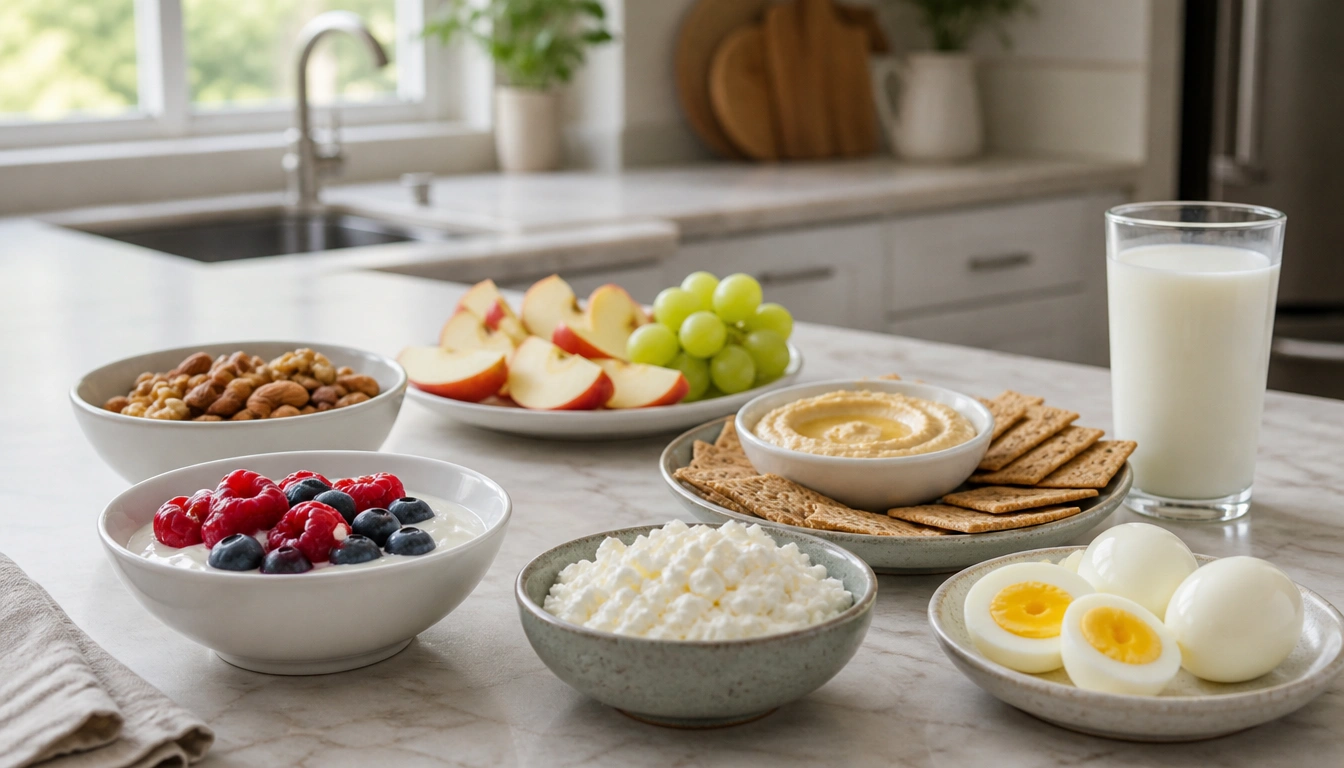
The healthiest time-saving snacks for adults over 50 are simple foods that combine protein, fiber, and healthy fats with little to no prep: Greek yogurt, cottage cheese, eggs, hummus, nuts, nut butter, fruit, whole-grain crackers, and calcium-fortified beverages. These snacks can help support muscle maintenance, bone health, digestion, and steady energy after 50, especially when they are portioned well and matched to a person’s appetite, chewing ability, and health conditions.
Key Takeaways
- After 50, snacks should do more than curb hunger: they can help distribute protein across the day to support muscle maintenance.
- The best quick snacks are nutrient-dense, not just convenient, and should limit added sugar, sodium, and saturated fat.
- Pair protein with fiber or healthy fat for steadier energy and better satisfaction between meals.
- Soft options like yogurt, cottage cheese, nut butter, and eggs are useful when chewing is difficult or appetite is low.
- Some adults over 50 need calorie-dense snacks to prevent weight loss, while others need lighter snacks for weight management.
- Hydration matters too: a snack is a good time to include water, milk, or another calcium-fortified beverage.
Why snacking needs change after 50
After 50, many adults need fewer calories than they did earlier in life, but they still need plenty of protein, vitamins, minerals, and fiber. That means snacks work best when they are chosen for nutritional value, not just convenience. Public health guidance from the NIH, CDC, and nutrition.gov emphasizes nutrient-dense foods because the goal is to get more useful nutrition from fewer calories.
Protein deserves special attention. Aging is associated with gradual muscle loss, and research summarized by the NIH and academic nutrition sources supports spreading protein intake through the day rather than putting most of it at dinner. A snack with protein can help support muscle maintenance, especially for people who eat small meals or feel full quickly.
Snacks can also support bone health and digestion. Calcium and vitamin D remain important after 50, while fiber helps bowel regularity and may support cholesterol and blood sugar control. For many adults, a well-chosen snack is a practical way to fill gaps that a rushed meal or small appetite leaves behind.
Another age-related issue is thirst. The sense of thirst can become less reliable with age, so pairing a snack with fluid is a useful habit. Water, milk, or a calcium-fortified beverage can make a snack more complete without adding much effort.
What makes a snack healthy for older adults
A healthy snack for an older adult should earn its place. It should deliver nutrients that matter after 50 while staying modest in added sugar, sodium, and saturated fat. That does not mean every snack must be “perfect”; it means choosing foods that support the body instead of only filling time.
A good rule is to look for at least one of these anchors: protein, fiber, or healthy fat. Protein helps preserve lean tissue. Fiber supports digestion and may help with blood sugar and heart health. Healthy fats from nuts, seeds, avocado, and some dairy foods can improve satisfaction and make a snack more energy-dense when needed.
Food quality matters more than trendy labels. A packaged snack can still be useful if it is low in sodium, reasonably low in added sugar, and built around recognizable foods such as nuts, yogurt, beans, or whole grains. For people with hypertension, the CDC recommends paying close attention to sodium. For people with diabetes, the CDC and nutrition.gov emphasize choosing carbohydrates with more fiber and balancing them with protein.
Not every snack needs to be low-calorie. If an adult over 50 is losing weight unintentionally or struggling to eat enough, a more calorie-dense snack may be the better choice. The healthiest snack is the one that fits the person’s actual needs.
A simple snack formula you can repeat
One of the easiest ways to build a better snack is to use a repeatable formula: choose one protein anchor, one fiber source, and one optional healthy fat. This keeps the snack quick without turning it into a random handful of foods that do not satisfy for long.
Protein anchor: Greek yogurt, cottage cheese, eggs, hummus, tuna, nut butter, cheese, soy yogurt, or a handful of unsalted nuts.
Fiber source: Berries, apple slices, pears, carrots, whole-grain crackers, whole-grain toast, cucumber, edamame, or beans.
Optional healthy fat: Walnuts, chia seeds, ground flax, avocado, or a thin layer of nut butter.
Examples are easy to imagine: Greek yogurt plus berries and chia; cottage cheese plus peaches; hummus plus whole-grain crackers; or an apple with peanut butter. The formula is flexible, which matters when appetite, schedule, or grocery budget changes from week to week.
This approach also helps reduce mindless snacking. If a snack has protein and fiber, it is more likely to hold you over until the next meal and less likely to turn into constant grazing.
Best no-prep and low-prep snack ideas
For adults over 50, the best snack list is usually short and practical. The goal is not novelty; it is food that is easy to keep on hand and easy to assemble when energy is low.
Dairy-based options: Plain Greek yogurt, cottage cheese, string cheese, and kefir are among the easiest choices. They provide protein and, in many cases, calcium. Add fruit, cinnamon, or a spoonful of seeds if you want more fiber and flavor.
Plant-based options: Hummus with whole-grain crackers, roasted edamame, unsalted nuts, nut butter on toast, or soy yogurt can work well. These choices are especially useful for people who prefer shelf-stable items or want a snack they can keep at work, in a purse, or in the car.
Egg-based options: Hard-boiled eggs are a strong time-saver because they can be batch-prepared and kept in the refrigerator. They are useful when you need protein without much chewing or cooking.
Produce-based options: Pre-washed berries, grapes, banana, mandarin oranges, cucumber slices, and baby carrots are low-prep and add fiber and water. Pair produce with protein so it does more than provide quick sweetness.
Shelf-stable options: Unsalted nuts, nut butter packets, whole-grain crackers, tuna or salmon packets, shelf-stable milk, and lower-sodium bean snacks can be helpful when refrigeration is limited. These are especially useful for travel, busy days, or backup snacks when the fridge is empty.
A practical approach is to keep two or three favorites in each category. Variety is helpful, but too many choices can make snack prep feel harder than it needs to be.
Soft-texture swaps for chewing issues or dry mouth
Chewing discomfort, dry mouth, dentures, or dental problems can make crunchy snacks less appealing. That does not mean snacks need to disappear. It means the texture should be adjusted to fit the person.
Soft options are often the easiest place to start. Greek yogurt, cottage cheese, kefir, pudding-style yogurt with less added sugar, applesauce, mashed avocado, soft scrambled eggs, tuna mixed with plain yogurt, and smooth nut butter can all be easier to manage than raw carrots or hard pretzels.
If you want something that still feels like a snack rather than a mini-meal, try softer pairings: banana with peanut butter, cottage cheese with soft fruit, hummus with soft pita, or oatmeal with nuts ground finely. For dry mouth, choosing moist foods can improve comfort and make eating less tiring.
For people with low appetite, smaller portions may be easier to finish. A small yogurt cup, a few spoonfuls of cottage cheese, or a cheese stick with fruit may be more realistic than a large snack plate. Texture matters because a snack only helps if it is actually eaten.
If swallowing is difficult, coughing happens during meals, or texture changes do not help, that is a reason to speak with a clinician or dietitian rather than trying to solve it only through food swaps.
How to adjust snacks for different goals
Adults over 50 do not all need the same snack. Some are trying to maintain weight, some need to stop unintentional weight loss, and others need better blood sugar or heart-health support. The best snack depends on the goal.
For weight maintenance or weight loss: Choose snacks that are filling without being overly calorie-dense. Fruit with yogurt, carrots with hummus, or a small handful of nuts can work well. Portioning matters here because even healthy foods can add up quickly if eaten directly from the package.
For unintended weight loss or low appetite: Look for more energy-dense snacks that still bring nutrients. Peanut butter on toast, full-fat yogurt, trail mix with nuts and seeds, avocado on whole-grain toast, or cottage cheese with fruit can provide more calories in a small volume. For someone eating too little, a snack should support intake rather than reduce it.
For blood sugar support: Choose snacks with protein and fiber, and avoid large amounts of juice, candy, baked goods, or refined crackers by themselves. Pairing fruit with nuts or yogurt is often more balanced than fruit alone. The CDC and nutrition.gov both emphasize balancing carbohydrate choices with protein and fiber.
For heart health and blood pressure: Focus on lower-sodium choices such as unsalted nuts, plain yogurt, fresh fruit, vegetables, and bean-based snacks. Watch deli meats, flavored crackers, and many packaged snack bars because sodium can add up quickly. The CDC advises limiting sodium for blood pressure management.
For kidney disease or other medical conditions: Snack choices may need individual adjustments, especially for potassium, phosphorus, sodium, or protein. A snack that is healthy for one person may not be ideal for another, so medical guidance matters here.
How to shop and prep once so snacks are actually grab-and-go
Convenient snacks usually become convenient because of setup, not because of willpower. A small amount of planning can make healthy choices easier all week.
Start with a basic snack system. Keep a few items in the fridge that require no cooking, such as yogurt cups, cottage cheese, cheese sticks, hummus, fruit, hard-boiled eggs, and washed vegetables. Add shelf-stable backups such as nuts, whole-grain crackers, tuna packets, and nut butter. If possible, keep water or another unsweetened beverage nearby so fluids are part of the routine.
Portioning helps a lot. Divide nuts, crackers, or trail mix into small containers or bags so you do not need to guess. This can also help with weight management because it reduces the chance of eating far more than intended. For people who need more energy, portioning still helps because it turns a nutrient-dense snack into a planned one instead of a random one.
Batch prep does not need to be elaborate. Wash fruit, boil a few eggs, pre-cut vegetables, or set out snack containers after grocery shopping. If a food is easy to see, it is more likely to be eaten. If it is buried in the back of the pantry, it is more likely to be forgotten.
It also helps to make the easiest snack the visible one. Put yogurt, fruit, or nuts at eye level and keep less useful snack foods out of immediate reach. Small environmental changes often matter more than motivation.
When a snack should become a meal replacement or a reason to get help
Snacks are meant to complement meals, not quietly replace them. If someone is regularly relying on snacks because full meals feel overwhelming, it may be a sign that appetite, fatigue, chewing comfort, digestion, or mood needs attention.
A snack may need to become more substantial when the person is missing meals, losing weight without trying, or feeling weak. In that case, a smoothie, yogurt bowl, egg toast, or another higher-calorie snack can act as a small meal. That can be a practical bridge, but it should not replace evaluation if the pattern is new or persistent.
It is also wise to check with a healthcare professional or registered dietitian if there is rapid weight loss, ongoing poor appetite, trouble swallowing, severe constipation, frequent diarrhea, or a big change in what foods feel tolerable. These are not just snack problems. They can signal a medical issue that needs attention.
For chronic conditions, personalized advice is especially important. Diabetes, hypertension, and chronic kidney disease can all change which “healthy” snacks are most appropriate. Medication interactions can also matter. The safest plan is the one matched to the whole person, not only the snack label.
For many adults over 50, the best snack is simple: something soft or crunchy as needed, quick to assemble, rich in protein or fiber, and realistic enough to repeat tomorrow.
Frequently Asked Questions
What snacks help older adults get enough protein without cooking?
Greek yogurt, cottage cheese, cheese sticks, hard-boiled eggs, hummus, nut butter, and tuna or salmon packets are all low-effort ways to add protein. Pairing them with fruit, crackers, or vegetables can make the snack more satisfying without much prep.
What are the best low-prep snacks for adults over 50 with chewing difficulties?
Soft foods usually work best: yogurt, cottage cheese, scrambled eggs, mashed avocado, applesauce, hummus, kefir, and smooth nut butter. Moist snacks are often easier to manage than crunchy or dry foods, especially if dry mouth is part of the problem.
How can adults over 50 choose snacks that support bone health?
Choose snacks that provide calcium and, when possible, vitamin D along with protein. Good examples include yogurt, cottage cheese, milk or calcium-fortified beverages, and some fortified soy foods. Pairing these with fruit or whole grains can improve overall nutrient balance.
What healthy snacks are best for adults over 50 with diabetes or high blood pressure?
For diabetes, pair carbohydrates with protein and fiber, such as fruit with nuts or yogurt. For high blood pressure, choose lower-sodium snacks like unsalted nuts, plain yogurt, fruit, vegetables, and bean-based options. Individual medication and condition needs still matter.
How can someone over 50 snack without overeating or replacing meals?
Pre-portion snacks into small containers, choose foods that combine protein and fiber, and keep snacks between meals rather than grazing all day. If snacks are starting to replace meals often, that may signal low appetite or another issue worth discussing with a clinician.
The Bottom Line
The healthiest time-saving snacks for adults over 50 are the ones that are easy to keep, easy to eat, and useful for more than just filling a gap. Protein, fiber, healthy fats, calcium, and hydration all matter more as age changes appetite and nutrient needs.
Use the snack that fits the job: softer foods for chewing problems, more calorie-dense options for unwanted weight loss, and lower-sodium or better-balanced choices for chronic conditions. A small amount of planning makes the healthiest option the easiest one to grab.
If appetite has changed a lot, weight is dropping, or swallowing or digestion has become difficult, snack planning should be part of a broader check-in with a clinician or dietitian.
Medical disclaimer
Medical disclaimer: This content is for educational and informational purposes only and is not a substitute for professional medical advice, diagnosis, or treatment. Dietary needs and supplement suitability vary by individual.
Sources
- National Institutes of Health (NIH) — nih.gov. Accessed November 2026.
- U.S. Government / Health Authority — nutrition.gov. Accessed November 2026.
- Centers for Disease Control and Prevention (CDC) — cdc.gov. Accessed November 2026.
- Academic Research Institution — ufl.edu. Accessed November 2026.
