
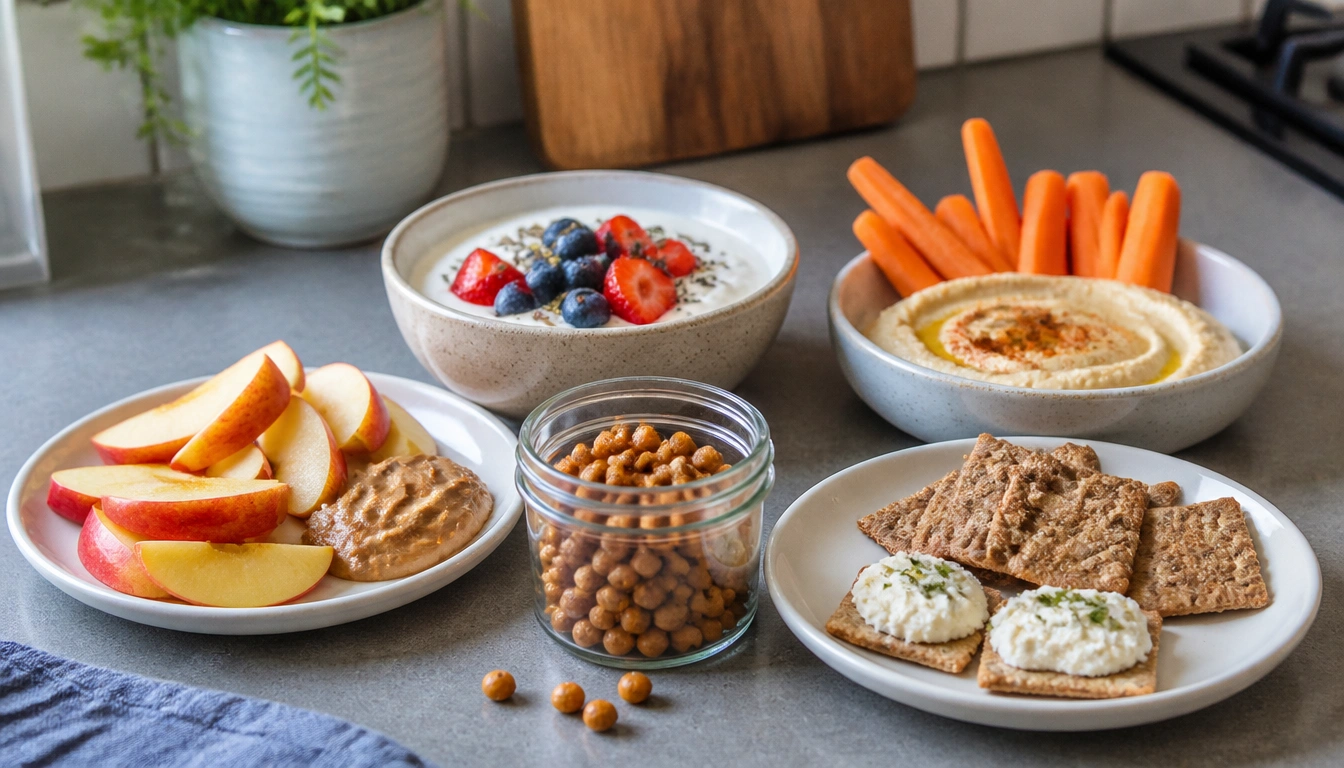
The fastest healthy vegetarian snacks are the ones built from a simple pairing: a fibre-rich carbohydrate plus protein or healthy fat. Think fruit with nut butter, yogurt with berries, hummus with vegetables, roasted chickpeas, or a small handful of nuts with whole-grain crackers. These options are filling enough to bridge meals, easy to pack, and better for nutrition than snacks made mostly from refined flour, sugar, or cheese alone.
Key Takeaways
- Pairing fibre with protein or healthy fat helps snacks feel more satisfying than crackers, sweets, or plain fruit on their own.
- Beginner vegetarian snacks should still help cover protein, fibre, iron, calcium, and zinc; vegan snack choices usually need more planning than lacto-ovo options.
- No-prep and 1-minute snacks can be genuinely nutritious: fruit with nut butter, yogurt with berries, or pre-portioned nuts and seeds.
- Packaged vegetarian snacks can hide a lot of sodium, added sugar, and saturated fat, so the label matters as much as the vegetarian claim.
- Teenagers, athletes, and people who are pregnant or breastfeeding may need larger or more frequent snacks to meet energy and nutrient needs.
Start with the pairing that keeps snacks satisfying
The fastest vegetarian snack is not just the one you can grab quickly; it is the one that actually carries you to the next meal. For most beginners, that means building snacks around fibre-rich carbohydrates and adding protein or healthy fats. Fibre slows digestion, while protein and fat help the snack feel more substantial and more stable for longer.
That is the basic reason a banana alone may not hold you over, but banana with peanut butter often does. The same idea works with apple slices and nut butter, whole-grain crackers and hummus, or berries and yogurt. According to the USDA and NHS-style public health guidance, plant-based eating can be nutrient-rich, but it works best when the food choices are intentional rather than random. A snack that is only sweet or only crunchy may be vegetarian, yet still leave you hungry soon after.
If your schedule is packed, the goal is not gourmet cooking. The goal is a reliable pattern you can repeat without thinking much about it. Build from what is already easy to keep at home, in a bag, or at work: fruit, nuts, seeds, yogurt, hummus, beans, whole-grain crackers, and cut vegetables.
Fast vegetarian snack ideas by prep level
Beginner-friendly snacks are easiest to stick with when they match your energy and your time. A few options need no prep at all, some take about a minute, and others are worth batching once for several days.
No-prep snacks
These are the best choices for busy mornings, commutes, or the point in the afternoon when you are too hungry to cook. Good examples include a piece of fruit with a handful of nuts, single-serve yogurt, string cheese with whole-grain crackers, or roasted edamame from a store-bought pack. If you are vegan, swap dairy yogurt and cheese for fortified soy yogurt, roasted chickpeas, or a nut-and-seed mix.
No-prep snacks work best when they are already visible and easy to reach. If the healthy option is buried in the back of the fridge, the convenience advantage disappears. Keep one or two go-to snacks where you will actually see them.
One-minute assembly snacks
These are simple combinations you can throw together with almost no thought. The fruit-and-nut-butter pairing is the clearest example. Slice an apple, banana, or pear and add nut butter. Another easy option is yogurt with berries and seeds. You can also make a small plate of crackers, hummus, and cherry tomatoes, or a quick bean dip with carrot sticks and cucumber.
The advantage here is flexibility. You can make these snacks bigger or smaller depending on how hungry you are. You can also shift the ingredients based on what you have on hand, which helps prevent waste and makes the habit easier to maintain.
Batch-prep snacks
Batch-prep is useful if you want convenience without relying only on packaged bars. Roasted chickpeas are a strong example: they are crunchy, portable, and easy to season. You can also portion trail mix into small containers, make a bean dip for the week, or wash and cut vegetables in advance so they are ready to grab.
Batch-prepped snacks are especially helpful if you tend to snack impulsively. When a good option is ready, you are less likely to reach for whatever is closest, which often means sweets, chips, or a snack bar that looks healthy but is mostly added sugar and refined starch.
The most useful nutrients beginner vegetarians should cover
For a new vegetarian eater, snack choice is not only about calories. It is also a chance to support the nutrients that matter most when animal foods are reduced or removed. The main ones to keep in view are protein, fibre, iron, calcium, and zinc. If you are eating vegan, vitamin B12 needs extra attention because it is not reliably available from plant foods unless they are fortified.
Protein helps a snack feel substantial, especially when paired with fibre. Good snack sources include yogurt, milk, soy yogurt, tofu cubes, edamame, roasted chickpeas, nuts, seeds, and bean-based dips. Fibre comes from fruit, vegetables, beans, lentils, whole grains, nuts, and seeds, and it helps with fullness as well as digestive regularity.
Iron is important because some beginners feel more tired when their diet changes and iron intake becomes inconsistent. Good snack-friendly sources include hummus, beans, lentil dips, pumpkin seeds, fortified cereals, and fortified plant milks. Pairing iron-rich foods with vitamin C-rich foods such as berries, citrus, or peppers can improve absorption. Calcium is easier to cover with dairy yogurt and milk, or with fortified plant milks and fortified soy yogurt. Zinc shows up in beans, nuts, seeds, and whole grains.
The snack picture changes depending on whether you are lacto-ovo vegetarian or vegan. Lacto-ovo vegetarians can lean on eggs, yogurt, milk, and cheese for convenient protein and calcium. Vegans need more attention to fortified foods and plant proteins, so snack planning should include fortified soy products, beans, tofu, nuts, and seeds more often.
Portable snack planning for work, school, and busy afternoons
The best snack plan is the one that survives a real day. If you are heading to work, class, the gym, or a long commute, keep a small “backup supply” of shelf-stable foods where you need them. Good choices include single-serve nuts, roasted chickpeas, whole-grain crackers, shelf-stable tofu pouches, seed packs, and fruit that travels well such as apples, oranges, and bananas.
For a bag or desk drawer, think in pairs rather than single foods. A bag of pretzels is easy to carry, but it will not be very filling on its own. Add nuts, a nut-butter packet, or a shelf-stable protein option. For school or work fridges, keep yogurt, cut vegetables, hummus, and cheese or soy yogurt ready to go.
Portioning matters because even healthy foods can become unhelpful if you are eating straight from a large bag while distracted. Pre-portion snacks into small containers or grab-and-go bags. That makes it easier to notice hunger and fullness and reduces the chance that a snack turns into a second lunch.
How to read labels on packaged vegetarian snacks
Packaged vegetarian snacks can be convenient, but “vegetarian” does not automatically mean “nutritious.” The label deserves a quick check, especially if you often buy snack bars, veggie straws, flavored crackers, sweetened yogurts, or ready-to-eat protein snacks.
Start with the ingredient list. If sugar, syrups, refined flour, or oils appear early, the snack may be more dessert-like than filling. Then look at the nutrition panel for added sugar, sodium, saturated fat, and serving size. A snack can look reasonable until you notice that the package contains two or three servings or that the sodium is unusually high for such a small item.
For beginners, a useful rule is to ask whether the snack offers something more than calories. Does it bring fibre, protein, healthy fat, or micronutrients such as calcium or iron? If not, it may be better as an occasional extra than as a regular snack. This is especially relevant for bars and chips marketed as plant-based but made mostly from refined ingredients.
Also watch portion creep. A snack that seems modest can become much larger when the package is easy to finish without noticing. If you tend to overeat packaged snacks, pour a single serving into a bowl instead of eating from the bag.
When snack needs change for teens, athletes, pregnancy, and breastfeeding
Some life stages and activity levels raise energy and nutrient needs enough that a standard snack may no longer be enough. Teenagers often need more food overall because they are growing quickly. Athletes may need more carbohydrate for training and more protein for recovery. People who are pregnant or breastfeeding often need more energy and should be especially mindful of iron, protein, calcium, and overall food quality.
In these situations, a snack may need to be larger, or it may need to happen more often. For example, a fruit-and-nut-butter snack might become fruit, nut butter, and yogurt; or hummus and vegetables might be paired with whole-grain toast or a wrap. The aim is not to eat constantly. It is to make sure the snacks are substantial enough for the body’s current demands.
If appetite is unusually high, or if you are feeling depleted, do not assume a smaller snack is automatically better. Listen to the pattern across the day. If meals are far apart, a more substantial snack is often more useful than trying to stretch a tiny one.
Common beginner mistakes and easy fixes
One common mistake is relying on cheese, crackers, sweets, or snack bars that are mostly refined carbs. These foods are convenient, but they often do not last long enough to prevent another hunger spike. Another mistake is assuming that anything labeled vegetarian is automatically healthy. Some packaged vegetarian foods are high in sodium, added sugar, or saturated fat, and they can crowd out more useful options.
A second mistake is forgetting to pair foods. Fruit alone, crackers alone, or vegetables alone may be healthy, but they often do not provide the staying power beginners expect. Add a second component: nut butter, hummus, yogurt, beans, seeds, nuts, tofu, or cheese if you eat dairy. That small addition often changes the snack from a quick bite into something that truly bridges a meal.
If you feel tired, dizzy, or weak after switching to vegetarian eating, do not try to self-correct by guessing. Review your pattern for iron, protein, and B12-rich or fortified foods, and speak with a healthcare professional or registered dietitian if the problem continues. Persistent symptoms may mean your diet needs adjustment, or that something else needs attention.
For most beginners, the easiest win is repetition. Pick two or three snacks you genuinely like, keep the ingredients on hand, and rotate them. That gives you convenience without falling back on empty-calorie choices.
Frequently Asked Questions
How can a beginner vegetarian build a snack that is filling, not just low-calorie?
Use the pair-and-stay-full approach: combine a fibre-rich food such as fruit, vegetables, beans, or whole grains with protein or healthy fat. Examples include apple slices with nut butter, hummus with carrots, or yogurt with berries and seeds. That mix tends to last longer than a snack made from refined carbs alone.
Which quick vegetarian snacks are best for getting enough protein, fibre, iron, calcium, and healthy fats?
Good all-around choices include yogurt with berries and seeds, hummus with vegetables and whole-grain crackers, roasted chickpeas, nut-and-seed mixes, and fortified soy yogurt for vegan eaters. These snacks can contribute protein, fibre, and, depending on the ingredients, calcium, iron, and healthy fats.
What are the best no-prep or 1-minute vegetarian snack options for busy days?
The easiest options are fruit plus nut butter, plain yogurt with fruit, cheese with whole-grain crackers, trail mix, or a ready-made hummus cup with vegetables. If you are vegan, choose fortified soy yogurt, nuts, seeds, roasted chickpeas, or fruit with nut butter instead.
How should lacto-ovo vegetarian snack choices differ from vegan snack choices?
Lacto-ovo vegetarians can use eggs, yogurt, milk, and cheese as convenient protein and calcium sources. Vegans usually need more planned choices, especially fortified soy products, tofu, beans, lentils, nuts, and seeds, because vitamin B12 and calcium need more deliberate attention.
How do I choose packaged vegetarian snacks without getting tricked by sugar, sodium, or saturated fat?
Check the ingredient list and the nutrition panel. Look for snacks that offer protein, fibre, or healthy fats rather than mostly refined flour, sugar, or oil. Also watch serving size, because a small-looking package may contain more sodium, sugar, or saturated fat than you expect.
The Bottom Line
The fastest healthy vegetarian snacks are usually simple combinations, not complicated recipes. Pair a fibre-rich food with protein or healthy fat, and you will usually get better fullness and steadier energy than from crackers, sweets, or plain fruit alone.
For beginners, the most useful habits are to keep a few staple snacks on hand, build in iron, calcium, zinc, and protein, and read labels on packaged foods. Lacto-ovo and vegan snack choices are both workable, but vegan eating usually requires more planning around fortified foods and plant proteins.
If you are a teen, athlete, pregnant, or breastfeeding, your snack needs may be larger or more frequent. If you develop persistent fatigue, dizziness, or other concerns after changing your diet, get individualized guidance from a healthcare professional or registered dietitian.
Medical disclaimer
Medical disclaimer: This content is for educational and informational purposes only and is not a substitute for professional medical advice, diagnosis, or treatment. Dietary needs and supplement suitability vary by individual.
Sources
- U.S. Government / Health Authority — usda.gov. Accessed November 2026.
- National Health Service (NHS) — www.nhs.uk. Accessed November 2026.
- Academic Research Institution — harvard.edu. Accessed November 2026.
