
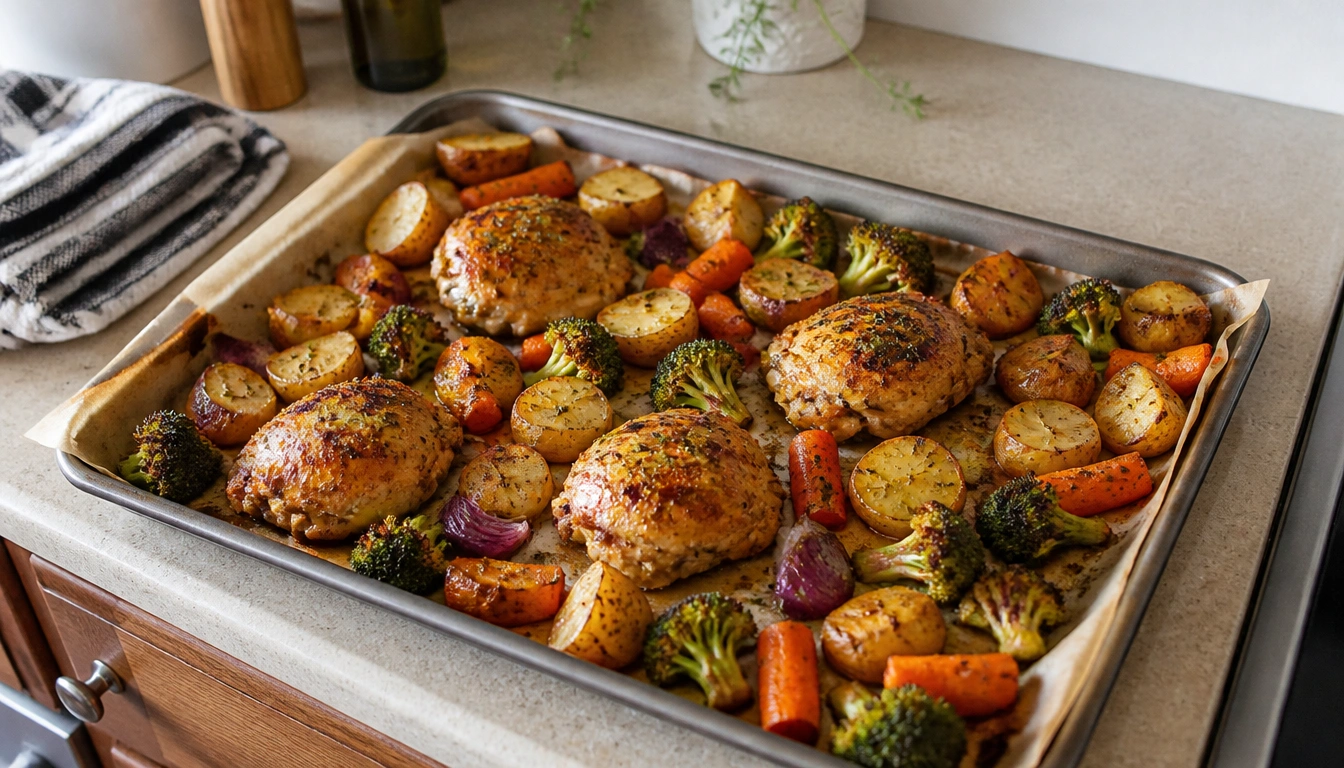
College students can make cheap, easy, healthy sheet-pan dinners by pairing one budget protein with low-cost vegetables, a little oil, and simple seasoning, then roasting everything together on one pan. The best approach is flexible: use what is on sale, cut ingredients to similar sizes, and plan for about 10–15 minutes of prep plus 20–35 minutes in the oven. If you do not have an oven, use a microwave-friendly backup instead.
Key Takeaways
- Use low-cost staples such as chicken thighs, beans, tofu, potatoes, carrots, onions, broccoli, and frozen vegetables to keep dinners affordable and reduce waste.
- Build meals with a simple protein + vegetables + healthy fat + seasoning framework instead of memorizing full recipes.
- MyPlate-style portions make sheet-pan dinners more filling: aim for plenty of vegetables, a solid protein portion, and a satisfying starch if needed.
- Sheet-pan dinners usually work best around 400–425°F, but cook time depends on ingredient size and density.
- Food safety matters: keep raw meat separate, use a thermometer for poultry, cool leftovers within two hours, and refrigerate them for 3–4 days.
Why sheet-pan dinners fit a college budget and schedule
For many students, dinner has to solve three problems at once: it needs to be affordable, quick, and easy to clean up. Budget-friendly sheet-pan dinners for college students work well because they use inexpensive ingredients, require little active cooking, and leave only one pan to wash. That makes them a strong option when classes, work shifts, labs, and studying leave little room for a complicated recipe.
They also help with food waste. A single sheet-pan dinner can use produce that is sturdy and cheap, like carrots, onions, broccoli, and potatoes, along with pantry protein such as beans or tofu. When students buy ingredients that can appear in more than one meal, they are less likely to toss wilted vegetables or forget about half-used containers in the fridge.
Roasting adds another advantage. Dry heat brings out browning and sweetness, so simple ingredients taste more finished without expensive sauces or many extra steps. That is useful in a shared kitchen, where extra equipment is often limited and cleanup time matters just as much as cooking time.
The basic sheet-pan formula
The easiest way to build a meal is to think in four parts: protein, vegetables, healthy fat, and seasoning. You do not need a strict recipe for this to work. Start with one protein, add two or more vegetables, coat everything lightly with oil, and season with a blend you already like.
For the protein, choose something that fits your budget and your kitchen. Chicken thighs are usually cheaper than many lean cuts and roast well because they stay juicy. Canned beans can be rinsed and roasted for a firmer texture. Firm tofu is another good option because it is low-cost, versatile, and easy to season. If you buy meat, choose a package you can use in more than one meal so nothing goes to waste.
For vegetables, mix longer-cooking items with quicker ones so the pan finishes together. Potatoes and carrots are affordable and filling. Broccoli, onions, and frozen vegetables are also useful because they are easy to portion and often less expensive than fresh specialty produce. A little oil helps the food roast instead of dry out, and simple spices like garlic powder, paprika, cumin, chili powder, or Italian seasoning give the meal flavor without much effort.
Cheap ingredients that stretch your grocery bill
The best sheet-pan ingredients for students are the ones that are inexpensive, widely available, and flexible enough to appear in several meals. Chicken thighs are a strong choice because they are often less expensive than boneless breast meat and they hold up well to roasting. Bone-in pieces can be even more budget friendly, though they may need a little more time in the oven.
Beans and tofu can stretch a grocery run when meat prices are high. Canned beans are shelf-stable, inexpensive, and fast to use. Extra-firm tofu is another practical option because it absorbs seasoning well and can be paired with almost any vegetable. Root vegetables such as potatoes and carrots are useful because they are filling, store well, and rarely feel wasted if they do not get cooked right away.
Broccoli and onions are especially helpful because they add flavor without much prep. Frozen vegetables can also be smart if fresh produce is expensive or spoils too quickly. Just spread them out well and cook off extra moisture so they roast instead of steaming. A student kitchen does not need a long shopping list; a few repeat ingredients can cover many dinners.
How to balance the plate without overcomplicating it
Public health guidance from the USDA’s MyPlate model is a useful way to think about balance without tracking every detail. A simple version is to fill about half the plate with vegetables, add a quarter protein, and use the remaining quarter for a starchy food such as potatoes, rice on the side, or another filling carbohydrate. Sheet-pan meals make this easy because the vegetables and protein cook together, and the starch can be built right into the pan if you want a one-pan dinner.
If you are especially hungry after long days of class, include enough vegetables and a satisfying starch so the meal holds you over. If you want a lighter dinner, increase the vegetable share and use a smaller portion of the starch. For students who need steady energy for studying, a balanced plate with fiber-rich vegetables, protein, and a little fat is usually more satisfying than a meal that is mostly refined carbs.
That balance also matters for practicality. A meal with enough protein and vegetables tends to reheat better and leaves you less likely to snack again an hour later. The goal is not a perfect plate. It is a dinner that is filling, affordable, and realistic to make on a weeknight.
Timing, temperature, and simple combinations that work
Most sheet-pan dinners roast well at 400–425°F. That range is hot enough to brown food without demanding exact precision. The most important trick is matching the size and density of the ingredients. Dense vegetables such as potatoes and carrots usually need a head start, while broccoli, onions, and tofu often cook faster. If everything on the pan has a similar thickness, it is much easier to finish at the same time.
In practical terms, students should plan for about 10–15 minutes of prep and about 20–35 minutes of oven time, depending on the ingredients. Cutting vegetables into even pieces helps a lot. If you use one pan for both quick and slow ingredients, give the slower ones a head start, then add the faster ones partway through. Stirring once during cooking can also help browning, especially if the pan is crowded.
Some combinations are especially easy for beginners. A mix of chicken thighs, potatoes, and carrots works well when seasoned with oil, garlic powder, and paprika. A vegetarian version can use tofu, broccoli, and onions with soy sauce or a simple spice blend. Canned beans can be roasted with sweet potatoes, peppers, and onions for a filling dinner. The exact combination matters less than the basic pattern: choose ingredients with similar cook times and spread them in a single layer so the food roasts instead of steams.
If you like extra flavor, add a finishing squeeze of lemon, a sprinkle of herbs, or a spoonful of salsa after roasting. Those small additions can make a simple dinner feel more complete without turning it into a more expensive recipe.
Dorm, shared-kitchen, and no-oven limitations
Sheet-pan dinners assume you have access to a conventional oven and a baking sheet. That is not always true in dorms or very small shared kitchens. If your housing setup does not allow oven use, the answer is not to force a sheet-pan method that will not work. Use a microwave-safe alternative instead, such as a mug meal, a single-bowl rice or grain bowl, or a microwave-steamed vegetable and protein combination.
Students with shared kitchens can still use sheet-pan dinners successfully if they plan around the space. Cook when the oven is free, label your ingredients, and keep a dedicated pan or foil lining if cleanup is a concern. If oven access is inconsistent, choose ingredients that can also be used another way, such as cooked chicken, canned beans, or pre-cut vegetables that can move between microwave meals and oven meals.
If you are cooking in a very small space, reduce the scale instead of skipping the meal idea entirely. A smaller pan or a half-sheet pan can be enough for one or two servings. The goal is convenience, not a huge batch that becomes hard to store or reheat.
Food safety for raw protein, leftovers, and reheating
Food safety is especially important in shared kitchens, where counters, tools, and storage space may be limited. Keep raw meat separate from vegetables and ready-to-eat foods. Use separate cutting boards and wash your hands after handling raw poultry, pork, or fish. If you are unsure whether meat is fully cooked, use an inexpensive digital thermometer rather than guessing. Poultry should reach a safe internal temperature before serving.
After cooking, do not leave food sitting out for long. The USDA recommends cooling leftovers within two hours and refrigerating them promptly. Store sheet-pan leftovers in airtight containers and eat them within 3 to 4 days. If you do not plan to eat them soon, freezing is a better option than hoping they will last longer in the fridge.
When reheating, warm the food thoroughly so the center is hot, not just the edges. That matters for both flavor and safety. If the meal includes sauce or vegetables that can dry out, add a small splash of water before reheating. Students who want one cooking session to cover multiple meals should portion leftovers right away so they are easier to grab on busy days.
Batch-cooking tips that reduce waste and save money
Batch cooking works best when the grocery list overlaps. Buy ingredients that can appear in more than one meal, such as potatoes, onions, carrots, broccoli, beans, eggs, or chicken thighs. Then use those ingredients in different combinations during the week. One roast-pan dinner can become two meals if you change the seasoning or pair it with a different side later.
Prepping a few staples at once also saves time. Washing and chopping vegetables before they are urgently needed makes weeknight cooking easier. If you buy frozen vegetables, keep them in the freezer and use only what you need. If you buy a larger package of protein, portion part of it into the freezer right away so it does not sit too long in the fridge.
Think in grocery runs, not individual recipes. A student who plans one sheet-pan dinner can buy ingredients that also work for breakfast or lunch, which lowers waste and reduces the number of times food goes bad before it is used. That approach is often more helpful than searching for a single “perfect” recipe. It keeps cooking flexible, which is exactly what student life usually requires.
Frequently Asked Questions
What are the cheapest proteins and vegetables to use in sheet-pan dinners?
Budget-friendly options often include chicken thighs, canned beans, and tofu for protein. For vegetables, potatoes, carrots, onions, broccoli, and frozen mixed vegetables are usually good choices because they are filling, versatile, and less likely to spoil quickly.
How do you build a balanced sheet-pan meal using MyPlate principles on a budget?
Use MyPlate as a simple guide: fill about half the meal with vegetables, add a quarter protein, and use the remaining quarter for a starch if you want more staying power. Sheet-pan meals make that easy because the protein and vegetables roast together, and potatoes or other starches can be added to the same pan.
What oven temperature and timing usually work best for sheet-pan dinners?
A range of 400–425°F works well for many sheet-pan meals. Total cooking time often falls around 20–35 minutes, but it depends on how dense the ingredients are. Cut food into similar-size pieces so it cooks more evenly, and give harder vegetables a head start if needed.
How can students adapt sheet-pan meals if they live in a dorm or have only a microwave?
If you do not have oven access, use a microwave-friendly meal instead of trying to force a sheet-pan method. Good options include microwave grain bowls, mug meals, or steamed vegetables with beans, tofu, or cooked chicken. In shared kitchens, smaller pans and simple ingredients make the process easier.
How do you store and reheat sheet-pan leftovers safely for a few days?
Cool leftovers within two hours, then store them in airtight containers in the refrigerator. The usual safe window is 3 to 4 days. When reheating, warm the food thoroughly until it is hot in the center, and add a small splash of water if the meal seems dry.
The Bottom Line
Sheet-pan dinners are one of the easiest ways for college students to eat affordably without adding much cleanup. They work best when you use a simple formula: one protein, a few vegetables, a little oil, and basic seasoning.
The most useful habits are also the simplest: buy ingredients that overlap across meals, cut food to similar sizes, keep raw meat separate, and store leftovers promptly. With those basics in place, a cheap dinner can still be filling, balanced, and realistic on a busy weeknight.
Medical disclaimer
Medical disclaimer: This content is for educational and informational purposes only and is not a substitute for professional medical advice, diagnosis, or treatment. Dietary needs and supplement suitability vary by individual.
Sources
- U.S. Government / Health Authority — nutrition.gov. Accessed October 2026.
- U.S. Government / Health Authority — usda.gov. Accessed October 2026.
- Centers for Disease Control and Prevention (CDC) — cdc.gov. Accessed October 2026.
- Academic Research Institution — osu.edu. Accessed October 2026.
- Academic Research Institution — uconn.edu. Accessed October 2026.
