
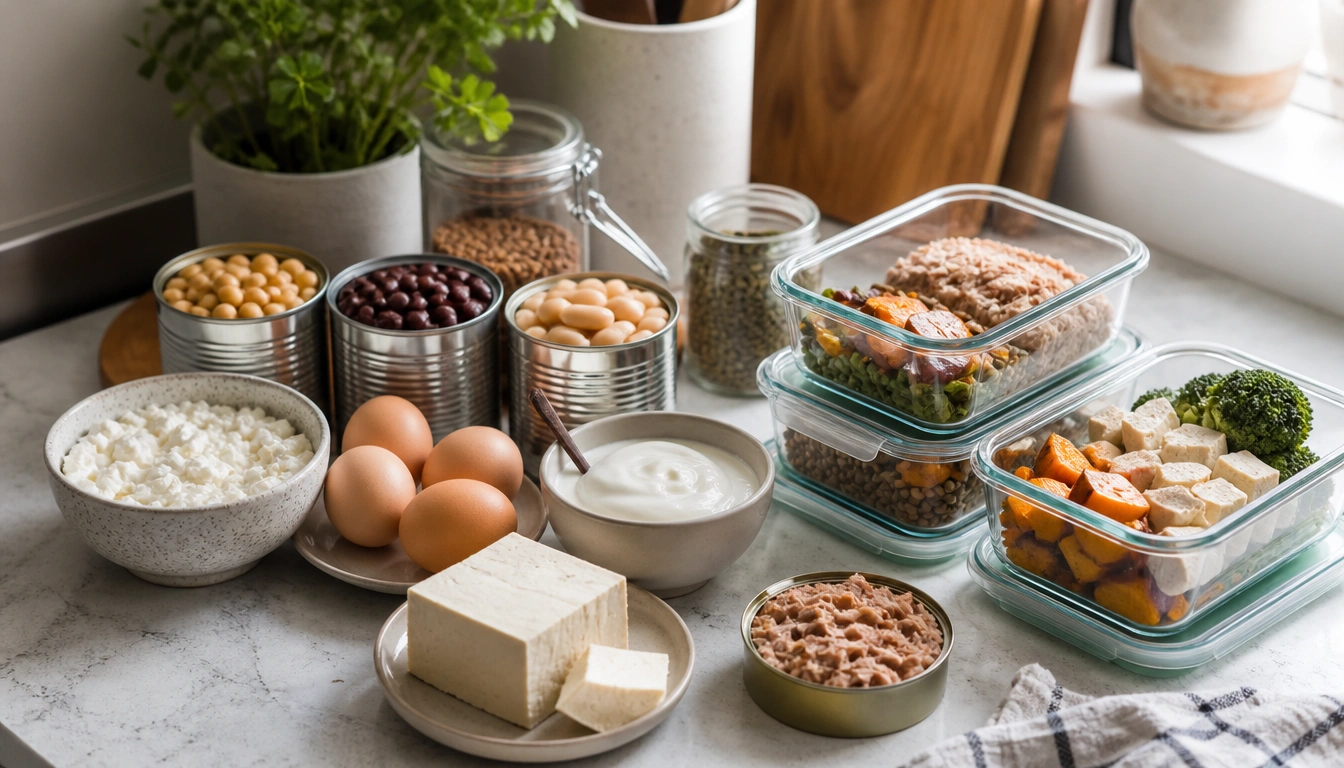
The cheapest, easiest protein foods for busy professionals are usually eggs, canned beans, lentils, tofu, plain Greek yogurt, cottage cheese, canned fish, and value cuts of meat or poultry. The best choice is not only the lowest price per serving, but the one you will actually use for quick meals and snacks. A small time-saving upgrade, like canned beans or microwaveable lentils, can be smarter than a cheaper option you never cook.
Key Takeaways
- Dried beans are usually the cheapest protein, but canned beans or lentils may be more realistic if time pressure would otherwise make you skip cooking.
- Eggs, Greek yogurt, cottage cheese, tofu, canned fish, and value cuts of meat can all fit a budget-friendly protein pattern.
- Rinsing canned beans and choosing low-sodium or no-salt-added options can meaningfully improve packaged-food quality.
- For older adults, easy-to-chew proteins like yogurt, eggs, and slow-cooked legumes can help support protein intake.
- Fast meals work best as a system: batch-cook once, then assemble breakfasts, lunches, dinners, and snacks from a few staples.
Why the cheapest protein is not always the best buy for a packed schedule
For busy professionals, the lowest sticker price does not always create the lowest real cost. Dried beans may be the cheapest protein on paper, but if they sit in the pantry because you are too tired to soak and cook them, they are not serving you well. The better budget choice is the food you can reliably turn into a meal before takeout or vending-machine options win by default.
The U.S. Dietary Guidelines and CDC-style healthy eating patterns emphasize affordable protein from both plant and animal sources, with an emphasis on nutrient-dense foods. That means looking for foods that deliver protein, satiety, and useful nutrients without requiring a long prep session. In practice, convenience can be part of a healthy budget strategy, not a failure of discipline.
A good rule is to compare foods by cost per usable serving, not only by package price. A slightly more expensive item that prevents food waste, supports consistency, and reduces the odds of a skipped lunch may be the better deal.
Budget protein foods by format
Shelf-stable options are the workhorses of a busy week. Canned beans, canned tuna, canned salmon, sardines, shelf-stable tofu, and nut butters can live in the pantry until you need them. These foods are especially useful for work travel, late meetings, or weeks when grocery runs are delayed. When possible, choose no-salt-added or low-sodium versions.
Refrigerator staples include eggs, plain Greek yogurt, cottage cheese, and tofu once opened. They require little to no cooking and can anchor breakfasts, lunches, and snacks. They are also easy to pair with fruit, vegetables, whole grains, or crackers so the meal feels complete without much effort.
Freezer staples help bridge the gap between planning and exhaustion. Frozen chicken, turkey, fish, edamame, and pre-cooked legumes can be portioned ahead of time and thawed only as needed. Frozen foods often cut waste because you use what you need and save the rest.
Quick-cook staples include lentils, eggs, and thin value cuts of meat or poultry. Lentils are especially practical because they cook faster than many dried beans and do not require soaking. Value cuts, such as bone-in chicken thighs or family packs of ground meat, often cost less per serving than more highly trimmed cuts.
How common protein foods compare in real life
Eggs are one of the most practical budget proteins because they are quick, versatile, and relatively low cost per serving. They work for breakfast bowls, sandwiches, fried rice, and simple dinners. For most healthy adults, moderate egg intake can fit into a balanced pattern.
Beans and lentils bring a different advantage: protein plus fiber. That combination tends to support fullness and makes them useful for lunches that need to carry you through a long afternoon. Lentils are the easiest choice when you want dried legumes without a long cooking project. Canned beans are the fastest choice when you need almost no prep.
Canned fish, especially tuna, salmon, and sardines, is one of the best shelf-stable ways to get high-quality protein. Salmon and sardines also add omega-3 fats. Greek yogurt and cottage cheese are strong refrigerator options because they are ready to eat and easy to pair with fruit or whole-grain toast. Tofu is another flexible option: inexpensive, mild, and fast to season.
Value cuts of meat and poultry can also be smart buys. They are not always the cheapest by package, but family packs and frozen options can lower the cost per meal. For busy professionals, the best protein list is less about one perfect food and more about building a rotation you can repeat without boredom.
| Food | Why it helps when busy | Best use |
|---|---|---|
| Eggs | Fast, portable, easy to combine | Breakfast, snack, quick dinner |
| Canned beans or lentils | Minimal prep, fiber-rich, filling | Bowls, salads, soups |
| Canned fish | Shelf-stable and protein-dense | Lunches, crackers, salads |
| Greek yogurt or cottage cheese | Ready to eat, versatile | Breakfast, snack, side dish |
| Tofu | Low-cost, quick to season | Stir-fries, bowls, wraps |
| Value cuts of meat | Useful for batch cooking | Meal prep, dinners, leftovers |
How to build fast meals without cooking from scratch
The easiest system is the assembly meal: combine one protein, one fiber-rich carbohydrate or vegetable, and one flavor booster. This avoids cooking from zero after a long workday. A microwave grain pouch, a can of beans, and a handful of greens can become dinner in minutes.
For breakfast, think in templates. Eggs with toast and fruit, Greek yogurt with oats and berries, or cottage cheese with whole-grain crackers are all fast options. If mornings are hectic, prep two or three portions at once so breakfast does not become a skipped meal.
For lunch, build bowls and wraps. Canned tuna with beans, greens, and salsa works well. Tofu with rice and frozen vegetables works well. Leftover chicken with salad and a grain also works. These meals are not elaborate, but they are usually cheaper and more filling than convenience store food.
For dinner, use the same formula with a slightly bigger protein portion. Add a frozen vegetable, a microwave potato, or a bagged salad. The goal is not culinary perfection; it is getting a decent meal on the table before fatigue pushes you toward takeout.
Snack swaps that keep you out of the vending machine
Snack choices matter because they bridge the gap between meals. A protein-rich snack can reduce the chance that hunger turns into a rushed fast-food stop. It can also make it easier to reach your protein target without a full cooking session.
Good budget-friendly swaps include hard-boiled eggs instead of chips, plain Greek yogurt instead of a dessert-style snack, roasted chickpeas instead of candy, cottage cheese with fruit instead of pastries, or tuna with whole-grain crackers instead of a vending machine sandwich. These options are not glamorous, but they are usually more filling and more stable for energy.
If you keep snacks at work, choose items that survive a desk drawer, lunch bag, or office fridge. That might mean canned fish, shelf-stable tofu, protein-rich yogurt cups, or nuts in measured portions. The best snack is the one available when stress peaks.
How to shop smarter for protein on a budget
Start with unit pricing. Two packages may look different in size or price, but the cost per ounce or per serving tells you more than the shelf tag does. Family packs, store brands, and frozen items often lower the price per meal. That said, only buy bigger packages if you will actually use them before they spoil.
The dried-versus-canned trade-off is mostly about time. Dried beans are usually cheaper, but canned beans may be the more sustainable choice for a person with long workdays. The same logic applies to lentils: dried lentils are inexpensive and cook faster than many legumes, but canned or pre-cooked versions can still be worthwhile if they prevent skipped meals.
Sodium deserves attention in canned and packaged foods. The CDC and Dietary Guidelines support limiting excess sodium as part of a healthy pattern. Look for no-salt-added or low-sodium labels on canned beans, fish, and soups. Rinsing canned beans under water can further reduce sodium and improve their taste. For packaged meats and ready-to-eat items, read the label for sodium and added ingredients before assuming the protein food is a healthy bargain.
Who should personalize protein choices
Most healthy adults can use a mixed pattern of plant and animal proteins. Still, some people need extra guidance. People with chronic kidney disease or other kidney problems should not make major protein changes without medical advice, because their needs may differ from standard healthy-adult patterns.
People with cardiovascular concerns, or those with familial hypercholesterolemia, may need individualized advice about egg intake and overall dietary pattern. Moderate egg intake is generally acceptable for many healthy adults, but personal risk factors matter more than internet rules. If you are unsure, ask a clinician or registered dietitian for advice that fits your blood lipids and overall health picture.
Older adults are another group that may benefit from planning ahead. Protein needs may be harder to meet when appetite is lower or chewing is difficult. Greek yogurt, eggs, cottage cheese, and slow-cooked legumes are useful because they are easy to chew and simple to portion. People who get bloating or discomfort from legumes may do better with smaller portions, well-rinsed canned beans, or a different protein source on some days.
A simple weekly prep plan that fits a busy calendar
A one-hour prep session can make the rest of the week easier. Start by cooking one or two anchor proteins: hard-boil a batch of eggs, roast or slow-cook a package of chicken, or simmer lentils for bowls and soups. If you prefer plant-forward meals, cook a pot of beans or prepare tofu portions for quick stir-fries.
Next, create grab-and-go pieces. Portion yogurt, wash fruit, open and rinse canned beans in advance, and divide leftovers into containers. Keep a few emergency meals in the freezer: cooked chicken, lentil chili, or rice-and-bean portions. These are especially helpful on evenings when you are too tired to cook but still want something better than takeout.
Finally, set up a repeatable grocery list. Include one shelf-stable protein, one refrigerator protein, one frozen protein, and one quick-cook option each week. That mix gives you flexibility without requiring a full meal plan. The point is to remove friction, not to create a complicated system you will abandon after a week.
Frequently Asked Questions
Which protein foods give the best protein per dollar for office-friendly meals?
Dried beans, lentils, eggs, tofu, cottage cheese, canned tuna or salmon, and family-pack chicken or turkey usually give strong value. The best pick depends on what you will actually eat during a workweek.
Are canned beans, tuna, eggs, yogurt, tofu, and lentils good budget protein options?
Yes. They are all practical budget proteins, and each has a different advantage. Beans and lentils add fiber, tuna and salmon are shelf-stable, eggs are fast, yogurt is ready to eat, and tofu is versatile.
How can busy professionals eat more protein without relying on supplements or expensive meal delivery?
Use a repeatable meal system: keep a few proteins on hand, batch-cook once a week, and build meals from assemblies like yogurt plus fruit, eggs plus toast, or beans plus rice and vegetables.
What are the quickest ways to prep budget protein foods for the workweek?
Hard-boil eggs, cook lentils, roast or slow-cook chicken, rinse canned beans, and portion yogurt or cottage cheese into containers. A short prep session can cover breakfasts, lunches, and snacks for several days.
How do I choose lower-sodium or healthier packaged protein foods?
Look for no-salt-added or low-sodium labels on canned beans and fish, check sodium on packaged meats, and rinse canned beans before using them. Also watch for added sugars in flavored dairy products.
The Bottom Line
For busy professionals, the best budget protein foods are the ones that fit real life: eggs, canned beans, lentils, tofu, Greek yogurt, cottage cheese, canned fish, and value cuts of meat or poultry. The cheapest option on paper is not always the one that saves money once waste and takeout are included.
If you want better consistency, build around a few pantry, fridge, freezer, and quick-cook staples. Use assembly meals, smarter snacks, and one weekly prep session to make protein easier to reach without supplements or expensive delivery.
If you have kidney disease, cardiovascular concerns, digestive sensitivity to legumes, or another condition that changes protein needs, personalize your choices with a clinician or registered dietitian.
Medical disclaimer
Medical disclaimer: This content is for educational and informational purposes only and is not a substitute for professional medical advice, diagnosis, or treatment. Dietary needs and supplement suitability vary by individual.
Sources
- U.S. Government / Health Authority — realfood.gov. Accessed October 2026.
- U.S. Government / Health Authority — hhs.gov. Accessed October 2026.
- Centers for Disease Control and Prevention (CDC) — cdc.gov. Accessed October 2026.
- U.S. Government / Health Authority — dietaryguidelines.gov. Accessed October 2026.
