
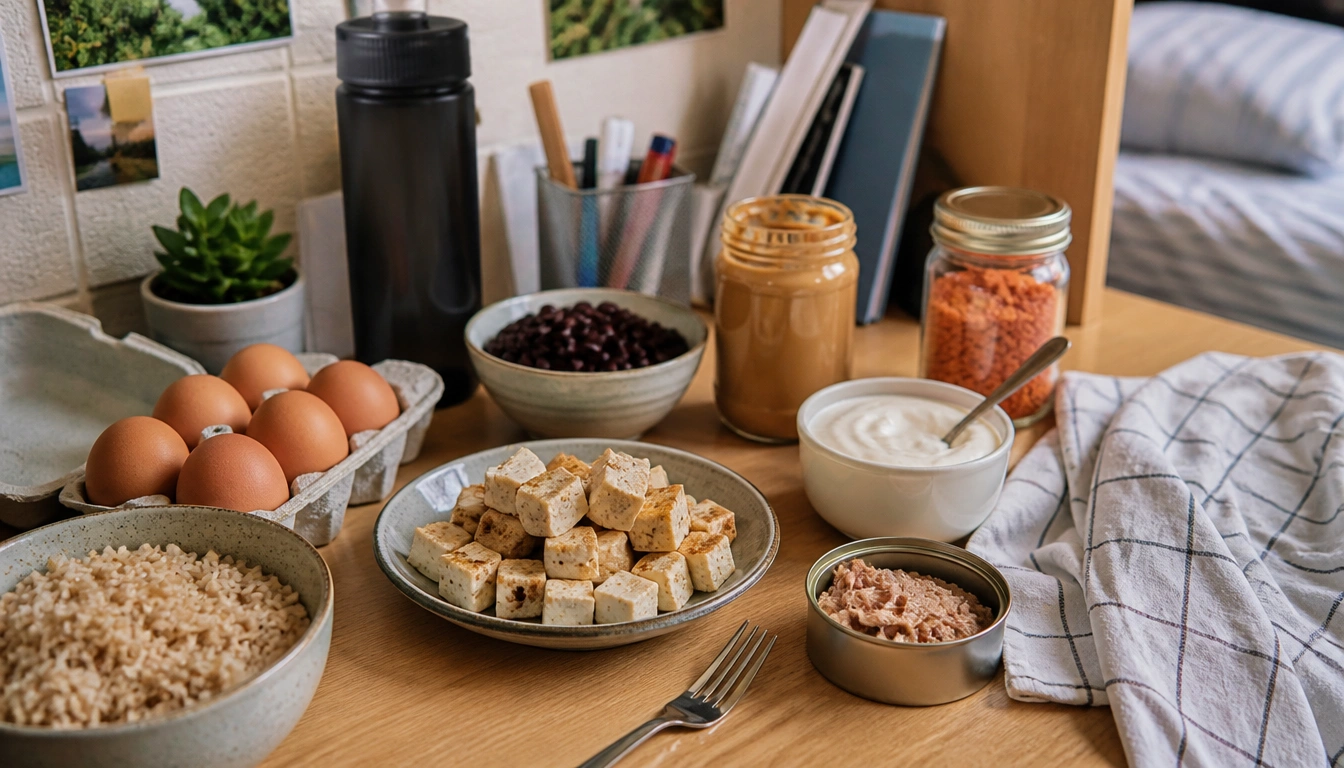
The cheapest, easiest protein foods for college students are usually eggs, beans and lentils, canned fish, peanut butter, yogurt or cottage cheese, fortified soy foods, and budget poultry like chicken thighs or drumsticks. Most college-aged adults do well aiming for protein as part of a balanced diet rather than chasing one fixed number: the Dietary Guidelines for Americans use a 10%–35% calorie range, and the baseline RDA is 0.8 grams per kilogram of body weight per day. Active students may need more.
Key Takeaways
- Protein needs for college students are usually a range, not one exact target: 10%–35% of calories from protein, with a baseline RDA of 0.8 g/kg body weight.
- The lowest-cost, highest-usefulness proteins for campus life are eggs, beans, lentils, canned fish, peanut butter, soy foods, dairy, and value-pack poultry.
- Plant proteins can fully meet needs when you eat a variety across the day, but vegan students should pay extra attention to vitamin B12 and iron.
- Dorm food safety matters: keep cold foods cold, thaw safely, and don’t let leftovers sit out too long in shared kitchens.
- If you work out hard or under-eat, protein needs and protein use change; calories, overall diet quality, and medical history matter too.
Protein needs for college students: the range that actually helps
For most college students, budget protein foods only make sense if the daily target is realistic. Protein is not something you need in one magic number. The Dietary Guidelines for Americans say healthy adults should get about 10%–35% of daily calories from protein. A common baseline is the RDA of 0.8 grams per kilogram of body weight per day. That baseline is meant to prevent deficiency in generally healthy adults, not to define every student’s best intake.
That matters because campus life is not one-size-fits-all. A student who walks to class and lifts once a week has different needs from a student in season for soccer, rowing, or wrestling. Sports dietitians often recommend more protein for heavy training, and total calories still matter. If you are consistently under-eating, your body may use protein for energy instead of using it efficiently for repair and recovery.
A practical way to think about it: build each meal around a reliable protein food, then let the rest of the plate fill in with grains, fruit, vegetables, and fats that fit your budget. That approach is easier to sustain than trying to hit a rigid gram goal every day.
Best budget protein foods ranked by college practicality
For students watching cost, convenience, and storage, the best protein foods are the ones you can buy cheaply, keep safely, and actually eat during a packed week. In dorms and shared kitchens, the most practical options tend to be the same ones public health programs favor: nutrient-dense staples with little waste.
- Eggs are usually a top pick because they are inexpensive, quick to cook, and work for breakfast, lunch, or dinner. They can be scrambled, microwaved carefully, hard-cooked, or added to rice and noodles.
- Beans and lentils are among the cheapest protein foods per serving. Dry beans are often the best value if you have time to cook a batch, while canned beans save time and still stretch a grocery budget.
- Canned fish such as tuna and salmon is shelf-stable, portable, and easy to add to pasta, crackers, rice, or salads. It is especially useful when you have no reliable kitchen.
- Peanut butter and seeds are compact, filling, and easy to store. They work well on toast, apples, oatmeal, or sandwiches when you need something fast between classes.
- Yogurt, cottage cheese, and fortified soy foods give you protein plus other nutrients. Plain versions often cost less per serving than flavored single cups.
- Budget poultry such as chicken thighs, drumsticks, or family packs can be cost-effective when you have refrigeration and a way to cook and store leftovers safely.
Price can vary by store, region, and sales cycle, so the best food is the one you can buy regularly without waste. A cheap protein that spoils before you eat it is not cheap for long.
Dorm-friendly and no-kitchen protein options
If you only have a microwave, mini-fridge, or shelf space, focus on foods that stay useful with minimal prep. That keeps protein intake steady even during exam weeks or late-night study sessions.
Good dorm-friendly options include:
- single-serve or bulk tubs of plain yogurt, if you have enough refrigeration
- string cheese or cottage cheese, when cold storage is available
- peanut butter packets or a jar of peanut butter
- roasted edamame, soy nuts, or shelf-stable tofu products where available
- canned tuna, salmon, sardines, or beans with a can opener
- microwaveable pouches of lentils, rice, or beans
- hard-boiled eggs bought pre-cooked or cooked in a shared kitchen
If you need grab-and-go combinations, think in pairs: peanut butter plus whole-grain bread, yogurt plus oats, tuna plus crackers, or beans plus microwave rice. These foods are not fancy, but they are consistent, portable, and much easier to rely on than supplements alone.
For students without a real kitchen, shelf-stable soy foods deserve more attention. Fortified soy milk and shelf-stable tofu can work well in a dorm fridge or pantry, and they fit students who avoid dairy or meat.
Cheap high-protein meals and snacks without supplements
You do not need protein powder to get enough protein on a student budget. Most students do better when they use ordinary foods that also provide fiber, vitamins, and minerals.
Try building meals around one main protein and one or two low-cost supports:
- Breakfast: eggs with toast, oatmeal with peanut butter, or yogurt with oats and fruit
- Lunch: bean burritos, tuna sandwiches, lentil soup, or rice with beans and salsa
- Dinner: chicken thighs with frozen vegetables and rice, pasta with beans, or a tofu stir-fry
- Snacks: yogurt, roasted chickpeas, peanut butter on crackers, cheese with fruit, or edamame
The easiest savings strategy is repetition. Pick two or three protein meals you actually like and keep the ingredients on hand. That is usually cheaper than buying many special items that sound healthy but go uneaten. It also helps with satiety: protein tends to make meals more filling, which can reduce random snacking when class days run long.
For students on meal plans, use dining hall meals strategically. If breakfast options are weak, save your budget proteins for breakfast at the dorm. If lunch is unpredictable, keep shelf-stable backup foods in your bag or room.
Plant-based protein on a student budget
Plant proteins can absolutely cover protein needs for college students, including vegans, as long as intake is varied across the day. You do not need every amino acid in the same bite. Eating a mix of legumes, grains, nuts, seeds, soy foods, and whole grains over the day is enough for most healthy people.
That said, plant-based students should watch a few nutrients that deserve extra planning. Vitamin B12 is the big one for vegans because it is not reliably available in unfortified plant foods. Iron also deserves attention, especially for menstruating students and athletes, because plant iron is less readily absorbed than the iron in meat. Fortified foods, beans, lentils, tofu, soy milk, leafy greens, nuts, and seeds can all help, but a varied pattern matters more than one perfect food.
Useful budget combinations include beans and rice, peanut butter on whole-grain bread, hummus with pita, lentil chili, tofu fried rice, and edamame with noodles. For vegetarian students who still eat dairy or eggs, those foods can make protein planning even simpler.
One caution: being plant-based does not automatically mean you are eating enough. If the budget gets tight and meals get smaller, total calories can fall too low, and that can make it harder to meet protein and energy needs at the same time.
Food safety and storage in dorms and shared kitchens
Food safety is part of budget planning because spoiled food is wasted money. Shared refrigerators, crowded shelves, and inconsistent meal schedules increase the odds of foodborne illness if you are not careful.
Keep these basics in mind:
- Refrigerate perishable foods promptly.
- Keep raw meat, poultry, and seafood separate from ready-to-eat foods.
- Thaw frozen protein foods in the refrigerator, in cold water, or in the microwave if you will cook them right away.
- Do not thaw meat or fish on the counter at room temperature.
- Store leftovers in shallow containers so they cool faster.
- Throw away leftovers that have sat out too long or smell or look off.
In a dorm, the safest protein foods are often the ones that tolerate a little flexibility: shelf-stable canned fish, unopened nut butters, dry beans, shelf-stable soy products, and foods that can be eaten soon after opening. If you buy chicken or dairy in bulk, make a plan before shopping so nothing sits forgotten in the fridge.
Cross-contamination is easy to miss in shared kitchens. Use clean utensils, wash hands before and after handling raw foods, and avoid placing cooked food back on plates or surfaces that held raw meat.
Special situations: athletes, under-eating, lactose intolerance, and when to get help
Student athletes often need more protein than non-athletes, especially during hard training blocks, but more is not automatically better. Recovery depends on training, sleep, total calories, and overall diet quality. If you train hard, spread protein across the day instead of saving all of it for one late meal.
Students who are under-eating for any reason, including stress, a meal plan that does not fit class timing, or a tight budget, should focus first on enough total food. Protein works best when the body also has enough energy. If intake is too low overall, the body is less able to use protein for repair and building tissue.
For lactose intolerance, dairy is optional. Lactose-free milk, fortified soy milk, tofu, beans, peanut butter, eggs, and canned fish are all workable alternatives. Students with kidney disease, a history of eating disorders, persistent gastrointestinal symptoms, unexplained weight loss, or another chronic condition should get personalized advice before making a sudden, large increase in protein. A campus health center or registered dietitian can help make a plan that fits both health and budget.
Budget shopping strategy: buy in bulk, canned, or fresh based on how you live
The cheapest protein is not always the lowest sticker price. What matters is cost per serving, waste, storage, and how quickly you can use the food. A bulk bag of dry beans may be the best bargain, but only if you have time to cook and eat them. A can of tuna may cost more per ounce than dry lentils, but it can be more realistic during midterms.
A useful shopping rule is to match the protein to the amount of infrastructure you actually have:
- Bulk buys work well for dry beans, lentils, oats, rice, peanut butter, and family-size poultry if you have freezer space.
- Canned and shelf-stable foods are best for dorms, travel, and backup meals because they reduce spoilage.
- Fresh foods make sense when you have reliable refrigeration and a plan to cook them within a few days.
When comparing foods, think in servings, not just package price. A slightly more expensive food can still be the better buy if it provides more usable protein and less waste. For fish, remember that light tuna is generally the better frequent choice than albacore or white tuna because mercury is a bigger concern with the white variety.
If you want the best value, keep a short list of repeat purchases and build from there. A small set of dependable foods is usually the most affordable system students can sustain.
Frequently Asked Questions
How much protein does a college student need per day?
A common baseline is 0.8 grams per kilogram of body weight per day, and the Dietary Guidelines for Americans place protein at 10%–35% of calories. Active students may need more, especially during heavy training or when overall food intake is low.
What are the cheapest high-protein foods that require little or no cooking?
Eggs, canned beans, lentils, peanut butter, canned tuna or salmon, yogurt, cottage cheese, fortified soy milk, tofu, and roasted soy snacks are usually the most practical. The best choice depends on what you can store, cook, and finish before food spoils.
Are plant proteins enough for students on a budget?
Yes. Beans, lentils, soy foods, nuts, seeds, and whole grains can fully cover protein needs when eaten in variety across the day. Vegan students should also plan for vitamin B12 and pay attention to iron, calcium, and overall calories.
What budget protein foods work in a dorm or shared kitchen?
Shelf-stable canned fish, peanut butter, canned beans, microwaveable lentils, instant oats, shelf-stable soy milk, pre-cooked eggs, and single-serve yogurt or cottage cheese are common dorm-friendly options. The safest foods are the ones you can refrigerate, seal, or eat soon after opening.
How can I hit protein goals without relying on protein powder or supplements?
Use ordinary foods at each meal: eggs or yogurt at breakfast, beans or tuna at lunch, chicken, tofu, or lentils at dinner, and peanut butter, cheese, edamame, or roasted chickpeas for snacks. Supplements can be convenient, but they are not required for most students.
The Bottom Line
College students do not need expensive food or protein supplements to eat well. The most practical budget proteins are usually eggs, beans, lentils, canned fish, peanut butter, yogurt, soy foods, and value-pack poultry, chosen based on storage and cooking access.
Aim for a protein pattern that fits your life: a reasonable daily range, enough total calories, and foods you will actually finish. If you train hard, eat mostly plant-based foods, or have a medical condition, personalized guidance can help you stay safe and well fed.
If your budget is tight, start with a short list of repeatable meals and snacks, then buy the foods that give you the most protein for the least waste in your own dorm or apartment setup.
Medical disclaimer
Medical disclaimer: This content is for educational and informational purposes only and is not a substitute for professional medical advice, diagnosis, or treatment. Dietary needs and supplement suitability vary by individual.
Sources
- U.S. Government / Health Authority — dietaryguidelines.gov. Accessed October 2026.
- U.S. Government / Health Authority — health.gov. Accessed October 2026.
- U.S. Government / Health Authority — usda.gov. Accessed October 2026.
- Centers for Disease Control and Prevention (CDC) — cdc.gov. Accessed October 2026.
- U.S. Government / Health Authority — usda.gov. Accessed October 2026.
- U.S. Government / Health Authority — usda.gov. Accessed October 2026.
