
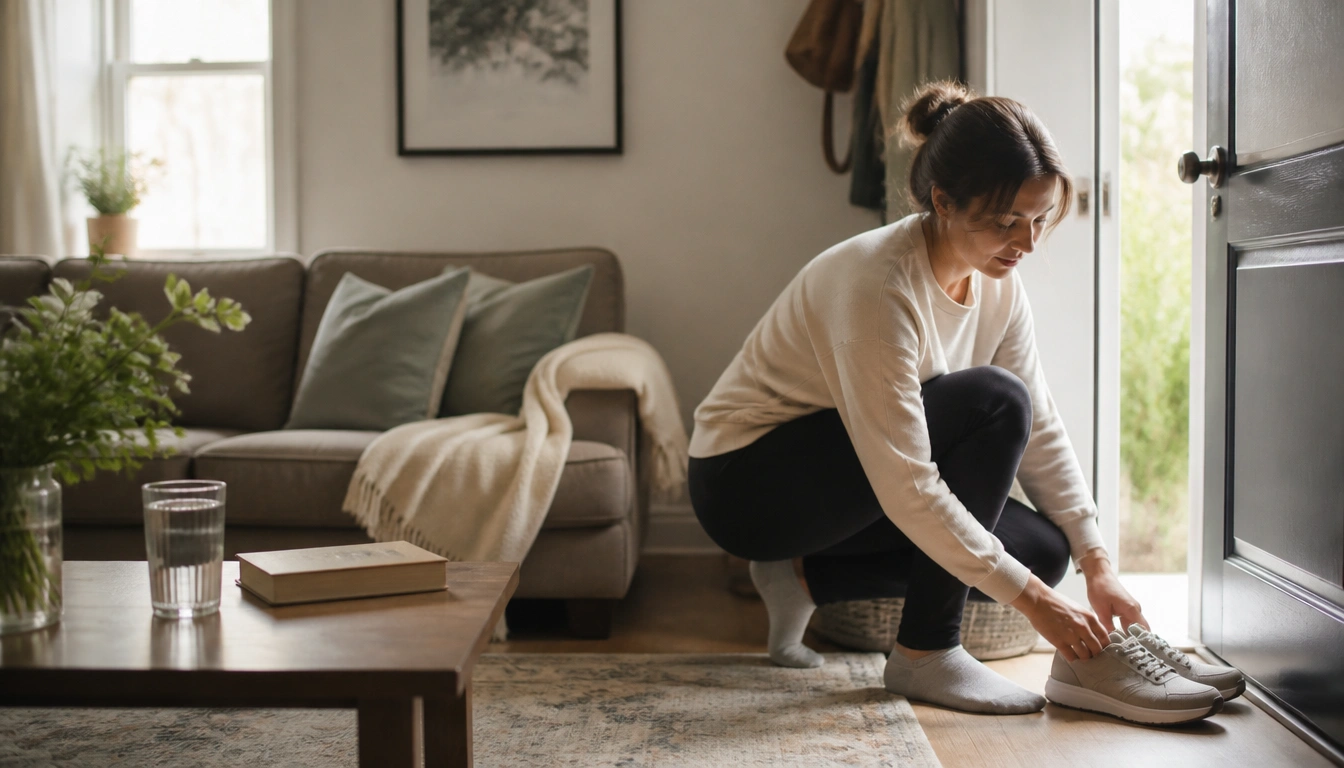
The easiest, safest way to start one healthy habit is to choose a tiny action you can do daily with almost no effort, attach it to an existing routine, and keep it so small that missed days are easy to recover from. For beginners, consistency matters more than intensity. A five-minute walk, one glass of water, one page of reading, or two minutes of stretching can be enough to build momentum.
Key Takeaways
- Start with a habit that feels almost too easy, not impressive. Tiny wins are more repeatable than big promises.
- Use a cue you already do every day, such as brushing your teeth, making coffee, or getting into bed.
- Build the first version around your current energy level. Burnout, parenting, shift work, and low fitness all need different starting points.
- For exercise habits, begin gently if you have been inactive, and stop right away for warning signs like chest pain, dizziness, or fainting.
- Missing a day is part of habit building. Restart with the same small version instead of trying to “make up” for lost time.
Why a tiny habit works better than a big overhaul
Absolute beginners often start with a burst of enthusiasm and a plan that is too large to repeat. That usually fails for a simple reason: daily life is already full, and habits that require heavy motivation create friction every time you try to start. Behavioral research and public health guidance favor gradual changes because small actions are easier to fit into real schedules and easier for the brain to repeat.
A tiny habit works because it lowers the barrier to entry. Instead of asking yourself to become “someone who exercises,” you ask yourself to do one small repeatable action. That could be one page of reading, one glass of water, two minutes of stretching, or a 5-to-10-minute walk. The point is not to do the maximum amount on day one. The point is to make the first step so manageable that you can do it on a tired day, a busy day, or a low-motivation day.
That approach also helps with confidence. Each time you complete a small habit, your brain gets evidence that you can follow through. Over time, that evidence matters more than a big but short-lived burst of effort. Public health agencies such as the CDC emphasize that every bit of movement counts, and the same idea applies to many healthy routines: start with what is sustainable, not what looks ambitious.
Choose the right first habit and make it ridiculously small
The best first habit is the one you can imagine doing on your worst ordinary day. If you are exhausted, stressed, or unsure where to start, pick the habit that feels simplest to repeat, not the one that sounds most ideal. The habit should fit your current life, not the life you wish you had in six months.
A useful test is this: if the habit takes more than a couple of minutes at first, it may be too large for a true beginner. Shrink it until it feels almost impossible to skip. Read one page. Put on your walking shoes. Drink one glass of water. Do two gentle stretches. Prepare one piece of fruit. The first version should be almost laughably easy.
This is where the habit loop helps. Every habit has a cue, a routine, and a reward. The cue is the trigger, the routine is the behavior, and the reward is the feeling or benefit that follows. If you want the habit to become automatic, keep the routine tiny and obvious, then give yourself a quick mental reward such as “done” or a brief sense of accomplishment.
If you have been failing to stay consistent, that is often a sign that the starting version is still too big. Make it smaller before you try to become more disciplined. Beginner success comes from reducing effort, not from testing willpower.
Use habit stacking so the new behavior has a built-in cue
Habit stacking means pairing a new habit with something you already do automatically. This works because you do not have to remember the new habit from scratch. The old routine becomes the cue. That matters when motivation is low, because memory and decision-making are often the first things to weaken under stress.
To choose a good cue, look for a reliable daily action that already happens without much debate. Good examples are brushing your teeth, making coffee, sitting down for breakfast, starting your lunch break, arriving home, or getting into bed. The cue should be stable, ordinary, and easy to notice.
Then connect a tiny habit to it. For example: after I brush my teeth in the morning, I will drink one glass of water. After I pour my coffee, I will do three gentle stretches. After I sit on the couch in the evening, I will read one page. After I put my phone on charge at night, I will prepare tomorrow’s walking shoes. The habit should be short enough that the cue does most of the work.
If your schedule changes a lot, choose a cue that moves with you. Shift workers may do better with “after I get home from work” or “after I wake up,” rather than a fixed clock time. Parents and caregivers may do better with cues tied to regular transitions, such as after school drop-off or after the children are in bed.
Design your environment so the habit feels easier than skipping it
Environment often beats willpower. If the healthy option is visible, ready, and simple, you are far more likely to do it. If it is buried, forgotten, or requires several extra steps, the habit will compete with fatigue and distraction every time.
Make the healthy habit easier by reducing friction. Put a water glass where you can see it. Place a book on your pillow. Leave walking shoes by the door. Keep fruit on the counter if that is a realistic food choice for you. Lay out exercise clothes the night before. If the habit is stretching, choose one obvious place to do it, such as beside the bed or next to the coffee maker.
You can also add a little friction to the behavior you want less often. For example, if phone scrolling pulls you away from sleep or reading, charge the phone across the room. If snacks are too easy to grab without thinking, put the healthier option in the front of the fridge and the less helpful option out of sight. The goal is not perfection or control. It is to make the next good choice the least annoying choice.
One practical rule: if a habit relies on finding the right mood, it is probably too hard. If it relies on seeing the right object in the right place, it is easier to keep.
Beginner examples for hydration, movement, reading, sleep, and food
Different goals need different first steps, but the structure stays the same: tiny action, clear cue, easy reward. If you need an example, use the smallest useful version of the habit rather than the version that sounds most productive.
Hydration: after brushing your teeth, drink one full glass of water. If that is too much, take a few sips and leave the glass in sight for later.
Walking: after lunch, walk for 5 minutes, or simply step outside and walk to the end of the block and back. If energy is very low, put on your shoes and stand outside for one minute.
Stretching: after you make coffee or tea, do two minutes of gentle neck, shoulder, or calf stretches. The habit is the stretch, not an intense mobility routine.
Reading: after you get into bed, read one page. If one page becomes easy, you can grow from there later, but the first win should be easy enough for tired evenings.
Sleep support: after you plug in your phone, dim the lights or set out tomorrow’s clothes. This is often more realistic than promising a perfect bedtime routine.
Food choices: after lunch, add one piece of fruit, a handful of vegetables, or one protein-rich snack. The first habit does not need to overhaul your entire diet to be useful.
For absolute beginners, the safest question is not “What is the best habit in theory?” It is “What is the smallest helpful habit I can repeat this week?”
Scale the habit to your life stage and energy level
Good habit design adapts to the season you are in. A habit that works during a calm week may fail during parenting stress, shift work, recovery, grief, or burnout. That does not mean the habit was wrong. It means the size was wrong for the moment.
If you are a busy parent or caregiver, use transition points instead of long blocks of free time. Two minutes of stretching while dinner cooks may be more realistic than a full workout. A short walk while pushing a stroller may be more realistic than a planned fitness session. If you work shifts, tie the habit to waking up, leaving work, or your first meal rather than to a standard morning routine.
Older adults and people with low baseline fitness may need an even gentler start. The best version may be standing up and sitting down a few times, walking to the mailbox, or taking a short stroll inside the house. If your energy is low because of stress or burnout, the right habit may be something that restores rather than drains you, such as drinking water, stepping outside for daylight, or doing a brief stretch break.
A two-minute version is often the right fallback. It protects the identity of the habit while respecting real life. You are not lowering your standards; you are making consistency possible.
Know the safety boundaries before you increase physical activity
For exercise-based habits, start gently if you have been sedentary for a long time. The CDC and other public health bodies emphasize gradual progress, not sudden intensity. If you have a chronic medical condition, are recovering from an injury, are pregnant, or have not been active for a while, it is wise to ask a healthcare professional before you make a significant jump in activity.
That does not mean you need permission for every small step. It means you should be cautious when the change is substantial or when medical issues may affect safe exercise. A short easy walk is different from a major training plan. If you are unsure, begin with low-intensity movement and get individualized advice before increasing the load.
Stop exercise immediately and seek medical attention if you develop chest pain, dizziness, fainting, or unusual shortness of breath. Those symptoms are not something to push through. If movement causes sharp pain, worsening symptoms, or a new problem that does not feel normal for you, pause and get help.
For most beginners, the safest start is gentle, regular, and boring. That is a feature, not a flaw. Consistency matters more than proving fitness on day one.
Handle missed days and low motivation without turning it into failure
Missed days are part of habit building, not proof that you cannot change. The most helpful response is to restart as soon as you can with the same tiny version of the habit. Do not wait for Monday, a better mood, or a perfect fresh start. Just return to the cue and the small routine.
Avoid the trap of “making up” for missed days by doing too much at once. That often creates soreness, fatigue, or discouragement, which makes the next day harder. The better goal is to get back into the rhythm, not to punish yourself for breaking it.
Low motivation is normal. Motivation rises and falls, so the habit should not depend on feeling inspired. That is why tiny habits and stable cues matter so much. If your energy is low, keep the habit at the two-minute version. If you are having a rough week, use the easiest version possible and count that as success.
Progress is measured by return, not perfection. If you can come back after a missed day, a stressful week, or a failed attempt, you are building a habit that can survive real life. That is the kind of habit that lasts.
Frequently Asked Questions
How small should my first habit be if I keep failing to stay consistent?
Make it smaller than your current attempt, then smaller again if needed. A first habit should be easy enough to do on a tired, busy, or stressful day. One glass of water, one page of reading, or two minutes of stretching can be a better starting point than a full routine.
What is habit stacking and how do I choose the right cue?
Habit stacking means linking a new habit to something you already do every day. Choose a cue that is reliable, obvious, and tied to an existing routine, such as brushing your teeth, making coffee, or getting into bed. The more automatic the cue, the easier the new habit is to repeat.
How long does it take for a new habit to feel automatic?
There is no exact number that fits everyone. Habit building depends on how simple the behavior is, how often you repeat it, and how stable the cue is. The practical goal is not to count days perfectly, but to keep the action easy enough that repetition becomes less mentally demanding over time.
What should I do if I miss a day or lose motivation?
Restart with the same small habit as soon as you can. Do not treat a missed day as failure or try to “make up” for it with an extra-hard session. Use the cue again, do the tiny version, and keep going. Consistency comes from returning, not from never slipping.
Which healthy habit is best to start with if I have limited time or energy?
Pick the habit that matches your biggest bottleneck. If you feel dehydrated, start with water. If you sit most of the day, start with a short walk or stretch break. If stress is high, choose something calming and simple, such as a brief outdoor pause or one page of reading. The best first habit is the one you can keep.
The Bottom Line
The best first healthy habit for an absolute beginner is the smallest one you can repeat in real life. Start with a clear cue, keep the action tiny, and make the environment support the habit instead of fighting it.
If the habit is exercise-based, begin gently and get medical advice first when you have health conditions, are recovering from injury, are pregnant, or have been inactive for a long time. Stop immediately for warning symptoms like chest pain, dizziness, fainting, or unusual shortness of breath.
Missed days do not cancel progress. Restart without guilt, keep the habit small, and let repetition build confidence before you ask for more. The goal is not a perfect streak; it is a habit that survives ordinary life.
Medical disclaimer
Medical disclaimer: This content is for educational and informational purposes only and is not a substitute for professional medical advice, diagnosis, or treatment. Dietary needs and supplement suitability vary by individual.
Sources
- National Institutes of Health (NIH) — nih.gov. Accessed October 2026.
- Centers for Disease Control and Prevention (CDC) — cdc.gov. Accessed October 2026.
- Centers for Disease Control and Prevention (CDC) — cdc.gov. Accessed October 2026.
- Academic Research Institution — stanford.edu. Accessed October 2026.
