
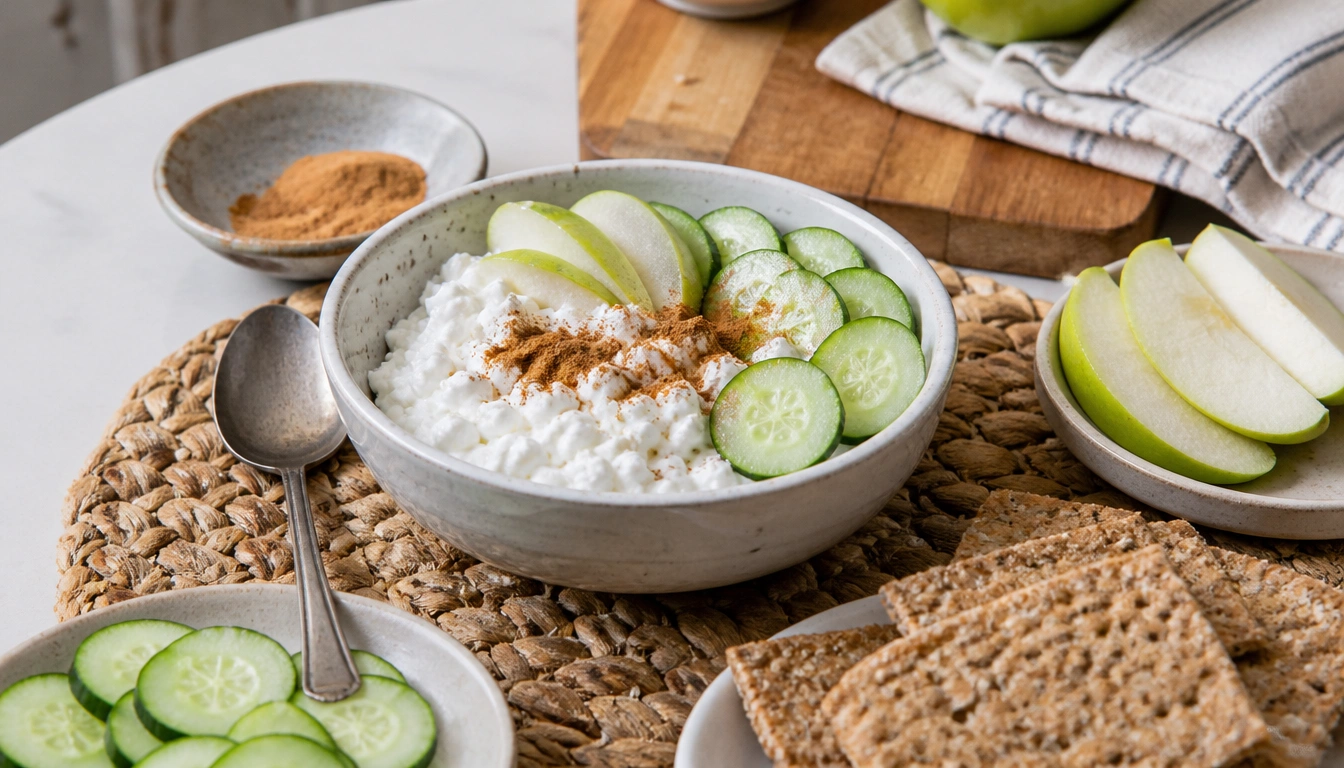
Cheap, filling cottage cheese snacks usually start with a plain store-brand tub, then get stretched with inexpensive add-ins like fruit, vegetables, oats, crackers, herbs, salsa, or canned fish. Cottage cheese is budget-friendly because it delivers a lot of protein for the price, especially when you compare it with many grab-and-go snacks. The best value usually comes from plain varieties, which are easier to season your own way.
Key Takeaways
- Plain cottage cheese is often the best budget buy because you can flavor it yourself instead of paying extra for pre-mixed varieties.
- A half-cup serving can be filling on its own, and it becomes more satisfying when you add fiber, crunch, or a small protein topper.
- Sweet versions can stay inexpensive with seasonal apples, frozen berries, cinnamon, or a spoonful of oats.
- Savory versions work well with salsa, pepper, herbs, cucumbers, carrots, whole-grain crackers, or tuna.
- Check labels for sodium, added sugar, and whether store-brand or low-fat options offer the best value for your household.
Why cottage cheese works well for budget-friendly snacking
Cottage cheese is a strong fit for budget snacking because it gives you a lot of protein for a relatively low cost per serving. That matters when you are trying to stay full without spending much on single-serve protein bars, deli snacks, or specialty yogurt cups. A half-cup serving of cottage cheese is usually enough to anchor a snack, and it brings a creamy texture that can be paired with very inexpensive foods.
Another reason it works is that cottage cheese is flexible. One tub can turn into several different snacks depending on what you already have at home. If you buy it as a plain staple, you can build both sweet and savory options from pantry items and produce that are on sale. That makes it easier to keep snack costs down without feeling like you are eating the same thing every day.
It also fits well into the kind of eating pattern many people want for fullness. Cottage cheese is known for its slow-digesting dairy protein, which helps some people feel satisfied longer than a snack built mostly from refined carbs. It also contributes calcium, phosphorus, and vitamin B12, so you are getting more than just protein from the same purchase.
How to choose the best-value cottage cheese at the store
For most budget shoppers, plain cottage cheese is the best starting point. Flavored versions may look convenient, but they often cost more and can add sugar or extra sodium. If you are planning to add fruit, herbs, salsa, or seasoning at home, plain cottage cheese usually gives you better value and more control.
Store brands are often the best deal, especially when you compare price per ounce rather than price per container. A larger tub usually costs less per serving than several small cups. If you can use it before it spoils, the bigger size is often the smarter buy.
Fat level is mostly a matter of preference and budget. Low-fat or fat-free options can be a good match if you want a lighter snack with the same protein base. Full-fat cottage cheese may taste richer and feel more satisfying to some people, but it is not always the lowest-cost option. When comparing products, look beyond the front label and check the nutrition panel and ingredient list.
Sodium deserves special attention. Cottage cheese is often salted, so two products that look similar can be very different once you read the label. If you are watching salt, look for lower-sodium or no-salt-added versions when available, and compare brands before you buy. According to the NHS, people who need to limit salt should pay close attention to packaged foods, not just the obvious salty snacks.
A simple formula for building a filling snack
The easiest way to turn cottage cheese into a better snack is to think in parts: a creamy base, something with crunch or fiber, a flavor boost, and, if needed, a small protein topper. That structure helps you make a snack that tastes better and holds you over longer without relying on expensive ingredients.
Base: start with plain cottage cheese.
Crunch or fiber: add something inexpensive like cucumber, celery, carrots, apple slices, oats, crackers, or frozen fruit.
Flavor boost: use cinnamon, pepper, chili flakes, herbs, salsa, lemon juice, or a seasoning blend.
Optional topper: add beans, tuna, seeds, or a hard-boiled egg if you want a more substantial snack.
This formula is useful because it keeps shopping simple. You do not need a long list of specialty ingredients. A tub of cottage cheese plus one produce item and one pantry item can make several different snacks across the week. If you are trying to avoid food waste, the best add-ins are the ones you already use in other meals.
If the texture of cottage cheese puts you off, mixing in a flavorful ingredient helps. Sweet add-ins soften the tanginess, while savory add-ins make the curds feel more like a dip or spread. You can also blend cottage cheese briefly if you prefer a smoother texture, though that is optional and not necessary for a good snack.
Savory budget snack ideas and sweet budget snack ideas
Savory snacks are often the easiest way to make cottage cheese taste less bland without adding much cost. One simple option is a pepper-and-herb bowl: cottage cheese with black pepper, dried dill, chives, or everything bagel seasoning, served with cucumber rounds, carrot sticks, or whole-grain crackers. Another low-cost choice is salsa cottage cheese, which uses a spoonful of jarred salsa and a pinch of cumin or chili powder for a quick dip.
For a more filling savory snack, stir cottage cheese into drained canned tuna and season with pepper or hot sauce. This can feel like a mini meal instead of a light snack, and canned tuna is usually a budget-friendly protein. If you want more crunch, serve the mixture with crackers or pile it onto sliced bell pepper.
Sweet snacks can also stay affordable. A classic version is cottage cheese with diced apple and cinnamon. Buy whatever apple variety is cheapest, and slice it thin so a small amount feels like more. Frozen berries are another smart option because they are usually cheaper than fresh out of season and thaw into a naturally sweet topping. A spoonful of oats can add texture and make the bowl feel more substantial.
Here are a few low-cost combinations that are easy to rotate:
- Cottage cheese, cinnamon, and chopped apple
- Cottage cheese, frozen berries, and a sprinkle of oats
- Cottage cheese, salsa, and cracked black pepper
- Cottage cheese, sliced cucumber, and dill
- Cottage cheese, tuna, and hot sauce
- Cottage cheese, tomato, and a pinch of Italian seasoning
When you want a sweeter bowl without much added sugar, lean on fruit, cinnamon, vanilla extract, or a small amount of oats. When you want savory, use acid and herbs: salsa, lemon juice, vinegar-based seasonings, pepper, garlic powder, or chili flakes. These small pantry ingredients change the flavor without driving up cost.
How to make cottage cheese snacks more filling without spending much more
If the snack needs to last until your next meal, add fiber and volume before you add expensive extras. A cucumber, carrot, or apple adds crunch and helps the bowl feel bigger. Oats, whole-grain crackers, and rice cakes add more staying power than cottage cheese alone. Frozen fruit is a useful middle ground because it is inexpensive, keeps well, and softens as it thaws.
Another budget-friendly tactic is to treat cottage cheese as the protein base and use smaller amounts of stronger add-ins. A little salsa, a little seasoning, or a few spoonfuls of fruit can be enough. You do not need to bury the snack under a lot of toppings for it to taste good.
If you are using cottage cheese as a mini-meal, combine it with one extra protein source only when needed. A half can of tuna, a hard-boiled egg, or a small sprinkle of seeds can make a noticeable difference in fullness. That said, many people do not need to add both extra protein and extra fat. Start small, then adjust based on how long you need the snack to carry you.
One practical rule for budget shoppers: use the most expensive ingredients sparingly and let the cheaper ones do the work. That means a spoonful of cottage cheese paired with a lot of produce or whole grains can be more economical than a large portion of a specialty snack product.
Practical shopping and prep tips for low-cost snack prep
Seasonal produce is usually the cheapest fresh add-in. Apples, cucumbers, carrots, and whatever berries are on sale can all work well with cottage cheese. If fresh fruit is expensive, frozen fruit is often the better buy because it stores longer and reduces waste. Pantry staples matter too: cinnamon, pepper, dried herbs, canned tuna, oats, and whole-grain crackers can all stretch one tub of cottage cheese into multiple snack ideas.
To keep costs down, think in reusable ingredients rather than one-off snack packs. For example, a cucumber can work with savory bowls, a fruit bowl, and a lunch plate. A jar of salsa can flavor cottage cheese, eggs, and grain bowls. That kind of overlap makes your grocery dollars go further.
Portioning can also help. Instead of eating straight from the tub, scoop out what you need into a small bowl and add your mix-ins there. This makes it easier to see how much you are using and may help the container last longer. If your household uses cottage cheese often, buying the larger size can be economical, but only if you can finish it before it goes bad.
When comparing brands, do not assume the cheapest container always gives the best value. Some store brands have a lower price but a higher sodium content, while others use a better ingredient list. Reading the label helps you choose the option that fits both your budget and your health goals.
Who should be cautious with cottage cheese
People watching sodium should be especially careful with cottage cheese, because many brands rely on added salt for flavor and preservation. If you are managing high blood pressure or have been told to limit sodium, use the nutrition label to compare brands and choose the lower-sodium option when possible. The NHS advises people who need to reduce salt to pay close attention to packaged foods, including dairy products that may not taste obviously salty.
Lactose intolerance is another common issue. Cottage cheese is a fresh dairy food, so it can contain more lactose than aged cheeses. Some people tolerate it in small amounts, while others do not. Lactose-free versions may help if you want to keep cottage cheese in your routine. If you know dairy tends to bother you, start cautiously and pay attention to how your body responds.
Milk allergy is different from lactose intolerance. If you have a true allergy to milk proteins, cottage cheese is not a safe option. In that case, choose a non-dairy snack instead. Because allergy reactions can be serious, it is not a food to test casually if you already know you are allergic to milk.
For people with special medical needs, the safest approach is individualized. A snack that works well for one person may not fit someone else’s sodium target, digestive tolerance, or allergy precautions.
Storage and food-safety tips for keeping cottage cheese fresh
Cottage cheese is a perishable food, so storage matters if you want to avoid waste. Keep it refrigerated, close the lid tightly, and use clean utensils each time you scoop it. This helps reduce contamination and keeps the texture and flavor better for longer.
For the best quality, use the container by the date on the package and pay attention to smell, appearance, and texture after opening. If the product looks or smells off, do not try to rescue it with toppings. Fresh dairy can spoil faster than shelf-stable snacks, especially if it has been left out during meal prep or packed in a lunch bag without cooling.
If you want to prep ahead, portion cottage cheese into small containers only as far ahead as you can safely store them. Add fruit, crackers, or cut vegetables close to eating time when possible, because some toppings lose texture if they sit too long. Frozen fruit is the easiest exception, since it can be portioned in advance and thawed as needed.
Food safety does not need to be complicated. Keep it cold, keep it covered, and avoid cross-contamination from dirty utensils or hands. That simple routine helps you make the most of an affordable snack without wasting the tub before you finish it.
Frequently Asked Questions
What can I mix with cottage cheese to make it taste better on a budget?
Affordable add-ins like cinnamon, black pepper, herbs, salsa, cucumber, apples, frozen berries, oats, or a little hot sauce can change the flavor without much extra cost. The best choice depends on whether you want a sweet or savory snack.
Is cottage cheese a good high-protein snack for fullness or weight management?
Yes, it can be a useful high-protein snack because it is filling for its cost and easy to pair with fiber-rich add-ins. It is not a magic food, but it may help some people stay satisfied between meals when used as part of an overall balanced eating pattern.
What are the cheapest sweet cottage cheese snack combinations?
Some of the cheapest sweet options are cottage cheese with cinnamon and apple, cottage cheese with thawed frozen berries, or cottage cheese with a small spoonful of oats. Seasonal fruit is usually the best buy, and frozen fruit often saves money when fresh fruit is pricey.
What are the cheapest savory cottage cheese snack combinations?
Good low-cost savory ideas include cottage cheese with pepper and cucumber, cottage cheese with salsa, cottage cheese with herbs and carrot sticks, or cottage cheese with tuna. Seasoning blends and canned ingredients can make the snack taste better without much added cost.
How much cottage cheese should I use for one snack serving?
A common snack portion is about half a cup, though you can adjust it based on your appetite and how much you need the snack to carry you. If you add fruit, vegetables, or crackers, that same amount can feel more substantial without requiring a larger serving.
The Bottom Line
Cottage cheese can be one of the cheapest ways to build a high-protein snack, especially if you buy a plain store-brand tub and flavor it yourself. The best budget combinations usually rely on inexpensive produce, pantry staples, or a small amount of canned protein.
For the strongest value, read labels for sodium, choose the style that fits your taste and tolerance, and use seasonal fruit or vegetables to keep costs down. If dairy does not agree with you or you need to limit salt, choose another snack or a lower-sodium/lactose-free option that fits your needs.
Medical disclaimer
Medical disclaimer: This content is for educational and informational purposes only and is not a substitute for professional medical advice, diagnosis, or treatment. Dietary needs and supplement suitability vary by individual.
Sources
- National Health Service (NHS) — cuh.nhs.uk. Accessed November 2026.
- Health & Clinical Editorial — webmd.com. Accessed November 2026.
- health.clevelandclinic.org — clevelandclinic.org. Accessed November 2026.
