
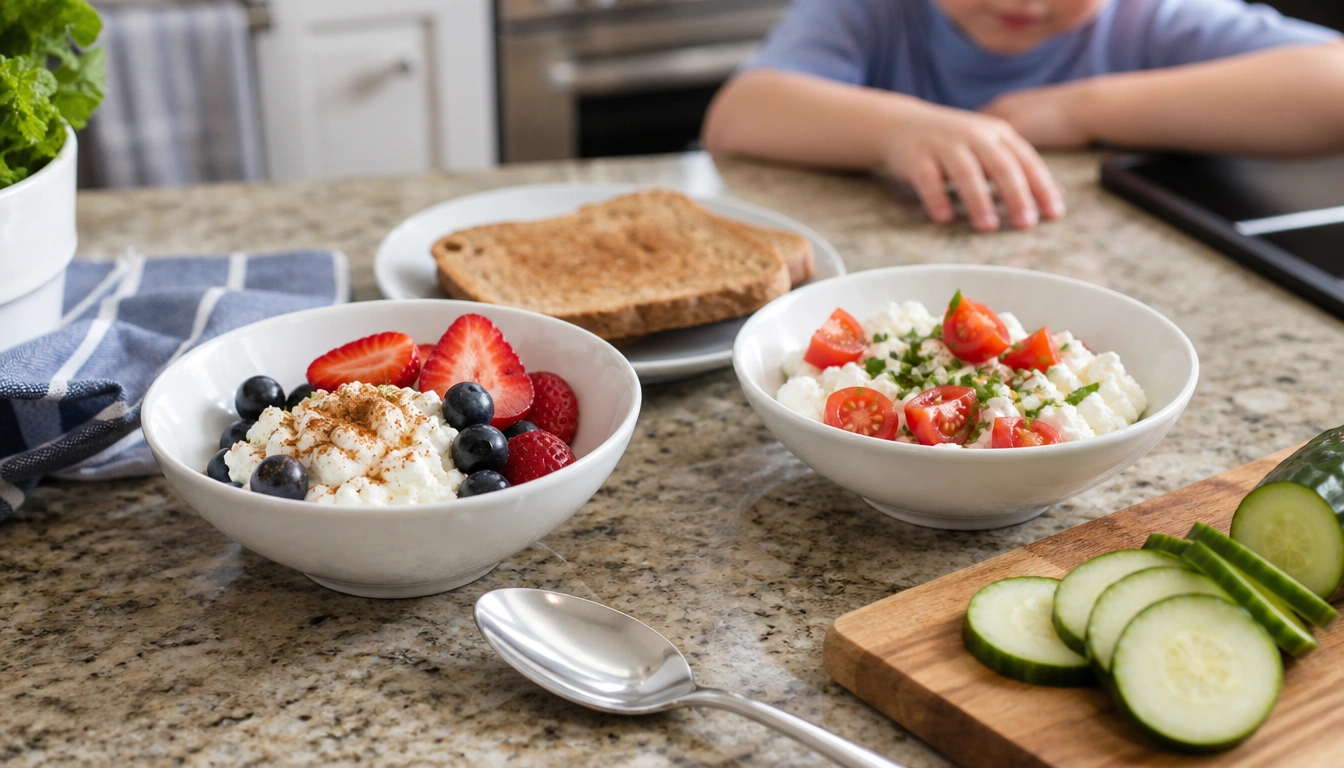
Yes—cottage cheese is one of the fastest filling snacks a busy parent can assemble in under two minutes. It is high in protein, especially slow-digesting casein, so it can help you stay satisfied between meals. Pair it with fruit, vegetables, whole grains, or a little healthy fat to make it more balanced and more likely to keep you going through the afternoon slump.
Key Takeaways
- Cottage cheese works well for busy parents because it is zero-cook, budget-friendly, and easy to customize with what is already in the fridge.
- Its casein protein digests slowly, which can support fullness longer than a carb-only snack.
- Compare labels before buying: some tubs are much higher in sodium than others, and flavored versions may contain added sugar.
- If the curd texture is a problem, whipped cottage cheese is an easy fix for kids and texture-sensitive adults.
- Use it as a base for sweet or savory snacks, then add fruit, crunchy produce, toast, herbs, or seeds to make it more satisfying.
Why cottage cheese fits the busy-parent snack problem
Busy parents usually need three things from a snack: fast, filling, and easy to clean up. Cottage cheese checks those boxes well. It comes ready to eat, stores easily in the fridge, and does not need cooking, blending, or complicated prep before it becomes a snack.
It also works in the real moments that drive snack decisions: after-school hunger, a quick bite before carpool, a desk snack during work-from-home hours, or a stopgap when lunch ran late. Instead of reaching for random leftovers or a package of crackers that disappears in two minutes, you can build something more balanced with very little effort.
The other reason cottage cheese is so useful is flexibility. It can go sweet or savory, can stand alone or be turned into a dip, and can be made more kid-friendly with a few texture tweaks. That makes it easier to use often without feeling repetitive.
Why cottage cheese can actually keep you full
Cottage cheese is useful as a snack base because it is protein-rich for its calorie count. A typical half-cup serving of low-fat cottage cheese provides a meaningful amount of protein, which helps make a snack more satisfying than a carb-only option. The exact amount varies by brand and fat level, so the label matters.
The main protein in cottage cheese is casein. Casein digests more slowly than some other proteins, which is one reason people often find cottage cheese more filling between meals. That slower digestion can be helpful when the goal is not just to nibble, but to bridge the gap until dinner.
It also brings useful nutrients beyond protein, including calcium, phosphorus, selenium, and vitamin B12. Those nutrients do not make cottage cheese magical, but they do make it a practical food with more nutritional value than many grab-and-go snacks. According to Harvard and other nutrition experts, using dairy foods as part of a balanced pattern can support overall nutrient intake.
How to shop for the right tub
Not all cottage cheese is the same, so a quick label check is worth the extra few seconds. Start with the fat level. Nonfat, low-fat, and full-fat versions all exist, and the choice usually comes down to your preferences, your budget, and how the rest of your day is going. If you want a lighter option, low-fat or fat-free is the simplest pick.
Sodium is the bigger issue for many shoppers. Cottage cheese can be surprisingly salty, and brands vary a lot. If you are watching blood pressure, trying to keep sodium in check, or just want a less salty snack base, compare labels and choose reduced-sodium or low-sodium varieties when they are available.
Plain cottage cheese is usually the most flexible choice because you can season it yourself. Flavored versions can be convenient, but they may bring added sugar or extra sodium, depending on the product. If you want more control, start with plain and add your own fruit, herbs, spices, or crunchy toppings.
Lactose-free cottage cheese is also an option for some people who are sensitive to lactose. That can be helpful if dairy usually feels uncomfortable but you still want a similar snack experience. If you are dealing with a true cow’s milk allergy, though, cottage cheese is not a safe substitute and should be strictly avoided.
Sweet and savory cottage cheese snack ideas
The easiest way to avoid snack fatigue is to think in formulas instead of recipes. A formula lets you grab whatever is available and still make a snack that tastes intentional.
Sweet ideas: mix cottage cheese with berries and cinnamon; top it with sliced peach, pineapple, or mango; add diced apple with a sprinkle of nutmeg; or stir in a spoonful of chia seeds and a few chopped nuts for more texture. If you want something that feels like a small breakfast, try cottage cheese with banana slices and a light drizzle of nut butter.
Savory ideas: spread cottage cheese on whole-grain toast and top with tomato slices and cracked pepper; spoon it beside cucumber rounds and bell pepper strips as a dip; stir in dill, chives, garlic powder, or everything bagel seasoning; or pile it onto crackers with sliced radishes for a quick, crunchy plate.
These are easy to tailor to what is already in the house. If you have a few extra minutes, a toasted whole-grain base adds more staying power. If you are truly racing the clock, even a bowl with fruit or vegetables and cottage cheese can be enough to stop the hanger spiral.
Making cottage cheese more kid-friendly
Texture is often the deal-breaker for kids and for adults who do not like visible curds. The good news is that cottage cheese is easy to adapt. Whipped cottage cheese is one of the simplest fixes: blend it briefly until smooth and creamy, then serve it as a dip or spread. That keeps the same basic nutrition profile while changing the mouthfeel.
You can also reduce texture resistance by adding familiar mix-ins. For sweet eaters, try fruit that is already well liked, such as strawberries, blueberries, or sliced bananas. For savory eaters, try a mild seasoning blend or a very small amount of shredded cheese on top. If your child dislikes “white lumps,” mixing cottage cheese with applesauce, mashed berries, or a thin layer of jam can make it feel less unfamiliar.
Small serving cups can help too. Some picky eaters are more willing to try a new food when it looks like a snack portion instead of a full bowl. A few cucumber rounds or whole-grain crackers on the side can make the plate feel more approachable without much extra work.
How to build a snack that lasts
If a snack is meant to carry you through the afternoon slump, think beyond the main ingredient. Cottage cheese gives you protein, but pairing it with fiber or healthy fat usually makes the snack more satisfying and more complete.
For sweet pairings, fruit adds fiber and hydration. Apples, berries, pears, and peaches are easy options. If you want more staying power, add nuts, seeds, or a small amount of nut butter. The goal is not a complicated meal; it is a snack that slows down hunger enough to get you to the next real eating time.
For savory pairings, whole-grain toast, whole-grain crackers, carrots, cucumber, celery, and bell peppers all work well. These add crunch and volume without much prep. A little olive oil, avocado, or seeds can add richness if you know the snack needs to last longer.
A useful rule for busy parents is to pair cottage cheese with at least one produce item or one whole-grain item whenever possible. That keeps the snack from becoming just a bowl of protein and makes it feel more like a real break.
When to choose caution or alternatives
Cottage cheese is a practical food for many people, but it is not the right fit for everyone all the time. If you are watching sodium because of blood pressure, kidney disease, or another medical reason, choose a lower-sodium product and keep an eye on portion size. If you are comparing brands, the label is more useful than the front-of-package claims.
If dairy sometimes bothers your stomach, lactose intolerance may be part of the picture. Some people do better with lactose-free cottage cheese, while others still need to keep portions small or avoid it. If symptoms like bloating, gas, cramping, or diarrhea keep happening, it is worth checking in with a healthcare professional.
A cow’s milk allergy is different from lactose intolerance. Allergy means strict avoidance, even if the product is labeled lactose-free. If you have a diagnosed milk allergy or are feeding a child with one, cottage cheese is off the table.
People with specific medical nutrition plans, including some heart, kidney, or gastrointestinal conditions, may need individualized advice about dairy and sodium. In those cases, a registered dietitian or clinician can help fit snacks into the bigger plan safely.
No-cook shortcuts for real-life parent routines
The best cottage cheese snack is the one you can actually make on a busy day. That means leaning on shortcuts. Keep a tub of cottage cheese at eye level in the fridge, and stock a few easy pairings such as berries, sliced cucumbers, cherry tomatoes, apples, whole-grain crackers, nuts, and seasoning blends.
For a work-from-home desk snack, portion cottage cheese into a small bowl and top it with fruit or a handful of nuts. For an after-school snack, set out cottage cheese with crackers, veggie sticks, or toast so kids can help themselves with minimal help. For a carpool or errand snack, choose something less messy, like cottage cheese with a spoonable fruit topping or a small container of whipped cottage cheese with crackers packed alongside it.
Make-ahead components can save even more time. Wash and cut produce once or twice a week, portion seasonings into small jars, and keep a few single-serve containers ready if that makes weekday assembly easier. The snack still takes under two minutes, but the decision fatigue drops a lot when the options are already waiting.
That is the real advantage of cottage cheese: it can move from fridge to bowl, toast, or dip in almost no time, while still feeling like an intentional choice instead of a last-minute scramble.
Frequently Asked Questions
How much protein is in cottage cheese and why does it help with fullness?
A typical half-cup serving of cottage cheese provides a meaningful amount of protein, though the exact amount depends on the brand and fat level. It helps with fullness because protein is more satisfying than a snack built mostly on refined carbs, and cottage cheese contains casein, a slower-digesting protein that may help you feel satisfied longer.
What are the best sweet and savory toppings for cottage cheese snacks?
For sweet snacks, berries, sliced peaches, banana, apple, cinnamon, chia, and nuts are all easy choices. For savory snacks, try tomatoes, cucumber, bell peppers, herbs, cracked pepper, garlic powder, everything bagel seasoning, or whole-grain toast. The best toppings are the ones you already keep on hand.
How can I make cottage cheese snacks more kid-friendly for picky eaters?
Blend it into whipped cottage cheese for a smoother texture, then serve it with familiar foods. Mild fruit, crackers, toast, or a small amount of seasoning can help. Small portions also matter, because some kids are more willing to try a new food when it looks like a simple snack rather than a big serving.
Is cottage cheese okay if I’m watching sodium or calories?
It can be, but label checks matter. Cottage cheese can be relatively high in sodium, so look for reduced-sodium or low-sodium versions if that is a concern. Fat-free or low-fat options may also fit better if you are watching calories, but the best choice depends on your overall diet and health goals.
What should I do if cottage cheese bothers my stomach or I’m lactose intolerant?
Some people tolerate lactose-free cottage cheese better than regular cottage cheese. If dairy still causes bloating, gas, cramping, or diarrhea, it may not be a good fit for you. A true cow’s milk allergy is different and requires strict avoidance. If symptoms keep happening, talk with a healthcare professional.
The Bottom Line
Cottage cheese is a strong option for busy parents because it is fast, filling, and easy to turn into a snack in less than two minutes. The most useful approach is to keep it plain, then build from there with fruit, vegetables, toast, herbs, or nuts.
If you shop with sodium in mind, choose a lower-sodium tub when possible. If texture is the barrier, try whipped cottage cheese or mix it with familiar foods. And if dairy does not agree with you, lactose-free options may help, but a milk allergy means avoiding cottage cheese entirely.
Medical disclaimer
Medical disclaimer: This content is for educational and informational purposes only and is not a substitute for professional medical advice, diagnosis, or treatment. Dietary needs and supplement suitability vary by individual.
Sources
- Academic Research Institution — harvard.edu. Accessed November 2026.
- Healthline — healthline.com. Accessed November 2026.
- Health & Clinical Editorial — webmd.com. Accessed November 2026.
- health.clevelandclinic.org — clevelandclinic.org. Accessed November 2026.
