
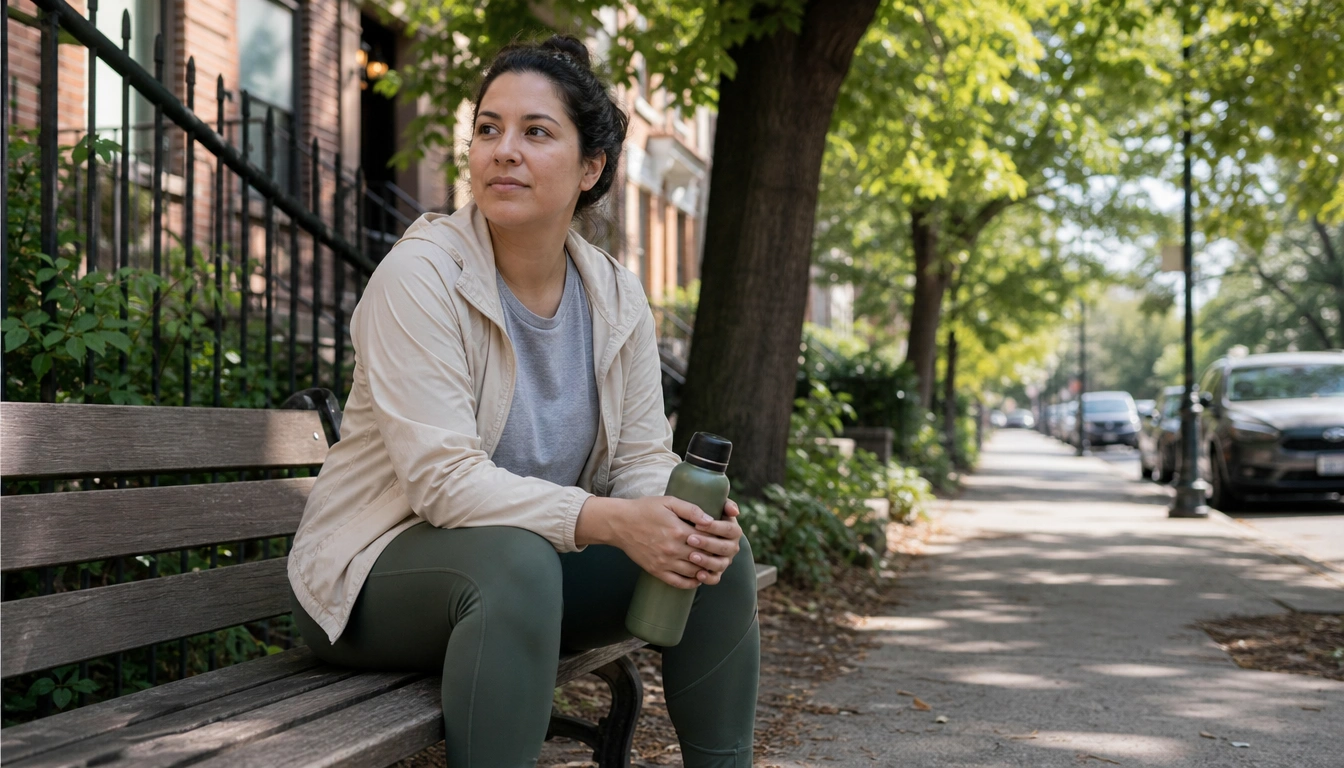
You can get meaningful benefits from daily outdoor time without spending money by keeping it simple: step outside for a few minutes every day, use whatever free green or blue space is nearby, and build the habit around an existing routine. A realistic target many people use is about 2 hours of nature exposure per week, which can be broken into roughly 20 minutes a day, but even smaller daily doses can still help.
Key Takeaways
- You do not need expensive gear or a perfect park to start; a sidewalk, bench, balcony, school track, canal path, or sunlit window can be a useful starting point.
- A common nature-prescription benchmark is about 2 hours a week, which can be split into short daily blocks so it feels doable on a busy schedule.
- If you cannot walk much, sitting outside, pausing in shade, or spending time near greenery can still support stress relief and routine reset.
- Cheap safety steps matter: check UV, use shade, wear a hat, stay on cleared paths, and do a tick check after time in grassy or wooded areas.
- Outdoor time works best as a habit when it is attached to something you already do, such as after breakfast, during lunch, or after putting the kids to bed.
Why daily outdoor time is worth making room for, especially when you’re on a budget
Daily outdoor time is one of the few health habits that can be free, flexible, and realistic for many households. Research summarized by the National Institutes of Health and public health agencies links time in natural environments with lower stress, better mood, and a helpful break from mental overload. That matters if you are juggling work, caregiving, money pressure, or chronic fatigue.
Outdoor time can also support movement without asking you to “work out.” A walk to the corner, laps around a school track, or a slow loop through a neighborhood street can add up. The benefit is not only exercise. Natural settings can make effort feel less draining and can offer a mental reset that is harder to get indoors.
For people on a budget, the value is practical: it is a health habit that can fit into daily life without a membership, equipment, or travel costs. The goal is not a perfect nature experience. The goal is a repeatable one.
How much outdoor time to aim for: simple weekly-to-daily translation of the nature-prescription idea
There is no single official dose of outdoor time that works for everyone. Still, many nature-prescription programs use a benchmark of about 2 hours per week. That target can sound large until you break it down.
If you divide 2 hours by 7 days, you get roughly 20 minutes a day. That can be one short walk, two 10-minute breaks, or a few minutes in the morning and a few more after dinner. If life is unpredictable, think in weekly totals instead of perfection. Three or four short outdoor sessions across the week are still better than waiting for the “right” day that never comes.
If your schedule is tight, start smaller. A five-minute step outside after waking up, a short sit in the yard or on a stoop, or a brief walk while water boils can help you build consistency. The habit matters more than the exact minute count at first.
What counts as outdoor time when you don’t have a park nearby
You do not need a scenic destination to make outdoor time count. Free and low-cost options often exist closer than people expect, especially in cities where green space is limited.
Look for tree-lined streets, community gardens, school tracks that are open to the public after hours, canal or river paths, library courtyards, shared building courtyards, and neighborhood benches. A balcony, stoop, doorway, or front step can also work if that is the easiest place to sit outside safely. Even a sunlit window can be a partial backup when weather, pain, fatigue, or caregiving duties keep you indoors.
These options are not identical. Walking near trees or water usually offers more sensory input and movement. Sitting outside still has value, especially if your main barrier is energy, accessibility, or safety. If your neighborhood feels unsafe or poorly maintained, choose the most practical nearby option rather than skipping the habit entirely.
For people with limited access to parks, the point is to use the space you actually have. A short loop around the block, a public path near transit, or a bench in a busier, well-used area may be more sustainable than trying to reach a distant green space.
How to turn outdoor time into a habit
The easiest habits are tied to something you already do. This is called habit-stacking, and it works well for outdoor time because the trigger is already in your day. You might step outside right after breakfast, after a lunch break, when you get home from work, or after school pickup.
Make the first version small enough that you are likely to repeat it. A “micro-walk” can mean one block out and back. A reset can mean standing outside for five minutes without your phone. If you care for children, you can pair outdoor time with an existing routine such as waiting for the bus, walking to the mailbox, or taking out the trash together.
Phone-free time can make the habit feel more restorative. Try putting your phone on silent, leaving headphones off, and noticing a few simple details: one thing you can see, one thing you can hear, and one thing you can smell. That small shift can make a short outing feel more like a break and less like another task.
Routine anchors help on tired days. Examples include “after coffee,” “after lunch,” or “before the evening shower.” The cue should be specific enough that you do not have to decide from scratch each day.
Budget-friendly ways to get more benefit from the same few minutes
You can improve the value of a short outing without spending money. Attention-restoration research suggests that nature is easier on the brain than constant screens, noise, and task-switching. So the goal is not only to be outside, but to let your attention loosen.
Pick one simple focus. Watch leaves move, follow clouds, listen for birds, or notice changes in light and shade. If you are near water, look at ripples or reflections. If you are in a city, watch how people, traffic, and plants move through the same space. These small details can create the “soft fascination” that helps the mind recover from overwork.
Breathing and posture matter too. Sit down if that makes it easier to stay outside longer. Stand in a doorway. Lean against a wall. Rest your shoulders. The benefit does not require hiking or a fast pace. What matters is repeated contact with the outdoors in a way that feels easy enough to keep doing.
Safety and comfort basics: sun, heat, pollen, air quality, and tick precautions without expensive gear
Low-cost safety is part of making the habit sustainable. In strong sun, use shade when you can, wear a hat if you already have one, and avoid the hottest part of the day when possible. The Centers for Disease Control and Prevention advises people to reduce heat and sun stress by planning for local conditions rather than pushing through discomfort.
If you are outdoors longer, clothing and timing help more than expensive products. A light, breathable outfit and a route with shade can make a big difference. If you use sunscreen, use it as directed. If you have a sun-sensitive condition or take medicines that affect sun tolerance, ask a clinician for personalized advice.
During pollen season or poor air quality days, check local reports before you head out if you have asthma or allergies. Keep your usual rescue medicines, such as an inhaler, available if prescribed. On high-pollen days, a shorter outing or a different time of day may be easier.
If you walk in grass, brush, or wooded areas, stay on cleared paths when possible and do a tick check when you come back in. Simple steps like tucking pants into socks and checking skin and clothing can reduce risk without special gear. The CDC recommends extra care in tick-prone areas, especially after time in tall grass or leaf litter.
Accessibility and life-stage adaptations
Children often benefit from outdoor time because it gives them room to move, look around, and use energy in a less structured way. For families, short outdoor breaks can be easier than a long outing. A quick walk, a playground visit, or a few minutes of looking for birds and bugs can be enough to create a daily routine.
Older adults may prefer low-impact outdoor time that supports balance, light activity, and social contact. A bench in a safe area, a short walk with rest stops, or sitting outside with a neighbor can be a meaningful habit. The aim is comfort and regularity, not endurance.
For people with limited mobility, chronic fatigue, pain, or sensory sensitivities, outdoor time can be adapted. Sitting on a balcony, in a courtyard, by an open doorway, or near a window with a clear view can still provide a change of scene and some of the calming effect of being outside. If walking is possible only in small amounts, break it up into shorter sessions.
If you are managing a chronic condition, the best version of outdoor time is the one you can repeat safely. Adjust duration, pace, and location to your energy level and health needs.
When outdoor time is not enough and you should seek medical care or individualized advice
Outdoor time can support well-being, but it is not a substitute for medical care. If you have ongoing shortness of breath, chest pain, dizziness, fainting, worsening anxiety, depression, or pain that keeps you from daily activities, speak with a healthcare professional.
You should also get individualized advice if you have severe asthma, significant heat sensitivity, a history of fainting outdoors, a major sun reaction, or a condition that makes pollen, insects, or heat risky. Children with persistent symptoms, older adults with balance concerns, and people with complex medical needs may need a tailored plan.
If outdoor time makes you feel worse instead of better, that is a signal to adjust the plan rather than push harder. A smaller dose, a different time of day, or a more accessible location may help. If not, ask for medical guidance.
Frequently Asked Questions
How much outdoor time do I need each day to see benefits?
There is no universal minimum, but a common nature-prescription goal is about 2 hours per week, which works out to roughly 20 minutes a day. If that feels too big, start smaller and build consistency. Regular short outings are often more realistic than occasional long ones.
What if I live in a city with little green space or unsafe parks?
Use the closest safe option you have: a tree-lined street, a community garden, a school track, a canal or river path, a bench, a balcony, or even a sunlit window as a backup. The best choice is the one you can use safely and repeat often.
Can sitting outside or being near a window count if I can’t walk?
Yes. Sitting outside, resting on a stoop, or spending time by a window with natural light can still offer a useful break and some restorative benefit. Walking adds more physical activity, but it is not required for outdoor time to matter.
What are the safest low-cost ways to spend time outdoors in sun, heat, allergy season, or near ticks?
Choose shade when possible, wear a hat if you have one, and avoid peak heat when you can. Check pollen or air quality if you have asthma or allergies, and keep your prescribed medicines available. In tick-prone areas, stay on cleared paths and do a tick check after you come inside.
How do I make outdoor time a daily habit when I’m busy or tired?
Attach it to something you already do, such as after breakfast, during lunch, or after the kids are in bed. Keep the first version very short, like five to ten minutes, and make it phone-free if possible. Small routines are easier to repeat than ambitious plans.
The Bottom Line
Daily outdoor time can be free, simple, and flexible. You do not need a perfect park or expensive gear to start. A short walk, a bench, a balcony, a tree-lined street, or a sunlit window can all help you build a low-cost habit that supports stress relief and routine movement.
If you want a practical target, think of about 2 hours a week and break it into small daily pieces. Then match the plan to your real life: your neighborhood, your energy level, your weather, and your safety needs. The best habit is the one you can keep doing.
If outdoor time becomes painful, unsafe, or not enough to address ongoing symptoms, get individualized medical advice. The goal is to use nature as a steady support, not to turn it into another source of pressure.
Medical disclaimer
Medical disclaimer: This content is for educational and informational purposes only and is not a substitute for professional medical advice, diagnosis, or treatment. Dietary needs and supplement suitability vary by individual.
Sources
- National Health Service (NHS) — hra.nhs.uk. Accessed November 2026.
- Centers for Disease Control and Prevention (CDC) — cdc.gov. Accessed November 2026.
- National Institutes of Health (NIH) — nih.gov. Accessed November 2026.
