
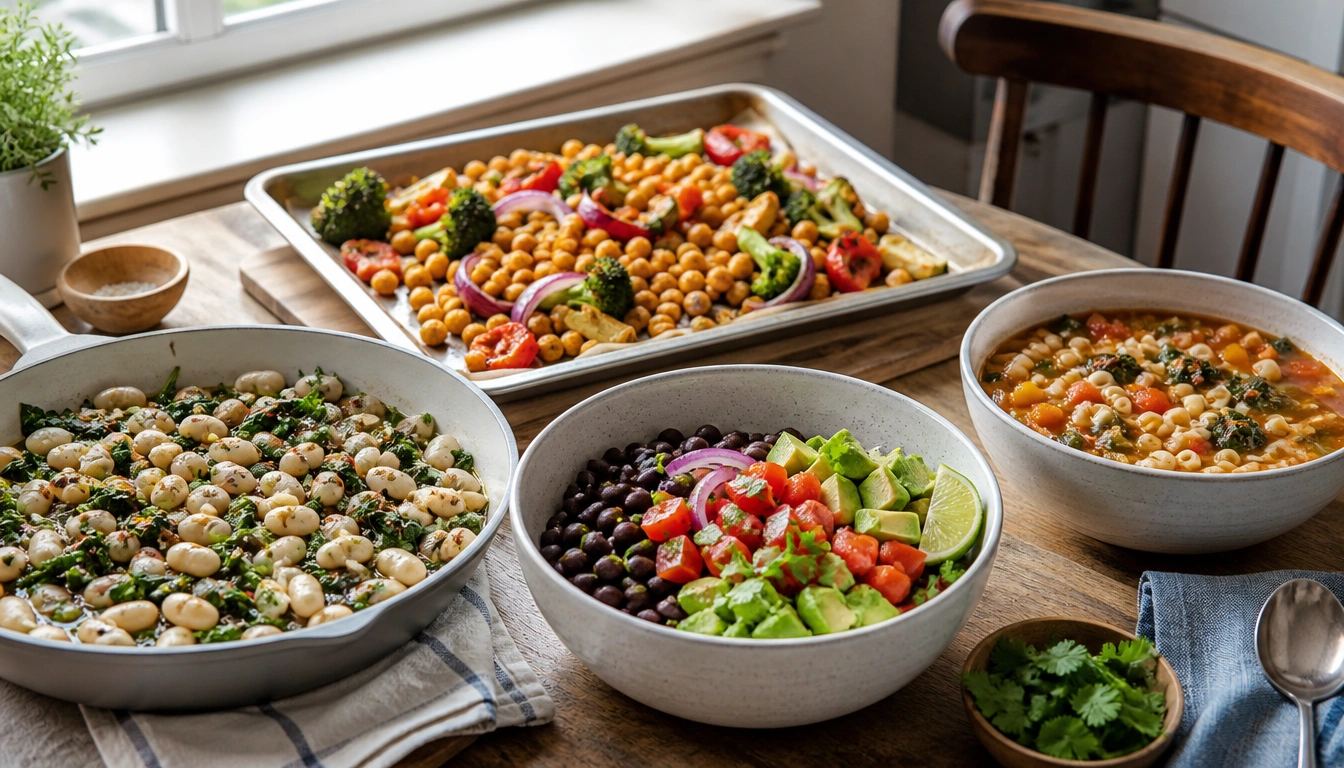
The easiest bean dinners for adults over 50 are simple, low-cleanup meals built from canned or cooked beans, vegetables, and a little protein or whole grain when needed. Good options include a 15-minute white bean and greens sauté, a black bean tostada or bowl, a sheet-pan chickpea dinner, and a quick bean soup. These meals can be filling, heart-friendly, and budget-conscious, especially when you rinse canned beans and build up fiber gradually.
Key Takeaways
- Beans are a strong dinner choice after 50 because they provide plant protein, fiber, and shortfall nutrients that support muscle maintenance and overall diet quality.
- Canned beans are the fastest option for busy evenings; choose no-salt-added when possible and rinse them to lower sodium.
- If beans are new to your routine, start with small servings, drink enough fluid, and let your gut adjust before increasing portions.
- Pair beans with vegetables and whole grains for a more complete meal; add yogurt, eggs, fish, or cheese only if extra protein is useful.
- Adults with kidney disease, severe digestive disorders, or medication-related diet restrictions should get individualized guidance before making major bean changes.
Why bean dinners make sense after 50
Beans are especially useful at dinner for adults over 50 because they do several jobs at once. They supply plant protein, which helps support muscle maintenance as people age, and they bring fiber that can help with fullness after a lighter meal. The National Institute on Aging also encourages older adults to focus on nutrient-dense foods that fit reduced appetite, changing metabolism, and practical cooking needs.
Beans can also help cover nutrients that many people do not get enough of, including potassium, magnesium, iron, folate, and choline. That matters because dinner is often a good time to add vegetables and protein in one meal instead of trying to do everything at breakfast or lunch. From a food-first point of view, beans are useful because they are filling without requiring expensive ingredients or complicated cooking.
Research and dietary guidance also suggest that bean-based meals can fit heart-healthy patterns and support better overall diet quality. For many adults, that combination is the real advantage: a meal that is affordable, satisfying, and easy enough to make on a low-energy evening.
How to choose the easiest bean format
For quick dinners, canned beans are usually the most practical choice. They are already cooked, so they can go straight into soups, sautés, bowls, and sheet-pan meals. Dried beans are economical and versatile, but they need soaking and longer cooking, which makes them less convenient for weeknight use unless you batch-cook them ahead of time.
When possible, look for no-salt-added or low-sodium canned beans. If regular canned beans are what you have, rinsing them under water can help reduce sodium and some of the starchy canning liquid. That is a simple step with a big payoff for people trying to keep dinner heart-friendly.
Convenience matters. The best bean is often the one you will actually use. For many older adults, keeping a few canned varieties on hand—such as black beans, chickpeas, cannellini beans, and kidney beans—makes it much easier to put dinner together without extra trips to the store.
Quick digestion and comfort tips for bean meals
If high-fiber foods are new to you, start with a small serving instead of a full bowl. Your digestive system may need time to adjust, and ramping up gradually can reduce gas, bloating, and discomfort. That is especially helpful for adults who have not eaten many beans recently.
Hydration matters too. Fiber works best when you are drinking enough fluid, so bean dinners often go well with soup, water, tea, or a broth-based side. You do not need anything elaborate; you just want to avoid adding a lot of fiber while running low on fluids.
If beans usually cause gas, try these practical adjustments:
- Use smaller portions more often instead of a very large serving.
- Choose well-rinsed canned beans or thoroughly cooked dried beans.
- Pair beans with gentler vegetables at first, such as spinach, zucchini, or carrots.
- Season with herbs, garlic, cumin, or ginger rather than heavy amounts of fat.
- Allow a few weeks for your gut to adapt before deciding beans do not work for you.
If you have persistent bloating, pain, or bowel changes, the issue may be more than ordinary bean adjustment and deserves medical attention.
15-minute white bean and greens sauté
This is one of the simplest bean dinner ideas for adults over 50 because it uses a short ingredient list and almost no cleanup. In a skillet, warm olive oil with garlic, then add chopped spinach or kale until it softens. Stir in rinsed cannellini or Great Northern beans, season with pepper, Italian herbs, or a little lemon, and heat until everything is warmed through.
This meal works well because the beans provide protein and fiber while the greens add volume and micronutrients. If you want a more complete plate, serve it with whole-grain toast, a small baked potato, or a side of tomatoes. For people with weaker appetite, a small bowl may be plenty. For people who need more staying power, add a sprinkle of grated Parmesan or a side of plain yogurt for extra protein.
Texture can matter more with age than people realize. Soft greens and tender beans are often easier to chew than dense meats or crunchy raw salads, which makes this an especially practical dinner on days when you want something simple and gentle.
Black bean bowls, tostadas, and sheet-pan chickpeas
Black beans work beautifully in a bowl or tostada because they are flavorful, fast, and easy to customize. Warm rinsed black beans with cumin and chili powder, then spoon them onto a baked tostada shell, soft tortilla, or bowl of brown rice. Add shredded cabbage, salsa, avocado, or plain Greek yogurt if you want creaminess with extra protein.
A bowl version is often easier for older adults who prefer less crunch or want fewer dishes. A tostada gives more texture, while a bowl is softer and easier to manage if chewing is a concern. Both formats keep prep light and make leftovers easy to reuse the next day.
Sheet-pan chickpeas are another low-effort option. Toss drained chickpeas with chopped zucchini, bell peppers, and cherry tomatoes, add olive oil and oregano, then roast until tender. The oven does most of the work, and the result can be served as a vegetarian main dish or alongside fish, chicken, or a grain if you want more protein or calories.
These two formats show the same basic strength of beans: you can build a dinner around pantry staples and still get something filling and balanced without a long recipe.
Speedy minestrone and bean soups
Bean soup is one of the easiest ways to turn pantry ingredients into a full dinner. Start with low-sodium broth, add canned tomatoes, a bag of frozen vegetables, and a can of rinsed beans such as kidney, pinto, or mixed beans. Simmer until the vegetables are hot and tender. If you have leftover pasta, rice, or cooked barley, you can add a small amount to make the soup more substantial.
This style of meal is especially useful for adults over 50 because it is soft, hydrating, and easy to portion. Soup can be more comfortable than a dry dinner for people who eat slowly, have a smaller appetite, or want something warm in the evening. It also stores well, which makes it practical for cooking once and eating twice.
If you want more flavor without much effort, add bay leaf, basil, thyme, or a spoonful of pesto at the end. A little grated cheese can help with flavor and protein, but it is optional. The main advantage is that soup stretches simple ingredients into several meals with very little cleanup.
Simple add-ons that make bean dinners more complete
Beans can stand on their own, but they often work even better when paired with vegetables and whole grains. That combination can make dinner more balanced and more satisfying, especially if you tend to get hungry again later in the evening. Think of beans as the base, then add color and texture around them.
Good add-ons include brown rice, whole-wheat bread, corn tortillas, quinoa, roasted sweet potatoes, or a small portion of oats in soup. Vegetables can be fresh, frozen, or canned if sodium is controlled. A simple rule is to let beans do the heavy lifting, then use vegetables to increase volume and whole grains to round out the meal.
If you need extra protein because your appetite is small or your overall intake is low, add one modest protein booster rather than overcomplicating the meal. Examples include a spoonful of Greek yogurt, a hard-boiled egg, a little cheese, canned tuna, or a side of tofu. The goal is not to make every bean dinner identical. It is to make it easy to meet your needs with ingredients you already have.
When bean dinners need medical adjustment
Most adults can enjoy beans safely, but some situations call for extra caution. People with chronic kidney disease may need to watch potassium and phosphorus intake, so bean portions and frequency should be discussed with a clinician or renal dietitian. The same is true if you have been told to follow a special mineral-restricted diet.
Digestive disorders can also change the picture. If you have severe irritable bowel syndrome, inflammatory bowel disease, or another condition that makes high-fiber foods hard to tolerate, beans may need to be limited, modified, or introduced in a very specific way. Do not assume that a healthy food is automatically right for your symptoms.
Medication matters too. If you take a complex medication regimen or have been told to follow a specialized diet, major changes in fiber intake should be reviewed with your healthcare professional. Beans are not a problem for most people, but individualized guidance is important when kidney function, gut health, or medication management is already complicated.
For most other adults over 50, a gradual approach is the safest and most comfortable way to build bean dinners into the routine.
Frequently Asked Questions
Are beans a good dinner protein for adults over 50?
Yes. Beans are a practical dinner protein because they provide plant protein along with fiber, which helps with fullness and overall diet quality. They work especially well when paired with vegetables and, if needed, a second protein source for people with higher needs.
How can I make bean dinners easier to digest if I’m not used to high-fiber foods?
Start with small portions, drink enough fluids, and increase beans slowly over a few weeks. Rinsing canned beans, cooking them well, and choosing softer meal formats like soup can also help reduce gas and bloating.
Is canned beans or dried beans better for quick healthy dinners?
Canned beans are usually better for quick dinners because they are already cooked. Dried beans are economical, but they take more planning. For convenience, choose no-salt-added canned beans when possible and rinse them before using.
How do bean dinners support heart health, blood sugar, and muscle maintenance after 50?
Bean dinners support health after 50 by providing fiber for heart-friendly eating patterns, plant protein for muscle maintenance, and a slower-digesting food base that can fit better-balanced meals. They also help improve overall diet quality when they replace more refined convenience foods.
What should people with kidney disease or other medical conditions consider before eating more beans?
People with kidney disease may need to monitor potassium and phosphorus, and some digestive disorders make high-fiber foods harder to tolerate. If you have these conditions or take complex medications, ask your healthcare professional how beans fit into your plan.
The Bottom Line
Beans are one of the easiest healthy dinner shortcuts for adults over 50 because they are inexpensive, filling, and adaptable. Canned beans, in particular, make it simple to build a meal with very little prep or cleanup.
The most practical options are a white bean and greens sauté, a black bean bowl or tostada, a sheet-pan chickpea dinner, and a quick bean soup. Start with small portions if fiber is new to you, rinse canned beans to cut sodium, and get individualized guidance if kidney, digestive, or medication issues apply.
Medical disclaimer
Medical disclaimer: This content is for educational and informational purposes only and is not a substitute for professional medical advice, diagnosis, or treatment. Dietary needs and supplement suitability vary by individual.
