
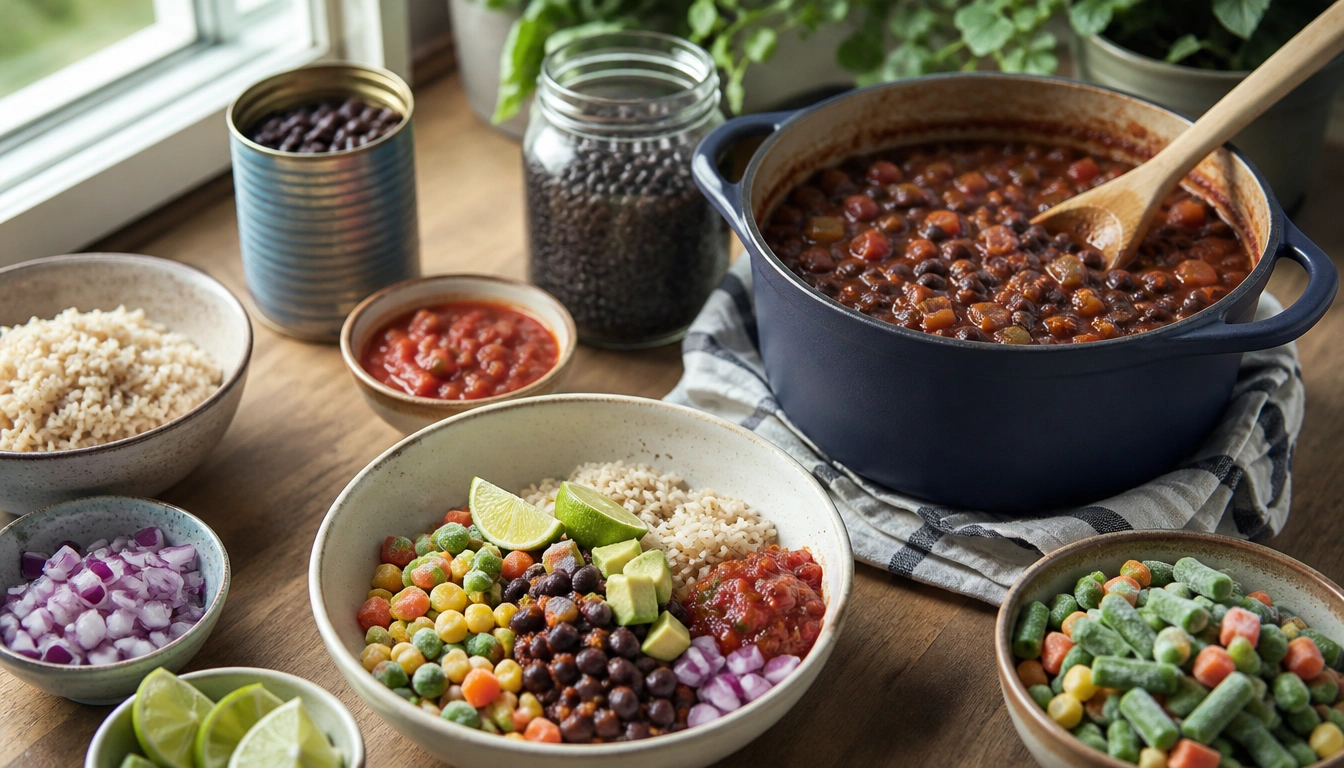
Easy bean dinner ideas for budget shoppers can be fast, filling, and flexible. Beans work well in burrito bowls, soups, chili, skillet meals, and pasta sauces, and they can be made with canned or dried beans depending on your time and budget. They provide plant protein, fiber, and minerals, which helps turn a low-cost dinner into a satisfying one.
Key Takeaways
- Beans are budget-friendly because they count toward both the Vegetable and Protein food groups, making them useful for simple plate-building.
- Canned beans save time, while dried beans usually cost less per serving and yield more once cooked.
- Beans can stretch meat in chili, burrito bowls, and pasta sauce without making dinner feel sparse.
- New bean eaters often do better when they increase fiber gradually, rinse canned beans, and drink enough water.
- Pair beans with vitamin C foods like tomatoes, citrus, or peppers to support iron absorption.
Why beans are a smart budget dinner staple
If you need easy bean dinner ideas for budget shoppers, beans deserve a place near the top of the list. They are inexpensive, shelf-stable, and versatile enough to work in very different meals without much cooking skill. A single pantry ingredient can become dinner in a bowl, skillet, soup pot, or casserole dish.
Beans are especially useful because they count toward both the Vegetable and Protein food groups. That makes them practical for meal planning when you are trying to cover more than one nutrition need without buying several expensive ingredients. From a food-first perspective, beans bring protein, fiber, and a hearty texture that helps a meal feel complete.
They also fit the way many budget cooks actually shop. If you already keep rice, pasta, tortillas, canned tomatoes, onions, frozen vegetables, or broth on hand, beans can tie those staples together. Instead of building dinner around a pricey protein and then adding sides, you can start with beans and let the rest of the meal fill in around them.
That flexibility matters on busy nights. Beans can be the main event in a meatless dinner, or they can be a cheaper way to stretch a smaller amount of meat into more servings. Either approach can keep dinner satisfying without pushing the grocery bill higher.
Canned beans vs. dried beans: cost, convenience, and when to use each
Both canned and dried beans can work well for weeknight dinners, but they serve different needs. Canned beans are the convenience choice: they are already cooked, so you only need to open, rinse, and heat them. That makes them a strong option for nights when dinner has to happen quickly.
Dried beans take more planning, but they are usually the better value per serving. Once cooked, a small amount of dried beans expands into a much larger amount of food, which is helpful when you want leftovers or need to feed a family. They are often the best choice for batch cooking and meal prep.
| Option | Best for | Trade-off |
|---|---|---|
| Canned beans | Fast dinners, low-prep meals, pantry emergencies | More expensive per serving and often higher in sodium |
| Dried beans | Lowest cost, meal prep, big-batch cooking | Need soaking, simmering, and more planning |
If you are choosing between them for tonight, ask one simple question: do you need speed or the lowest cost? Canned beans usually win on speed. Dried beans usually win on budget. Many households use both, depending on the day. Keeping a few cans in the pantry gives you a backup dinner, while a bag of dried beans gives you more meals for less money.
For canned beans, rinsing them in a colander can lower some of the sodium and improve the flavor. For dried beans, buy the type you use most often so they do not sit in the pantry too long. Black beans, pinto beans, and kidney beans are especially useful because they fit many familiar meals.
How to build a cheap bean dinner with pantry and freezer staples
A cheap bean dinner does not need a long ingredient list. The most affordable version usually starts with beans, adds one starch, and then uses a few flavor builders you may already have. Think in layers rather than recipes.
Base: beans plus rice, pasta, tortillas, potatoes, sweet potatoes, or bread.
Flavor: onion, garlic, salsa, canned tomatoes, broth, chili powder, cumin, curry powder, Italian seasoning, or soy sauce.
Produce: frozen corn, frozen spinach, onions, bell peppers, carrots, or whatever is available.
Finish: a little cheese, yogurt, avocado, lime, cilantro, hot sauce, or crushed tortilla chips if the budget allows.
This is why beans are so useful for pantry-based dinners. You can make a filling meal with minimal fresh produce when money, time, or store trips are limited. Frozen vegetables are especially helpful because they keep longer, cost less than many fresh options, and can be stirred straight into soups, skillets, and rice bowls.
One practical approach is to build a “beans plus one” dinner. Beans plus rice. Beans plus pasta. Beans plus sweet potato. Beans plus tortillas. That structure keeps shopping simple and reduces waste because the same ingredients can move into different meals across the week.
Easy bean dinner concepts for busy nights
Some of the best bean dinners are the ones that feel familiar. Familiar flavors make it easier to keep costs down because you do not need specialty ingredients to make the meal work.
Burrito bowls
Start with rice, then add black beans or pinto beans, frozen corn, salsa, and any cooked vegetables you have. If you are using leftover chicken or ground beef, beans can make the bowl more filling so you need less meat overall. A spoonful of plain yogurt or a sprinkle of cheese can finish it without much cost.
Sweet potato skillet
Dice sweet potatoes and cook them in a skillet until tender, then stir in black beans, cumin, garlic powder, and chili powder. This combination is naturally hearty and works as a one-pan meal. If you have onions or spinach, they can go in too, but the dish still works without them.
Taco or enchilada soup
Combine pinto or black beans with canned tomatoes, frozen corn, broth, and taco seasoning. Simmer until hot, then serve with tortillas, chips, or rice. This is one of the easiest pantry meals because it can be built almost entirely from shelf-stable ingredients.
Meat-extended chili or pasta sauce
Beans are excellent for stretching meat in familiar dinners. In chili, replace part of the ground meat with beans so the pot still tastes hearty but costs less per serving. In pasta sauce, kidney beans or white beans can be folded into the sauce for extra body and fiber. The flavor stays recognizable, but the meal becomes more budget-friendly and more filling.
If you are cooking for kids or picky eaters, this approach can be especially useful. The meal still looks and tastes familiar, which makes it easier to add beans without creating a separate dinner for everyone.
Flavor-building on a budget
Beans are inexpensive, but plain beans are not always exciting. The good news is that good flavor does not have to be expensive. A few pantry staples can make beans taste rich and satisfying without relying on packaged sauces or specialty ingredients.
Start with aromatics if you have them. Onion and garlic add a lot of flavor for little money, and they work in nearly every bean dinner. Spices such as cumin, chili powder, paprika, oregano, curry powder, and black pepper can shift the same can of beans into very different meals.
Acid is another low-cost flavor tool. A splash of vinegar, a squeeze of lime, a spoonful of salsa, or canned tomatoes can brighten the dish and keep it from tasting flat. If a meal feels heavy, acid often makes it more balanced without adding much expense.
Low-cost toppings can also change a meal’s feel. A little cheese, chopped onion, hot sauce, pickled jalapeños, yogurt, or crushed tortilla chips can make a bowl more appealing. You do not need all of them. One or two finishing touches are usually enough.
For budget cooks, the trick is to build from what you already buy. If you keep taco seasoning, Italian seasoning, or curry powder at home, you can turn the same beans into several different dinners. That prevents flavor fatigue and helps pantry staples feel less repetitive.
Nutrition benefits that matter most for budget shoppers
Beans are valued not just because they are cheap, but because they deliver a lot of nutrition for the price. They provide plant-based protein and fiber together, which is one reason they are so satisfying. That combination slows digestion and helps meals feel more substantial than a starch alone.
They also contribute key nutrients such as folate, iron, potassium, magnesium, zinc, copper, and phosphorus. According to the USDA and other public health guidance, beans are a smart way to increase fiber intake while lowering dependence on higher-cost, higher-saturated-fat protein options.
That matters for more than one reason. Many adults do not get enough fiber, and foods that help close that gap can support better regularity and a fuller feeling after meals. Observational and clinical research also links regular legume intake with healthier dietary patterns, including heart-healthy eating styles like DASH and Mediterranean-style meals.
Beans can also support heart-conscious eating because they are naturally low in fat and can replace some meat in familiar dishes. When you use beans to stretch a meal, you often lower the cost while adding fiber and reducing the amount of saturated fat from animal protein.
One detail to remember: plant iron is not absorbed as easily as iron from meat. You can improve absorption by serving beans with vitamin C foods such as tomatoes, bell peppers, citrus, or lime juice. That is an easy way to make the meal more complete without adding much cost.
Digestion and sodium tips for making bean dinners easier to tolerate
If you are new to high-fiber meals, your body may need time to adjust. Beans can cause gas or bloating at first because they contain fermentable carbohydrates that gut bacteria break down. That does not mean beans are a bad choice; it usually means you should increase them gradually.
A few practical steps can help. Start with smaller portions and work up over time. Choose rinsed canned beans when possible. Drink enough water through the day, since fiber works best when fluids are adequate. If you cook dried beans, follow safe cooking directions carefully so they soften fully and cook evenly.
Sodium is the other issue to watch, especially with canned beans. Some cans are much higher in sodium than dried beans you cook yourself. If you are watching sodium for general health or on medical advice, choose no-salt-added beans when available and rinse regular canned beans in a colander under running water. That simple step can make them easier to fit into a lower-sodium meal pattern.
If bean dinners cause ongoing severe discomfort, sudden bowel changes, or symptoms that do not improve as you adjust, it is worth checking with a healthcare professional or registered dietitian. Most people tolerate beans well once intake increases gradually, but individual needs can differ.
Simple shopping and meal-prep strategy for multiple dinners
One of the easiest ways to save money is to plan beans into more than one dinner. Buy ingredients that overlap. For example, a bag of rice can support burrito bowls, chili bowls, and bean-and-veg skillet dinners. A can of tomatoes can be used for soup, chili, or pasta sauce. Frozen corn can move between bowls, soups, and skillet meals.
If you buy dried beans, cook a larger batch and freeze portions in meal-sized containers. That gives you the low cost of dried beans with the convenience of ready-to-use beans later in the week. If you buy canned beans, stock a few different types so you can pivot between recipes when plans change.
Think of the pantry in modules: beans, starch, seasoning, and a finishing ingredient. Once those are on hand, dinner becomes much easier to assemble. You do not need a new recipe every night. You need a few flexible combinations that you actually want to eat again.
For many budget shoppers, that is the real win. Beans help turn a short grocery list into several dinners, and they do it without much prep, without fancy ingredients, and without sacrificing satiety. When a meal is cheap, filling, and familiar, it is easier to repeat—and that is often what makes a budget plan work.
Frequently Asked Questions
Are canned beans or dried beans cheaper and better for weeknight dinners?
Dried beans are usually cheaper per serving, especially if you cook a big batch. Canned beans are better when you need speed because they are already cooked. Many households use canned beans for quick dinners and dried beans for meal prep or leftovers.
How can I make bean dinners taste good without spending much money?
Use low-cost flavor builders like onion, garlic, canned tomatoes, salsa, cumin, chili powder, oregano, or curry powder. A little acid from lime juice or vinegar can brighten the flavor, and inexpensive toppings like yogurt or cheese can make bowls feel more complete.
How do I reduce gas and bloating when eating more beans?
Increase beans gradually instead of jumping to large portions right away. Rinse canned beans, drink enough water, and choose well-cooked dried beans if you cook from scratch. If discomfort stays severe or unusual, talk with a healthcare professional.
What pantry ingredients pair well with beans for cheap dinners?
Rice, pasta, tortillas, canned tomatoes, broth, salsa, frozen corn, frozen spinach, onions, and potatoes all work well with beans. These ingredients help you make soups, bowls, skillet meals, and sauces with minimal fresh produce.
How do beans help with protein, fiber, and heart health?
Beans provide both plant protein and fiber, which helps meals feel filling and supports better diet quality. Public health guidance also places beans within heart-healthy eating patterns. They are a useful way to add nutrients while keeping costs down.
The Bottom Line
Beans are one of the easiest foods to turn into a healthy budget dinner because they are cheap, filling, and flexible. They work as the main ingredient or as a meat stretcher in meals like chili, burrito bowls, skillet dinners, soup, and pasta sauce.
For the best mix of cost and convenience, keep both canned and dried beans in your kitchen. Use canned beans on busy nights, dried beans when you want the lowest price per serving, and build meals with pantry staples, freezer vegetables, and a few basic seasonings.
If you are increasing bean intake, start gradually, rinse canned beans, and pair them with enough water and vitamin C-rich foods. That makes bean dinners easier to tolerate and easier to rely on during a tight grocery week.
Medical disclaimer
Medical disclaimer: This content is for educational and informational purposes only and is not a substitute for professional medical advice, diagnosis, or treatment. Dietary needs and supplement suitability vary by individual.
Sources
- U.S. Government / Health Authority — usda.gov. Accessed October 2026.
- Academic Research Institution — sdstate.edu. Accessed October 2026.
