
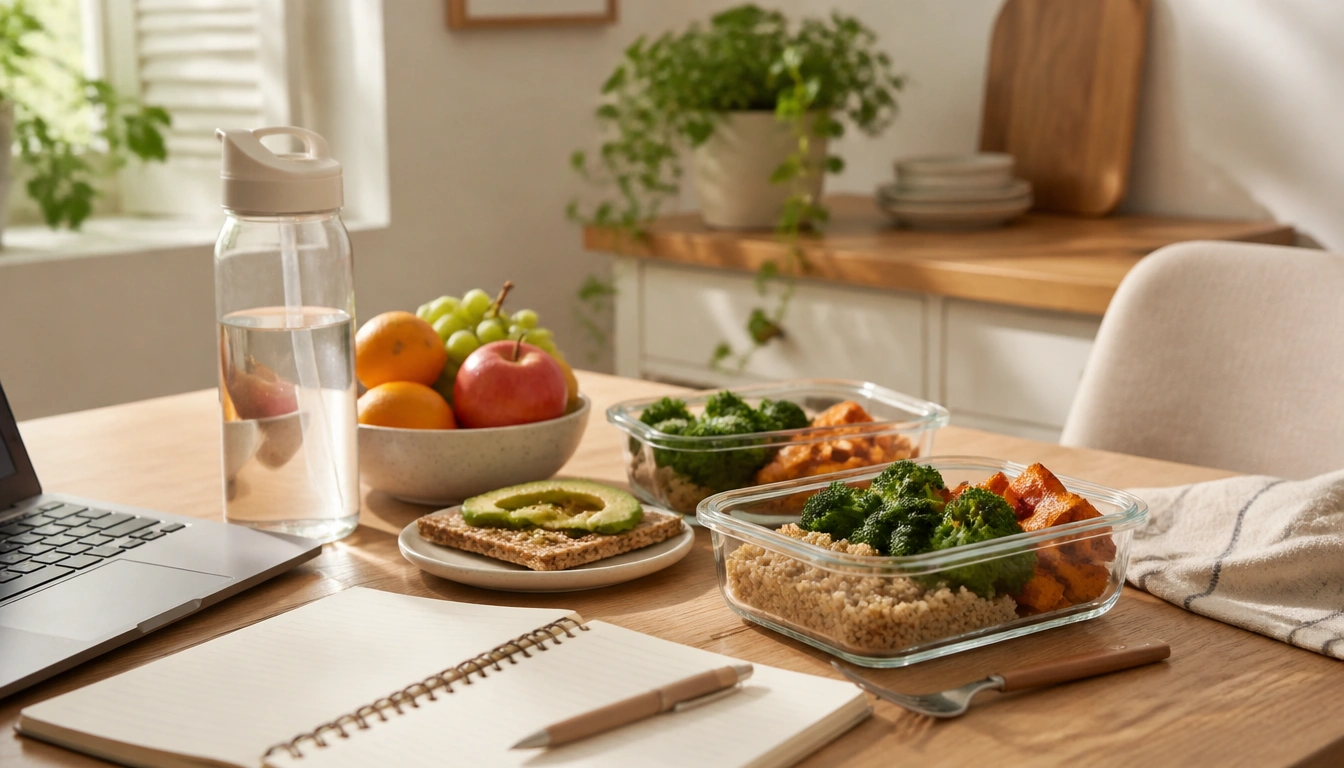
The easiest healthy habit swaps are the ones that replace, rather than erase, a routine you already have: water instead of soda, a more satisfying snack instead of an automatic vending-machine choice, or a simpler cooking method instead of a heavy one. Start with one swap only, attach it to an existing cue, and make the healthier option easier to reach than the old one. That approach is usually more realistic than trying to overhaul everything at once.
Key Takeaways
- Small swaps work because they keep the cue and routine structure intact while changing the behavior, which makes the change feel less disruptive.
- A successful first swap should be specific, familiar, and easy to repeat in the same situation every day.
- Drinks are often the easiest place to begin because replacing sugary beverages can reduce added sugar without changing every meal.
- Environment design matters: if the healthy choice is visible, ready, and convenient, you need less willpower.
- Beginner-friendly swaps should feel satisfying, not punishing; the goal is steadier habits, not food rules or perfection.
- People with diabetes, kidney disease, pregnancy, athletic training demands, or disordered-eating history may need personalized guidance instead of generic advice.
Why small swaps beat a total overhaul for beginners
Easy healthy habit swaps work well for beginners because they lower the pressure to change everything at once. Public health guidance from the CDC and the NHS emphasizes small, sustainable changes over sudden, rigid overhauls. That matters because most people do not fail from lack of effort; they get stuck because the plan asks for too much change too quickly.
A swap also feels more doable than a ban. If you tell yourself you can never have a soda, late-night snack, or takeout meal again, the change can start to feel like deprivation. If you change the form of the habit instead, you keep some comfort and familiarity while improving the outcome. That makes the first step easier to repeat.
There is also a confidence effect. Each time you complete a small swap, you get evidence that you can follow through. That success builds self-efficacy, which is a practical way of saying, “I can do this again.” For someone who feels overwhelmed, that sense of momentum often matters more than a perfect nutrition plan.
This is why beginner-friendly change should be built around one modest win, not a complete identity shift. You are not trying to become a different person overnight. You are making the next decision simpler.
How the habit loop works: cue, routine, reward
Many habits follow a simple loop: a cue triggers the behavior, the routine happens, and a reward reinforces it. The cue may be time of day, stress, boredom, location, or another person. The reward may be relief, stimulation, comfort, or a break from work.
Habit swaps work because they keep the cue and the reward in place while replacing the routine. For example, if the 3 p.m. cue is feeling drained at work, the old routine might be a candy bar and soda from the vending machine. A swap keeps the break, the movement, and the brief mental reset, but changes the food or drink choice.
That distinction is useful because many people try to remove a habit without changing the trigger. If the cue still shows up, the urge still shows up too. Replacing the routine gives the brain something familiar to do when the cue appears, which is easier than relying on willpower alone.
Think of the swap as a translation, not a punishment. You are not deleting the whole pattern. You are teaching the pattern a healthier language.
How to choose your first swap without overwhelm
The best first swap is usually the one that is easiest to repeat in real life. Start with a habit that happens often, feels low-risk, and has a clear replacement available. If you are not sure where to begin, look for the choice you make almost automatically when you are tired, stressed, bored, or rushing.
A simple way to choose is to ask: “What is one thing I do every day that I would be willing to change just a little?” That could be the afternoon drink, the default snack, or the cooking fat you use without thinking. Keep the target narrow. One habit is enough for week one.
You do not need to audit your whole life first. You only need enough awareness to spot a repeatable pattern. If a swap depends on fancy ingredients, a lot of prep, or a perfect schedule, it is probably too complicated for an absolute beginner. The right first swap should fit your real routine, not an ideal version of it.
If you are stuck, choose the least emotionally loaded habit. Many people find beverages easier than meals, and snacks easier than full dinners. A small win in one of those areas can create enough confidence to tackle something else later.
Drink swaps, snack swaps, and easier cooking changes
For many beginners, drinks are the cleanest place to start. Sugary beverages can add a lot of sugar without making you feel full. A better first swap might be water, sparkling water, unsweetened tea, or a lower-sugar alternative that still feels satisfying. If you love a flavored drink, keeping the fizz, temperature, or citrus twist can make the swap more acceptable.
Snack swaps work best when they still feel like a real snack. The goal is not to go from “fun” to “plain.” It is to replace something that disappears quickly with something that is a little more filling. Examples include fruit with peanut butter, yogurt and berries, air-popped popcorn, nuts in a portion you actually enjoy, or vegetables with hummus. These kinds of snacks can offer fiber, protein, or fat that helps them feel more satisfying.
Cooking and prep swaps reduce effort as well as excess fat intake. You might use baking, grilling, steaming, or an air fryer instead of deep-frying or heavy pan-frying. You might use less butter or cream in some recipes and choose plant oils or lighter dairy options where they fit the dish. The point is not to make every meal “perfect.” It is to make the everyday version easier on both your time and your body.
A few beginner-friendly swaps:
- Soda or sweet tea to sparkling water with citrus, unsweetened tea, or water with ice and fruit.
- Chips or candy to popcorn, nuts, yogurt, fruit, or hummus with vegetables.
- Deep-fried or heavily pan-fried meals to baked, grilled, or air-fried versions.
- Butter-heavy cooking to a modest amount of unsaturated oil when the recipe allows it.
If one swap sounds boring, adjust the format before you abandon it. A colder drink, different seasoning, or more satisfying texture can make the healthier option feel much closer to the original habit.
How to make the new habit stick: one-swap rule, habit stacking, and environment design
The one-swap rule is simple: do not start a second change until the first one feels automatic. This keeps your attention focused and lowers the chance of burnout. Beginners often try to change breakfast, snacks, drinks, exercise, bedtime, and shopping all at once, then feel like they failed when life gets busy. One change at a time is more durable.
Habit stacking can help the new behavior stay attached to real life. Pair the new action with something you already do. For example: “When I start the coffee machine, I pour a glass of water,” or “When I come home from work, I put a sparkling water in the fridge front row.” The existing habit becomes the cue for the new one.
Environment design makes the healthy choice easier to repeat. Put the water bottle where you can see it. Place fruit at eye level. Move the vending-machine money or snack stash farther away if possible. Keep the most convenient option aligned with the habit you want, because convenience drives behavior more than good intentions do.
The more a swap reduces friction, the better. If you have to remember it, search for it, or prepare it from scratch every time, the habit is less likely to survive a stressful day. Make the next step obvious, not heroic.
Common beginner mistakes to avoid
One common mistake is trying to do too much. A long list of “better habits” can feel impressive at first, but it usually creates decision fatigue. Beginners often do better with one small, repeatable action than with a full wellness makeover.
Another mistake is expecting perfection. A healthy swap is not ruined because you had the old version once or twice. The habit still counts if you return to it more often than not. Progress is usually uneven, especially when stress, travel, family schedules, or money concerns are involved.
It also helps to avoid a willpower-only plan. If the only strategy is “I’ll just try harder,” the environment may win. Snacks in sight, drinks in the car, and a busy schedule can pull you back into old patterns. Planning ahead is not weak; it is how habits become easier.
For some people, the deeper mistake is treating food as a moral scorecard. A swap should not become a rigid rule about “good” and “bad” foods. That framing can be especially risky for people with a history of disordered eating. Gentle, flexible change is usually safer than strict restriction.
When simple swaps need personalization or medical guidance
Not every healthy habit swap should be universal. Children, pregnant people, endurance athletes, and people with medical conditions may need more individual guidance than a general wellness article can provide. The CDC and other health authorities stress that nutrition needs vary by age, growth stage, activity level, and health status.
For children and teens, the goal is usually to support growth and nutrient intake, not to focus on calorie-cutting. For pregnant people, food changes should support energy, nutrient needs, and safety. For endurance athletes or people with physically demanding jobs, a swap that reduces total intake too much can backfire by leaving them underfueled.
People with diabetes, kidney disease, or other chronic conditions may need tailored advice on carbohydrates, protein, sodium, fluids, potassium, or other nutrients. In those cases, generic swaps can be helpful starting points, but they are not a substitute for individualized medical care. A registered dietitian or clinician can help adapt the idea to the condition.
It is also wise to check in with a healthcare professional if you have unexplained weight change, severe fatigue, digestive symptoms, or a history of disordered eating. The right plan should support health without creating new problems.
How to keep swaps flexible for real life
Healthy habit swaps work best when they survive ordinary life, not ideal life. That means they need to fit workdays, travel, family meals, tight budgets, and days when you are too tired to cook. A flexible swap is more likely to last than a perfect one that only works in a controlled routine.
At work, keep a low-friction option nearby so you are not forced to rely on vending machines when stress hits. While traveling, look for the closest reasonable match instead of trying to follow your home routine exactly. If you are eating with family, focus on what you can add or change on your plate without turning dinner into a project.
Budget matters too. A swap should not require expensive specialty foods to count. Water, plain popcorn, oats, eggs, beans, frozen vegetables, fruit, yogurt, and store-brand sparkling water can all be workable starting points depending on your preferences and access. The best habit is the one you can actually repeat.
Flexibility also protects motivation. If you miss a day, use the next meal or snack as a new starting point. You do not need to “make up for it.” You just return to the routine. That mindset keeps the habit from turning into an all-or-nothing cycle.
A simple way to begin this week: choose one cue, one swap, and one easy backup plan. For example: “When I hit the afternoon slump, I’ll choose sparkling water instead of soda. If I forget, I’ll keep a bottle on my desk tomorrow.” That is enough to start.
Frequently Asked Questions
Why do habit swaps work better than trying to quit a behavior outright?
Because the cue and reward stay in place while only the routine changes. That makes the new behavior feel less disruptive and often easier to repeat than relying on sheer willpower or total restriction.
Which drink swaps are the best first step for beginners?
The easiest first steps are usually water, sparkling water, or unsweetened tea in place of soda, sweet tea, or energy drinks. Keeping the fizz, flavor, or ritual can make the swap feel more doable.
What are simple snack swaps that feel satisfying, not restrictive?
Look for snacks with fiber, protein, or fat that still feel familiar: fruit with nut butter, yogurt and berries, popcorn, nuts, or vegetables with hummus. The goal is satisfying and repeatable, not “diet food.”
How can I make healthy swaps stick using routines and environment design?
Attach the new habit to something you already do, like pouring water after starting coffee. Then make the healthy choice visible and convenient, such as keeping it at eye level or ready to grab.
Are healthy habit swaps safe for kids, pregnant people, athletes, or people with medical conditions?
Often yes, but the swap may need personalization. Children, pregnant people, endurance athletes, and people with diabetes, kidney disease, or other conditions may need tailored guidance from a clinician or dietitian.
The Bottom Line
The easiest healthy habit swaps are small, familiar changes that fit into routines you already have. Start with one clear swap, connect it to a cue you already notice, and make the healthier option the easiest one to reach.
Do not aim for perfect food rules or a total lifestyle reset. A swap is successful when it lowers friction, feels sustainable, and helps you repeat the habit often enough for it to become automatic.
If you have a medical condition, are pregnant, are supporting a growing child, or have a history of disordered eating, personalize the plan with a healthcare professional so the change supports your needs rather than creating new stress.
Medical disclaimer
Medical disclaimer: This content is for educational and informational purposes only and is not a substitute for professional medical advice, diagnosis, or treatment. Dietary needs and supplement suitability vary by individual.
Sources
- Centers for Disease Control and Prevention (CDC) — cdc.gov. Accessed November 2026.
- National Health Service (NHS) — wchc.nhs.uk. Accessed November 2026.
