
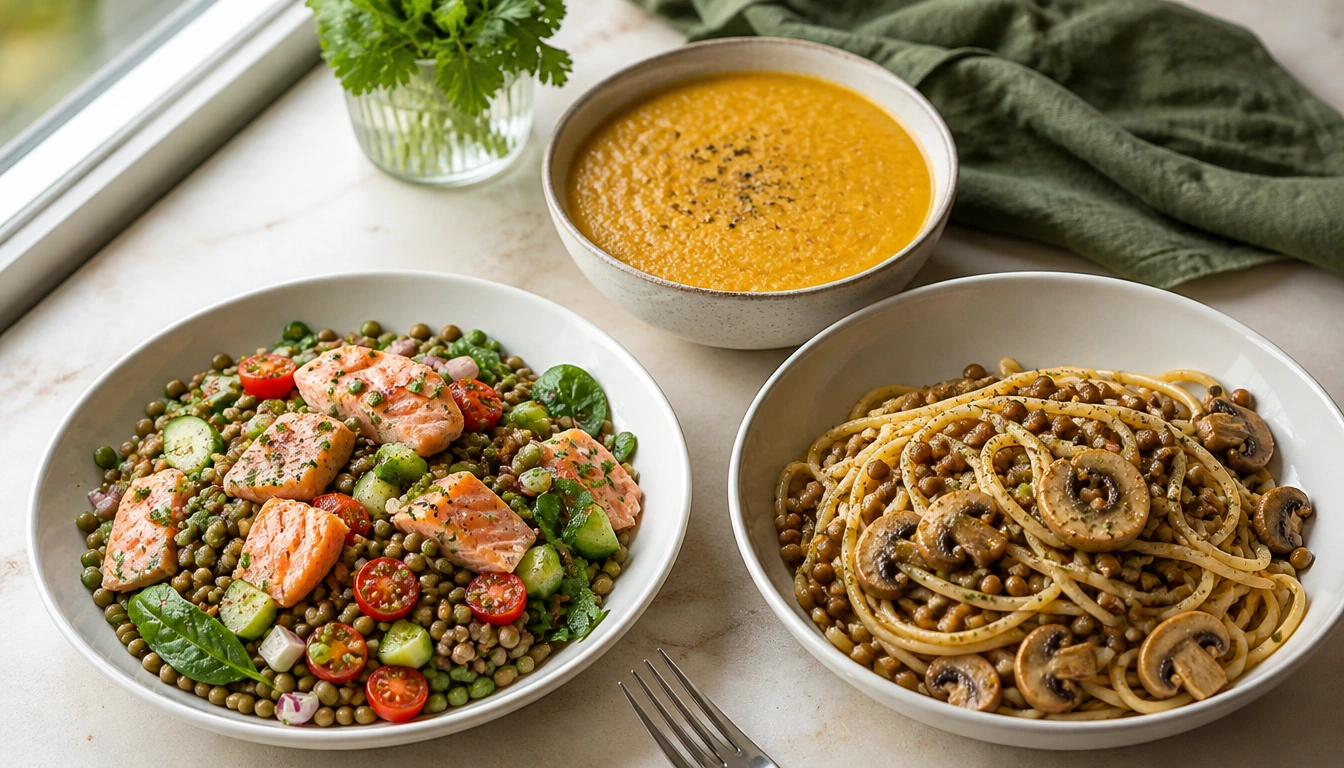
Simple lentil meals for adults over 50 include soft red lentil soup, warm lentil salads, and quick lentil pasta sauces. Lentils are a smart choice because they provide protein, fiber, and slow-digesting carbohydrates in a budget-friendly package. If you are new to high-fiber foods, start with small portions, drink enough fluids, and choose softer lentils first if chewing or digestion is a concern.
Key Takeaways
- Lentils can support three big aging goals at once: preserving muscle, helping steadier blood sugar, and promoting regular digestion.
- Red or yellow split lentils cook fastest and turn soft, which makes them a good choice for soups and smoother meals.
- Brown and green lentils hold their shape better, so they work well in salads, stews, and grain bowls.
- Canned lentils are a practical shortcut if you rinse them well to reduce sodium and improve flavor.
- If lentils are new to your diet, increase slowly and pair them with water to help reduce gas, bloating, or cramping.
Why lentil meal ideas fit adults over 50
As cooking energy, budget, and digestive comfort become more important, easy lentil meal ideas for adults over 50 can solve several problems at once. Lentils are inexpensive, shelf-stable, and flexible enough for soups, bowls, salads, and pasta sauces. They also fit the kind of eating pattern public health groups encourage for healthy aging: more vegetables, more fiber, lean or plant protein, and less reliance on refined grains and heavily processed foods.
That matters because many adults over 50 are trying to protect more than one health goal at the same time. Lentils can help with all three of the biggest ones: keeping protein intake steady enough to support muscle, choosing carbohydrates that are less likely to spike blood sugar, and getting more fiber to support bowel regularity. They are also easy to season in different ways, so they do not have to taste like the same meal every time.
Lentils and healthy aging
Lentils are a strong fit for healthy aging because they bring together protein, fiber, and slow-digesting carbohydrates in one food. According to the National Institutes of Health and Harvard T.H. Chan School of Public Health, legumes such as lentils are useful in older-adult eating patterns because they contribute to overall diet quality without adding much saturated fat or sodium.
For muscle preservation: older adults often need protein-rich foods spread across the day. Lentils are not a complete replacement for other protein foods, but they are a helpful plant-based source that can support meal balance when paired with fish, yogurt, eggs, dairy, tofu, or whole grains.
For blood sugar stability: lentils are digested more slowly than refined starches. Their fiber and resistant starch help blunt the sharp rise and fall that can follow white bread, white rice, or sweetened meals. That makes them a sensible option for adults managing prediabetes or type 2 diabetes as part of an overall eating pattern.
For digestive regularity: the fiber in lentils can help prevent constipation, which becomes more common with age. Soluble fiber also plays a role in heart health by helping with cholesterol management. If you are not used to a high-fiber diet, the benefits are best gained gradually.
Choosing the right lentil for the meal
Different lentils behave differently in the pot, so choosing the right type can make cooking easier. For quick meals, red or yellow split lentils are the softest option. They cook quickly, break down easily, and are ideal for smooth soups, dals, and puréed dishes. If chewing is harder for you, these are often the most comfortable starting point.
Brown and green lentils are better when you want more texture. They hold their shape in salads, grain bowls, and stews, so they are useful when you want a meal that feels hearty without being heavy. They also work well in sauces when you want a little bite rather than a fully soft texture.
Canned lentils are the most convenient shortcut. They are already cooked, so they can turn a five-minute meal into something more complete. Rinse them in a colander under running water before using them to wash away some of the sodium and improve the taste. This can be especially helpful for quick lunches, low-energy evenings, or meal prep.
| Type | Best use | Texture | Convenience |
|---|---|---|---|
| Red or yellow split lentils | Soups, purées, soft curries | Very soft | Fastest dried option |
| Brown or green lentils | Salads, bowls, stews, pasta sauces | Firmer | Great for batch cooking |
| Canned lentils | Fast meals, salad toppings, easy sides | Ready to eat | Best shortcut |
How to make lentils easier to digest
If you are new to lentils or have been eating low-fiber foods for a while, your gut may need time to adjust. That does not mean lentils are a bad fit. It usually means the portion and preparation method need to be gentler at first.
Start with a smaller serving, then increase slowly over several days or weeks if you tolerate it well. Pair lentil meals with water or other fluids across the day, since fiber works best when you are adequately hydrated. If you notice gas or cramping, try softer lentils, smaller portions, and simpler seasonings before giving up on them.
Some practical cooking steps can also help. Simmer lentils until tender rather than leaving them undercooked. If a recipe feels too dense, mix lentils with broth, cooked vegetables, or a little olive oil to improve texture. For many people, warm foods such as soup are easier to tolerate than a large cold salad when they are just starting out.
If you live with IBS or another digestive disorder, tolerance can vary. Some people do better with small portions of canned, well-rinsed lentils, while others need to limit servings or choose different legumes. Personalized advice can help if symptoms are frequent or severe.
Three simple lentil meals to make this week
15-minute no-chopping red lentil coconut soup: combine rinsed red split lentils with low-sodium broth, diced tomatoes, and curry powder. Simmer until the lentils are soft and the soup thickens, then stir in a little coconut milk and a handful of spinach. This is a good beginner recipe because it turns soft, is easy to chew, and does not require much prep.
Mediterranean warm lentil and salmon salad: toss cooked brown or green lentils with chopped cucumber, tomatoes, lemon juice, olive oil, and herbs such as parsley or dill. Top with baked salmon. The lentils add fiber and steady energy, while salmon adds high-quality protein and heart-healthy fats. If salmon is not available, try tuna, sardines, or chopped hard-boiled eggs.
Quick lentil and mushroom bolognese over whole-grain pasta: sauté mushrooms and onion in olive oil until softened, then add low-sodium marinara and cooked brown or green lentils. Simmer briefly and serve over whole-grain pasta. This meal feels familiar, uses affordable ingredients, and gives a meatless sauce more staying power than a standard tomato sauce alone.
All three recipes can be adjusted to your energy level. Use prechopped vegetables, canned lentils, or leftover cooked grains when needed. A healthy recipe is one you can actually make again.
How to build a balanced lentil meal
Lentils work best when they are part of a larger plate, not the only food on it. A balanced meal usually combines lentils with a protein source, vegetables, and a helpful fat or whole grain. That mix can make the meal more satisfying and better suited to heart health, muscle maintenance, and blood sugar support.
For example, you might serve lentils with salmon and roasted vegetables, or combine them with brown rice, olive oil, and greens. Whole grains add extra fiber and make the meal more filling. Olive oil helps with flavor and satiety. Herbs, citrus, garlic, and spices add taste without relying on excess salt.
If you are building a meal for blood sugar steadiness, keep the starch portion moderate and let vegetables and protein share the plate with the lentils. If you are trying to support muscle, make sure the meal includes a meaningful protein partner, especially at breakfast or lunch if those meals are usually light.
Shopping and prep tips for easy weekly meals
Keeping lentil meals simple starts at the store. Dry lentils are usually inexpensive and have a long shelf life, so they are useful for pantry planning. Canned lentils are worth keeping on hand for busy days because they remove the cooking step entirely. A mix of both gives you flexibility.
Choose a few low-effort add-ins that can be reused across several meals: low-sodium broth, canned tomatoes, spinach, onions, mushrooms, olive oil, lemons, and a couple of dried herbs or spice blends. These ingredients can turn one basic pot of lentils into multiple meals without much extra work.
If prep feels tiring, cook a larger batch of brown or green lentils once and use them in different ways over the next few days. One batch can become soup, a salad base, or a pasta sauce. Store leftovers safely in the refrigerator and reheat only what you plan to eat. A little planning can make healthy eating much easier when energy is limited.
When to check with a clinician first
Some people should be more cautious when changing lentil intake. If you have irritable bowel syndrome, lentils may need to be introduced carefully because they can trigger symptoms in some people. If you take warfarin or another anticoagulant, ask your clinician how to keep vitamin K intake consistent rather than making sudden large changes to your eating pattern.
People with advanced kidney disease may also need individual guidance, especially if they have been told to limit potassium, protein, or phosphorus. In that situation, lentils may still be possible, but the amount and frequency should come from a clinician or renal dietitian. If you have frequent digestive symptoms, trouble chewing, or multiple chronic conditions, individualized advice is more useful than a one-size-fits-all plan.
For most adults over 50, lentils are a practical, affordable food to keep in regular rotation. The safest approach is gradual, flexible, and personalized.
Frequently Asked Questions
Why are lentils especially helpful for adults over 50?
They provide a useful mix of protein, fiber, and slow-digesting carbohydrates in one affordable food. That combination can support muscle maintenance, steadier blood sugar, and bowel regularity, which are common priorities in healthy aging.
Which type of lentil is best for quick meals or softer textures?
Red or yellow split lentils are usually best for quick, soft meals. They cook faster than most other lentils and break down into a smooth texture, which makes them a good choice for soups and gentle meals.
How can I make lentils easier to digest if I’m not used to eating much fiber?
Start with a small portion, then increase slowly over time. Drink enough fluids, cook lentils until tender, and consider softer options like red lentils or well-rinsed canned lentils if gas or bloating is a concern.
Are canned lentils a healthy shortcut, and how should I use them?
Yes. Canned lentils are a practical shortcut because they are already cooked. Rinse them before use to reduce some of the sodium, then add them to soups, salads, pasta sauces, or grain bowls for a fast meal.
What should I pair with lentils to make a balanced meal for healthy aging?
Pair lentils with vegetables, a quality protein such as salmon, eggs, yogurt, or tofu, and a healthy fat like olive oil. Whole grains can also help round out the meal and make it more filling.
The Bottom Line
Lentils are one of the easiest foods to turn into healthy meals after 50 because they are inexpensive, versatile, and useful for protein, fiber, and blood sugar-friendly eating. Soft soups, warm salads, and simple pasta sauces are often the easiest places to start.
If lentils tend to cause gas or feel too dense, begin with smaller portions and choose a softer style such as red split lentils or rinsed canned lentils. Pair them with water, vegetables, and other familiar foods so the meal is easier to digest and easier to repeat.
If you have IBS, kidney disease, or take warfarin, check with a clinician before making large changes in how often you eat lentils. For many adults, though, they are a practical pantry staple worth keeping on regular rotation.
Medical disclaimer
Medical disclaimer: This content is for educational and informational purposes only and is not a substitute for professional medical advice, diagnosis, or treatment. Dietary needs and supplement suitability vary by individual.
Sources
- National Institutes of Health (NIH) — nih.gov. Accessed October 2026.
- Centers for Disease Control and Prevention (CDC) — cdc.gov. Accessed October 2026.
- National Institutes of Health (NIH) — nih.gov. Accessed October 2026.
- Centers for Disease Control and Prevention (CDC) — cdc.gov. Accessed October 2026.
- National Institutes of Health (NIH) — nih.gov. Accessed October 2026.
- National Institutes of Health (NIH) — nih.gov. Accessed October 2026.
- Academic Research Institution — harvard.edu. Accessed October 2026.
- Academic Research Institution — tufts.edu. Accessed October 2026.
