
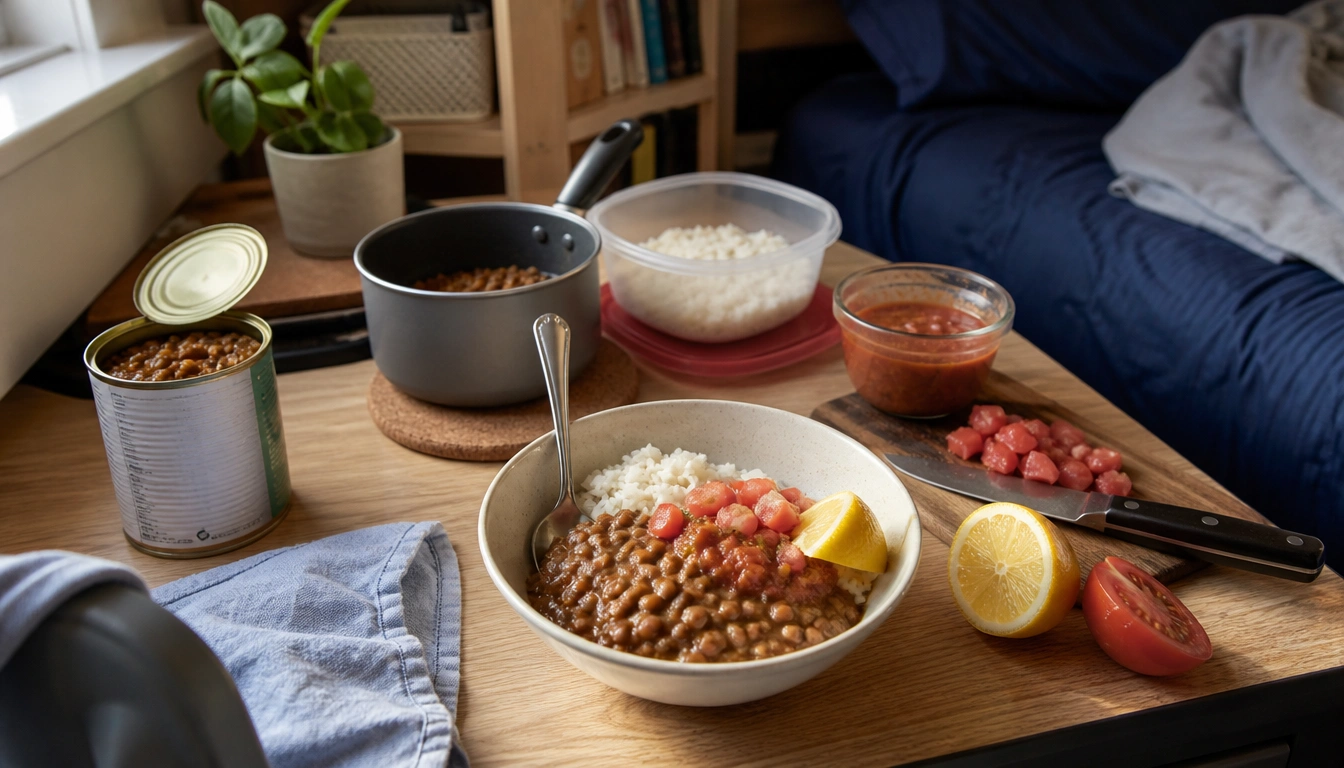
The easiest, cheapest, and most dorm-friendly lentil meals are canned lentil salads, microwave rice bowls, quick lentil soups, and simple pasta or taco-style meals built from pantry ingredients. For the fastest options, use canned lentils or red lentils; for salads and heartier bowls, green or brown lentils work best. With a few add-ins like salsa, tomatoes, lemon, or frozen vegetables, lentils can become filling student meals with minimal equipment and cleanup.
Key Takeaways
- Canned lentils are the fastest option for no-cook dorm meals, while red lentils cook quickest from dry.
- Green and brown lentils keep their shape, so they work well in salads, bowls, tacos, and meal prep.
- Lentils are budget-friendly and provide protein, fiber, and slow-digesting carbs that can help you stay full between classes.
- A squeeze of lemon, tomatoes, salsa, or bell peppers can help improve iron absorption from lentil-based meals.
- If you are new to lentils, start with smaller portions and drink water, since extra fiber can cause temporary gas or bloating.
- One batch of lentils can turn into several meals across a busy week, which makes them especially useful in dorm life.
Lentils fit the college food problem better than most staples
Easy lentil meal ideas for college students usually start with the same three constraints: not much money, not much time, and not much equipment. Lentils handle all three well. They are shelf-stable, inexpensive, and flexible enough to work in a dorm room, a shared apartment kitchen, or even a setup with only a microwave and mini-fridge. Public health and university nutrition guidance commonly include pulses like lentils as a regular part of healthy eating patterns because they provide protein, fiber, and useful micronutrients in a low-cost package.
That matters for student schedules. Meals built around lentils tend to digest more slowly than refined snacks, which can make them a steadier choice for long class days and late study sessions. The fiber and protein also help meals feel more satisfying, so you are less likely to rely on vending-machine food an hour later. For college cooking, that combination is the real advantage: low cost, low effort, and better staying power.
There is also a practical reason lentils work so well in student housing. You do not need a full kitchen to use them. A can opener, microwave-safe bowl, a spoon, and maybe one pot are enough for most of the meals in this guide.
Choose the right lentil type for the job
Different lentil types solve different student problems. Choosing the right one saves time and improves texture, which makes the meal more likely to be eaten again later in the week.
| Lentil type | Best use | Why students like it |
|---|---|---|
| Canned lentils | No-cook salads, wraps, quick bowls | Already cooked, fast to rinse and use, ideal when you have almost no time |
| Red lentils | Soups, dal-style meals, thick sauces | Cook the fastest from dry and break down into a soft, creamy texture |
| Green or brown lentils | Salads, grain bowls, taco fillings, meal prep | Hold their shape and give a firmer bite that feels heartier |
If you are shopping for only one kind of dry lentil, red lentils are the easiest starting point for beginners because they cook quickly and do not require soaking. If you want a lentil that acts more like a sturdy base for bowls or a meat substitute in pasta or tacos, green or brown lentils are usually the better choice. For the absolute fastest dorm meal, canned lentils win because they are ready after a rinse.
The texture difference matters more than many students expect. Creamy red lentils are good when you want something warm and comforting, while green and brown lentils stay intact and are better when you want a meal that looks and feels more like a composed bowl. According to university nutrition resources such as North Carolina State University and the University of Colorado Denver, lentils are easy to incorporate into everyday meals because they work in both simple and more structured recipes.
Fast cooking rules that make lentils student-friendly
The easiest lentil meals follow a few rules: use one pot when you can, use the microwave when you need speed, and cook a bigger batch when you know the week will be busy. This is less about being a “good cook” and more about reducing friction.
For one-pot cooking, combine dry lentils with water or broth, heat until tender, and season near the end so the flavor tastes fresher. Red lentils are the best choice for quick soups and soft sauces because they cook fast and naturally thicken the liquid. Green and brown lentils take a little longer but remain firmer, which makes them better for leftovers.
Microwave cooking also works. A deep microwave-safe bowl can handle a simple lentil meal with broth, canned tomatoes, frozen vegetables, or pre-cooked rice. Use short bursts and stir between rounds so the food heats evenly. For no-cook meals, canned lentils can go straight into a salad or wrap after rinsing. For leftovers, one batch can become dinner, tomorrow’s lunch, and a late-night study snack without much extra effort.
Three dorm-friendly lentil meal ideas you can make fast
No-cook or near-no-cook for the busiest days: Mix rinsed canned lentils with salsa, chopped tomatoes, shredded lettuce, or pre-cut peppers. Spoon the mixture into a tortilla, pita, or microwave rice cup. If you have hummus, avocado, or cheese, add a small amount for richness. This is the sort of meal that works when your only tools are a can opener and a fork.
Quick hot meals with a pot or microwave bowl: Make a simple lentil soup by combining red lentils, water or broth, garlic powder, and canned tomatoes. Add frozen vegetables if you have them. For a microwave version, use a deep bowl and cook in intervals until the lentils soften. A spoonful of curry paste, bouillon, or chili seasoning can change the flavor without much effort. Another easy option is a microwave rice bowl with canned lentils and jarred sauce.
Bulk-friendly meals that stretch across the week: Cook a pot of green or brown lentils and use them in different meals over several days. One batch can become lentil tacos on day one, a grain bowl on day two, and pasta sauce on day three. You can also stir cooked lentils into marinara, chili, or curry-style soup. This approach keeps food waste low and helps you avoid cooking from scratch every night.
Across all three styles, the goal is the same: use a base lentil and change the flavor around it. That makes student meal prep feel less repetitive and more realistic.
Make lentils taste good and keep them filling
Lentils are affordable, but plain lentils are not always exciting. Cheap pantry add-ins can solve that problem. Salsa, jarred marinara, curry powder, garlic powder, onion powder, soy sauce, hot sauce, and bouillon all add flavor quickly. If you have canned tomatoes, mustard, pesto, or a little cheese, those can help too. The best student meals often come from combining one lentil base with one sauce and one extra texture.
To keep a lentil meal satisfying, think in parts: protein, carbs, and fats. Lentils bring protein and fiber. Rice, pasta, bread, or tortillas add carbs and make the meal feel complete. Olive oil, cheese, peanut butter, avocado, tahini, or seeds can add healthy fats and improve the mouthfeel. A bowl of lentils alone may be fine, but a bowl of lentils with rice, vegetables, and a little fat usually feels more like a full meal.
That balance also helps with energy. Lentils digest more slowly than many refined snacks, so a meal built around them may support steadier study energy without the sharp rise-and-fall pattern that some students notice after sugary convenience foods. According to academic nutrition guidance, lentils are a strong fit for meal patterns that aim to keep hunger and energy more stable through the day.
How to avoid gas or bloating when you start eating more lentils
For students new to lentils, the main adjustment issue is digestion. Because lentils are high in fiber, a sudden jump from low-fiber eating to large lentil portions can cause temporary gas or bloating. That does not mean lentils are a bad choice; it usually means your gut needs time to adapt.
A better approach is to start with smaller portions and increase gradually over a week or two. Pair lentils with water and other foods instead of eating a very large bowl all at once. Canned lentils are sometimes easier for beginners because they are already cooked and easy to portion. Red lentils can also feel gentler for some people because they break down well when cooked thoroughly.
If you have a history of digestive disorders, such as IBS or IBD, your tolerance may be different. In those cases, the amount you can comfortably eat can change from day to day, especially during symptom flares. If persistent discomfort or significant digestive symptoms continue, a campus health clinician or registered dietitian can help you personalize your plan.
Use vitamin C foods to help with iron absorption
Lentils contain iron, but plant-based iron is not absorbed as efficiently as the iron found in animal foods. That is why pairing lentils with vitamin C-rich ingredients is such a useful habit. Vitamin C can help your body absorb more of the iron from the meal.
Easy college-friendly options include lemon juice, lime juice, tomatoes, salsa, bell peppers, or even a side of fruit. A lentil burrito bowl with salsa, a lentil salad with tomatoes and peppers, or a lentil soup finished with lemon all fit the same idea. You do not need a perfect pairing or a complicated recipe; just add one vitamin C food when lentils are the main protein source.
This is especially useful for students who rely on plant-based meals often. It is a small adjustment, but it makes the meal more nutritionally complete without raising the budget or the prep time. If you already like sour flavors, this is one of the easiest habits to build into dorm cooking.
Meal prep and storage that actually works in dorm life
Meal prep should make the week easier, not turn your mini-fridge into a science experiment. Cooked lentils store well in a small container and can be used for several meals. If space is tight, keep one batch plain and add different sauces later so the food feels new each time.
Try to store lentils in a sealed container and label the date if your fridge is shared. Use clean utensils to avoid contamination, and reheat leftovers until steaming hot if you are warming them up. If you are preparing food for several days, portion it into smaller containers so you can grab one serving without opening the whole batch every time. That helps food last longer and makes it easier to pack meals between classes.
For students with only a microwave, batch-prepped lentils are especially useful. You can pair them with rice cups, frozen vegetables, tortillas, or bagged salad greens and build several different meals without repeating the same exact dish. That flexibility is what makes lentils one of the most dorm-friendly staples you can buy.
Frequently Asked Questions
What type of lentils is best for quick student meals?
Canned lentils are fastest because they are already cooked. If you are buying dry lentils, red lentils are the quickest to cook and turn soft, while green or brown lentils are better when you want a firmer texture for bowls, salads, or meal prep.
Can I make lentil meals in a dorm without a full kitchen?
Yes. Many lentil meals work with only a microwave, a microwave-safe bowl, a can opener, or one small pot. Canned lentils are especially useful for no-cook meals, and red lentils can be cooked quickly with water, broth, and a few seasonings.
How do I keep lentil meals from causing gas or bloating?
Start with small portions and increase gradually so your digestion can adapt. Drink water with your meals, cook lentils thoroughly, and avoid making your first servings too large. Some people also find that canned or well-cooked red lentils are easier to tolerate at first.
How can lentils help with energy and staying full during long study days?
Lentils provide protein, fiber, and slow-digesting carbohydrates, which can help a meal feel more filling and steadier than refined snack foods. Many students find that lentil-based meals keep them satisfied longer, which can make long study blocks easier to manage.
How should I pair lentils with other foods to improve iron absorption?
Add a vitamin C food to the meal, such as lemon, tomatoes, salsa, or bell peppers. You do not need a complicated recipe; even a small amount of one of these foods can help your body absorb more of the iron from lentils.
The Bottom Line
Lentils are one of the best budget foods for college students because they are cheap, filling, and adaptable to limited equipment. If you keep canned lentils, red lentils, and one or two easy sauces on hand, you can build several meals without much effort.
For dorm cooking, the most useful strategy is to match the lentil type to the job: canned for no-cook meals, red for quick hot meals, and green or brown for bowls, salads, and leftovers. Add a vitamin C food when you can, and increase fiber gradually if you are new to lentils.
That combination gives you practical meals that fit a student schedule: simple, affordable, and much more likely to carry you through classes and study sessions without constant snacking.
Medical disclaimer
Medical disclaimer: This content is for educational and informational purposes only and is not a substitute for professional medical advice, diagnosis, or treatment. Dietary needs and supplement suitability vary by individual.
Sources
- Academic Research Institution — ucdavis.edu. Accessed October 2026.
- Academic Research Institution — msudenver.edu. Accessed October 2026.
- Academic Research Institution — ncsu.edu. Accessed October 2026.
