
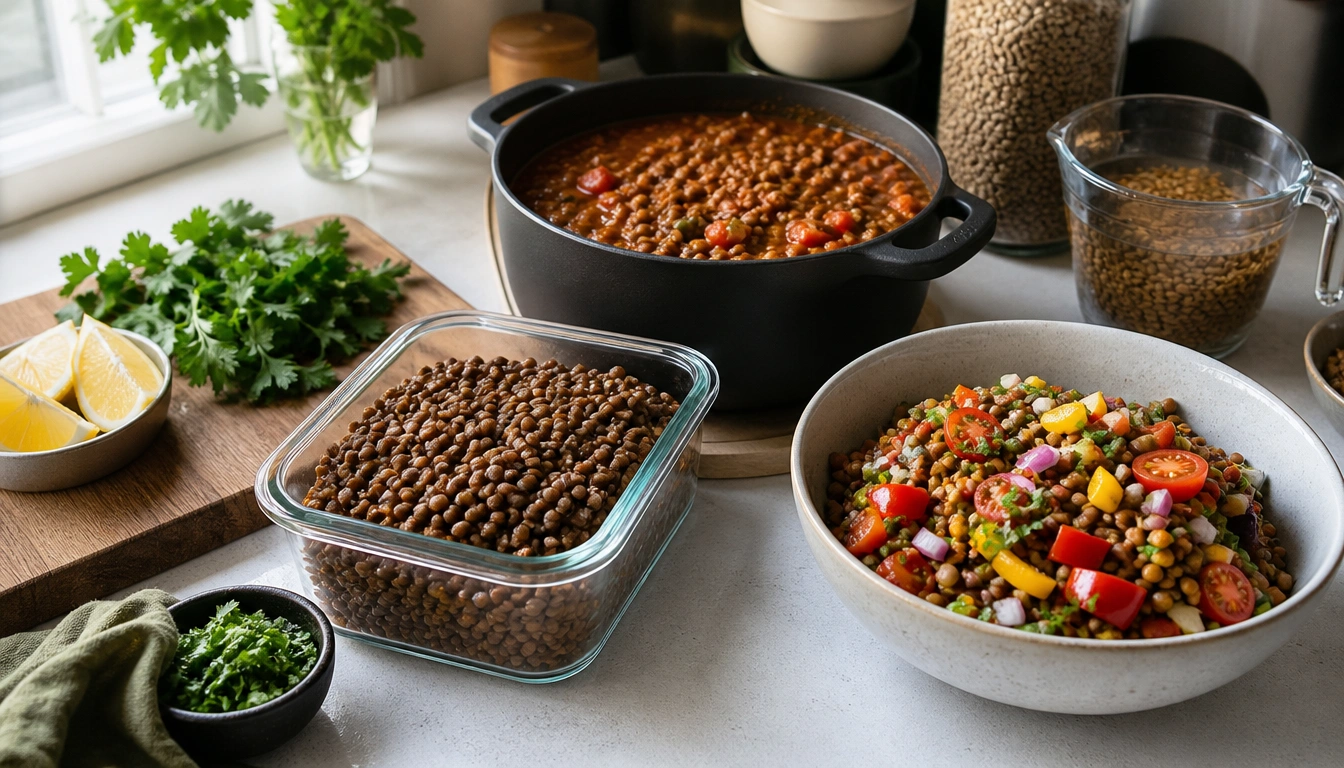
The easiest lentil meal-prep ideas for beginners are simple lentil salads, a plain cooked lentil base for mixing into meals, and a hearty lentil chili or stew. Choose brown or green lentils when you want shape and texture, or red lentils when you want a softer, faster-cooking base. Keep prep practical by cooking one batch, seasoning lightly, and storing portions safely for quick use all week.
Key Takeaways
- Brown and green lentils hold their shape best for salads, bowls, and side dishes; red and yellow split lentils work better for soups, curries, and dals.
- Most dry lentils do not need soaking and usually cook in about 15 to 30 minutes, which makes them beginner-friendly.
- A smart starter approach is to use one of three modes: batch cooking, ingredient prepping, or individual portioning.
- Lentils mix easily into other foods such as salads, scrambled eggs, pasta sauce, and soups, so leftovers stay useful instead of boring.
- Pair lentils with vitamin C foods like bell peppers, tomatoes, citrus, or broccoli to help support iron absorption.
- If you are new to high-fiber foods, start with smaller portions and increase gradually to improve comfort and reduce bloating.
Pick the lentil that fits the meal
If you are looking for the easiest lentil meal ideas for meal-prep beginners, start with the lentil type. That choice does most of the work for you. Brown and green lentils are the best “all-purpose” option for people who want a little texture. They hold their shape after cooking, so they fit salads, grain bowls, side dishes, and soups where you want the lentils to stay visible rather than melt away.
Red and yellow split lentils behave differently. They soften quickly and break down into a creamy, spoonable texture, which makes them a better match for thick soups, curries, and dals. If you want a meal that feels comforting and easy to reheat, those varieties are usually the simplest. According to the USDA and Harvard T.H. Chan School of Public Health, beans, peas, and lentils are flexible plant foods that can help you build meals around fiber and protein without a lot of kitchen effort.
For a first attempt, keep it simple: buy one shape that matches your plan instead of trying to stock several. If you want salads and bowls, choose brown or green. If you want a soft, saucy dish, choose red or yellow split lentils. That small decision keeps the rest of meal prep easier.
Choose the easiest prep style for your week
Beginners often try to prep too many meals at once and end up with a lot of containers they do not want to eat. A better approach is to pick one of three meal-prep modes and keep it manageable.
Batch cooking means making one larger recipe, such as a lentil chili, lentil soup, or seasoned lentil stew, then portioning it into containers. This is the easiest option when you want grab-and-go lunches or dinners and do not want to assemble meals every day.
Ingredient prepping means cooking plain or lightly seasoned lentils ahead of time so you can add them to different meals through the week. This works well if you like flexibility. Cook once, then spoon lentils into salads, stir them into pasta sauce, add them to scrambled eggs, or tuck them into soup for extra substance.
Individual portioning means building complete lunch or dinner containers in advance, usually with lentils plus grains, vegetables, and a dressing or sauce. This is useful if you prefer a ready-made meal and want fewer decisions during the week. All three methods work. The best one is the one you will actually repeat.
Three beginner-friendly lentil meal ideas
Salad bowl: Use green or brown lentils for a lentil salad with chopped cucumber, tomatoes, bell peppers, parsley, and a simple olive oil and vinegar dressing. Add a grain like brown rice or quinoa if you want more staying power. The reason this works well for meal prep is that the lentils hold texture, the vegetables add freshness, and the dressing can be packed separately so the salad stays crisp. A squeeze of lemon or a handful of chopped herbs makes it taste brighter without extra effort.
Ready-to-use protein base: Cook a pot of lentils with onion, garlic, or a bay leaf if you want mild flavor from the start, then keep them plain enough to use in several ways. This is the most flexible choice for beginners. A scoop can go into scrambled eggs at breakfast, into tomato sauce for pasta at dinner, or into a quick soup at lunch. If you are only learning one lentil skill, this is it: cook a simple base that can travel across meals.
Chili or stew: Lentil chili is one of the most forgiving beginner meals because it welcomes pantry ingredients. Start with onion, garlic, canned tomatoes, chili powder, cumin, and broth or water, then add lentils and any vegetables you already have. Red lentils will thicken the pot more quickly; brown or green lentils will give a chunkier texture. Serve it with rice, bread, or a simple salad. The meal becomes more practical because one pot creates several servings with minimal cleanup.
Use flavor shortcuts that actually work
Many beginners think lentils taste bland because they are underseasoned, not because they are difficult to cook. A small set of flavor-building shortcuts can fix that fast. Start with aromatics such as onion, garlic, or scallions. Cook them briefly before adding liquid, and the whole dish tastes deeper. If you are short on time, even garlic powder and onion powder can help.
Acid matters too. A splash of vinegar, lemon juice, or a spoonful of tomato paste can make lentils taste sharper and less flat. Herbs and pantry seasonings do a lot of work with very little effort: cumin, black pepper, smoked paprika, curry powder, dried oregano, chili powder, and Italian seasoning all pair well with lentils. Keep the seasoning style aligned with the meal. Mediterranean flavors work for salads and bowls; cumin and chili powder suit chili and stew; curry powder is an easy bridge for red lentils.
If you want a fast rule, season while cooking, then adjust at the end with salt, acid, or fresh herbs. That gives you better flavor than trying to rescue a bland batch after it is already packed away.
Make lentils easier to digest as you build tolerance
Lentils are rich in fiber, which is one reason they are so filling. That same fiber can also be the reason beginners feel bloated if they jump straight to large portions. A gradual approach is usually more comfortable. Start with a smaller serving, see how your body responds, and increase over time if you tolerate it well.
For some people, a gentle start means using lentils as a mixed ingredient rather than the whole base of the meal. For example, add a few spoonfuls to soup, mix them into rice, or combine them with vegetables and grains instead of serving a large bowl of lentils alone. This keeps the fiber load more manageable while you adapt.
Cooking lentils until tender also helps. Red and yellow split lentils are often easier for first-timers because they soften more completely. Drinking enough fluid across the day can also support comfortable digestion. If you have a digestive disorder or you notice persistent discomfort, it is worth discussing fiber changes with a healthcare professional or dietitian rather than pushing through symptoms.
Store cooked lentils safely for the week
Food safety matters just as much as flavor. Cooked lentils should not sit out for long after cooking. Cool them promptly and refrigerate them within two hours. Keep the refrigerator at or below 40°F (4°C), and store lentils in shallow containers so they cool more evenly.
For meal prep, portion lentils into containers that match how you actually eat. Small portions are useful for mix-ins, while larger portions make sense for planned meals like chili or stew. Plain cooked lentils usually keep well in the fridge for about 3 to 5 days when stored properly, which is enough for a weekday meal-prep rhythm. If you want them to last longer, freeze them in meal-sized amounts. Freezing works especially well for chili, soup, and cooked lentils that will be stirred into other dishes later.
If you plan to use lentils in salads, consider storing the lentils and the crunchy vegetables separately so the textures stay better. If you are making a sauce or soup, the texture changes matter less, so those recipes are even more freezer-friendly. The CDC and USDA both emphasize safe cooling, refrigeration, and reheating practices for prepared foods, and lentils are no exception.
Build balanced meals around lentils
Lentils are useful because they can act as a protein source, a fiber source, or part of a vegetable-forward meal depending on the dish. To make them more filling without making them complicated, pair them with grains, vegetables, and a little fat. Rice, quinoa, whole-grain bread, or whole-wheat pasta can help turn lentils into a more complete meal. Roasted vegetables, leafy greens, cucumbers, carrots, and tomatoes add color and volume.
For iron support, combine lentils with vitamin C foods such as bell peppers, tomatoes, citrus, or broccoli. That simple pairing can help your body absorb non-heme iron more effectively. It is an easy upgrade: add a squeeze of lemon to lentil salad, serve lentil stew with tomato-rich salsa, or mix roasted broccoli into a lentil bowl.
If you want a practical template, think in three parts: lentils for the base, vegetables for freshness, and a grain or sauce for balance. That structure keeps meals affordable, flexible, and less repetitive over the week. It also makes lentils feel more like a normal part of your routine instead of a special recipe you only make once.
Frequently Asked Questions
Which lentil type is best for salads, soups, and batch cooking?
Brown and green lentils are best when you want the lentils to keep their shape, so they work well for salads, bowls, and hearty soups. Red and yellow split lentils soften more and are better for smooth soups, curries, and dals. If you only buy one type first, brown or green is the most flexible for beginners.
How do I cook lentils so they stay easy to use for meal prep all week?
Cook them until just tender, then cool and refrigerate them promptly in shallow containers. If you want versatility, cook a plain batch with mild aromatics and season individual meals later. That makes the lentils easier to reuse in salads, soups, eggs, or pasta without tasting repetitive.
How can I make lentil meals more filling and better balanced without making them complicated?
Pair lentils with a grain such as rice or quinoa, add vegetables, and include a little healthy fat from olive oil, avocado, or a simple dressing. This creates a more complete meal with very little extra work. Adding vitamin C foods like tomatoes or bell peppers is another easy upgrade.
What are the best ways to add flavor to lentils for beginners?
Use onion, garlic, bay leaf, cumin, chili powder, smoked paprika, curry powder, oregano, or lemon juice. Lentils take on flavor well, so a few basic seasonings go a long way. If a batch tastes flat, finish it with acid, herbs, or a little salt rather than overcomplicating the recipe.
How do I store cooked lentils safely in the fridge or freezer?
Refrigerate cooked lentils within two hours of cooking and keep them at or below 40°F (4°C). They usually keep for about 3 to 5 days in the fridge. For longer storage, freeze them in meal-sized portions and thaw only what you need for the next meal.
The Bottom Line
The easiest lentil meal prep for beginners is not about making a perfect week of food. It is about choosing the right lentil type, cooking one simple batch, and using it in a few different ways. Brown or green lentils are best for texture, while red lentils are best when you want a soft, quick-cooking base.
Keep the process practical: use simple seasonings, start with smaller portions if your digestive system is adjusting, and store everything safely. If you pair lentils with vegetables, grains, and vitamin C foods, you get meals that are affordable, flexible, and much easier to repeat.
Once you get comfortable, lentils become one of the easiest ingredients to keep on hand for the week. They fit into salads, soups, stews, sauces, and bowls without much extra planning, which is exactly what meal-prep beginners need.
Medical disclaimer
Medical disclaimer: This content is for educational and informational purposes only and is not a substitute for professional medical advice, diagnosis, or treatment. Dietary needs and supplement suitability vary by individual.
Sources
- U.S. Government / Health Authority — usda.gov. Accessed October 2026.
- Centers for Disease Control and Prevention (CDC) — cdc.gov. Accessed October 2026.
- Academic Research Institution — stanford.edu. Accessed October 2026.
- Academic Research Institution — harvard.edu. Accessed October 2026.
