
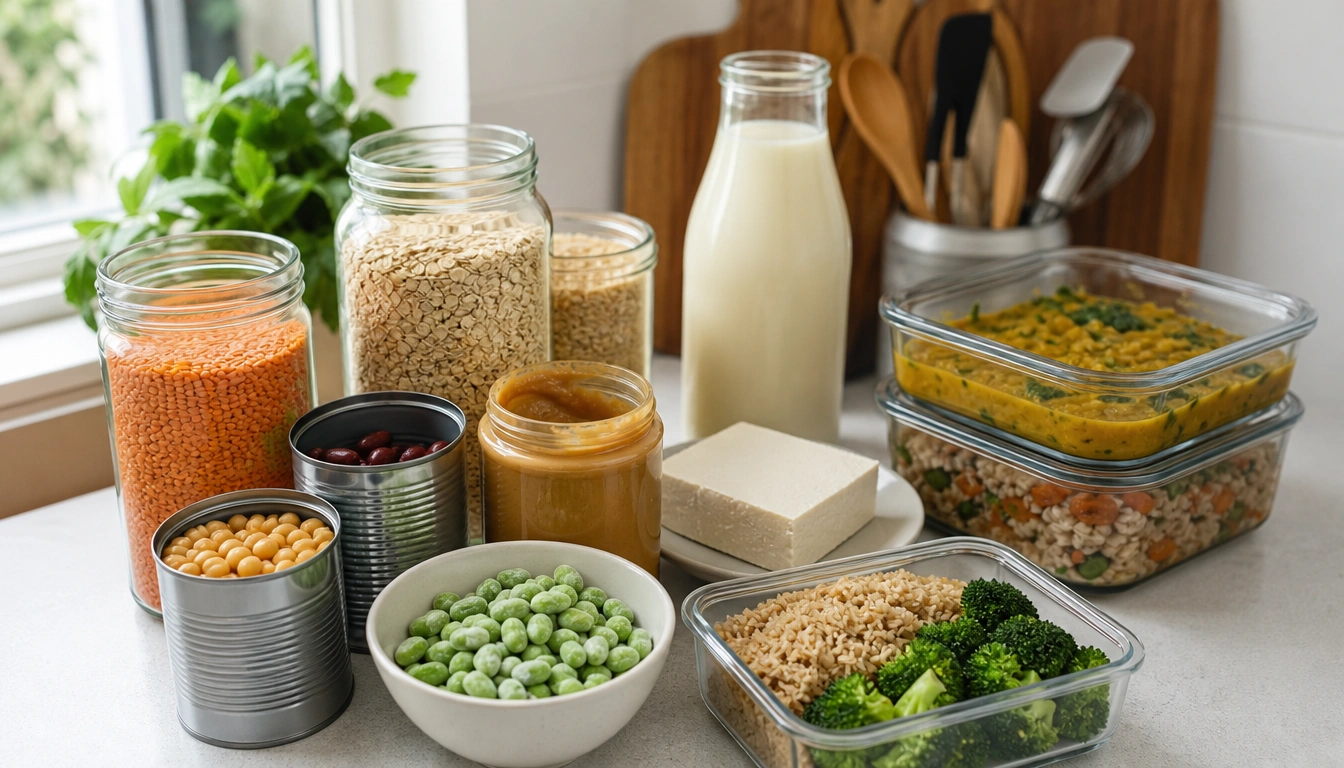
The cheapest easy vegetarian protein sources are usually beans, lentils, chickpeas, tofu, soy milk, edamame, peanuts, peanut butter, and everyday whole grains. You do not need to eat complementary plant proteins in the same meal; a varied day of legumes, grains, nuts, and seeds is enough. The smartest budget approach is to rely on low-cost staples, stretch them into several meals, and pay attention to vitamin B12 and iron.
Key Takeaways
- Beans, lentils, and chickpeas are usually the best value because they provide protein, fiber, and satiety at a low cost per serving.
- Complementary plant proteins do not have to be combined in one meal; balance matters across the day, not on a plate-by-plate basis.
- Tofu and soy milk are especially useful budget options because soy is a complete protein and works in both sweet and savory meals.
- Frozen edamame and peas are convenient, low-waste proteins that can fill out bowls, salads, and pasta dishes without much prep.
- On a vegetarian pattern, vitamin B12 and iron still deserve attention; vitamin C-rich foods can help your body absorb plant-based iron better.
Budget reality check: vegetarian protein can be inexpensive
If your main goal is to eat more vegetarian protein without overspending, the most useful strategy is to build around staple foods rather than specialty products. Public health guidance from the U.S. Department of Agriculture and the NHS consistently points to beans, lentils, peas, tofu, soy milk, nuts, and grains as affordable building blocks. These foods are widely available, shelf-stable or freezer-friendly, and easy to use in everyday meals.
Plant proteins also bring extra value beyond protein grams alone. Beans and lentils add fiber, potassium, folate, and iron, which helps meals feel more filling and can support heart and metabolic health. That makes them more satisfying than many processed “protein” products that cost more and do less for fullness.
For a low-budget pantry, start with foods that are easy to store and hard to waste: dry lentils, dry or canned beans, oats, brown rice, whole-wheat pasta, peanut butter, canned chickpeas, frozen vegetables, and frozen edamame. These ingredients can cover breakfast, lunch, dinner, and snacks without requiring a separate “health food” aisle.
Peanut butter and other budget nut and seed butters
Peanut butter is one of the cheapest concentrated vegetarian protein foods most shoppers can buy. It is useful because it is shelf-stable, familiar, and easy to add to meals you already eat. Two tablespoons count as a meaningful protein portion in USDA food pattern terms, and they also bring fats that help make a snack more satisfying.
Standard store-brand peanut butter is usually the best value. Look for versions with minimal added sugar and oils if possible, but do not overpay for specialty jars unless you prefer them. Peanut butter works well on toast, stirred into oatmeal, blended into smoothies, or used in a quick sauce for noodles, rice bowls, or roasted vegetables.
Other nut and seed butters can fit too, but they are often pricier. Sunflower seed butter may be useful for allergies, while tahini can be a good option when used sparingly in dressings or sauces. For budget shoppers, peanut butter usually gives the strongest mix of price, protein, and convenience.
Whole grains as the everyday protein backbone, plus tofu, soy milk, and edamame
Whole grains are not the highest-protein foods on the shelf, but they matter because they add a reliable protein base to cheap meals. Oats, brown rice, whole-wheat pasta, whole-grain bread, and barley all contribute protein while helping turn beans or tofu into a full meal. They also make it easier to eat enough total food on a budget without relying on expensive packaged products.
Tofu and soy milk deserve special attention. According to public health guidance, soy is one of the plant foods that naturally provides a complete protein profile. That makes tofu and soy milk especially practical for people who want a low-cost protein source that works across different meals. Tofu can be baked, pan-fried, scrambled, blended into sauces, or added to soups. Soy milk can replace dairy milk in cereal, coffee, smoothies, or baking.
Frozen edamame is another strong value buy. It is convenient, waste-light, and easy to portion. Peas are similar: inexpensive, freezer-friendly, and simple to stir into rice, pasta, curries, and soups. These foods do not need much prep to improve the protein content of a meal.
How to combine plant proteins across the day without overthinking it
Many people worry about “complete proteins,” but that concern is often overstated for healthy adults eating a varied vegetarian diet. You do not need to combine complementary plant proteins in the same meal. If you eat grains, legumes, nuts, and seeds over the course of a day, your body can use the amino acids from those foods together.
That means rice and beans do not have to sit on the same plate for every meal to “count.” You can have oatmeal with peanut butter at breakfast, a lentil soup at lunch, and a grain bowl with tofu at dinner. The day as a whole is what matters most.
For better nutrient coverage, pair plant proteins with vitamin C-rich foods when you can. Bell peppers, citrus fruit, tomatoes, strawberries, and lemon juice can help your body absorb non-heme iron from beans, lentils, and greens. That matters especially if you rely on a lot of plant-based meals and want to support iron status without expensive supplements or frequent meat purchases.
How to stretch meals and cut grocery costs with beans, lentils, and frozen produce
Beans and lentils are some of the easiest foods to stretch across several meals. Dry lentils are especially convenient because they cook quickly and do not need soaking, which makes them ideal for busy weeks. Dry beans often cost less per serving than canned beans, while canned beans save time. A practical budget approach is to use both: dry beans when you can plan ahead, canned beans when you need speed.
Freezer-friendly foods also reduce waste, which is a major hidden cost saver. Frozen spinach, broccoli, peas, mixed vegetables, and edamame are usually cheaper than fresh produce that spoils before you use it. They are picked and frozen at peak ripeness, so they remain useful for soups, stir-fries, pasta, grain bowls, and casseroles.
One of the best savings tricks is to blend or mash legumes into familiar dishes. Add lentils to chili, black beans to tacos, chickpeas to curry, or white beans to pasta sauce. This lowers the cost per serving, increases fiber, and makes the meal more filling without forcing a big change in flavor or texture. If you already cook meat sometimes, beans can stretch those recipes farther too.
Digestion tips for increasing fiber without discomfort
More beans and lentils can cause bloating or gas if your usual diet is low in fiber. That does not mean they are a bad choice; it usually means your gut needs time to adjust. The easiest fix is gradual change. Start with small portions and increase over days or weeks instead of jumping straight to large servings.
Rinsing canned beans can help reduce some of the compounds that may trigger gas. If you cook dry beans, soak them when appropriate and cook them until tender. Lentils are often easier to tolerate because they cook quickly and usually need less preparation. Drinking enough fluid also helps your digestive system handle more fiber.
It can also help to spread fiber across the day instead of loading it all into one meal. If beans are new for you, pair them with lower-fiber foods you already tolerate well. Cooking methods and seasonings matter too: cumin, ginger, garlic, fennel, and simple simmered dishes can be easier on the stomach than very greasy or heavily spiced meals.
Who may need extra caution or individualized advice
Most healthy adults can eat more vegetarian protein foods safely, but some people need more tailored guidance. Anyone with advanced kidney disease, significant digestive disorders, or another medical condition that affects diet should check with a clinician or registered dietitian before making major changes in protein intake.
Pregnant or breastfeeding people, older adults, and growing children may need more attention to total calories, protein quality, and nutrient density. The same is true for anyone trying to maintain muscle mass while eating less overall. In these cases, the best food choices are still usually simple staples, but the amount and timing may need to be individualized.
Watch for signs that deserve medical review, such as persistent fatigue, unexplained weakness, or symptoms that could fit iron or B12 deficiency. Unfortified vegetarian diets can fall short on vitamin B12 because plant foods do not naturally supply it. Iron also needs attention because plant iron is less easily absorbed than animal iron. Fortified foods and, for some people, supplements may be necessary.
Simple budget meal ideas and pantry building tips
A practical vegetarian pantry does not need many items. If you keep a few low-cost proteins and a few flexible starches, you can build meals quickly. Useful staples include lentils, canned beans, peanut butter, tofu, soy milk, oats, brown rice, pasta, tortillas, frozen vegetables, and frozen fruit. These foods can be mixed and matched into breakfasts, lunches, snacks, and dinners.
Easy meals can stay simple: oatmeal with peanut butter and fruit; rice with tofu and frozen vegetables; lentil soup with bread; bean tacos with salsa and cabbage; pasta with white beans and tomato sauce; or a peanut sauce over noodles and vegetables. These are not specialty recipes. They are low-cost frameworks that you can repeat with different seasonings.
If grocery costs are a concern, buy what you will actually use, and let the freezer do more of the work. Store-bought flavor helpers like soy sauce, garlic powder, hot sauce, and canned tomatoes can make a very basic pantry feel varied without adding much expense. The goal is not perfection. The goal is a small set of dependable foods that make it easy to eat enough protein week after week.
Frequently Asked Questions
How much protein do budget-friendly vegetarian foods actually provide per serving?
It varies by food, but beans, lentils, tofu, soy milk, peanut butter, and edamame all contribute meaningful protein. USDA food pattern guidance treats portions of beans, lentils, tofu, peanut butter, and nuts as useful protein equivalents, which is why they are such practical budget staples.
Do plant proteins need to be combined in the same meal to be complete?
No. Complementary plant proteins do not have to be eaten together at one meal. A varied day that includes grains, legumes, nuts, and seeds is enough for most healthy adults to cover essential amino acids.
What are the cheapest vegetarian protein sources that also help with fiber and satiety?
Beans, lentils, peas, chickpeas, and tofu are among the best value foods because they give you protein plus fiber, which helps meals feel more filling. Oats, brown rice, and whole-wheat pasta can help stretch those proteins further.
How can I make bean- and lentil-based meals easier on digestion when I suddenly eat more fiber?
Increase portions gradually, drink enough fluids, and use canned beans that are rinsed well or dry beans cooked until tender. Lentils are often easier to start with because they cook quickly and are usually gentler than larger beans for some people.
What nutrients may still need attention on a budget vegetarian diet, especially B12 and iron?
Vitamin B12 is the biggest concern because it is not naturally present in unfortified plant foods. Iron also needs attention because plant iron is absorbed less efficiently. Vitamin C-rich foods such as citrus, tomatoes, and peppers can improve iron absorption from plant-based meals.
The Bottom Line
The cheapest easy vegetarian protein foods are usually the basics: beans, lentils, chickpeas, tofu, soy milk, peanut butter, oats, rice, pasta, and frozen edamame. You do not need specialty products to eat well, and you do not need to combine every protein perfectly at every meal.
For most people, the best budget strategy is to build meals around one or two staples, then stretch them with grains, frozen vegetables, and simple sauces. If digestion is a concern, increase fiber slowly and keep fluids up while your body adjusts.
Keep an eye on vitamin B12 and iron if your diet is mostly plant-based, and use vitamin C-rich foods to support iron absorption. If you have a medical condition or ongoing symptoms of deficiency, individual advice matters more than any general plan.
Medical disclaimer
Medical disclaimer: This content is for educational and informational purposes only and is not a substitute for professional medical advice, diagnosis, or treatment. Dietary needs and supplement suitability vary by individual.
Sources
- U.S. Government / Health Authority — health.gov. Accessed November 2026.
- National Health Service (NHS) — oxfordhealth.nhs.uk. Accessed November 2026.
- U.S. Government / Health Authority — realfood.gov. Accessed November 2026.
- National Health Service (NHS) — www.nhs.uk. Accessed November 2026.
- National Health Service (NHS) — royaldevon.nhs.uk. Accessed November 2026.
