
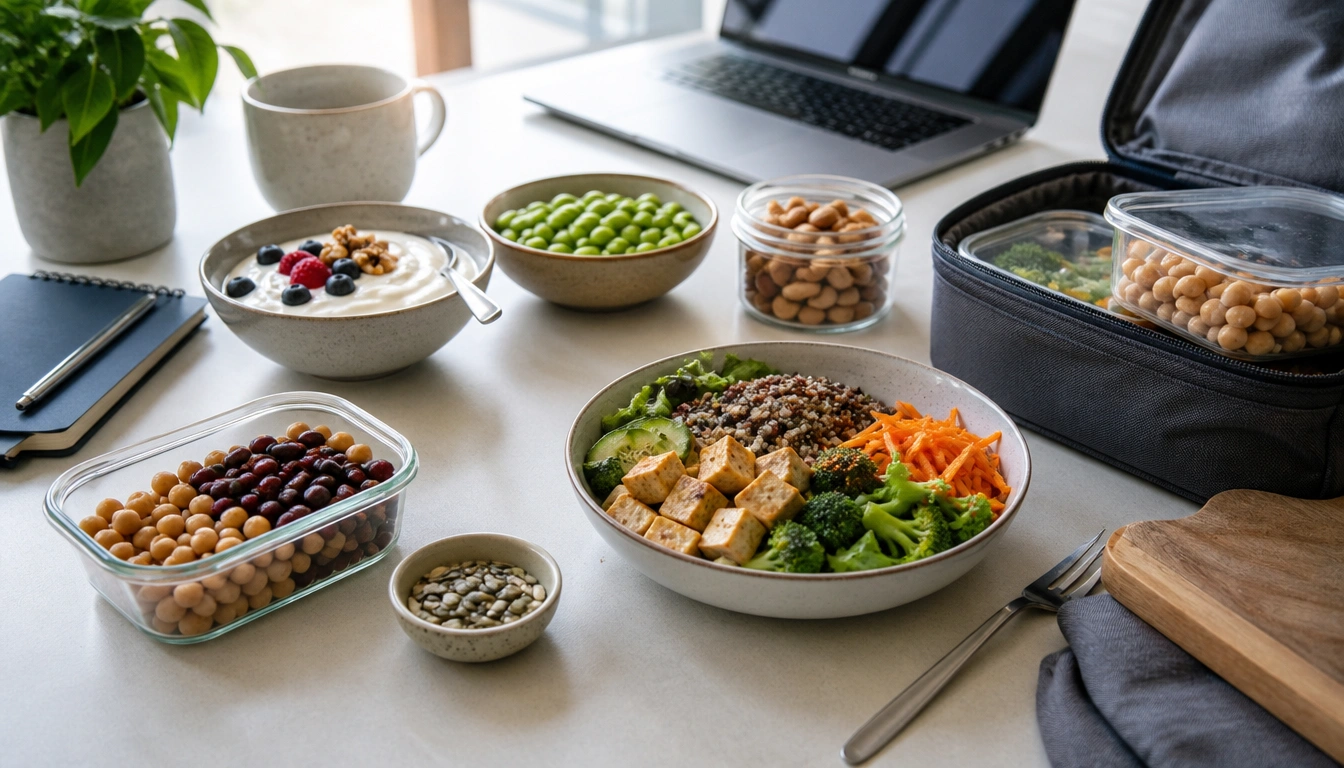
The easiest high-protein vegetarian foods for busy professionals are the ones you can eat with almost no effort: Greek yogurt or skyr, cottage cheese, eggs, edamame, tofu, tempeh, canned beans and lentils, soy milk, nuts, seeds, and high-protein fortified foods. The best approach is to mix a few zero-prep, microwave-friendly, and batch-prepped options so you can meet your protein needs even on rushed workdays.
Key Takeaways
- You do not need strict same-meal protein combining. A mix of plant proteins across the day is enough for most healthy adults.
- The most practical choices are foods that are already cooked, microwavable, portable, or easy to batch prep on one day for the whole week.
- Protein needs can be higher for older adults and very active professionals, and spreading protein across meals can make those needs easier to meet.
- Vegetarian diets can also need attention to vitamin B12, iron, zinc, calcium, and iodine, especially if the diet is mostly plant-based.
- If beans and lentils are new to your routine, increase them gradually and keep hydration in mind to reduce bloating and digestive upset.
What makes a vegetarian protein source truly easy for a busy workday
For easy vegetarian protein sources for busy professionals, the best foods are not the ones with the highest protein number on paper. They are the ones you can reliably eat when meetings run long, you forget lunch, or the office kitchen is your only option. Practical usefulness matters more than culinary ambition.
A genuinely easy protein food usually has at least one of these qualities: it is ready to eat, needs only a microwave, can be kept in a desk or office fridge, or can be prepped in a short batch and eaten several times. That is why foods such as Greek yogurt, skyr, cottage cheese, hard-boiled eggs, edamame, tofu, tempeh, canned beans, lentils, soy milk, nuts, seeds, and high-protein fortified products are so useful. They fit real schedules.
The U.S. Department of Agriculture and the National Institutes of Health both recognize well-planned vegetarian eating patterns as nutritionally sound. The practical challenge is not whether vegetarian protein works; it is whether your workday routine makes it easy to use consistently.
The best low-prep options by effort level
If time is tight, sorting protein foods by effort level makes planning easier. The goal is to choose the least friction for the moment you are in.
Zero-prep or almost zero-prep
These are the fastest options because they require opening a container, pouring a drink, or adding a topping. Greek yogurt or skyr, cottage cheese, string cheese, soy milk, hard-boiled eggs, roasted nuts, seeds, and certain protein-rich fortified bars or cups can all work well. They are especially helpful for breakfast, commuting, and emergency snacks.
These foods are useful because they are portable and predictable. If your morning is chaotic, a yogurt cup plus fruit and seeds is often more realistic than a cooked breakfast you planned to make and did not have time for.
Microwave-friendly
Frozen shelled edamame, pre-cooked lentils, pouch beans, tofu, and some grain-and-bean bowls can be heated quickly in an office microwave or at home. This category is valuable because it gives you a hot meal without real cooking. A microwave meal can be as simple as rice, beans, and salsa, or a ready grain bowl topped with tofu or edamame.
Microwave-friendly foods are also useful for people who prefer warm lunches but do not have time to cook from scratch. They usually pair well with salad kits, bagged vegetables, or microwavable grains, which keeps prep to a minimum.
Batch-preppable
Some foods are easiest when you prepare them once and use them multiple times. Tofu, tempeh, hard-boiled eggs, roasted chickpeas, cooked lentils, and a tray of beans or grain bowls can carry several meals. Batch prep does not have to mean a full meal prep marathon. A single container of one protein plus a few supporting foods can carry you through several lunches or snacks.
For many busy professionals, this is the sweet spot: one short prep session on the weekend, then assemble-and-go during the week.
How to build a high-protein vegetarian day without full recipes
You do not need full recipes to eat enough protein. It is often easier to think in meal templates. For breakfast, choose a protein base such as Greek yogurt, skyr, cottage cheese, soy milk, eggs, or tofu scramble leftovers. Add fruit, oats, seeds, or whole-grain toast if you need more staying power. A high-protein breakfast helps because many busy people go too long without eating and then try to catch up later.
For lunch, aim for a protein anchor plus a convenient carb and vegetable. Examples include a salad kit with lentils, a grain bowl topped with tofu, a wrap with eggs or hummus and beans, or a soup paired with yogurt, cheese, or edamame. The meal does not need to be elaborate to be effective.
For snacks, think portable and desk-safe: roasted chickpeas, trail mix with nuts and seeds, yogurt cups, cheese sticks, shelf-stable roasted soy nuts, or edamame when you have access to a microwave. Snacks are not just for cravings; they can help bridge long gaps between meetings.
For dinner, the least effort often comes from frozen or pre-cooked ingredients. A stir-fry with tempeh, tofu, or edamame; pasta with lentils; eggs with vegetables and toast; or a bean-based bowl can be assembled quickly. The best dinner is the one you can repeat on a weeknight without needing a complicated plan.
Protein timing and distribution for long workdays
Protein timing is less rigid than some people think, but distribution still matters. Instead of loading most of your protein into one meal, it is often more practical to spread it across breakfast, lunch, dinner, and one or two snacks. That can make it easier to meet your total daily needs and can help you feel steadier across the day.
This matters especially when your schedule is unpredictable. A missed lunch or tiny breakfast is easier to recover from if the rest of the day still includes meaningful protein. It also helps older adults and very active professionals, who may benefit from more protein per meal rather than relying on one large serving at dinner.
The National Institutes of Health notes that protein needs vary by age and activity level, and people who exercise regularly may need more than the baseline recommended amount. For busy professionals, that usually means making protein visible in more than one meal, not trying to rescue the day with one giant serving at night.
When you do not have time to cook
A simple pantry, freezer, and desk-stash system can prevent low-protein defaults. Keep a few shelf-stable foods at work or at home so your options do not disappear when life gets busy. Good pantry items include canned beans, lentils, nut butter, roasted nuts, seeds, shelf-stable soy milk, whole-grain crackers, and tuna-like vegetarian alternatives if you use them. In the freezer, keep shelled edamame, frozen vegetables, and pre-cooked grains or tofu if your budget allows.
Desk-friendly foods matter because office logistics are real. Not every workplace has a good cafeteria, and not every day allows a grocery stop. If you have a fridge, keep yogurt, cheese, tofu, or cut vegetables there. If you do not, use shelf-stable options that can survive a commute and a long afternoon.
It also helps to pair protein with foods that reduce decision fatigue. For example, a pouch of beans plus a salad kit, a yogurt cup plus fruit, or tofu plus microwavable rice gives you a meal without much thought. The less you have to decide when you are hungry, the more likely you are to actually eat well.
Why variety matters more than same-meal combining
Older ideas about vegetarian protein often suggested that every meal had to combine specific plant foods, such as beans and rice eaten together. Modern nutrition consensus does not require that. Your body maintains an amino acid pool over time, so eating a variety of plant proteins across the day is enough for most healthy adults.
That means you do not need to engineer every lunch with perfect amino acid math. Instead, focus on variety across the day and week: legumes, soy foods, dairy if you use it, eggs if you eat them, whole grains, nuts, and seeds. This approach is easier to sustain and usually more realistic for working adults.
There is still a practical reason to mix protein sources. Different foods bring different textures, nutrients, and convenience levels. Soy foods, dairy, eggs, beans, lentils, nuts, and seeds each solve different workday problems. Variety is useful not because your body cannot handle plant proteins alone, but because a varied pattern is easier to keep up.
Special considerations for older adults, active professionals, and fast fiber increases
Older adults often need to think about protein differently from younger adults. Muscle maintenance becomes harder with age, so enough protein at each meal can matter, not just enough over the full day. That makes convenience foods especially useful: yogurt cups, eggs, tofu, tempeh, edamame, and beans can be easier than large, complicated meals.
Very active professionals, especially those training before or after work, may also need more protein and more consistent intake across the day. If you exercise regularly and then spend hours in meetings, planning a solid breakfast and lunch becomes more important than waiting for dinner to “make up for it.”
If you are increasing beans, lentils, or whole grains quickly, digestive adjustment is normal. Bloating or gas can happen when fiber rises too fast. Increase gradually, drink enough water, and spread fiber-rich foods through the day rather than stacking several large servings at once. If a food is causing discomfort, reduce the amount temporarily and build back up over time.
Nutrients besides protein that deserve attention in vegetarian diets
Protein gets most of the attention, but vegetarian diets can also need planning for vitamin B12, iron, zinc, calcium, and iodine. That does not mean problems are inevitable. It means these nutrients should stay on your radar, especially if your diet is mostly plant-based and highly repetitive.
Some vegetarian patterns make these nutrients easier to cover. Dairy and eggs can contribute B12, calcium, and protein. Fortified foods can help with B12 and calcium. Beans, lentils, whole grains, nuts, and seeds contribute iron and zinc, though absorption can vary. Iodine can be overlooked if you do not use iodized salt or eat iodine-rich foods regularly.
The most practical move is not to micromanage every nutrient every day. It is to build a varied routine and notice gaps early. If you are vegan, pregnant, older, highly active, or eating a very limited diet, it is reasonable to review your pattern with a registered dietitian or healthcare professional.
A five-minute planning system that actually fits a workweek
Instead of planning a perfect menu, pick a short weekly system. In five minutes, choose two zero-prep proteins, two microwave-friendly proteins, and one batch-prep item. That gives you coverage for the week without requiring a complicated spreadsheet or a full cooking session.
Next, place protein in the moments where your schedule usually breaks down. If mornings are rushed, stock breakfast proteins. If lunch is often delayed, keep desk snacks and a backup lunch option at work. If dinners are inconsistent, keep freezer proteins ready for the nights you are drained.
Finally, make the environment do some of the work. Put shelf-stable items where you can see them, keep a few emergency meals in the freezer, and buy foods that need little assembly. The best vegetarian protein plan is not the most detailed one. It is the one you can repeat when work gets messy.
Frequently Asked Questions
How much protein do busy vegetarian professionals actually need each day?
The baseline recommendation for healthy adults is about 0.75 grams of protein per kilogram of body weight per day, according to public health guidance. People who are older or very active may need more, but exact needs vary by age, size, health, and training habits.
Do plant proteins need to be combined in the same meal to be complete?
No. Modern nutrition consensus does not require strict same-meal combining. Eating a variety of plant proteins across the day is enough for most healthy adults, as long as total intake is adequate.
What are the best zero-cook or microwave-friendly vegetarian protein options?
Good options include Greek yogurt or skyr, cottage cheese, hard-boiled eggs, soy milk, tofu, tempeh, canned beans, lentils, and frozen shelled edamame. The best choice is the one you will actually eat during a busy workday.
How can I get enough protein without spending much time cooking?
Use a mix of pantry, fridge, and freezer staples. Keep a few ready-to-eat proteins on hand, choose microwave-friendly foods for lunches, and batch-prep one or two protein items that can be reused in several meals.
What vegetarian protein foods are best for office snacks or desk lunches?
Portable options work best: yogurt cups, cheese sticks, roasted nuts, seeds, roasted chickpeas, edamame, shelf-stable soy milk, and small containers of beans or tofu. Choose foods that store safely and do not need much assembly.
The Bottom Line
The easiest vegetarian protein strategy for busy professionals is not complicated: keep a few ready-to-eat foods, a few microwave options, and one or two batch-prepped staples available at all times. That makes it much easier to stay consistent when work gets hectic.
You do not need perfect meal-by-meal protein combining. Variety across the day is enough for most people, and distributing protein across breakfast, lunch, snacks, and dinner can help older adults and active professionals meet their needs more comfortably.
If you add beans, lentils, and other high-fiber foods quickly, build up gradually and pay attention to hydration and digestion. A simple, repeatable routine usually works better than an ambitious meal plan you cannot sustain.
Medical disclaimer
Medical disclaimer: This content is for educational and informational purposes only and is not a substitute for professional medical advice, diagnosis, or treatment. Dietary needs and supplement suitability vary by individual.
