
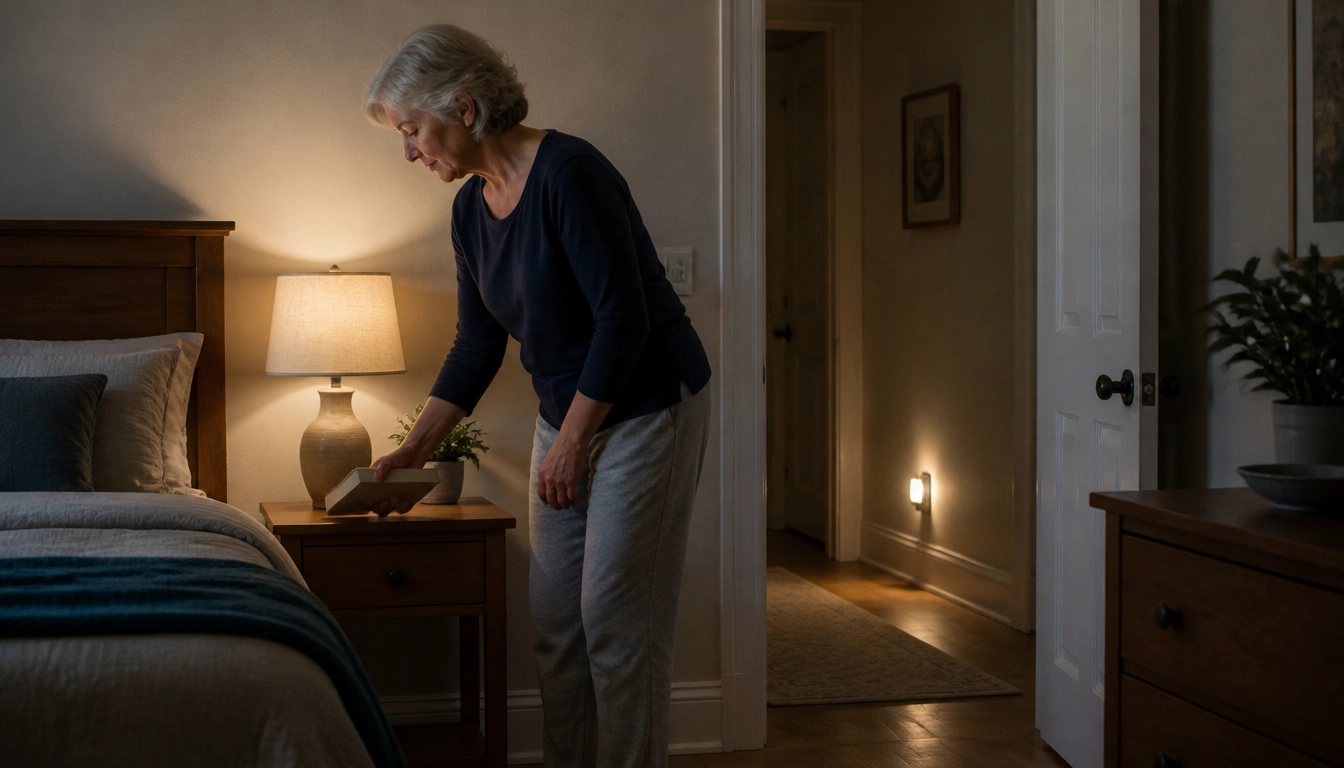
Adults over 60 usually sleep better with a calm, consistent wind-down that starts before they feel “tired enough” to crash. A practical evening routine includes dimming lights, limiting screens, avoiding late caffeine, alcohol, and heavy meals, reviewing medicines that may affect sleep, and making the bedroom safer for nighttime trips to the bathroom. If sleep remains poor or you snore, gasp, or wake unrefreshed, it is worth getting medical advice.
Key Takeaways
- Older adults often feel sleepy earlier, so an earlier wind-down usually works better than forcing a late bedtime.
- A 30- to 60-minute routine should be simple: reduce light, lower stimulation, prepare for sleep, and keep the same wake time.
- Screens, bright indoor lighting, late caffeine, heavy meals, and alcohol can all fragment sleep in later life.
- Medication timing matters; some common prescriptions can cause insomnia, vivid dreams, or daytime sleepiness.
- A safe bedroom setup matters more after 60 because nighttime bathroom trips raise fall risk.
- Persistent snoring, gasping, restless legs, or unrefreshing sleep may signal a problem that needs medical evaluation.
Why evening routines matter more after 60
Sleep does not usually disappear with age, but it often changes. Many adults over 60 become sleepy earlier in the evening and wake earlier in the morning because the body clock shifts forward. That means a late-night routine that once felt normal may now work against the body’s natural timing.
A structured evening preparation habit helps in two ways. First, it gives the brain repeated cues that the day is ending. Second, it reduces the kind of alerting input that can delay sleep, such as bright light, stimulating conversation, or a second round of chores. The goal is not to “force” sleep. It is to make the transition easier so sleep pressure can do its job.
For many older adults, especially retirees, the day can lose some of its built-in anchors. Without a commute, school pickup, or fixed evening schedule, bedtime can drift later or earlier from one day to the next. A steady routine brings back that rhythm in a low-pressure way.
What a practical 30-to-60-minute evening routine looks like
A useful routine is short, repeatable, and calm. Think of it as a sequence rather than a project. Start with the same general pattern most nights, then adjust the details to fit mobility, health needs, and household schedules.
Begin by easing the pace. Put away demanding tasks, save problem-solving for earlier in the day, and switch to low-effort activities. A short shower, a simple hygiene routine, or changing into comfortable sleepwear can signal that bedtime is getting closer.
Then lower stimulation. Turn down noise, dim lights, and choose a quiet activity such as reading paper pages, listening to soft music, or doing a brief relaxation exercise. If you live with others, let them know that this is your slow-down window so interruptions are less likely.
Finally, prepare the room. Set out water if your clinician recommends it, place glasses or hearing aids where you will need them in the morning, and make sure the bathroom path is clear. The simplest routine is often the one that lasts.
Light, screens, and melatonin
Light is one of the strongest signals for the body clock. Bright evening light can delay sleepiness and make it harder for melatonin to rise at the right time. That is why a digital sunset can help. For many people, turning off television, tablets, phones, and computer screens at least 30 minutes before bed is a realistic starting point.
If you prefer to keep watching TV, reduce the brightness and avoid fast-paced or emotionally charged content. A calm show may be less disruptive than scrolling on a phone, because scrolling tends to keep the brain engaged and encourages “just one more minute” behavior. If you use an e-reader, choose a warm display setting and keep brightness low.
The most useful idea is not perfection. It is reducing alerting input in the last part of the evening so the brain can shift toward rest. Replacing screen time with a predictable, quiet activity also creates a stronger sleep cue over time.
Food, drink, and medication timing
Evening eating and drinking can influence sleep more than people expect. Heavy meals close to bedtime may trigger indigestion or reflux, which can lead to waking later. Caffeine can linger and make it harder to fall asleep, so coffee, tea, cola, energy drinks, and even some chocolate are best kept earlier in the day if sleep is sensitive.
Alcohol is a common sleep mistake. It may make someone feel drowsy at first, but it often fragments sleep later in the night and can increase bathroom trips. For older adults, that combination can be especially disruptive.
Medication timing deserves attention too. Many prescriptions used in later life can affect sleep quality, alertness, or nighttime wake-ups, including some medicines for pain, blood pressure, mood, allergies, and bladder symptoms. A routine is a good time to review the timing of all medicines with a clinician or pharmacist, especially if sleep changed after a new prescription was started.
Do not change a prescription on your own. The safest step is to ask whether timing, dose timing, or a different option could reduce sleep disruption.
Building a safer sleep environment
A good sleep environment is quiet, comfortable, and easy to navigate at night. Adults over 60 may benefit from making the room safer, not just darker. That matters because a quick trip to the bathroom in a sleepy state can turn into a fall.
Keep the pathway from bed to bathroom clear. Remove loose rugs, cords, shoes, and low furniture that could catch a foot. Use low-glare nightlights in the bedroom, hallway, and bathroom so you can see enough to walk safely without bright overhead light that can fully wake you up.
Temperature also matters. A cooler bedroom is often easier for sleep than a warm one, but the room should still feel comfortable enough that you do not wake from chills. Bedding that can be adjusted in layers gives you more control than a single heavy blanket.
If mobility is limited, think about small changes that reduce strain: a bedside lamp that is easy to reach, stable footwear or slippers with grip, and a clear place for a cane or walker if you use one. The best setup is the one that makes nighttime movement safer without requiring a lot of effort.
How to match the routine to your body clock
Many adults over 60 do better with an earlier bedtime rather than trying to stay up late. If you feel sleepy at 9:00 p.m., that may be your body clock speaking, not a failure of discipline. Fighting that signal every night can create a cycle of overtiredness and lighter sleep.
A consistent wake time is usually the strongest anchor for the day. Waking at about the same time every morning, even after a rough night, helps set the next evening’s sleep drive. If your schedule is flexible, this anchor can be more useful than obsessing over bedtime.
Morning light also helps. Exposure to daylight soon after waking tells the brain that the day has started and helps keep the sleep-wake rhythm steady. A short walk, time on a porch, or sitting near a bright window can help. For older adults who spend a lot of time indoors, this daytime cue can be especially important.
If you nap, keep it brief and earlier in the day so it does not steal from nighttime sleep. The goal is not a rigid perfect routine; it is a routine that supports your natural timing and fits your life.
How to tell whether the problem is more than sleep hygiene
Sleep hygiene can help many people, but it is not the whole answer. If you snore loudly, gasp during sleep, wake up choking, or feel very sleepy during the day despite enough time in bed, ask a healthcare professional about sleep apnea. If you have uncomfortable leg sensations or an urge to move your legs that keeps you from falling asleep, restless legs syndrome is another possibility.
Persistent insomnia can also reflect depression, pain, urinary symptoms, anxiety, or medication side effects. The clues matter: trouble falling asleep, waking too early, frequent awakenings, or feeling unrefreshed most mornings may need a medical review rather than more sleep tips.
If poor sleep has lasted more than a month, affects memory or mood, increases fall risk, or is getting worse, do not assume it is just “part of aging.” The National Institute on Aging and the CDC both emphasize that healthy sleep remains important in later life, and a clinician can help identify what is driving the disruption.
Common mistakes older adults make at night
One common mistake is using alcohol as a sleep aid. Another is staying in bed awake for long stretches, which can train the brain to associate the bed with frustration instead of sleep. If you are wide awake for a long time, a brief quiet activity in dim light may be more helpful than lying there and straining to fall asleep.
Some older adults also assume sleep problems are unavoidable with age and stop asking questions. That can delay treatment for issues like sleep apnea, restless legs syndrome, pain, or medicine side effects. A better approach is to treat poor sleep as a symptom worth understanding, not a personal weakness.
Finally, it helps to avoid making too many changes at once. The easiest routines are the ones you can repeat on ordinary nights. Small, steady adjustments usually work better than a dramatic overhaul that is hard to maintain.
Frequently Asked Questions
How long before bed should screens be turned off for better sleep?
A good starting point is at least 30 minutes before bed. Some adults do better with a longer screen-free window, especially if they are sensitive to light or tend to get absorbed in scrolling. If you keep a screen on, lower brightness and choose calmer content.
What foods and drinks should older adults avoid in the evening?
Late caffeine, heavy meals, and alcohol are the main concerns. Caffeine can delay sleep, heavy food can cause reflux or indigestion, and alcohol may make you sleepy at first but fragment sleep later. Chocolate can matter too if you are sensitive to caffeine.
What is the best bedtime and wake-up schedule for adults over 60?
The best schedule is the one you can keep steady. Many adults over 60 feel sleepy earlier, so an earlier bedtime may fit better than staying up late. A consistent wake time every day is especially important, and morning light can help anchor the rhythm.
How can an older adult make the bedroom safer for nighttime bathroom trips?
Keep the floor clear, remove clutter and loose rugs, and use low-glare nightlights along the path to the bathroom. Make sure your glasses, cane, walker, or slippers are where you need them. The goal is enough light to walk safely without fully waking yourself up.
When is poor sleep in later life a sign of sleep apnea or another medical problem?
Get checked if you snore loudly, gasp, wake choking, feel unrefreshed most mornings, or have strong daytime sleepiness. Restless legs symptoms, persistent insomnia, or sleep changes after a new medicine also deserve medical attention. These are not problems you need to just live with.
The Bottom Line
A realistic evening preparation habit for adults over 60 is simple: lower light, reduce screens, avoid late caffeine, alcohol, and heavy meals, and keep the bedroom safe and easy to move through at night. The routine works best when it respects an earlier body clock rather than fighting it.
If sleep remains poor despite good habits, or if there are signs such as snoring, gasping, restless legs, or unrefreshing sleep, get a medical review. Better sleep in later life often comes from a mix of routine, safer surroundings, and the right treatment for whatever is interrupting rest.
Medical disclaimer
Medical disclaimer: This content is for educational and informational purposes only and is not a substitute for professional medical advice, diagnosis, or treatment. Dietary needs and supplement suitability vary by individual.
