
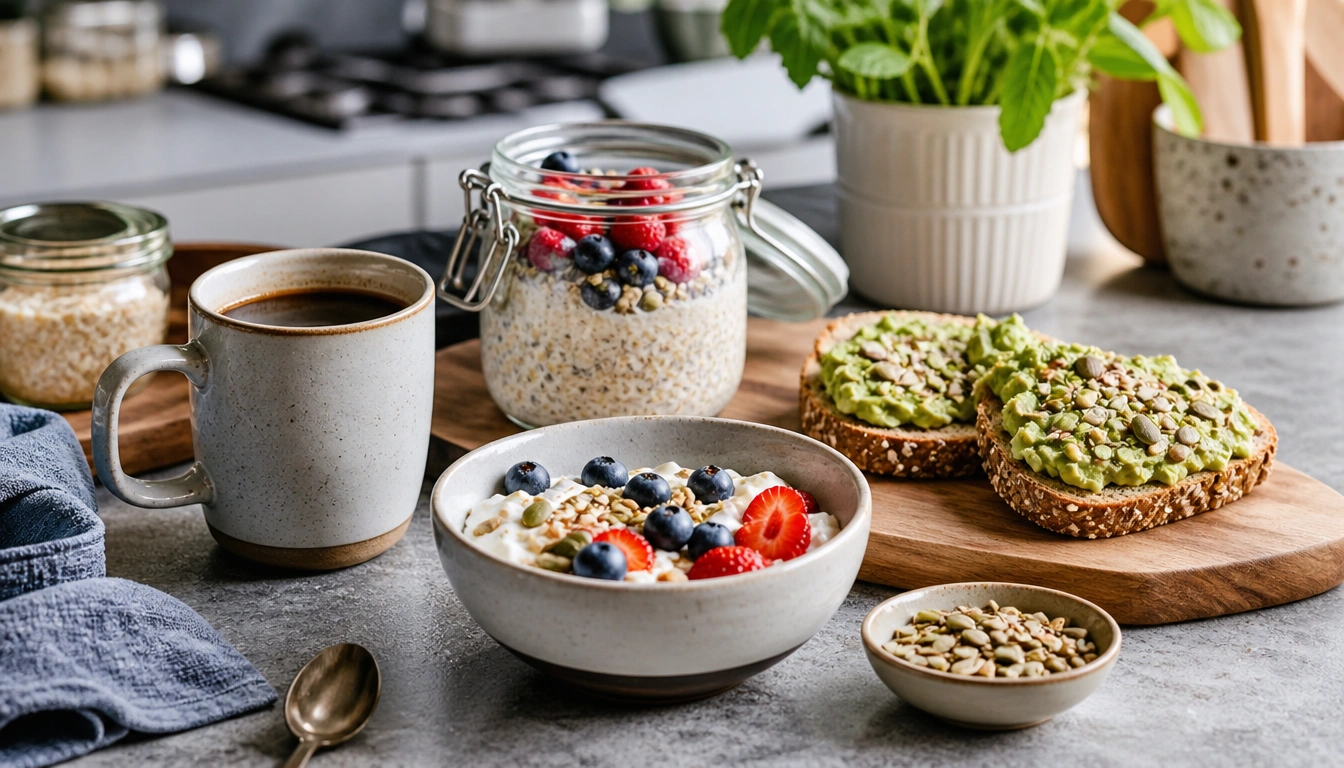
Fast, filling high-fiber breakfasts for busy workdays are usually built from a few dependable foods: oats, yogurt, fruit, seeds, whole-grain toast, beans, and nuts or nut butter. The most satisfying options combine fiber with protein and healthy fats, so you feel full longer and avoid the midmorning crash that often follows refined pastries or sugary cereal.
Key Takeaways
- Aim for a breakfast that moves you toward your daily fiber goal, not perfection. For many adults, 8 to 10 grams at breakfast is a practical starting point.
- Fiber works best when paired with protein and healthy fats, which slow digestion and make a meal more filling for meetings, commutes, and long mornings.
- Soluble fiber helps with blood sugar steadiness and satiety; insoluble fiber supports regularity and digestive health. Most breakfasts can include both.
- If mornings are hectic, use two modes: prep the night before or assemble a meal in under five minutes with pantry and fridge staples.
- Increase fiber gradually and drink enough fluids. A sudden jump can cause bloating, gas, or cramping, especially if you are not used to high-fiber foods.
Why busy mornings often turn into low-fiber breakfasts
Fiber-friendly breakfast ideas for busy professionals matter because the default workday breakfast is often built around speed, not staying power. A pastry, sweet cereal, or white toast may be easy to grab, but those foods usually lack the fiber that helps a meal last. The result is familiar: you eat quickly, feel okay for a short while, and then start looking for snacks before lunch.
Fiber is the part of plant foods that your body does not fully digest. That does not make it filler. It helps create a more gradual rise in blood sugar, supports fullness, and contributes to digestive regularity. The National Institutes of Health notes that most adults do not meet recommended fiber intake, which is one reason breakfast is such a useful place to make a small change that adds up.
For breakfast planning, it helps to think in two practical fiber types. Soluble fiber dissolves in water and forms a gel-like texture. It is common in oats, chia seeds, beans, apples, and berries. In breakfast terms, soluble fiber is the type that helps meals feel satisfying and can support steadier blood sugar after eating. Insoluble fiber does not dissolve in water and is common in whole grains, wheat bran, and the skins of many fruits and vegetables. At breakfast, it supports movement through the digestive tract and helps keep regularity on track.
Most real breakfasts include both, and that combination is useful. A bowl of oats with berries, for example, gives you more than one kind of fiber in a format that fits a rushed morning.
The fiber plus protein plus healthy fats formula
For a long work morning, fiber alone is usually not enough. The most dependable breakfasts combine fiber, protein, and healthy fats. This trio works better because each part slows digestion in a different way. Fiber adds bulk and slows the pace of absorption, protein helps with satiety, and healthy fats make the meal feel more substantial. Together, they are more likely to carry you through commuting, meetings, and concentrated desk work without an immediate hunger rebound.
A practical breakfast fiber target is 8 to 10 grams as a stepping stone, not a rule that defines success or failure. Think of that amount as a bridge toward your broader daily goal, which for many adults is roughly in the high 20s to low 30s grams per day depending on age and sex. If breakfast usually contains little or no fiber, getting to 8 grams is a meaningful improvement.
That target is easier to hit when you build meals around one main fiber source and then add protein and fat around it. For example:
- Oats plus Greek yogurt plus chia seeds
- Whole-grain toast plus eggs plus avocado
- Beans plus eggs plus salsa
- Yogurt plus berries plus nuts or seeds
These combinations are practical because they do not require perfect meal prep. They just need a pattern you can repeat on busy weeks.
Night-before breakfasts that are ready when you are
When the morning is packed, the easiest solution is to do the thinking the night before. That does not mean elaborate prep. It usually means assembling a breakfast in a jar, container, or lidded bowl so you can open the fridge and leave with something ready.
Overnight oats are one of the best options for busy professionals because they are cheap, flexible, and easy to customize. Rolled oats provide a solid base of fiber, while chia seeds, flaxseed, berries, and yogurt can raise both fiber and protein. The texture becomes soft and spoonable by morning, which makes it convenient for desk eating or a quick break between calls.
Yogurt parfaits are another strong choice, especially if you want something cool and portable. Plain Greek yogurt gives you protein, while raspberries, blackberries, sliced pear, high-fiber granola, hemp seeds, or ground flax add texture and fiber. The main caution is sugar-heavy toppings. A parfait can look healthy while still being low in fiber if most of the volume comes from sweetened granola or fruit syrup.
Night-before breakfasts work best when you keep a few staples in rotation: oats, chia or flax, plain yogurt, berries, and a crunchy fiber add-on such as nuts or seeds. That approach reduces decision fatigue and makes it more likely you will actually eat breakfast instead of skipping it.
Five-minute breakfasts for mornings that start fast
Some mornings do not leave room for jars or overnight prep. On those days, the goal is not culinary creativity. The goal is a breakfast you can assemble in minutes with foods you already keep on hand.
Seedy avocado toast is a strong savory option. Use whole-grain or sprouted bread, then add avocado and a topping such as hemp seeds, flaxseed, or sesame seeds. If you want more staying power, add a boiled egg or a side of plain yogurt. The bread and seeds bring fiber, the avocado contributes healthy fats, and any added protein helps round out the meal.
A microwave egg-and-bean mug is another fast option for people who prefer savory food in the morning. Beat eggs in a mug or small bowl, stir in rinsed beans and spinach, then microwave in short bursts until set. Salsa, hot sauce, or a sprinkle of cheese can add flavor without complicating the prep. Beans are especially useful here because they bring both fiber and plant protein in one ingredient.
Sweet breakfasts can be just as fast. Try fruit plus nut butter on whole-grain toast, plain yogurt topped with berries and seeds, or oatmeal made with milk and stirred with chia seeds or ground flax. If you keep a few staples visible and ready, a high-fiber breakfast becomes a default instead of a project.
Choose your base, then build around it
A simple way to make breakfast repeatable is to choose a base and then swap the toppings or mix-ins depending on your schedule. This keeps breakfast flexible without turning it into guesswork.
| Base | Best fiber add-ons | Easy protein or fat add-ons | Best for |
|---|---|---|---|
| Oats | Chia, flax, berries, sliced pear | Greek yogurt, milk, nuts | Make-ahead breakfasts and slow mornings |
| Yogurt | Raspberries, blackberries, oats, seeds | Nuts, nut butter, high-protein yogurt | Cold, portable, no-cook breakfasts |
| Whole-grain toast | Avocado, tomatoes, seeds, fruit spread with whole fruit on the side | Eggs, nut butter, cheese | Quick savory or sweet assemblies |
| Fruit | Berries, pears, apples, kiwi | Nut butter, yogurt, cottage cheese | Desk snacks or light breakfasts |
| Beans | Black beans, white beans, hummus | Eggs, avocado, cheese | Hearty savory meals |
This framework helps because it matches food choice to schedule. If you are rushing out the door, yogurt and berries may be the easiest. If you want something more substantial before a long meeting block, oats or beans may work better. If you do not like sweet breakfasts, toast, eggs, avocado, and beans can still deliver plenty of fiber.
What to skip when you want more fiber
Some breakfast foods seem convenient but do little for satiety. Refined pastries, croissants, doughnuts, many toaster pastries, and sugary cereals can be eaten quickly, but they usually provide more refined starch and added sugar than fiber. The same caution applies to some breakfast bars that market themselves as healthy while offering little real fiber or protein.
A quick label habit can help. Look for breakfast foods that list whole grains, oats, beans, seeds, nuts, or fruit near the top of the ingredient list. If a bar or cereal is mostly syrup, sugar, or refined flour, it may not keep you full for long, even if the packaging looks health-focused.
Another common mistake is under-hydrating when fiber goes up. Fiber absorbs water, and both soluble and insoluble forms work better when your fluid intake keeps pace. If you add seeds, beans, or bran suddenly but do not drink enough, you may feel more discomfort instead of more benefit.
How to increase fiber without discomfort
If your current breakfast is low in fiber, increase it gradually. The Mayo Clinic and the NIH both note that sudden jumps can lead to bloating, gas, and cramping. That is not a sign that fiber is bad; it usually means your digestive system needs time to adjust. A slower ramp-up is more comfortable and more sustainable.
Start by improving one breakfast habit at a time. You might add berries to yogurt, switch to whole-grain bread, or stir chia seeds into oats a few days a week. Then build from there. This gradual approach is especially helpful if you are also changing your overall diet, because a large jump in fiber from multiple meals at once can feel rough.
Hydration matters during the adjustment period. Water, milk, coffee, tea, and watery fruits all contribute to fluid intake, but the practical point is simple: do not increase fiber and forget fluids. If breakfast includes more oats, beans, seeds, or whole grains, make sure you are also drinking enough during the morning.
Some people need individualized advice before increasing fiber. Lower-fiber or modified eating plans may be appropriate for certain gastrointestinal conditions, including active inflammatory bowel disease, strictures, or severe gastroparesis. In those situations, a clinician or registered dietitian can help you decide what is appropriate for your symptoms and treatment plan.
Portable breakfast habits for the office and the commute
Portable breakfasts do not have to be elaborate. The most useful ones survive a commute, fit in a small container, and are easy to eat at a desk without a mess. Mason jars, leakproof containers, divided lunch boxes, and insulated bags can all help, especially if your morning starts on public transit or in the car.
For best results, keep wet and crunchy components separate until eating. That means yogurt in one container and granola or seeds in another, or toast packed separately from avocado if you are not eating immediately. If you are bringing eggs, beans, or grain bowls, choose containers that seal well and are easy to reheat if your office allows it.
Desk breakfasts work best when they are simple enough to eat while checking email or reviewing your calendar, but not so messy that you skip them altogether. If your schedule is unpredictable, it helps to keep a backup stash at work: packets of nuts, shelf-stable oatmeal, a box of whole-grain crackers, or single-serve nut butter can bridge the gap on very busy mornings. The goal is not a perfect routine. It is a breakfast pattern you can repeat even when the day starts early.
Frequently Asked Questions
How much fiber should an adult aim for at breakfast?
There is no official breakfast-only target, but 8 to 10 grams is a realistic starting point for many adults. Think of it as a stepping stone toward your daily fiber goal rather than a requirement for every meal.
What are the best high-fiber breakfast foods that require no cooking?
Good no-cook choices include plain Greek yogurt, berries, chia seeds, ground flax, nuts, nut butter, whole-grain cereal with a strong fiber count, and overnight oats made the night before. These are easy to combine into a filling meal.
What are the best 5-minute high-fiber breakfast ideas?
Whole-grain toast with avocado and seeds, yogurt with berries and flax, oatmeal with chia seeds, or eggs with beans and salsa are all realistic under-5-minute options. The best choice is the one you can repeat on busy mornings.
How can I make breakfast more filling with fiber, protein, and healthy fats?
Use the three-part formula: choose a fiber base such as oats, fruit, whole grains, or beans; add protein such as yogurt, eggs, or milk; then include healthy fats like avocado, nuts, seeds, or nut butter. That combination usually lasts longer than fiber alone.
How should I increase fiber without getting bloating or stomach discomfort?
Increase fiber gradually over days or weeks, not all at once, and drink enough fluids as you do it. Sudden jumps can cause gas, bloating, or cramping, especially if your diet has been low in fiber for a while.
The Bottom Line
A fast, filling breakfast does not need to be complicated. The most useful options are the ones built from familiar ingredients that combine fiber with protein and healthy fats, such as oats with yogurt and chia, whole-grain toast with avocado and eggs, or yogurt with berries and seeds.
If you want the easiest path, use one of two routines: prep the night before or assemble breakfast in under five minutes. Start with a modest fiber increase, drink enough fluids, and adjust based on how your digestive system feels.
For many busy professionals, the best breakfast is not the trendiest one. It is the one you can eat consistently, carry to work, and feel good about through the first half of the day.
Medical disclaimer
Medical disclaimer: This content is for educational and informational purposes only and is not a substitute for professional medical advice, diagnosis, or treatment. Dietary needs and supplement suitability vary by individual.
Sources
- National Institutes of Health (NIH) — nih.gov. Accessed November 2026.
- Mayo Clinic — mayoclinic.org. Accessed November 2026.
