
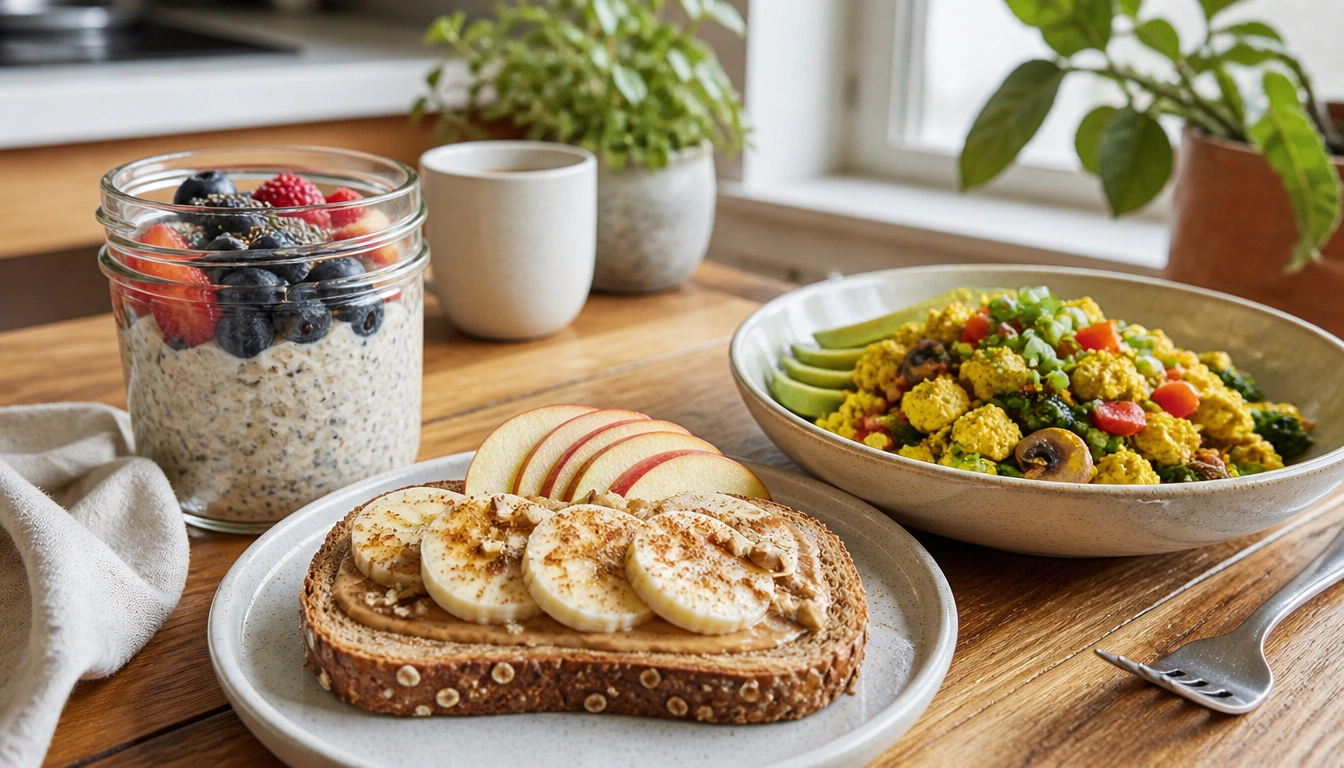
A vegetarian beginner can start with simple breakfasts built from whole grains, fruit, nuts, seeds, beans, or tofu. Good low-effort options include overnight oats with chia, whole-grain toast with nut butter and berries, high-fiber cereal with fruit, or beans and vegetables in a wrap. Start with modest portions, increase fiber gradually, and drink plenty of fluids so your digestion can adjust comfortably.
Key Takeaways
- Breakfast is one of the easiest meals to make fiber-forward because a small swap can improve fullness, energy, and digestion for the rest of the day.
- Soluble fiber from oats, chia, beans, and some fruit helps support steadier blood sugar and a more filling breakfast; insoluble fiber from whole grains, seeds, and vegetable skins helps keep stools moving.
- A practical breakfast pattern is whole grain + fruit or vegetables + plant protein + healthy fat.
- If you are new to fiber, increase it slowly over several weeks to lower the chance of bloating, gas, or cramps.
- Water matters more as fiber rises; higher-fiber eating works best when you stay well hydrated.
- People with IBS, FODMAP triggers, or inflammatory bowel disease may need a personalized plan rather than a one-size-fits-all high-fiber breakfast.
Why breakfast is the easiest place to start
For vegetarian beginners, breakfast is often the simplest meal to make fiber-friendly because it is usually built from a few repeatable ingredients rather than a full recipe. That makes it easier to trade refined grains and meat-heavy patterns for foods that provide more fiber, such as oats, whole-grain bread, fruit, seeds, beans, and tofu.
Breakfast also sets the tone for the day. A meal with fiber, protein, and healthy fat tends to stay with you longer than a low-fiber pastry or a plain bowl of refined cereal. That can help with morning satiety, smoother energy, and fewer mid-morning crashes. The USDA’s dietary guidance emphasizes building fiber intake from whole foods rather than relying on processed products with added fiber alone.
If you are used to bacon, sausage, or eggs as the center of breakfast, the shift can feel unfamiliar at first. The easiest approach is not to build a brand-new “perfect” breakfast. It is to make one or two practical swaps you can repeat.
Fiber basics for breakfasts that actually keep you full
Fiber comes in two broad types, and breakfast foods usually contain a mix of both. Soluble fiber dissolves in water and forms a gel-like texture. It is found in oats, chia seeds, beans, apples, pears, berries, and some other fruits. In breakfast meals, soluble fiber can help slow digestion and support steadier blood sugar after eating.
Insoluble fiber does not dissolve in water. It adds bulk to stool and helps food move through the digestive tract. Whole grains, nuts, seeds, vegetable skins, and many bran-rich cereals are common sources. For many people, this is the type of fiber that supports regularity.
For adults, public health guidance commonly uses a benchmark of about 14 grams of fiber per 1,000 calories, which often works out to roughly 25 grams daily for many women and 38 grams for many men, depending on age and energy needs. Many people fall short of that target, so breakfast can help close the gap without requiring a complicated diet overhaul.
The most useful way to think about fiber at breakfast is not as a single nutrient to chase, but as a support for fullness, digestion, and daily consistency. That is why a breakfast with oats and berries behaves differently from white toast alone, even if both are quick to prepare.
Build a breakfast formula you can repeat
A reliable vegetarian breakfast formula is: whole grain + fruit or vegetables + plant protein + healthy fat. You do not need every component in a large amount, but including each one makes the meal more balanced and more satisfying.
Whole grains bring more fiber than refined grains. Fruit or vegetables add more fiber, volume, and micronutrients. Plant proteins such as yogurt, milk, soy milk, tofu, beans, or nut butter can help make the meal feel substantial. Healthy fats from nuts, seeds, avocado, or nut butter can further improve satiety.
Here is the practical version: if your breakfast is mostly carbohydrate, add protein and fat. If it is mostly protein but low in fiber, add fruit, oats, whole-grain toast, beans, or seeds. That small adjustment often matters more than trying to make breakfast elaborate.
Sweet breakfast ideas
Overnight chia-oat jars: Mix rolled oats, milk or a fortified plant milk, and chia seeds. Add berries in the morning or the night before. This is one of the easiest ways to get soluble fiber, some insoluble fiber, and healthy fats in a make-ahead meal.
Yogurt or milk-based bowls: Use plain yogurt or a milk-based base with oats, fruit, and a spoonful of nuts or seeds. If you prefer plant-based eating, soy yogurt or fortified soy milk can work well. The goal is not to overload the bowl; it is to make it more filling than a plain dairy product or smoothie alone.
High-fiber cereal with fruit and seeds: Choose a cereal that is genuinely high in fiber, then add berries, sliced pear, or banana plus walnuts, pumpkin seeds, or flax. This is a good “no-cook” breakfast for busy mornings.
Nut-butter toast with berries: Use 100% whole-grain or sprouted bread, spread nut butter, and top with berries or banana. It is simple, portable, and easier to tolerate than many heavier breakfast options when you are first increasing fiber.
Savory breakfast ideas
Beans on toast or in a wrap: White beans, black beans, or pinto beans can turn toast or a whole-grain wrap into a fiber-rich breakfast. Add salsa, spinach, or peppers for more volume and flavor.
Tofu scramble with vegetables: Crumbled tofu cooks quickly and pairs well with mushrooms, spinach, onions, tomatoes, or bell peppers. Serve it with whole-grain toast or a tortilla to raise the fiber content.
Savory grain bowls: Leftover brown rice, quinoa, or barley can become breakfast with beans, avocado, and chopped vegetables. This is especially useful if you do not enjoy sweet foods first thing in the morning.
Avocado and seed toppings: Avocado on whole-grain toast, topped with hemp, sesame, or pumpkin seeds, can be a good bridge meal for beginners who want something satisfying without a lot of cooking.
Increase fiber slowly so your gut can adjust
One of the most common beginner mistakes is adding a very high-fiber breakfast all at once. If your current intake is low, your gut may need time to adapt. Moving too fast can cause bloating, gas, cramping, or a change in bowel habits.
A better approach is “start low, go slow.” Add one higher-fiber item at a time, then give your body a few days or a week before making another jump. For example, begin with one slice of whole-grain toast instead of white toast, or add a tablespoon of chia to oats rather than doubling the amount of seeds and beans on the same day.
Pay attention to how you feel, not just to the nutrition label. If you notice persistent discomfort, loosen your pace and simplify the meal. Some people do well with oats and berries right away, while others tolerate toasted bread and nut butter better before moving to beans or larger servings of seeds.
If symptoms are severe, persistent, or accompanied by significant changes in bowel habits, that is a reason to speak with a registered dietitian or clinician rather than trying to push through.
Hydration matters as much as the fiber itself
Fiber works best when fluids are available. Soluble fiber absorbs water and forms a gel, and insoluble fiber helps stool move through the digestive tract. Without enough fluid, a sudden increase in fiber can backfire and make constipation worse instead of better.
That does not mean you need a special drink or a complicated hydration plan. It means pairing breakfast with water, milk, fortified plant milk, or another non-sugary beverage and continuing to drink fluids during the morning. If your new breakfast includes oats, chia, beans, or bran cereal, hydration becomes even more important.
A useful habit is to think of the breakfast plate and the drink together. If the meal is dry and dense, such as toast, cereal, or a grain bowl, make sure there is a fluid alongside it. This is especially helpful when you are still adjusting to more fiber.
When sensitive digestion changes the plan
Not every vegetarian beginner should aim for the same fiber pattern. If you have irritable bowel syndrome, FODMAP triggers, or an inflammatory bowel condition, a very high-fiber breakfast may not be the best starting point. Some high-fiber foods are also more fermentable and can cause discomfort in sensitive people.
That does not mean fiber is off-limits. It means the type, amount, and timing may need to be individualized. For example, some people tolerate oats, chia, citrus, or firm bananas better than large servings of beans, certain bran cereals, or some raw fruits and vegetables. Others may need guidance from a dietitian to balance fiber with symptom control.
If you have a diagnosed digestive condition, use broad food rules carefully. A food that works well for one person may be a poor fit for another, even if both are vegetarian. Personalized advice is more useful than trying to force a generic “high-fiber” plan.
Make it easier with smart shopping and prep
A good fiber-friendly breakfast pattern becomes easier when your kitchen already has the right staples. Keep rolled oats, whole-grain bread, high-fiber cereal, chia or flax seeds, nut butter, canned beans, tofu, berries, bananas, apples, and frozen fruit on hand. These foods cover most quick breakfast combinations without requiring special recipes.
Batch prep helps too. You can mix several jars of overnight oats at once, portion nuts and seeds into small containers, or prep tofu and vegetables the night before. Leftover grains from dinner can become the base for a savory breakfast the next day.
If your mornings are rushed, choose combinations that require assembly rather than cooking. Cereal with fruit and seeds, toast with nut butter and berries, or a wrap filled with beans and vegetables are all realistic options. The best breakfast is the one you can repeat most days.
Common mistakes to avoid as you begin
Too much fiber too fast is the biggest issue for many beginners. Another common mistake is building a breakfast that is fiber-rich but not satisfying because it lacks protein or fat. A bowl of fruit alone may be healthy, but it often does not hold hunger as well as oats plus yogurt, or toast plus nut butter.
It is also easy to rely too heavily on packaged products that advertise added fiber while the rest of the meal stays low in quality and variety. Processed high-fiber bars or cereals can be useful in a pinch, but they work best when they are part of a food-first pattern built around whole grains, fruits, vegetables, nuts, seeds, beans, and soy foods.
For vegetarian beginners, the goal is not to make breakfast more complicated. It is to make it more complete: enough fiber to support digestion, enough protein and fat to support fullness, and enough fluids to help the whole meal work comfortably.
Frequently Asked Questions
How can a vegetarian beginner increase fiber at breakfast without getting bloated or gassy?
Increase fiber gradually instead of making a sudden jump. Start with one change, such as swapping to whole-grain bread or adding a small spoonful of chia, then build from there. Drink fluids with the meal and pay attention to which foods feel gentle versus irritating.
What are the best high-fiber breakfast foods for vegetarians?
Good options include oats, whole-grain bread, high-fiber cereal, berries, pears, chia seeds, flax, nuts, beans, tofu, and fortified soy foods. The most useful choices are usually the ones you can prepare consistently and that fit your digestion.
How much fiber should I aim for at breakfast and per day?
There is no single required breakfast target, but breakfast can help you make progress toward daily needs. Public health guidance commonly uses about 14 grams of fiber per 1,000 calories, which often works out to roughly 25 grams daily for many women and 38 grams for many men, depending on overall intake.
What’s the difference between soluble and insoluble fiber in breakfast foods?
Soluble fiber dissolves in water and forms a gel-like texture. It is common in oats, chia, beans, and some fruit and can help with fullness and steadier blood sugar. Insoluble fiber, found in whole grains, nuts, seeds, and vegetable skins, helps add bulk and supports regular bowel movements.
Do I need to use supplements or can I get enough fiber from food alone?
Most people can get enough fiber from food alone if they build meals around whole grains, fruit, vegetables, beans, nuts, and seeds. Food-first choices are preferred because they provide fiber along with vitamins, minerals, and other beneficial plant compounds.
The Bottom Line
A fiber-friendly vegetarian breakfast does not need to be complicated. The easiest wins are whole grains, fruit or vegetables, a plant protein, and a source of healthy fat, such as oats with berries and chia or toast with nut butter and fruit.
If you are new to higher-fiber eating, go gradually and keep hydration in mind. That approach is more likely to support fullness and regular digestion without triggering unnecessary bloating.
If you have IBS, FODMAP concerns, or another digestive condition, a personalized plan is more useful than forcing a generic high-fiber breakfast pattern. The right breakfast is the one you can tolerate, repeat, and enjoy.
Medical disclaimer
Medical disclaimer: This content is for educational and informational purposes only and is not a substitute for professional medical advice, diagnosis, or treatment. Dietary needs and supplement suitability vary by individual.
Sources
- U.S. Government / Health Authority — dietaryguidelines.gov. Accessed November 2026.
- Mayo Clinic — mayoclinic.org. Accessed November 2026.
