
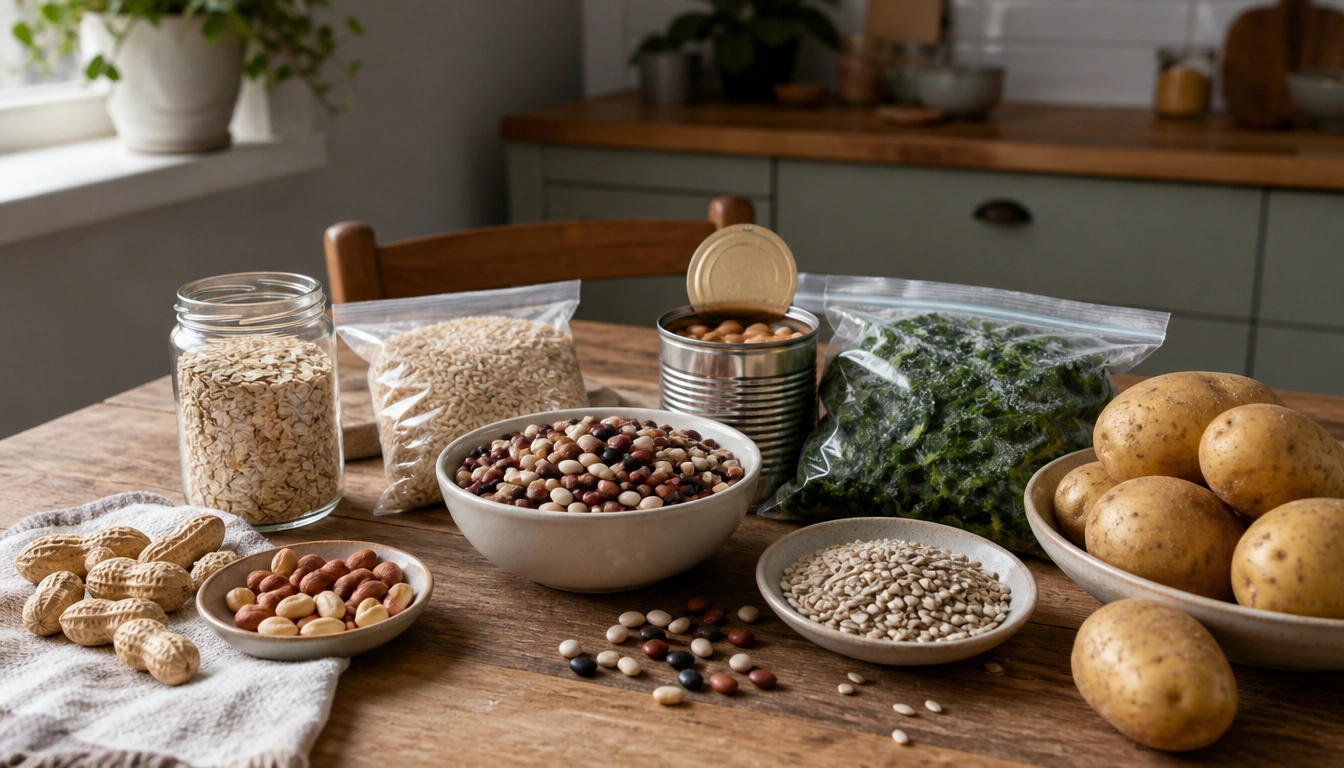
Affordable magnesium foods are usually everyday staples rather than expensive specialty items. Beans, lentils, oats, brown rice, whole-wheat foods, peanuts, sunflower seeds, potatoes with the skin, and frozen spinach can all help you get more magnesium from food. For most healthy adults, a budget-friendly mixed diet is enough to make a real difference without supplements.
Key Takeaways
- Magnesium-rich foods often overlap with high-fiber foods, so budget staples like beans, oats, and whole grains do double duty.
- Refining grains removes magnesium-rich bran and germ, which is why brown rice, oats, and whole-wheat foods beat refined versions when prices are similar.
- Dried or canned beans, frozen spinach, peanuts, and sunflower seeds are often cheaper per serving than imported superfoods or specialty nuts.
- Food sources of magnesium are generally safe; side effects and upper limits mainly apply to supplemental magnesium, especially for people with kidney disease.
- Simple prep habits like soaking beans, choosing frozen greens, and buying bulk dry goods can improve usefulness and reduce waste.
Why magnesium matters when you are shopping on a budget
Magnesium helps with muscle and nerve function, energy production, blood glucose control, blood pressure regulation, and the body’s use of calcium and potassium. According to the National Institutes of Health, many adults do not consistently get enough from food. That does not mean you need expensive powders or imported “superfoods.” In practice, the cheapest magnesium foods are often the same foods that help stretch a grocery budget: beans, grains, frozen vegetables, and simple nuts or seeds.
This matters because low-cost foods are most useful when they bring more than one benefit. A food that offers magnesium, fiber, protein, and long shelf life is often a better buy than a trendy item that is expensive and difficult to use before it spoils. For budget shoppers, magnesium is easiest to improve by upgrading staple purchases rather than adding a separate supplement routine.
What makes a good magnesium food for budget shoppers
A good magnesium food on a budget usually has four traits: it is nutrient-dense, it comes in an affordable form, it stores well, and it fits into normal meals. That is why the best options are often dry goods, canned goods, and frozen produce. These items are easy to keep on hand, which reduces waste and makes it more likely you will actually eat them.
Magnesium is also closely linked with fiber-rich foods. In plants, magnesium is concentrated in chlorophyll and in the fibrous outer layers of grains and legumes. So when you choose foods that are naturally high in fiber, you often raise magnesium at the same time. This is one reason beans, oats, and whole grains are such dependable budget choices.
Another useful rule is to compare cost per serving, not just shelf price. A bag of dried lentils or a tub of oats may look plain, but it can produce many meals. That makes the cost per magnesium-rich serving much lower than foods that are marketed as premium health products.
Best low-cost magnesium foods by aisle
Dry goods and canned goods: Beans and lentils are among the most practical magnesium foods for budget shoppers. Black beans, kidney beans, pinto beans, chickpeas, and lentils all contribute magnesium along with fiber and protein. Dried beans are usually the least expensive option per serving, while canned beans are a good convenience choice when time matters.
Grains and breakfast foods: Oats are an especially smart buy because they are inexpensive, easy to store, and useful in both sweet and savory meals. Brown rice and whole-wheat bread or pasta also help, especially when the price difference from refined versions is small. These foods are not just fillers; they contribute meaningful magnesium along with other nutrients preserved in the bran and germ.
Seeds and nuts: Sunflower seeds and peanuts are often much more affordable than specialty nuts. They can add magnesium to oatmeal, yogurt, salads, or sandwiches. Peanut butter is also useful, though it is less magnesium-dense than whole seeds. If you buy nut or seed products, plain versions are usually the best value.
Vegetables and potatoes: Frozen spinach is one of the easiest low-cost magnesium vegetables to keep in the freezer. Potatoes with the skin are another dependable staple. Neither food is exotic, but both are practical ways to add magnesium without changing your whole shopping pattern. Frozen greens are especially helpful because they reduce spoilage, and potatoes are widely available year-round.
A few realistic examples: A bowl of oatmeal with peanut butter, a lunch of beans and brown rice, or a dinner with potatoes and frozen spinach can all move your magnesium intake in the right direction without any specialty ingredients.
How much magnesium most adults actually need
According to the National Institutes of Health and federal food-label guidance, adult men generally need about 400 to 420 milligrams of magnesium per day, while adult women generally need about 310 to 320 milligrams per day. During pregnancy, the target is higher, around 350 to 360 milligrams per day. The Daily Value used on food labels is 420 milligrams.
You do not need to hit that number with one food. It is usually easier and more realistic to build magnesium across the day. For example, breakfast oats, a bean-based lunch, and a dinner with whole grains or vegetables can all add up. This is one reason budget shoppers benefit from choosing staples that show up in multiple meals rather than relying on a single “superfood.”
Needs can be higher during pregnancy, and older adults may have different nutrient needs or medication issues that affect food choices. If you have a medical condition or a restricted diet, individual guidance matters more than any general shopping list.
Whole grains versus refined grains for magnesium
Whole grains usually contain more magnesium than refined grains because refining removes the bran and germ, where much of the mineral is stored. That is why brown rice is more useful than white rice for magnesium, and why whole-wheat bread or pasta is more helpful than refined white versions when prices are close.
This does not mean refined grains are “bad.” They can still fit into a healthy diet, and sometimes they are cheaper or more available. But if you are specifically trying to raise magnesium on a budget, whole forms are usually the better buy. Rolled oats are another excellent example because they are minimally processed, shelf-stable, and easy to use in many meals.
The tradeoff is simple: if whole-grain products cost only a little more, they are usually worth choosing for their mineral and fiber content. If the price gap is large, you can still get magnesium from beans, seeds, and vegetables while using refined grains more sparingly.
Smart buying and prep strategies that save money
Bulk dry goods are often the most budget-friendly way to shop for magnesium. Dry beans, lentils, oats, and rice keep well and typically cost less per serving than more processed convenience foods. If you have pantry space, buying larger packages can reduce trips to the store and help lower waste.
Canned beans are useful when cooking time is tight. They cost a bit more than dried beans, but they save time and still provide a solid magnesium boost. Rinsing canned beans can reduce sodium if that matters for your diet.
Frozen spinach is another smart purchase because it is already washed, chopped, and ready to use. It is less likely to spoil before you finish it, which makes it a better value than fresh greens for many households. Frozen collards or mixed greens can work too if spinach is unavailable.
Soaking beans and, when appropriate, sprouting or thorough cooking can improve texture and may help reduce compounds that can interfere modestly with mineral absorption. Boiling grains and legumes also makes them easier to digest for many people. These steps do not need to be complicated: soak dried beans overnight if you can, cook a larger batch, and freeze leftovers in meal-sized portions.
One more budget tactic is to build meals around a base of oats, beans, potatoes, or whole grains, then add smaller amounts of seeds or nut butter for extra magnesium. That approach stretches pricier ingredients instead of making them the center of every meal.
A simple budget shopping shortlist
If you want a short list to start with, think in combinations rather than isolated foods. One low-cost shopping pattern might include oats for breakfast, canned or dried beans for lunches, frozen spinach for quick sides or soups, and peanuts or sunflower seeds for snacks. Another useful pattern is brown rice, lentils, potatoes with skin, and peanut butter.
Mixing these foods works because they are flexible. Oats can become breakfast or a binder in savory recipes. Beans can be used in chili, soup, tacos, salads, and rice bowls. Frozen spinach can disappear into eggs, pasta, soups, and casseroles. Potatoes can be baked, roasted, or microwaved with minimal effort.
If store availability is limited, do not get stuck waiting for a perfect list. Choose the cheapest reliable options you can actually buy and use. A practical pantry of magnesium foods is better than a theoretical list of ingredients that are too expensive, too specialized, or too perishable.
Food first, supplements second: safety and when to ask for help
For healthy people, getting magnesium from food is generally safe. The kidneys normally help regulate excess magnesium from the diet, which is one reason food sources are preferred. The upper limit that people often hear about mainly applies to supplemental magnesium, not to magnesium from ordinary foods.
That distinction matters because supplemental magnesium can cause side effects such as diarrhea, nausea, or abdominal cramping, especially at higher doses. People with kidney problems need extra caution, because reduced kidney function can make it harder to clear excess magnesium. The National Institutes of Health and other public health sources advise speaking with a clinician before using magnesium supplements if you have kidney disease or take regular prescription medicines.
You should also ask for medical guidance if you are trying to treat symptoms such as ongoing muscle weakness, frequent cramping, or palpitations. Those symptoms can have many causes, and more magnesium is not always the answer. For most budget shoppers, the safest first step is to improve food quality with low-cost staples and only consider supplements when a clinician says they are needed.
Frequently Asked Questions
Which cheap foods are highest in magnesium per serving?
Among budget-friendly foods, sunflower seeds, beans, lentils, oats, brown rice, peanuts, and potatoes with skin are strong choices. Spinach is also useful, especially frozen or cooked. The best value usually comes from foods that are both mineral-rich and easy to use often.
Are beans, oats, and frozen spinach good magnesium sources?
Yes. Beans provide magnesium along with protein and fiber, oats are a cheap whole grain with useful mineral content, and frozen spinach is a convenient vegetable source. They are especially helpful because they are affordable, versatile, and easy to keep on hand.
How can I raise magnesium intake on a tight grocery budget?
Build meals around low-cost staples such as oats, beans, brown rice, potatoes, and frozen greens. Add peanuts or sunflower seeds when you can. Buying dried beans, choosing frozen vegetables, and swapping refined grains for whole grains when prices are close are practical ways to improve intake.
Do whole grains have more magnesium than refined grains?
Usually yes. Refining removes the bran and germ, which contain much of the grain’s magnesium. Brown rice, whole-wheat bread, whole-wheat pasta, and oats are generally better magnesium choices than white rice or refined white flour products.
Are magnesium supplements necessary if I eat magnesium-rich foods?
Not necessarily. Many people can improve intake through food alone, especially by eating beans, whole grains, seeds, and vegetables regularly. Supplements mainly matter when a clinician identifies a need or when food intake is not enough, and they require extra caution in people with kidney disease.
The Bottom Line
If you are shopping on a budget, the best magnesium foods are usually ordinary staples, not specialty products. Beans, lentils, oats, brown rice, whole-wheat foods, peanuts, sunflower seeds, potatoes with skin, and frozen spinach can all help.
The most useful strategy is to swap in whole, shelf-stable foods that you can use often and waste less of. Buying bulk dry goods, choosing frozen greens, and using canned beans when time is tight make it easier to stay consistent.
Food sources are the safest first step for most people. Supplements are a different category and deserve extra caution, especially if you have kidney problems or take medications. If you are unsure, ask a healthcare professional before using a magnesium supplement.
Medical disclaimer
Medical disclaimer: This content is for educational and informational purposes only and is not a substitute for professional medical advice, diagnosis, or treatment. Dietary needs and supplement suitability vary by individual.
Sources
- National Institutes of Health (NIH) — nih.gov. Accessed October 2026.
- National Institutes of Health (NIH) — nih.gov. Accessed October 2026.
- National Institutes of Health (NIH) — nih.gov. Accessed October 2026.
- U.S. Government / Health Authority — hhs.gov. Accessed October 2026.
- Academic Research Institution — harvard.edu. Accessed October 2026.
