
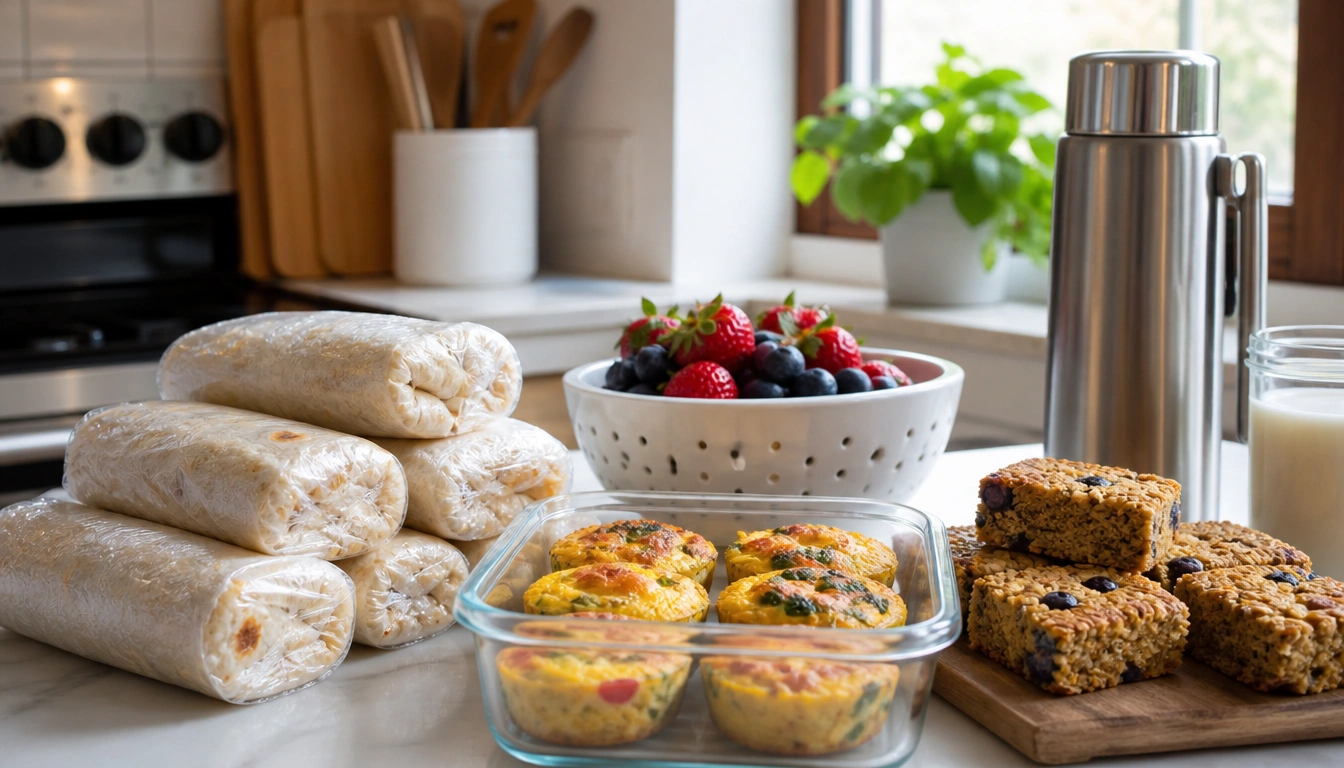
The best freezer-friendly breakfast ideas for busy parents are high in fiber and protein, reheat well, and can be portioned for both adults and kids. Think breakfast burritos, English muffin sandwiches, egg muffins, baked oatmeal squares, and egg bites. These options are more sustaining than sweet pastries or cereal because they help steady blood sugar and keep hunger down longer.
Key Takeaways
- Fiber plus protein makes breakfast more filling and steadying than sugary grab-and-go foods.
- Savory handhelds, egg bites, and baked oatmeal are the most reliable freezer formats for families.
- Cool food completely, wrap it well, and use within 1–3 months for best texture and quality.
- Toddlers need softer textures, small pieces, and careful attention to choking hazards.
- Freezer breakfasts can be adapted for gluten-free, dairy-free, and vegan diets with a few ingredient swaps.
Why freezer breakfasts solve the weekday morning problem for families
Busy mornings often push families toward whatever is fastest, not what is most satisfying. A freezer stocked with ready-to-reheat breakfasts takes pressure off the morning rush and cuts down on decision fatigue. Instead of choosing between skipped meals and packaged convenience foods, you can pull out something homemade that already has a better balance of nutrients.
That balance matters. Public health guidance from the NHS and Harvard-based nutrition education emphasizes breakfasts that combine higher-fiber carbohydrate foods with protein and healthy fats. This mix tends to digest more slowly than pastries, sweet cereal, or white-flour breakfast sandwiches. The result is steadier energy, better satiety, and fewer mid-morning hunger spikes.
For children, that steadier start can be helpful at school, too. A breakfast built from oats, eggs, beans, yogurt, or whole grains is more likely to keep them focused than a sugar-heavy option that burns through quickly. For adults, it can mean less grazing before lunch and a calmer start to the day.
Freezer breakfasts also solve a practical family problem: timing. A dish that can be reheated in minutes works on days when one child is late for the bus, another wants a second round of food, and you are trying to leave the house with coffee in hand. Convenience is not the enemy of healthy eating when the convenience food is something you made ahead with real ingredients.
What makes a freezer breakfast truly filling: fiber, protein, and healthy fats
The most satisfying freezer breakfasts usually include at least two of these three pieces: fiber-rich carbohydrates, protein, and healthy fats. Fiber helps slow digestion and supports fullness. Protein supports satiety and helps meals feel more substantial. Fat adds flavor and staying power, especially when the meal would otherwise lean dry or plain.
This is why a plain muffin or sweet toaster pastry usually does not hold up as a breakfast on its own. It may be easy to eat, but it often leaves people hungry again soon after. By contrast, an egg sandwich on whole-grain bread, a burrito with beans and vegetables, or baked oatmeal with yogurt on the side gives the body more to work with.
For freezer meal planning, the easiest formats are the ones that reheat evenly and do not depend on crisp textures to be enjoyable. Good options include:
- Breakfast burritos with eggs, beans, cheese, and vegetables
- English muffin sandwiches with egg and lean protein
- Egg muffins or egg bites with vegetables and cheese
- Baked oatmeal squares with fruit, seeds, or nuts
- Blender muffins made with oats, banana, and yogurt
If you are trying to build a balanced breakfast without overthinking it, use the freezer item as the base and add one simple side such as fruit, milk, yogurt, or cut vegetables. That keeps the meal practical while improving nutrition and variety.
Savory handhelds: breakfast burritos and English muffin sandwiches
Savory handhelds are often the best answer for parents who need breakfast to be portable. They hold up well in the freezer, are easy to eat in the car or between errands, and can be filled with ingredients that cover the main nutrition bases.
Breakfast burritos work especially well because tortillas are flexible and forgiving after freezing. Scrambled eggs, black beans or pinto beans, sautéed peppers, onions, potatoes, and a little cheese make a filling combination. A whole-wheat tortilla adds more fiber than a refined one, but any sturdy tortilla works if it is wrapped tightly. To make burritos less soggy, cool the filling before assembling and avoid overly wet add-ins.
English muffin sandwiches are another strong choice, especially for kids and adults who want something familiar. Use whole-grain English muffins, egg, and a protein such as turkey sausage, Canadian bacon, or a vegetarian option like a bean patty. If you want better texture after reheating, keep moisture-heavy toppings like tomato slices or fresh avocado out of the freezer version and add them after warming.
A useful approach is to assemble a batch with a few flavor variations so nobody gets bored. One tray might be egg, cheese, and spinach. Another might be egg, beans, and salsa. For families with mixed preferences, this makes it easier to satisfy both adults who like savory breakfasts and kids who prefer simple flavors.
Protein-packed bites: egg muffins and yogurt or cottage cheese egg bites
Egg muffins and egg bites are among the most practical freezer breakfasts because they reheat quickly, portion easily, and can be customized with whatever vegetables are in the fridge. They are also a good choice when you want something that is not sandwich-based.
Egg muffins are basically mini baked frittatas. Whisk eggs with chopped vegetables, a little cheese, and optional herbs, then bake in a muffin tin until set. Spinach, mushrooms, peppers, and broccoli work well. If you want more staying power, add diced cooked potato, beans, or a bit of turkey sausage. The smaller size makes them useful for children, but they are still satisfying for adults when paired with fruit or toast.
Yogurt or cottage cheese egg bites offer a softer, creamier texture. Blending plain Greek yogurt or cottage cheese into the egg mixture adds moisture and a little extra protein. These are useful if your family dislikes dry egg muffins. Because they are small and tender, they are also one of the easier freezer breakfast ideas for younger eaters, as long as the texture is appropriate for the child’s age.
For the best freezer results, do not overbake. Eggs that are baked just until set tend to reheat better and stay less rubbery. Let them cool fully before freezing, then store them in a single layer or with parchment between layers so they do not stick together.
Comforting make-ahead grains: baked oatmeal squares and similar options
If your family likes a sweeter breakfast, baked oatmeal is one of the most freezer-friendly options you can make. It gives you the comfort of a warm grain-based breakfast without relying on a sugary pastry. Rolled oats bring fiber, and they pair well with fruit, nuts, seeds, yogurt, or milk.
Baked oatmeal can be made in a large pan, cooled, and cut into squares. Apples, berries, cinnamon, banana, and pumpkin are all easy additions. Chia seeds or ground flax can add more fiber and help the mixture set. For families that prefer less sweetness, the recipe can stay lightly sweetened and still taste good after reheating.
Similar options include banana-oat muffins, baked oatmeal cups, or breakfast bars made from oats and fruit. These are especially helpful for households that want a grab-and-go option that feels a little more like a snack but still has better nutrition than a pastry. If you serve baked oatmeal with plain yogurt or a glass of milk, the meal becomes more balanced and filling.
To improve texture after freezing, let the oatmeal cool completely, slice it into portions, and freeze the pieces separately before bagging them. This keeps them from clumping and makes it easier to grab just what you need on busy mornings.
How to freeze, store, and reheat without sogginess or freezer burn
Good freezer breakfast ideas can fail if they are stored poorly. The goal is to protect texture, prevent freezer burn, and make reheating simple enough that you will actually use the food.
Start by cooling cooked food completely before freezing. Putting hot food into the freezer can raise the temperature inside the freezer and affects surrounding foods. Once the food is cool, wrap it tightly. Parchment paper, foil, plastic wrap, or reusable freezer wraps can all help. Then place the item in a freezer bag or airtight container and press out as much air as possible.
Label the package with the date and food name. For best quality, use homemade freezer breakfasts within 1 to 3 months. They may still be safe longer if kept frozen properly, but texture and flavor are usually better inside that window.
Reheating depends on the food. Burritos and sandwiches often do well from frozen in the microwave or toaster oven, though thawing overnight can give a more even result. Egg muffins and egg bites usually reheat quickly from frozen. Baked oatmeal often tastes best when warmed gently with a splash of milk or topped with yogurt after heating. If you want less sogginess, avoid over-wrapping the food while reheating and let steam escape for a moment before serving.
Age and allergy adaptations: toddlers, gluten-free, dairy-free, vegan
Freezer breakfasts can work for many dietary needs with a few adjustments. For toddlers and young children, texture matters as much as ingredients. Keep pieces small, soft, and easy to chew. Cut burritos and sandwiches into age-appropriate portions, and avoid large chunks of hard vegetables, whole nuts, or large seeds that could pose a choking hazard. For children under 2, keep added sugars to a minimum and rely more on fruit, oats, eggs, and plain dairy or fortified alternatives.
For gluten-free families, use certified gluten-free oats and gluten-free bread or tortillas. Baked oatmeal, egg muffins, and egg bites are often the easiest starting points because they can be naturally gluten-free when you use the right ingredients.
For dairy-free breakfasts, use a nondairy milk that fits the recipe and skip cheese or replace it with a dairy-free alternative if desired. For vegan breakfasts, tofu scramble burritos, bean-filled wraps, and oat-based baked goods made with plant milk can all work well. The main idea is still the same: include a fiber source, a protein source, and something that holds up after freezing.
For families managing allergies, always check labels on tortillas, bread, sausage, and plant-based swaps, since hidden ingredients can vary by brand. If you are cooking for a child with food allergies or a medical dietary restriction, individual guidance from a pediatric clinician or dietitian is worth getting.
Simple pairing ideas and a one-hour prep workflow
A freezer breakfast becomes more useful when you pair it with a small side that fills out the plate. A burrito plus fruit. Egg muffins plus toast. Baked oatmeal plus yogurt. A sandwich plus berries or cherry tomatoes. These combinations are easy to assemble and help keep breakfast from feeling skimpy.
If you want a realistic weekend workflow, choose one or two breakfast items rather than trying to make everything. Start by gathering containers, parchment, labels, and muffin tins. While one item bakes, assemble the next. Cook fillings first so they have time to cool. Then portion, wrap, label, and freeze in a single layer before stacking.
A simple one-hour setup might look like this: mix and bake egg muffins while the oven is hot, prepare a tray of burrito filling or baked oatmeal, cool everything, portion the food, and place it in the freezer. If your freezer space is tight, flatten bagged items so they stack neatly and freeze faster.
The most useful rule is to make foods your family will actually eat. A freezer full of technically healthy breakfasts is not helpful if nobody wants them. Start with the flavors your household already likes, then add more vegetables, whole grains, and protein gradually. That is usually the easiest way to turn freezer cooking into a habit that sticks.
Frequently Asked Questions
How do I freeze breakfast burritos, muffins, or egg bites without them getting soggy?
Cool them completely first, then wrap each item tightly so air cannot get in. For burritos and sandwiches, parchment plus foil or a freezer bag works well. For egg muffins and egg bites, freeze them in a single layer before bagging. Reheat gently so excess steam does not make them soggy.
What ingredients make a freezer breakfast more filling and balanced?
Choose a fiber-rich base like oats, whole-grain bread, or a whole-wheat tortilla, then add protein such as eggs, beans, Greek yogurt, cottage cheese, tofu, or lean meat. Healthy fats from cheese, seeds, nut butter, or avocado add staying power. Vegetables and fruit add volume and nutrients.
How long do homemade freezer breakfasts last safely?
When stored in airtight packaging and kept frozen properly, homemade freezer breakfasts are best used within 1 to 3 months for peak quality. They can remain safe longer if frozen consistently, but flavor and texture usually decline after that window.
What are the best freezer breakfast ideas for toddlers and young kids?
Egg muffins, soft breakfast burritos cut into small pieces, and baked oatmeal squares are usually good starting points. Keep textures soft, avoid large chunks and choking hazards, and minimize added sugar for children under 2. Always match the food’s size and texture to the child’s chewing skills.
Can I make freezer breakfasts without eggs, dairy, or gluten?
Yes. Use gluten-free oats, gluten-free bread or tortillas, and fillings built around beans, tofu, vegetables, fruit, and plant milks. Vegan burritos, oat-based bakes, and dairy-free muffins can all work well if the recipe is balanced and the ingredients are labeled carefully.
The Bottom Line
Freezer breakfasts are most helpful when they are built around fiber, protein, and foods that reheat well. That makes them more sustaining than sweet pastries or cereal and more likely to carry the family through a busy morning.
The easiest wins are burritos, English muffin sandwiches, egg muffins, egg bites, and baked oatmeal squares. Keep the texture practical, cool and wrap the food well, and aim to use it within 1 to 3 months for the best quality.
If you want this to stick, start small: make one breakfast item, portion it for the week, and pair it with fruit or yogurt. A simple freezer routine can save time, reduce stress, and make breakfast feel much more manageable.
Medical disclaimer
Medical disclaimer: This content is for educational and informational purposes only and is not a substitute for professional medical advice, diagnosis, or treatment. Dietary needs and supplement suitability vary by individual.
Sources
- National Health Service (NHS) — wchc.nhs.uk. Accessed October 2026.
- National Health Service (NHS) — www.nhs.uk. Accessed October 2026.
- Academic Research Institution — harvard.edu. Accessed October 2026.
