
Gut-Friendly Breakfasts: Simple, Evidence-Aware Ideas
Gut-friendly breakfasts are less about a single “perfect” food and more about a flexible meal pattern you enjoy and tolerate. A practical starting point is a mix of plant foods, protein, and fluids—then adjusting portions and ingredients to your own needs.
What makes a breakfast gut-friendly?
For many people, a supportive breakfast includes fiber-containing plant foods, a source of protein, and enough fluid. Oats, fruit, beans, vegetables, whole grains, nuts, and seeds can contribute fiber. Yogurt, eggs, tofu, milk or fortified alternatives, and nut butters are easy ways to add protein. The best combination is the one that fits your culture, budget, schedule, and digestion.
If your current diet is low in fiber, increase it gradually rather than switching overnight. A rapid change may lead to more gas or bloating for some people. Drinking fluids and giving your body time to adapt can make the change more comfortable.
Easy gut-friendly breakfast ideas
Oats, yogurt, and fruit
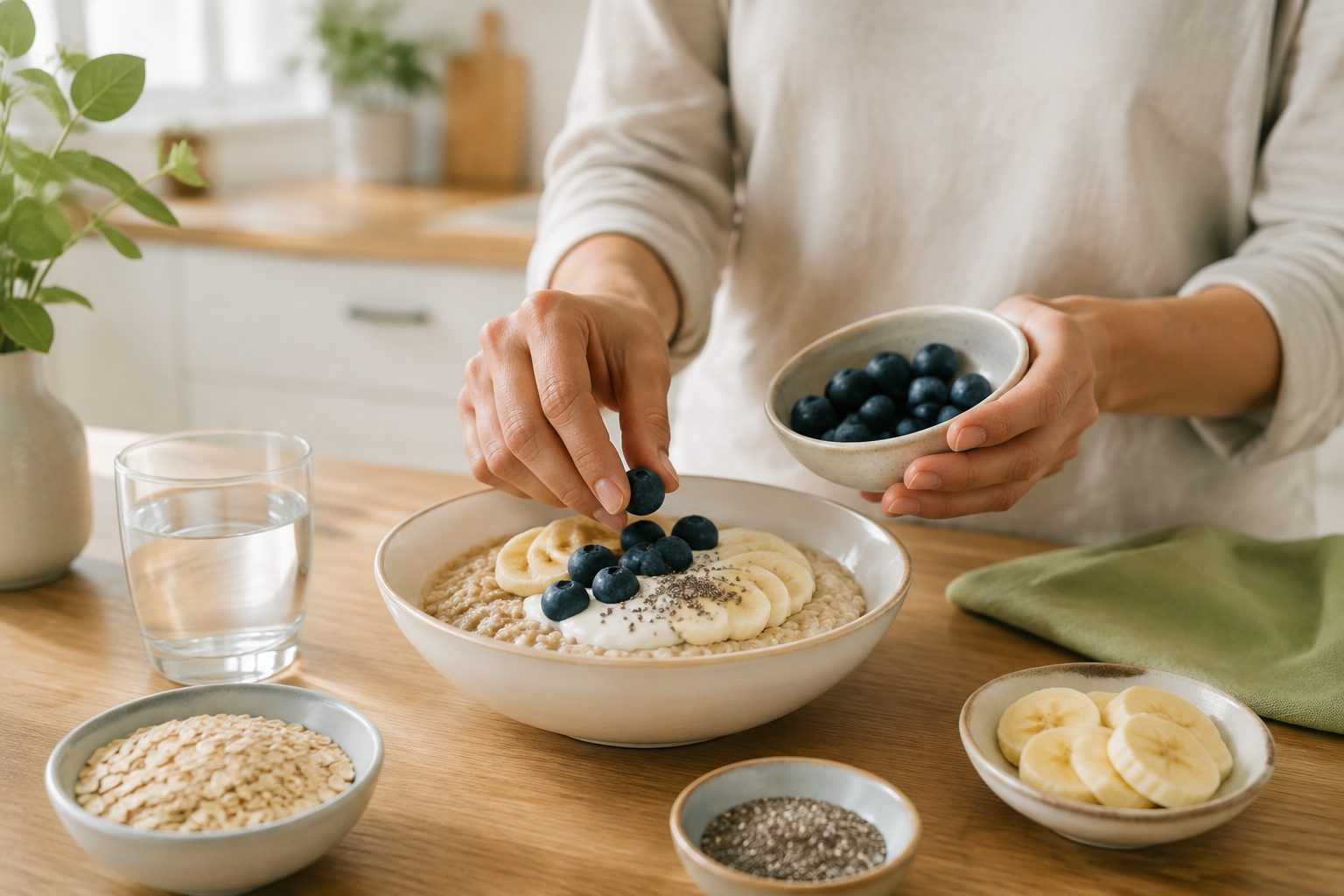
Top cooked or overnight oats with plain yogurt or a dairy-free alternative you tolerate, berries, banana, and a spoonful of chia or ground flax.
Eggs with whole grains
Pair eggs or tofu scramble with whole-grain toast and a side of fruit. Add spinach, tomatoes, or avocado if those foods work for you.
Make-ahead chia pudding
Combine chia seeds with milk or fortified plant milk, then add fruit and walnuts in the morning. Start with a small serving if seeds are new to you.
Savory beans and toast
Try mashed beans on whole-grain toast with a cooked vegetable. Canned low-sodium beans are a convenient option; rinse them before using.
Simple smoothie—if tolerated
Blend fruit, yogurt or soy milk, and oats. Keep the portion comfortable and include a solid snack later if liquid meals do not keep you full.
Leftovers count
Breakfast does not have to be traditional. A grain bowl with vegetables and a protein source can be a balanced morning meal.
Fiber: go slowly and keep it practical
Fiber is found naturally in many plant foods, but more is not always better at once. If you are working toward a higher-fiber pattern, start by changing one part of breakfast: swap a refined cereal for oats, add fruit, or choose whole-grain toast. Continue with fluids throughout the day. Some people with digestive conditions receive individualized fiber guidance, so it is reasonable to ask a registered dietitian or clinician what fits your situation.
How to personalize breakfast for your digestion
Notice patterns without becoming overly restrictive. A brief food-and-symptom note can help you discuss recurring symptoms with a qualified professional. Consider texture too: cooked oats or cooked fruit may feel different from a very large raw smoothie or a high-fiber bar. For lactose intolerance, lactose-free dairy products or non-dairy alternatives may be options. For medically required gluten avoidance, choose certified gluten-free foods and discuss the plan with your care team.
Supplements are not a shortcut
Probiotic, prebiotic, and fiber supplements are often marketed for digestive health, but product quality and effects vary. A supplement should not replace a varied diet or medical evaluation. The U.S. Food and Drug Administration does not approve dietary supplements for safety and effectiveness before they are marketed. Ask a clinician or pharmacist before starting one, especially if you are pregnant, nursing, planning surgery, managing a medical condition, or taking medication.
FAQs about gut-friendly breakfasts
What is a gut-friendly breakfast?
It is a breakfast built around foods you tolerate that may include plant foods, protein, and fluids. There is no single menu that works for everyone.
Is yogurt good for gut health?
Yogurt can fit into a balanced breakfast for people who tolerate it. Choose the type and portion that work for you; lactose-free or non-dairy alternatives may be useful for some people.
How quickly should I add more fiber?
Make gradual changes, such as adding fruit or switching to oats, and drink fluids. If symptoms persist or worsen, seek individualized advice.
Do I need a probiotic supplement?
Not necessarily. The effects of probiotics can depend on the product and the person. Discuss supplements with a clinician or pharmacist, particularly if you have a health condition or take medicines.
When should digestive symptoms be checked?
Seek medical care for severe or persistent symptoms, blood in stool, unexplained weight loss, fever, dehydration, or a major change in bowel habits.
References
- National Institute of Diabetes and Digestive and Kidney Diseases (NIDDK): Eating, Diet, & Nutrition for Gas in the Digestive Tract
- U.S. Food and Drug Administration: FDA 101—Dietary Supplements
- Dietary Guidelines for Americans
Medical disclaimer: This article is for general education and is not medical advice, diagnosis, or treatment. Talk with a qualified health professional about persistent symptoms, dietary restrictions, supplements, or a plan tailored to your health needs.
