
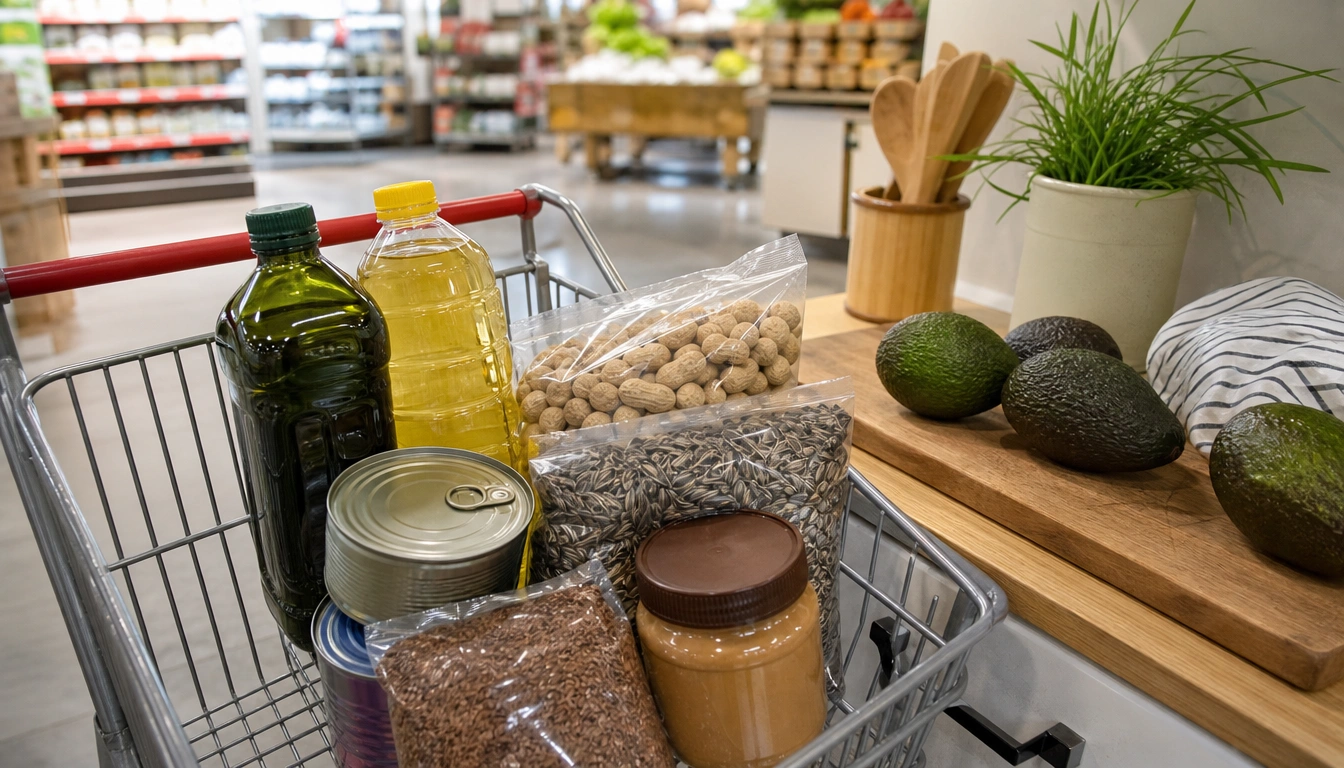
The cheapest grocery-store foods that provide healthy fats are usually store-brand canola or olive oil, peanuts and sunflower seeds, peanut butter, canned or pouched sardines or salmon, light tuna, flaxseed, and discounted or frozen avocados. The most budget-friendly strategy is to replace saturated fats with these unsaturated fats in foods you already eat, rather than adding extra fat on top of your usual intake.
Key Takeaways
- Look for unsaturated fats first: canola oil, olive oil, peanuts, seeds, nut butters, and canned fish usually give the best mix of nutrition and price.
- Buying food in its most basic form is often cheaper than buying “healthy” snack products with added sugar, sodium, or refined oils.
- Unit price matters more than the front label. Store brands, bulk bins, and shelf-stable foods often cost less per serving.
- Healthy fats are still calorie-dense, so budget-friendly choices still need portion control if your energy needs are low.
- If you have food allergies, kidney disease, high triglycerides, or another medical condition, your best fat choices may need individual guidance.
Why healthy fats matter and what counts on a budget
Healthy fats are useful because they do more than add calories. They help the body absorb vitamins A, D, E, and K, support cell membranes, and contribute to hormone production and nerve function. Unsaturated fats also fit well into heart-healthy eating patterns because they can replace saturated fats in everyday meals.
On a budget, the main goal is not to buy the fanciest oil or the most expensive fish. The goal is to shift the type of fat you use. Guidance from the American Heart Association and similar public health organizations emphasizes replacing saturated fats with monounsaturated and polyunsaturated fats, rather than simply adding more fat to the diet. That matters because a spoonful of oil or a handful of nuts can improve the fat profile of a meal, but extra fat still adds calories.
Monounsaturated fats are common in olive, canola, and peanut oils, as well as avocados and many nuts. Polyunsaturated fats are common in seeds, walnuts, vegetable oils, and fatty fish. Both types are useful. If money is tight, the cheaper option is often the better one as long as it is a plain, unsaturated fat source and fits the rest of your diet.
Best budget grocery staples by category
Cooking oils: For everyday cooking, generic olive oil and canola oil are usually the most practical low-cost choices. Canola oil is especially versatile for sautéing, roasting, and baking. Regular olive oil often costs less than extra-virgin versions and still supplies unsaturated fats for ordinary cooking. Save pricier finishing oils for meals where flavor really matters.
Canned and pouched fish: Sardines, salmon, and light tuna are useful when fresh seafood is too expensive or likely to spoil. They are shelf-stable, require no prep, and can provide omega-3 fats in a very budget-friendly form. Canned fish is especially helpful for quick lunches, grain bowls, pasta, and sandwiches.
Nuts and seeds: Peanuts, sunflower seeds, and flaxseed are usually cheaper than almonds, pistachios, walnuts, or macadamias. Plain peanuts are often one of the lowest-cost sources of unsaturated fat and protein in the store. Flaxseed is a useful add-in for oatmeal, yogurt, smoothies, or baked goods. If you buy whole flaxseed, grinding it improves access to its nutrients.
Nut and seed butters: Store-brand peanut butter is often the best value. Sunflower seed butter can be a useful alternative for people with peanut or tree nut allergies, though it may cost more. Check the ingredient list so the jar is mostly peanuts or seeds, not a long list of added sugar and oils.
Avocados and other staples: Fresh avocados can be affordable when bought in season, on sale, or in discounted multi-packs. Frozen avocado chunks can also reduce waste if your store carries them at a good price. Other practical staples include olives, roasted soybeans if tolerated, and plain seeds you can sprinkle onto vegetables or salads.
How to shop smart
The cheapest healthy fats are often the least flashy. A good starting point is the unit price on the shelf tag, not the front label. Compare price per ounce or per gram across brands and package sizes. A larger jar is not always cheaper, but it often is for oils, peanut butter, and seeds if you know you will use them before they spoil.
Store brands are often worth trying for oils, peanut butter, canned fish, and seeds. In many cases, the difference is packaging or marketing rather than nutrition. Bulk bins can also lower the price of peanuts, sunflower seeds, and flaxseed, especially if you only need a small amount. Shelf-stable foods are especially useful for budget planning because they last longer and reduce waste.
Buying in larger quantities makes the most sense when the food is easy to store and you use it regularly. Oils should be kept sealed away from heat and light. Nuts and seeds stay fresher if you store them in airtight containers, and some people prefer the freezer for longer storage. Canned fish is one of the most convenient pantry items because it has a long shelf life and no refrigeration until opened.
What to watch out for
Not every product marketed as healthy actually delivers a good value. Some “plant-based,” “protein,” or “heart healthy” snacks contain a lot of added sugar, excess sodium, or refined starches. Others rely on less desirable fats or add only a small amount of the food that sounds healthy on the front of the package.
Partially hydrogenated oils are the main trans fat concern, although they are less common than they used to be. Still, ingredient lists matter. If a packaged food includes partially hydrogenated oil, it is best to put it back. The same is true for products that sound wholesome but are really candy-like snacks with a little nut or seed content mixed in.
Front-of-package claims can be misleading because they may highlight one positive feature while hiding a less helpful overall profile. A granola bar may advertise nuts, but still be expensive per serving and high in sugar. A flavored nut butter may contain healthy fats but also added sweeteners and oil. The label panel and ingredient list usually tell you more than the marketing on the front.
How much to buy and eat
Healthy fats are calorie-dense, so even budget foods can become expensive if portions drift upward. That does not mean you should avoid them. It means you should use them with intent. A small amount often goes a long way in cooking, and many meals only need a modest serving to improve flavor and satiety.
If you are trying to stretch food dollars, think in terms of replacing rather than adding. For example, use a drizzle of canola or olive oil instead of butter for roasting vegetables, or swap a saturated-fat-heavy snack for toast with peanut butter. That kind of substitution improves the fat quality of the meal without necessarily increasing total food cost much.
People with lower energy needs, including many older adults and some sedentary adults, may need to be especially careful with portions because a few extra tablespoons of oil or large handfuls of nuts can add up quickly. If your goal is weight maintenance or weight loss, the calorie content of healthy fats still matters.
A practical approach is to buy the foods you will actually use and portion them into meals and snacks. Pre-portioning nuts, seeds, and nut butter can help prevent mindless overuse. For oils, a spoon or measured pour is often enough; you usually do not need to free-pour straight from the bottle.
Who may need extra caution
Some people need a more individualized approach than a general grocery guide can provide. Food allergies are one common reason. Peanut, tree nut, and soy allergies can rule out otherwise useful budget staples, so label reading and safe substitutions matter. Sunflower seed butter or other seed-based options may help, but they are not automatically cheaper or suitable for every household.
Medical conditions can also change the best choice. People with chronic kidney disease, high triglycerides, digestive disorders, or diagnosed heart disease may need advice from a clinician or registered dietitian about total fat intake, omega-3 choices, or how much fish, nut butter, or oil fits their plan. According to public health guidance, the right amount and type of fat can depend on the full diet, medications, and overall health.
Older adults may need special attention as well, especially if appetite is low or meals are small. Healthy fats can help make food more satisfying, but the portions still need to match energy needs. For some people, the biggest benefit is not adding more fat; it is choosing a better fat source in a familiar meal.
Meal and snack examples that stay affordable
A budget-friendly breakfast could be oatmeal with ground flaxseed and a spoonful of peanut butter. That combines whole grains with unsaturated fat and can be cheaper than a packaged breakfast bar. Another option is toast with peanut butter and sliced banana, which uses a low-cost spread to add flavor and staying power.
For lunch, canned sardines or salmon on whole-grain crackers, in a sandwich, or over rice can provide omega-3 fats without the price of fresh seafood. Tuna mixed with a little yogurt or mayo can also work if you watch portions and choose the right product for your goals.
For dinner, use canola or olive oil to roast vegetables, stir-fry beans and vegetables, or finish a pasta dish. A small amount can improve taste and texture while replacing more saturated fat-heavy ingredients. If avocados are on sale, use them in simple meals rather than as a specialty add-on: on toast, in tacos, or as a topping for beans and rice.
Snacks can be simple too. A small handful of peanuts, sunflower seeds, or plain trail mix can be more economical than packaged snack products. If you make your own mix, you control the price and the ingredients.
Premium versus budget versions
Some higher-priced foods are worth it in specific situations, but many are not necessary for everyday healthy eating. Extra-virgin olive oil can be a good choice for flavor or dressings, but standard olive oil or canola oil usually makes more sense for routine cooking. The nutrient difference is not large enough to justify premium prices for every use.
Fresh wild salmon may taste excellent, but canned salmon or sardines can deliver similar practical benefits for far less money. The same idea applies to nut butters: a simple store-brand peanut butter often provides the main nutritional benefit at a lower cost than specialty almond or cashew spreads.
That does not mean the premium version is never worth buying. If you strongly prefer the taste, need a specific allergy-friendly product, or use a small amount in a dish where flavor matters, paying more can be reasonable. But from a budget perspective, the best value usually comes from plain, minimally processed foods you can use regularly.
If you want the biggest nutrition return for the smallest grocery bill, focus on foods that deliver unsaturated fats, fit your cooking habits, store well, and do not tempt you to overspend on marketing. That is usually the best tradeoff for budget shoppers.
Frequently Asked Questions
Which budget-friendly oils are best for everyday cooking?
Canola oil and standard olive oil are usually the best low-cost choices for most everyday cooking. They are versatile, widely available, and supply unsaturated fats. For budget shoppers, the better pick is often the one with the lowest unit price that fits your usual cooking method.
Are canned fish and pouches a good low-cost source of omega-3s?
Yes. Canned or pouched sardines, salmon, and some tuna products can be a practical, shelf-stable source of omega-3 fats. They are often much cheaper than fresh seafood and can fit into quick meals without extra prep.
What are the cheapest nuts and seeds with the most health value?
Peanuts, sunflower seeds, and flaxseed are often among the best values. They usually cost less than almonds, walnuts, or pistachios, and they provide useful unsaturated fats. Plain versions are usually the most economical choice.
How can I tell whether a nut butter or packaged food actually contains healthy fats?
Check the ingredient list and nutrition label. A good nut butter is usually mostly nuts or seeds, with little or no added sugar and no partially hydrogenated oils. Front-label claims like “natural” or “protein” do not guarantee a healthy fat profile.
How much healthy fat should I buy or eat without going overboard on calories?
Healthy fats are still calorie-dense, so portions matter. Buy amounts you will use before they spoil, and use fats as replacements for less healthy fats rather than extras on top of the same meal. If you have lower energy needs, smaller portions may be best.
The Bottom Line
The cheapest healthy fats are usually basic grocery staples, not specialty products: canola or olive oil, peanuts, sunflower seeds, peanut butter, canned fish, and discounted or frozen avocados. The best savings come from using them to replace saturated fats in foods you already eat.
Shopping well matters as much as choosing the right food. Compare unit prices, buy store brands when the ingredient list is solid, and favor shelf-stable options that reduce waste. Be cautious with packaged “healthy” foods that add sugar, sodium, or partially hydrogenated oils.
Healthy fats can support heart health and better meal quality, but they are still calorie-dense. If you have allergies or a medical condition such as kidney disease, high triglycerides, or heart disease, personalized advice may be worth it before making major changes.
Medical disclaimer
Medical disclaimer: This content is for educational and informational purposes only and is not a substitute for professional medical advice, diagnosis, or treatment. Dietary needs and supplement suitability vary by individual.
Sources
- Academic Research Institution — harvard.edu. Accessed October 2026.
- heartfoundation.org.au — heartfoundation.org.au. Accessed October 2026.
- myplate.food — myplate.food. Accessed October 2026.
