
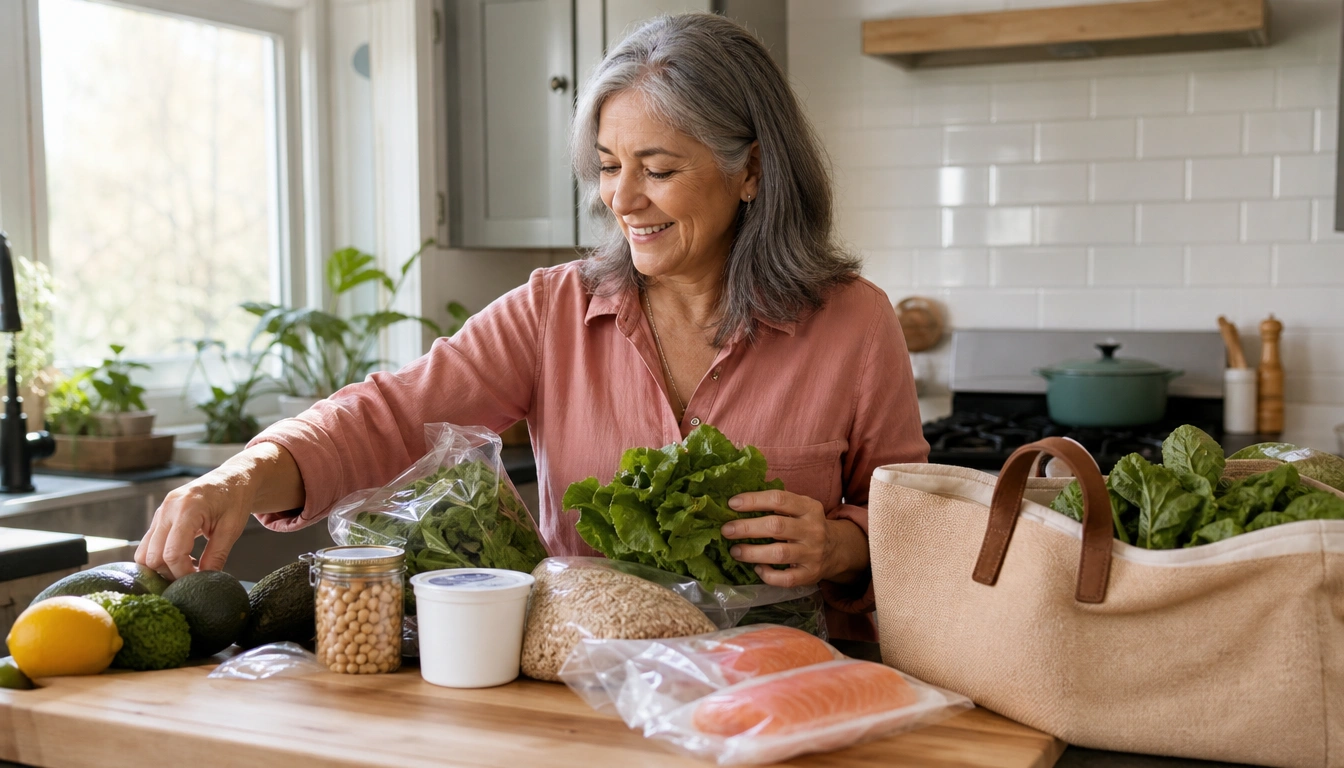
Adults over 50 usually do best with a grocery routine built around nutrient-dense foods, steady protein, high-fiber choices, and practical convenience. That means shopping less for empty calories and more for foods that support muscle, bone health, hydration, and energy in smaller portions. A good plan starts before you enter the store: check what you already have, write a list by store section, and choose foods that can work across several meals.
Key Takeaways
- After 50, calorie needs often decline, so groceries should deliver more nutrients per bite, not just more food.
- Protein works best when it is spread across meals, so buy foods you can use at breakfast, lunch, and dinner.
- Frozen produce, canned beans, microwaveable grains, and rotisserie chicken can reduce waste and still fit a healthy plan.
- Soft textures can still be nutritious: think steamed vegetables, stewed fruit, flaky fish, yogurt, and slow-cooked proteins.
- Thirst cues may weaken with age, so include soups, fruits, vegetables, milk, and fortified alternatives that support hydration.
- If you have hypertension, diabetes, CKD, swallowing issues, or medication interactions, the grocery list should be individualized.
Why grocery planning matters more after 50
The best healthy grocery planning routine for adults over 50 starts with one basic shift: many people need fewer calories, but they still need plenty of protein, fiber, calcium, vitamin D, and other nutrients. The National Institute on Aging and the Dietary Guidelines for Americans emphasize that aging changes how the body uses food, so a cart full of snacks or refined convenience foods can crowd out the foods that matter most.
This is not about eating “perfectly.” It is about choosing foods that do more work per serving. That usually means more vegetables, fruit, beans, whole grains, dairy or fortified alternatives, and protein-rich foods instead of items that mainly add sugar, sodium, or refined starch. Good grocery planning also helps support muscle maintenance, since age-related muscle loss can accelerate when protein intake is too low. A thoughtful list can also help with bone health, bowel regularity, and steady energy.
For many adults over 50, a practical grocery routine also protects independence. If shopping is tiring, appetite is smaller, or cooking energy is limited, planning ahead can keep meals simple without making them less nourishing.
Build the grocery routine before the store
A useful grocery trip starts at home. First, check the fridge, freezer, and pantry so you do not buy duplicates or let food spoil before it is used. Then think through the next few meals instead of shopping for vague “healthy foods.” This makes it easier to buy ingredients that actually fit your routine.
Try organizing the list by store section: produce, protein, dairy or fortified alternatives, grains, and pantry staples. That keeps the trip efficient and reduces the chance of impulse buys. It can also help if fatigue, joint pain, or mobility issues make long trips harder.
When planning for one person or a small household, look for overlap. Choose ingredients that can be reused in multiple meals, such as oats for breakfast, salad greens for lunch, and frozen vegetables for dinner. A few flexible basics often work better than many single-use items. The Dietary Guidelines for Americans also support this kind of pattern: build meals around a mix of nutrient-rich foods rather than relying on heavily processed convenience products.
The over-50 shopping blueprint for everyday meals
In most carts, the core shopping pattern should be simple: produce, protein, dairy or fortified alternatives, whole grains, and a small set of pantry staples. This is where nutrient density matters. Instead of filling the cart with low-nutrient foods that disappear quickly, choose foods that support several meals and several health goals at once.
Produce: Fresh produce is great, but frozen and low-sodium canned options count too. Frozen vegetables and fruit can be especially helpful because they last longer and reduce waste. Pick colorful options such as broccoli, spinach, carrots, peppers, berries, peaches, and mixed vegetable blends.
Protein: Shop for foods that are easy to use in more than one meal. Eggs, Greek yogurt, milk, cottage cheese, canned tuna, salmon, beans, lentils, tofu, chicken, and flaky fish are all practical choices. The goal is not just to have protein at dinner; it is to make it easy to include at breakfast and lunch too.
Dairy or fortified alternatives: Milk, yogurt, kefir, and calcium- and vitamin D-fortified soy or other alternatives can help support bone health. Choose versions with little added sugar when possible.
Whole grains and staples: Oats, brown rice, whole-wheat bread, whole-grain pasta, quinoa, beans, nuts, and seeds can help you build satisfying meals without much effort. Keep seasoning basics on hand, such as olive oil, pepper, garlic, herbs, and low-sodium broth.
How to choose protein for muscle preservation
Protein is especially important after 50 because muscle maintenance becomes harder when intake is inconsistent. A practical approach is to spread protein across meals rather than saving most of it for dinner. That can make breakfast and lunch more useful for muscle support, and it can also be easier on appetite.
Grocery combinations that work well include eggs with whole-grain toast, yogurt with fruit and nuts, tuna with beans and crackers, cottage cheese with tomatoes, or chicken with microwaveable grains and vegetables. For plant-based eating, beans, lentils, tofu, soy milk, and nuts can all contribute to the pattern.
If your household eats very small portions, shop for protein foods that can be stretched across several uses. A rotisserie chicken can become lunch salad, soup, or a grain bowl. A container of Greek yogurt can serve as breakfast, a snack, or a creamy base for a sauce. Canned beans can be added to soup, salads, tacos, and pasta. This is often more realistic than buying a large cut of meat that is only used once.
Fiber and gut health picks
Fiber supports bowel regularity, blood sugar control, and heart health, and it becomes more important when digestion slows with age. The target is easier to reach when fiber is built into routine grocery choices rather than added as an afterthought.
Choose whole grains instead of refined grains when possible: oats, whole-wheat bread, brown rice, barley, and whole-grain pasta are all useful staples. Add beans, lentils, chickpeas, berries, apples, pears, leafy greens, carrots, and cruciferous vegetables. You do not need a complicated menu to get there.
If you are increasing fiber, do it gradually and pair it with enough fluids. A sudden jump can cause bloating or discomfort. Canned beans can be rinsed to reduce sodium, and frozen vegetables can make it easier to add fiber without extra prep. MedlinePlus and NIH resources both support the idea that fiber-rich foods should be introduced in ways a person can actually stick with.
Hydration-supportive grocery choices
Older adults may not feel thirsty as strongly, so hydration can improve when it comes from both beverages and food. That means the grocery cart should include more than just bottles of water. It should also include foods that carry fluid naturally.
Good picks include soups, broth-based meals, melons, oranges, berries, cucumbers, tomatoes, lettuce, zucchini, yogurt, milk, and fortified beverages. These foods can help support fluid intake without forcing large drinks at once. They can also be easier to tolerate when appetite is low.
Make hydration easier by pairing it with routine. Keep a water bottle where you sit, serve soup with lunch, and include fruit with breakfast or snacks. If you rely on coffee or tea, remember that those do not replace the need for regular fluids and water-rich foods. The goal is steady intake across the day, especially when thirst cues are less reliable.
Make groceries work for real life
For one or two people, the best groceries are the ones that are likely to get eaten. That means smaller quantities, freezer-friendly choices, and ingredients that can be used in several ways. Buying a giant container of produce or bread may sound efficient, but if it spoils, it becomes expensive and discouraging.
Helpful shortcuts include pre-washed greens, pre-cut vegetables, microwaveable whole grains, canned beans, frozen fruit, and rotisserie chicken. These can reduce cooking fatigue without forcing a dependence on ultra-processed meals. Freezer storage is especially useful for bread, meat, berries, cooked grains, and extra portions of soup or stew.
Food waste prevention is part of health planning. If a food is hard to chew or cook, it may sit untouched until it spoils. Choose a mix of fresh, frozen, and shelf-stable items so the kitchen always has something usable, even on low-energy days.
When the standard grocery list needs modification
Sometimes the grocery list needs to change because of chewing trouble, swallowing concerns, low appetite, or a medical condition. That is where texture and medical boundaries matter. The same nutritional goals can often be met with softer foods: steamed vegetables instead of raw crunch, slow-cooked proteins instead of tough cuts, flaky fish instead of chewy meats, and stewed fruit instead of raw fruit that is harder to manage.
Some conditions require individualized advice rather than a universal grocery list. People with hypertension may need to watch sodium. People with diabetes may need a more specific carbohydrate pattern. People with chronic kidney disease may need changes in potassium, phosphorus, protein, or fluid intake. Certain medications can also interact with foods, including grapefruit, potassium-based salt substitutes, or very high vitamin K intake. For those situations, it is best to review food changes with a clinician or dietitian.
Unintentional weight loss, very low appetite, or new swallowing problems should not be ignored. Those can signal a health issue that needs medical attention, not just a different shopping list.
Budget- and energy-saving swaps that still fit the goal
Healthy grocery shopping after 50 does not have to mean buying only fresh foods or cooking from scratch every day. Frozen vegetables can be as practical as fresh, and they often reduce waste. Canned beans, canned fish, and frozen fruit are also useful when time, energy, or transportation is limited.
Rotisserie chicken, microwaveable grain pouches, bagged salads, and pre-cut vegetables can save effort on difficult days. The tradeoff is often worth it if it helps you eat more meals at home and rely less on fast food or packaged snacks. A balanced routine is not about getting everything perfect; it is about making healthy choices easier to repeat.
For many adults, the smartest grocery plan is a flexible one: mostly nutrient-dense foods, a few convenience items that truly help, and enough variety to keep meals workable over time. That combination supports health without adding unnecessary complexity.
Frequently Asked Questions
What foods should adults over 50 prioritize on a grocery list?
Focus on nutrient-dense foods that do more than just fill you up: vegetables, fruit, beans, lentils, whole grains, eggs, yogurt, milk or fortified alternatives, fish, poultry, tofu, nuts, and seeds. These foods support protein, fiber, calcium, vitamin D, and overall meal quality.
How much protein, fiber, calcium, and vitamin D do older adults need from food?
Needs vary by age, sex, and health status, but public guidance for older adults emphasizes adequate protein spread across meals, fiber-rich foods, and enough calcium and vitamin D for bone health. Exact targets can differ, especially if you have kidney disease or other medical conditions, so personalized advice may be needed.
What are the best grocery planning strategies for one person or a small household?
Check what you already have, buy smaller amounts more often, and choose ingredients that can be used in several meals. Frozen produce, canned beans, rotisserie chicken, yogurt, and whole grains are helpful because they reduce waste and make meals easier when energy is low.
How can adults over 50 grocery shop when chewing, swallowing, or appetite becomes an issue?
Use softer but still nutritious foods: steamed vegetables, soups, yogurt, eggs, flaky fish, slow-cooked meats, oatmeal, and stewed fruit. If swallowing is difficult or appetite is dropping, the issue should be evaluated by a healthcare professional rather than managed by food changes alone.
Which groceries are smart choices for adults over 50 with conditions like hypertension, diabetes, or CKD?
The best choices depend on the condition and medications. Many people with hypertension need to pay attention to sodium, those with diabetes may need carbohydrate planning, and people with CKD may need changes in protein, potassium, phosphorus, or fluid intake. Individualized guidance is important.
The Bottom Line
A healthy grocery routine after 50 is less about strict rules and more about choosing foods that match changing needs: fewer empty calories, more protein spread through the day, more fiber, and enough calcium and vitamin D to support bone health.
The most practical carts usually include a mix of fresh, frozen, canned, and convenience foods that save time and reduce waste. That approach can support health, energy, and independence without making shopping or cooking feel overwhelming.
If appetite drops, chewing becomes difficult, or you manage conditions such as hypertension, diabetes, or kidney disease, the grocery list should be adjusted to the person—not the other way around.
Medical disclaimer
Medical disclaimer: This content is for educational and informational purposes only and is not a substitute for professional medical advice, diagnosis, or treatment. Dietary needs and supplement suitability vary by individual.
Sources
- National Institutes of Health (NIH) — nih.gov. Accessed October 2026.
- U.S. Government / Health Authority — realfood.gov. Accessed October 2026.
- U.S. Government / Health Authority — medlineplus.gov. Accessed October 2026.
- U.S. Government / Health Authority — dietaryguidelines.gov. Accessed October 2026.
- Academic / Medical Research Institution — heart.org. Accessed October 2026.
